Bronchial Asthma PowerPoint Template





Template Preview
Designed for healthcare professionals creating clear and structured medical presentations.
Ideal for doctors, medical educators, and pharmaceutical teams preparing lectures, clinical education, product presentations, and training.
Fully editable in PowerPoint, allowing you to customize diagrams, charts, and slide layouts with your own medical content
Ready-to-use presentation structure that saves time and helps you build professional healthcare presentations quickly.
Fully Animated
Built-in animations help you present medical information clearly and make complex concepts easier to understand.
Editable Colors and Shapes
Editable colors and shapes help you easily customize the slides to match your content and presentation style, just drag and drop your content.
Professional medical layouts
Professional medical layouts help you organize clinical information, medical data, and treatment insights in a clear and structured way.

Created by Medical Professionals
This template prioritizes medical accuracy, clarity, and real-world usability. Each slide is designed with a medical audience in mind, helping you present clinical information, data, and treatment insights in a way that is structured, credible, and easy for healthcare professionals to understand.
Medical Training for Pharmaceutical & Life Sciences Companies
Pulmonology and primary care training teams onboarding new sales reps can structure introductory sessions around this 80-plus-slide Bronchial Asthma template's five-type framework, Allergic, Seasonal, Occupational, Non-Allergic, and Exercise-Induced, each linked back to its own trigger profile. New hires get a visual reference for how the same underlying airway inflammation produces five clinically distinct presentations depending on trigger exposure. The SABA mechanism content gives trainees a structured reference for how quick-relief medication actually reverses bronchoconstriction during an attack. New reps finish training able to connect trigger, airway pathophysiology, and asthma type to the corresponding treatment approach.
Medical Congress & Scientific Conference Presentations
Pulmonologists and allergists preparing a conference session can build around this Bronchial Asthma template's pathophysiology animation, tracing allergen uptake through TH2-cell activation, IgE and eosinophil recruitment, to bronchoconstriction and airway remodeling, rather than assembling immune-cascade diagrams independently. The five-type classification gives a speaker a ready framework for a trigger-based differential discussion. A Key Opinion Leader presenting at a pulmonology conference can bring their own institutional inhaler-adherence data into the existing SABA mechanism content. The diagnosis content, chest X-ray, lung function tests, allergy testing, and arterial blood gas analysis, keeps the discussion clinically current for a specialist audience.
Pharmaceutical Product & Medical Affairs Presentations
Medical Affairs teams supporting a bronchodilator, inhaled corticosteroid, or broader respiratory portfolio can use this Bronchial Asthma presentation as disease-level groundwork for scientific exchange, covering the TH2-mediated pathophysiology before any product-specific data enters the conversation. Medical Science Liaisons can reference the SABA mechanism content, beta-2 receptor binding through cAMP-driven smooth-muscle relaxation, when a scientific exchange conversation calls for context on how quick-relief therapy actually works. Airway-inflammation biology, not a branded message, is the substance of this presentation, and it still needs the customer's own medical and compliance sign-off before Medical Affairs uses it with any audience. Pulmonology and primary care teams gain a consistent scientific reference spanning trigger, pathophysiology, type, and treatment.
eLearning & SCORM Training Modules
Pulmonology and respiratory-therapy programs building an asthma module can customize this template with their own case studies, then convert the finished presentation into a SCORM-compliant module for their learning management system when self-paced study fits the curriculum better. The TH2-mediated pathophysiology animation translates naturally into interactive checkpoints within a broader respiratory pharmacology course. When a program needs a narrower scope, such as the five-type classification alone or a version tailored for nursing versus respiratory-therapy learners, the RxSlides team can adjust the template's coverage and branding. The RxSlides team can also build a fully custom, from-scratch presentation whenever a training objective isn't yet covered by the catalog.
Medical & Healthcare Education
Medical and nursing faculty teaching pulmonology can use this template's pathophysiology animation to walk students through the full immune cascade behind an asthma attack, from allergen uptake through bronchoconstriction and airway remodeling. The five-type classification gives students a clear structure for connecting trigger exposure to clinical presentation. The SABA mechanism content connects classroom pharmacology to the bedside reality of how quick-relief inhalers actually reverse an attack. Students leave with a structured understanding of bronchial asthma spanning trigger, pathophysiology, type, and treatment.
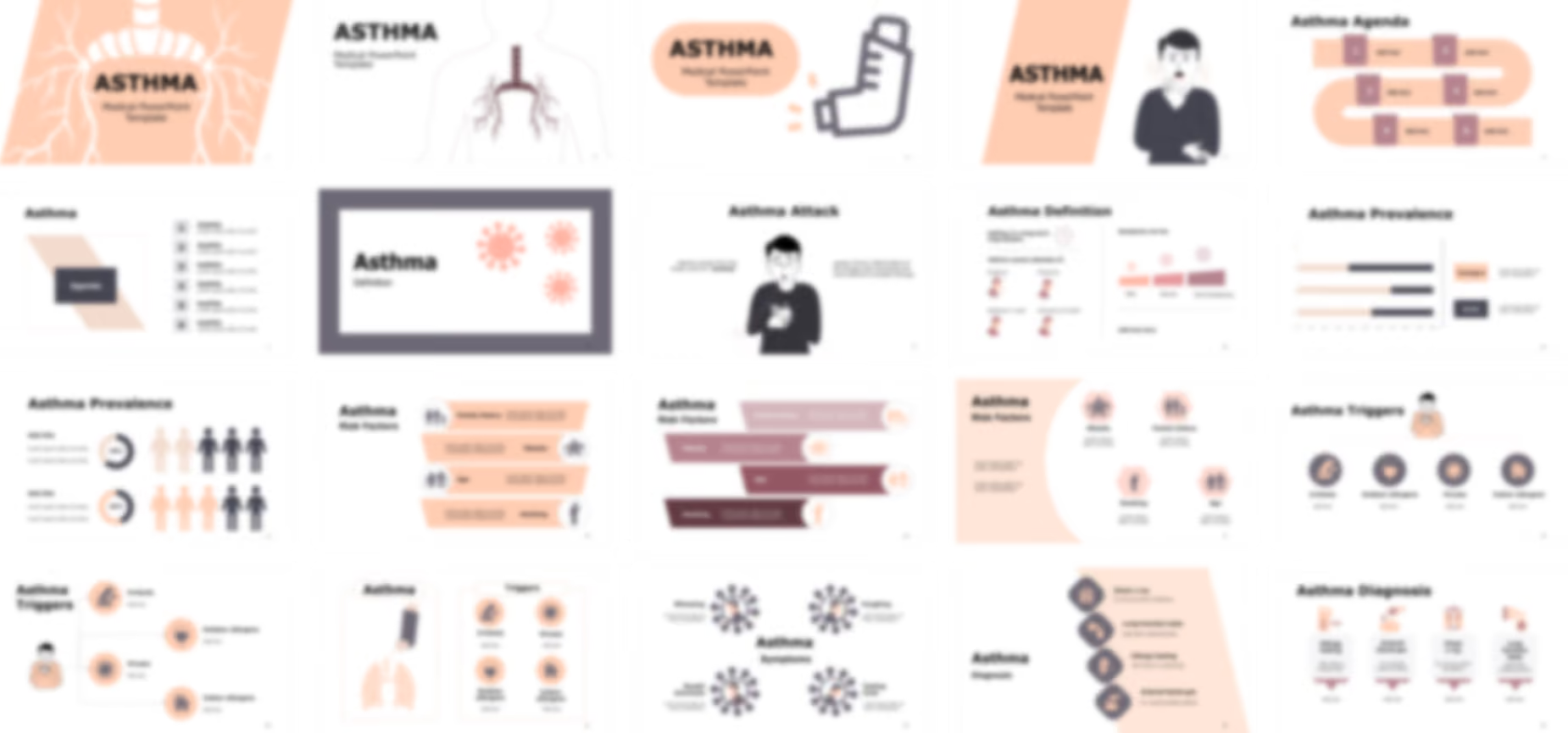
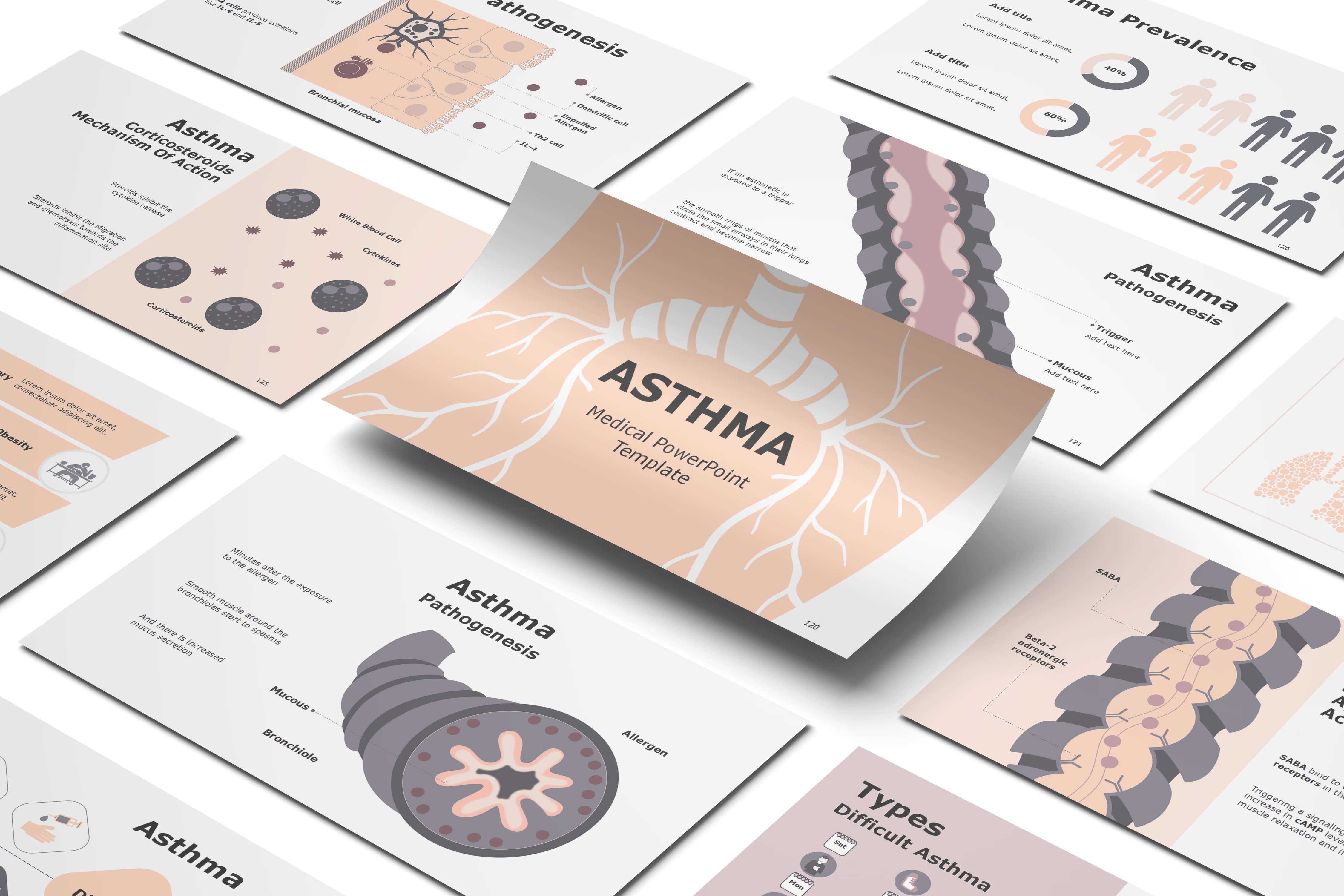
The Bronchial Asthma PowerPoint template opens with creatively designed cover slides and an editable table of contents before a definition describes the condition as a lung disease in which the airways narrow, swell, and become blocked by excess mucus. An accompanying infographic then charts asthma's prevalence at both global and local levels, with percentages that can be updated to a specific dataset.
Medical icons present risk factors including smoking, obesity, family history, and age, in this editable medical presentation template. Additional icons then cover triggers such as irritants, outdoor allergens, viruses, and indoor allergens.
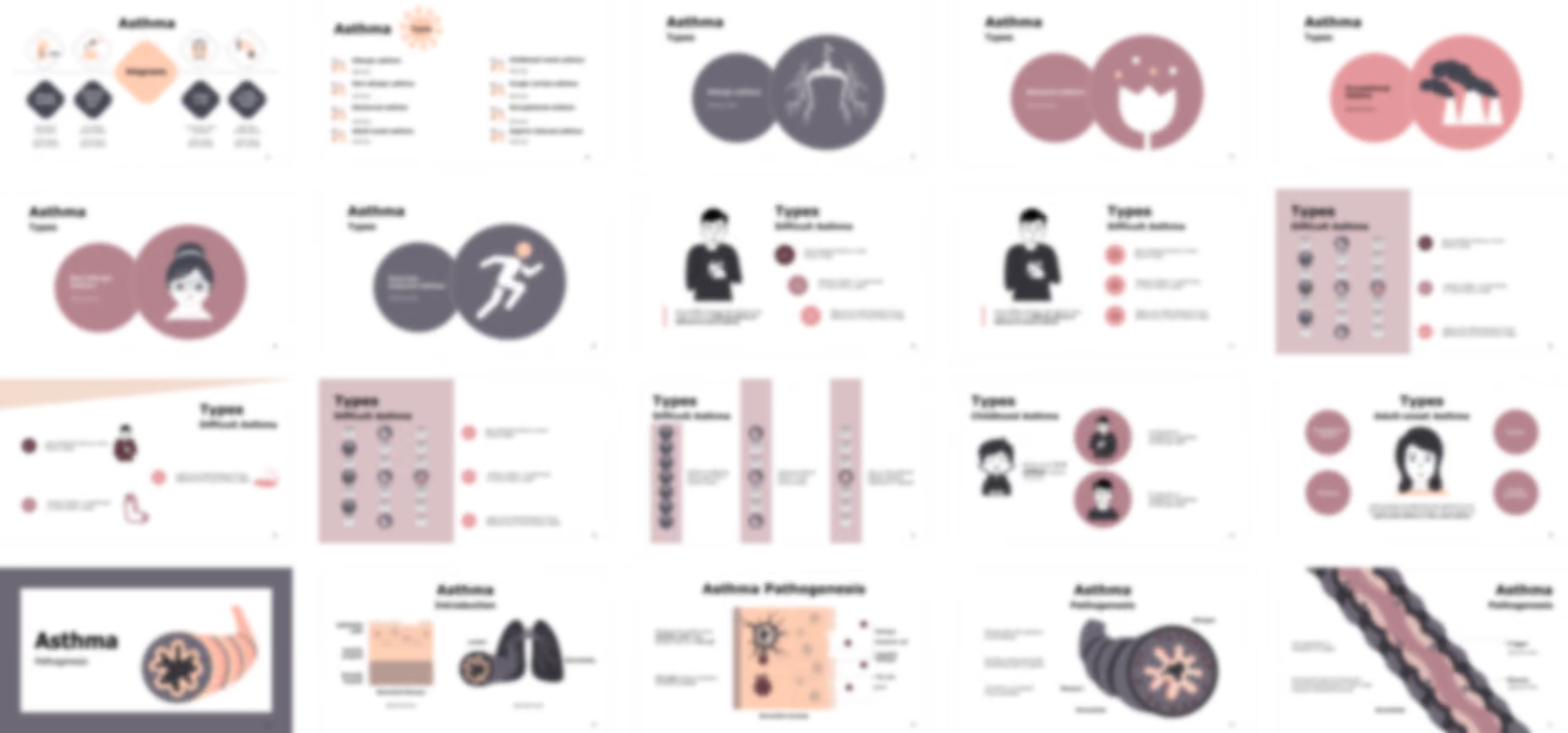
An animated illustration explains the pathophysiology of bronchial asthma, tracing how dendritic cells present allergens to T helper cells, triggering cytokine release that produces IgE antibodies and activates eosinophils, causing the smooth muscle around the bronchioles to spasm and secrete mucus. Establishing this inflammatory cascade first gives educators a shared reference point before comparative illustrations distinguish allergic, seasonal, occupational, non-allergic, and exercise induced asthma types.
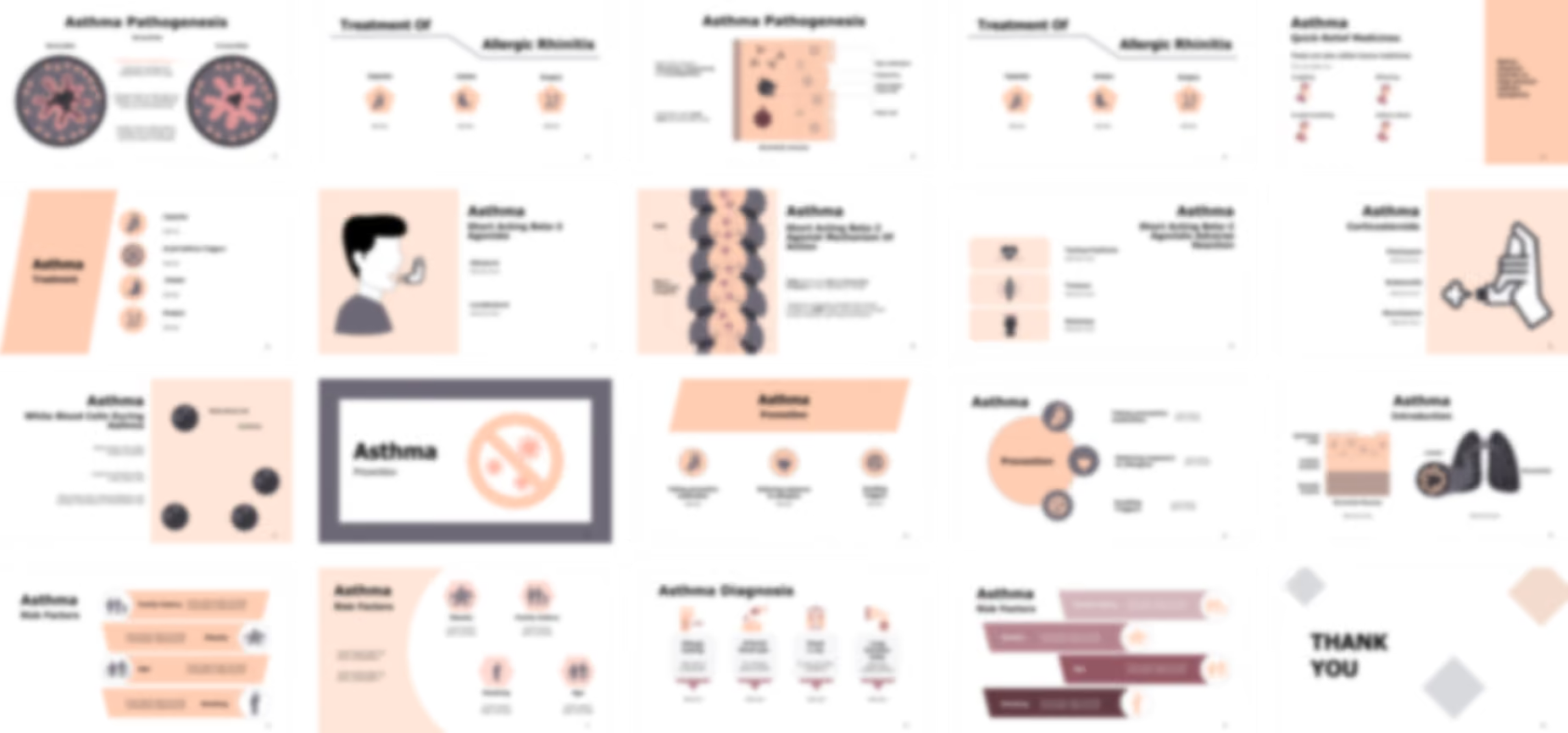
Medical icons visualize symptoms including sneezing, wheezing, coughing, and shortness of breath, before diagnostic content covers chest x-rays, lung function tests, allergy testing, and arterial blood gas analysis. The template closes with treatment options including short acting beta 2 agonists and corticosteroids, alongside prevention measures such as reduced allergen exposure, plus a set of customizable icons and illustrations for pulmonology education.
Ready To Transform Your Presentation ?
Pay once, use forever