Beta Blockers PowerPoint Template

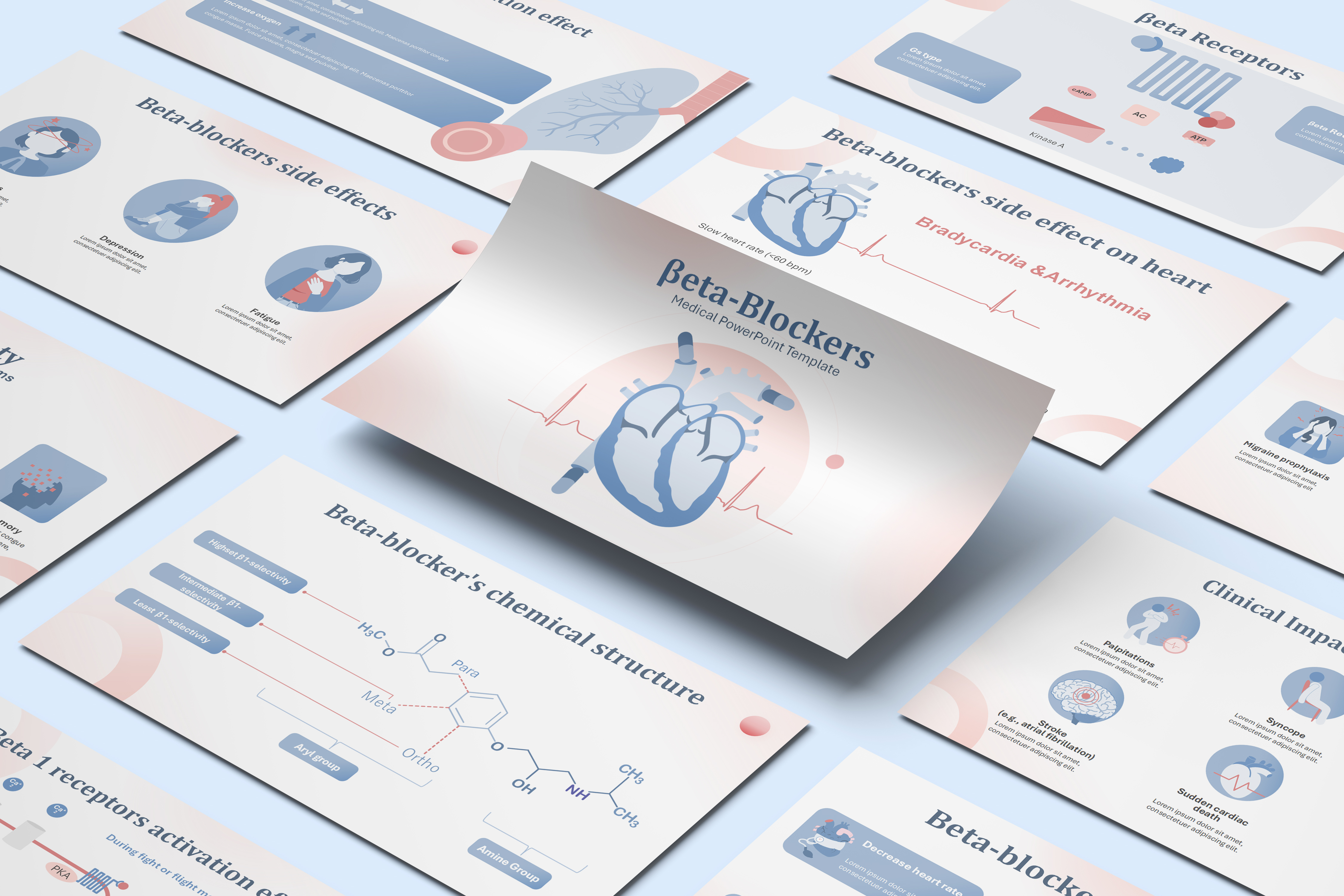




Template Preview
Designed for healthcare professionals creating clear and structured medical presentations.
Ideal for doctors, medical educators, and pharmaceutical teams preparing lectures, clinical education, product presentations, and training.
Fully editable in PowerPoint, allowing you to customize diagrams, charts, and slide layouts with your own medical content
Ready-to-use presentation structure that saves time and helps you build professional healthcare presentations quickly.
Fully Animated
Built-in animations help you present medical information clearly and make complex concepts easier to understand.
Editable Colors and Shapes
Editable colors and shapes help you easily customize the slides to match your content and presentation style, just drag and drop your content.
Professional medical layouts
Professional medical layouts help you organize clinical information, medical data, and treatment insights in a clear and structured way.

Created by Medical Professionals
This template prioritizes medical accuracy, clarity, and real-world usability. Each slide is designed with a medical audience in mind, helping you present clinical information, data, and treatment insights in a way that is structured, credible, and easy for healthcare professionals to understand.
Pharmaceutical Product & Medical Affairs Presentations
Medical Affairs teams supporting a beta-adrenergic blocker or broader cardiovascular portfolio can put this 70-plus-slide Beta Blockers template to work as scientific-exchange groundwork, covering the beta-1-versus-beta-2 receptor distinction and the fight-or-flight activation sequence across five organ systems without referencing a specific brand. Medical Science Liaisons can reference the three-generation classification, first through third generation agents and their receptor-selectivity differences, when a scientific exchange conversation calls for context on why one agent might be favored over another. Since the content covers class-wide pharmacology rather than a single product, it hands Medical Affairs a foundation that still needs the customer's own medical and compliance review before it's used with any audience. Cardiology and primary care teams gain a consistent scientific reference spanning mechanism, indications well beyond hypertension, and safety.
Medical Congress & Scientific Conference Presentations
Cardiologists and primary care physicians preparing a conference session can build around this Beta Blockers template's fight-or-flight activation animation, tracing beta-receptor effects across the eyes, heart, lungs, kidneys, and glucose metabolism, rather than assembling adrenergic-physiology diagrams independently. The pacemaker-cell electrophysiology sequence gives a speaker a ready framework for a mechanism-focused cardiology discussion. A Key Opinion Leader presenting at a cardiology conference can pair the existing seven-indication content, spanning cardiovascular disease through migraine prophylaxis, with their own institutional prescribing data. The three-generation classification keeps the discussion clinically current for a specialist audience.
Medical Training for Pharmaceutical & Life Sciences Companies
Cardiology and primary care training teams onboarding new sales reps can structure introductory sessions around this Beta Blockers template's receptor-biology foundation, beta-1 and beta-2 distribution across organ systems, before moving into the blocking mechanism itself. New hires get a visual reference for the three-generation classification, timolol and propranolol through labetalol and carvedilol, alongside the seven-condition indication range extending from hypertension to essential tremor and migraine prophylaxis. The side-effect content, covering bradycardia, bronchospasm, and depression, gives trainees a structured safety-communication reference. New reps finish training able to explain why receptor selectivity differs across beta-blocker generations.
eLearning & SCORM Training Modules
Pharmacy schools and cardiology fellowship programs building a cardiovascular pharmacology module can customize this Beta Blockers template with their own patient case studies, then convert the finished presentation into a SCORM-compliant module for their learning management system when self-paced study suits the program better. The receptor-activation and blocking-mechanism animations translate naturally into interactive checkpoints within a broader autonomic pharmacology course. When a program needs a narrower scope, such as the generational classification alone or a version tailored for nursing versus pharmacy learners, the RxSlides team can adjust the template's coverage and branding. For a training objective that falls outside every current template, the RxSlides team can build a fully custom presentation from scratch.
Medical & Healthcare Education
Medical and pharmacy school faculty teaching autonomic pharmacology can use this template's beta-receptor distribution slides to establish the physiological foundation before introducing how blockade reverses each fight-or-flight effect. The three-generation classification gives students a clear structure for understanding how receptor selectivity evolved across beta-blocker development. The seven-indication overview connects classroom pharmacology to the range of clinical scenarios, cardiovascular disease through migraine prophylaxis, students will encounter in practice. Students leave with a structured understanding of beta-blocker mechanism, classification, and the organ-system effects that inform prescribing.
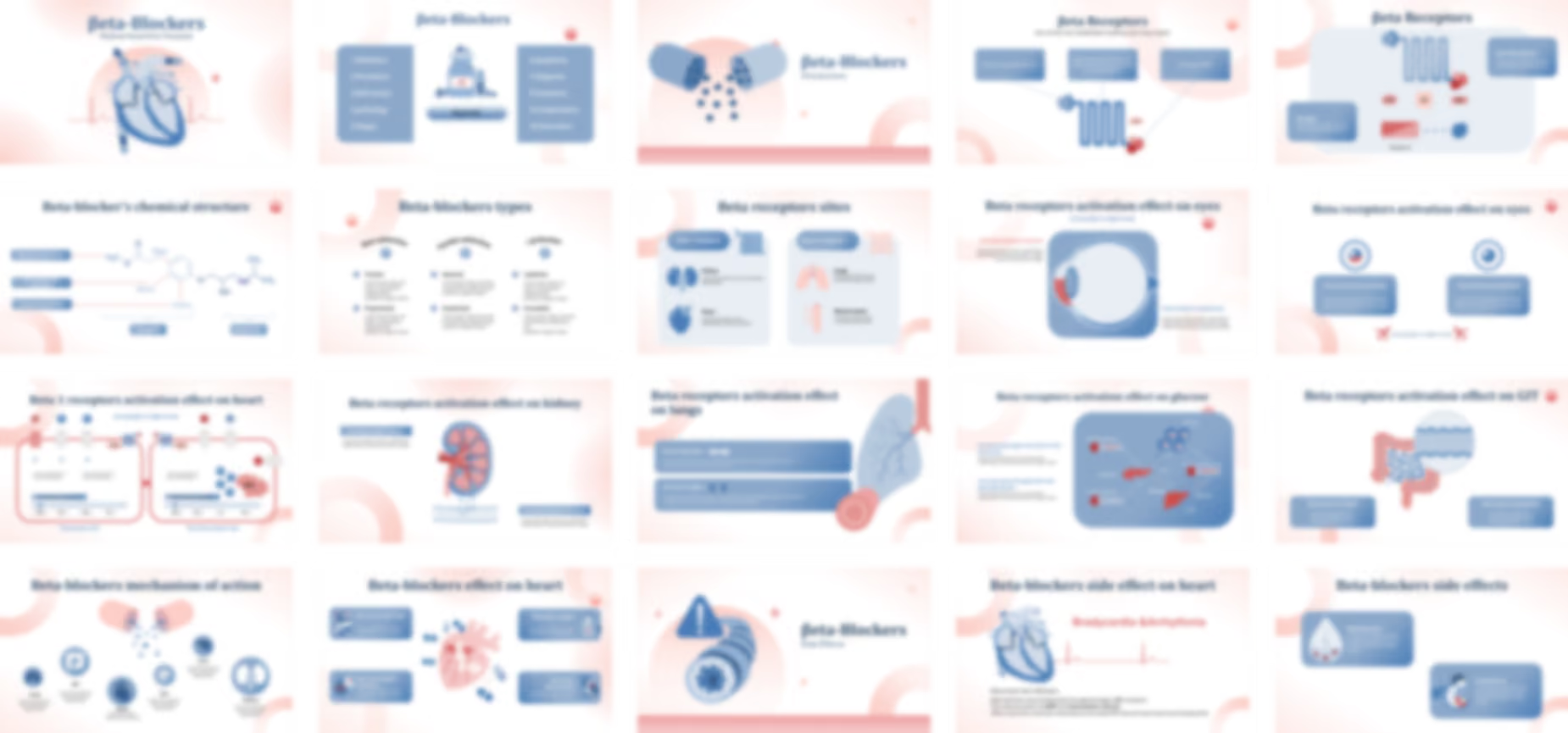
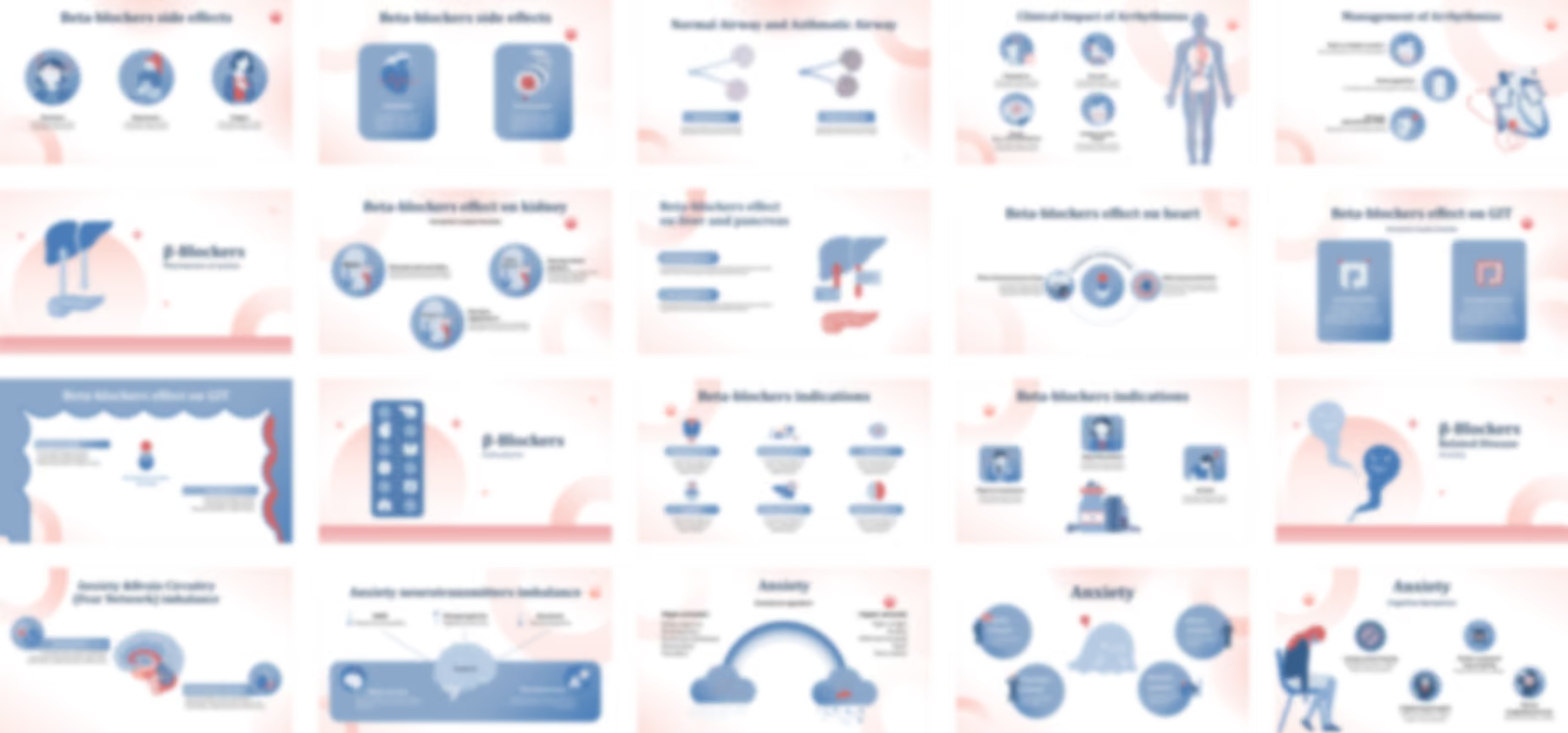
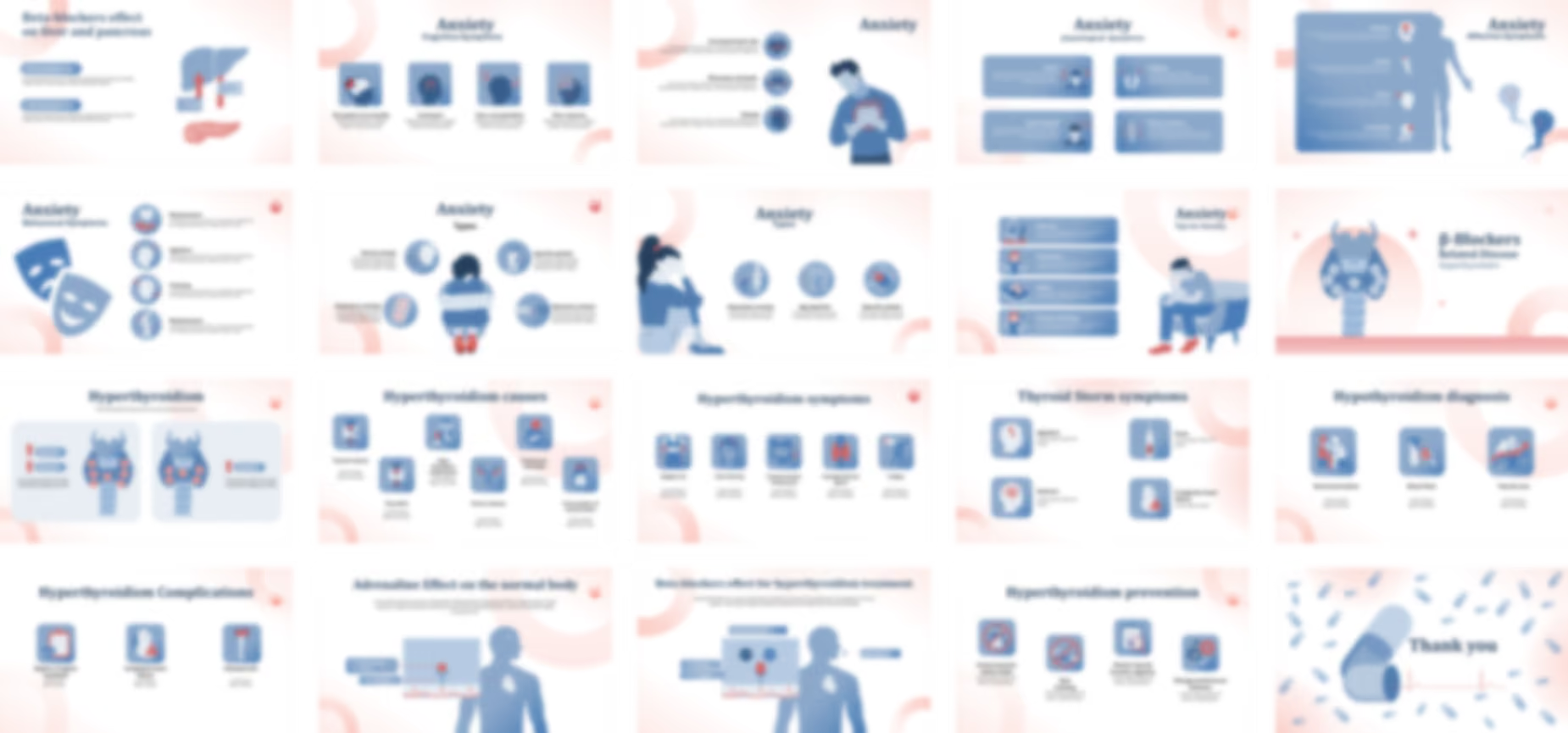
The Beta Blockers PowerPoint template opens with cover slides before defining beta receptors as G protein coupled adrenergic receptors bound by epinephrine and norepinephrine, distinguishing beta 1 receptors in the heart and kidney from beta 2 receptors in the lungs and blood vessels. Further slides classify beta blockers into three generations, first generation timolol and propranolol, second generation atenolol and acebutolol, and third generation labetalol and carvedilol, along with their respective brand names.
Animated illustrations trace beta receptor activation during the fight or flight response across the eyes, heart, lungs, kidneys, and glucose metabolism, detailing how pacemaker and non-pacemaker heart cells generate and propagate the action potential that drives contraction. Establishing this activation pathway first gives educators a shared reference point before the template turns to how beta blockers reverse these effects.
Animated illustrations show how blocking beta receptors decreases aqueous humor and heart rate, reduces contractility and blood pressure, lowers renin and blood glucose, and decreases gastrointestinal motility and secretions, in this editable medical presentation template.
Medical illustrations cover indications including tachycardia, hypertension, myocardial infarction, congestive heart failure, hyperthyroidism, essential tremors, glaucoma, anxiety, and migraine prophylaxis. The template closes with medical icons for side effects such as bradycardia, bronchospasm, depression, and hypotension, rounding out a set of customizable icons for cardiovascular pharmacology education.
Ready To Transform Your Presentation ?
Pay once, use forever