Breast Cancer PowerPoint Template






Template Preview
Designed for healthcare professionals creating clear and structured medical presentations.
Ideal for doctors, medical educators, and pharmaceutical teams preparing lectures, clinical education, product presentations, and training.
Fully editable in PowerPoint, allowing you to customize diagrams, charts, and slide layouts with your own medical content
Ready-to-use presentation structure that saves time and helps you build professional healthcare presentations quickly.
Fully Animated
Built-in animations help you present medical information clearly and make complex concepts easier to understand.
Editable Colors and Shapes
Editable colors and shapes help you easily customize the slides to match your content and presentation style, just drag and drop your content.
Professional medical layouts
Professional medical layouts help you organize clinical information, medical data, and treatment insights in a clear and structured way.

Created by Medical Professionals
This template prioritizes medical accuracy, clarity, and real-world usability. Each slide is designed with a medical audience in mind, helping you present clinical information, data, and treatment insights in a way that is structured, credible, and easy for healthcare professionals to understand.
Medical Training for Pharmaceutical & Life Sciences Companies
Oncology-focused pharmaceutical companies can build foundational breast cancer training around the template's animated cell-growth and metastasis illustrations. Sales representatives study the receptor biology, estrogen, progesterone, and HER2/neu, and the systemic therapy overview before they are cleared to hold promotional conversations with oncologists and breast surgeons about where a given therapy fits. The template's staging and treatment-pathway content, covering surgery, radiation, and systemic therapy, gives trainers a scientifically grounded baseline without needing a clinical illustrator on staff. New hires build disease fluency faster, with a consistent foundation before product-specific detailing begins.

Medical Congress & Scientific Conference Presentations
Oncologists, breast surgeons, and academic Key Opinion Leaders preparing a congress session on breast cancer can start from the template's animated pathology sequence tracing normal duct cells through hyperplasia to invasive carcinoma. A medical professor lecturing on receptor-driven therapy can adapt the monoclonal antibody and hormonal therapy mechanism slides instead of assembling treatment pathway diagrams from separate sources. The epidemiology infographic and self-examination visuals give a clinical case presentation supporting context before the discussion moves to management. The result is an editable, congress-ready narrative that leaves room for the presenter's own imaging and outcomes data.

Pharmaceutical Product & Medical Affairs Presentations
Medical Affairs teams supporting an oncology portfolio can adapt the template's receptor biology and systemic therapy slides to position where a targeted or hormonal therapy fits within breast cancer management. Medical Science Liaisons use the resulting materials in scientific exchange with oncologists and breast surgeons, referencing the same staging and pathology content those clinicians already recognize. Because the treatment content covers surgery, systemic therapy, and radiation separately, Medical Affairs can adjust emphasis for a specific therapy class without commissioning new illustrations. Medical Affairs keeps full control over promotional review, while the template supplies an already-accurate scientific foundation to review against.

eLearning & SCORM Training Modules
Oncology nurse educators can customize the Breast Cancer template with their own institutional protocols and patient case examples, then optionally convert the finished presentation into a SCORM-compliant module for nursing staff or patient educators on an LMS. The base template isn't presentation-ready or a finished course until that customization happens. The epidemiology, pathology, staging, and treatment content is already sequenced for teaching, so a customized version reaches certification-ready SCORM status faster than building a course from unstructured source material. For programs with different needs, the RxSlides team can also adjust the template's scope, depth, or branding, or design a fully custom oncology presentation from scratch when nothing existing fits.
Medical & Healthcare Education
An oncology unit's teaching plan can lean on the template's breast anatomy and cell-growth illustrations to walk students through malignant transformation before introducing staging, without a faculty member rebuilding the visuals each term. Public health educators preparing Breast Cancer Awareness Month sessions can simplify the same risk-factor and self-examination infographics for a community audience. Patient educators and oncology nurses adapting the material for caregiver-facing sessions can lean on the treatment-pathway visuals while keeping the underlying biology accurate. Students and community members alike leave with a clearer picture of how breast cancer is detected, classified, and treated.
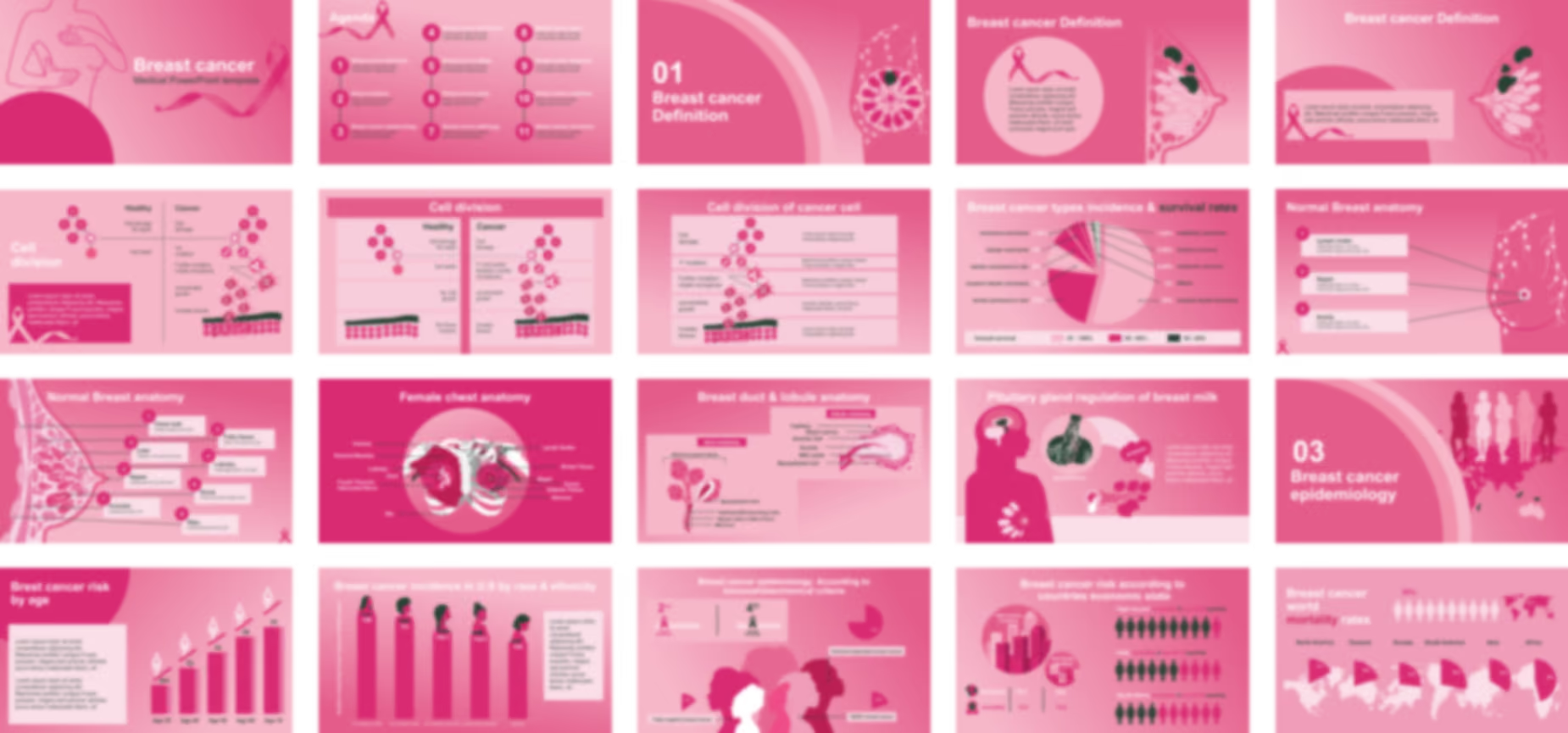
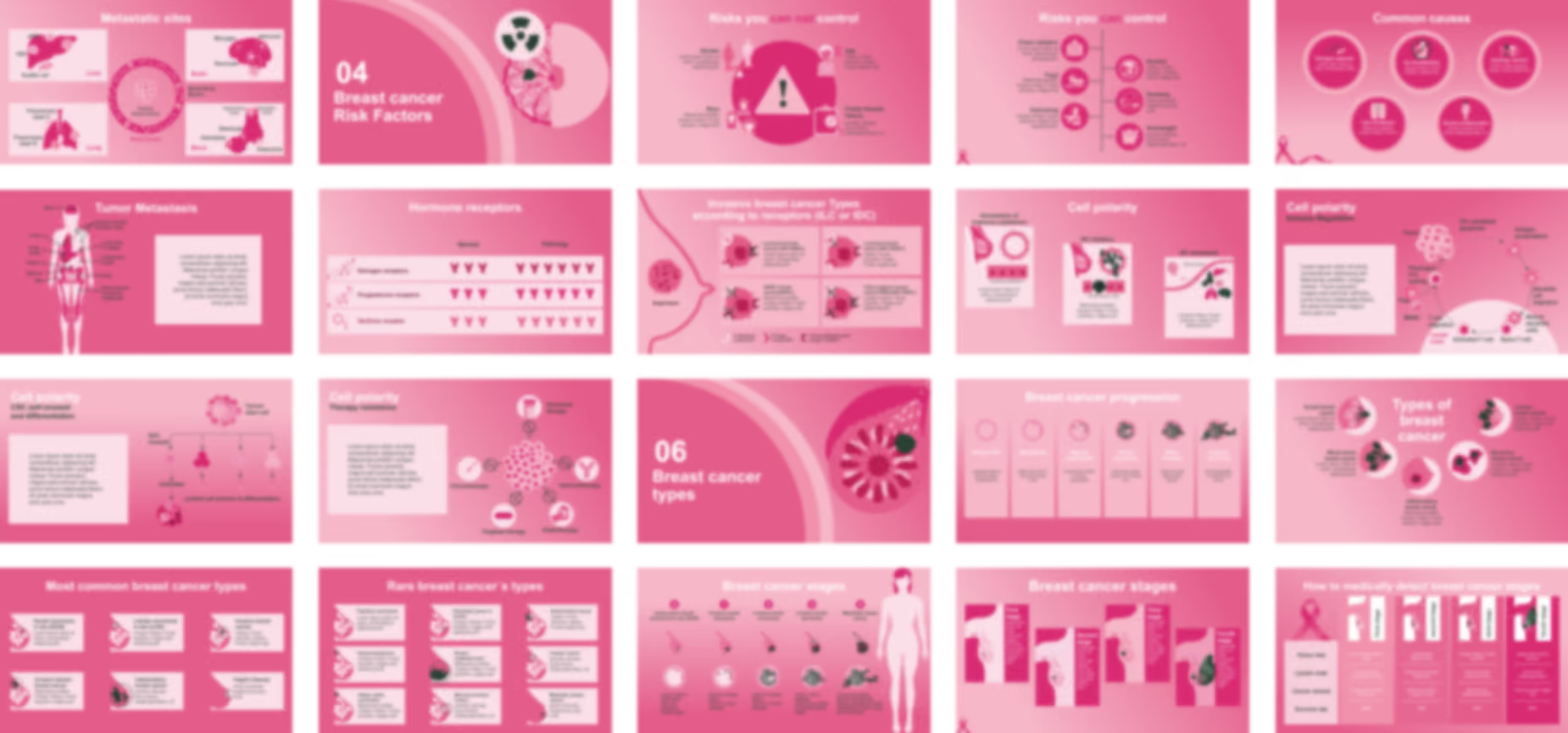
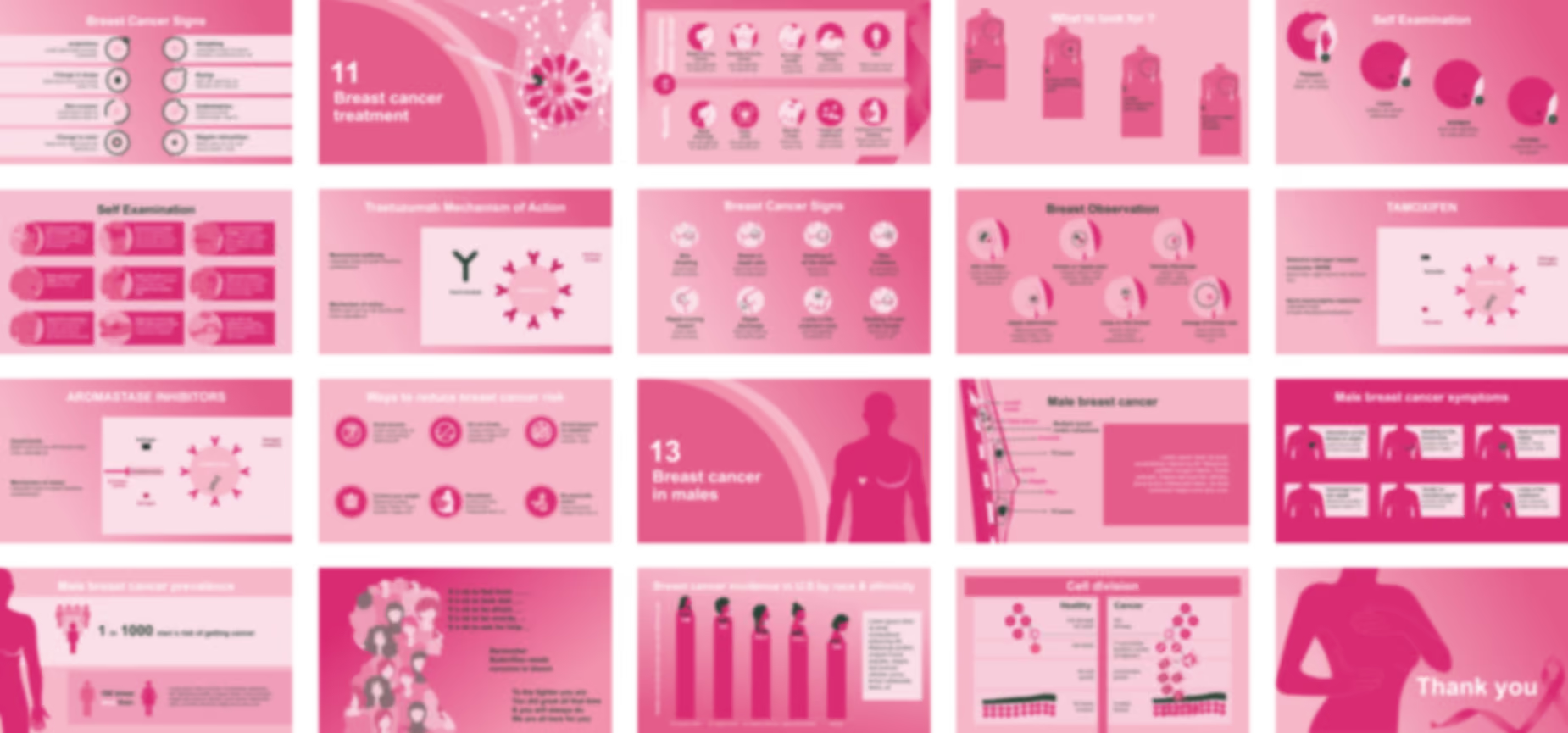
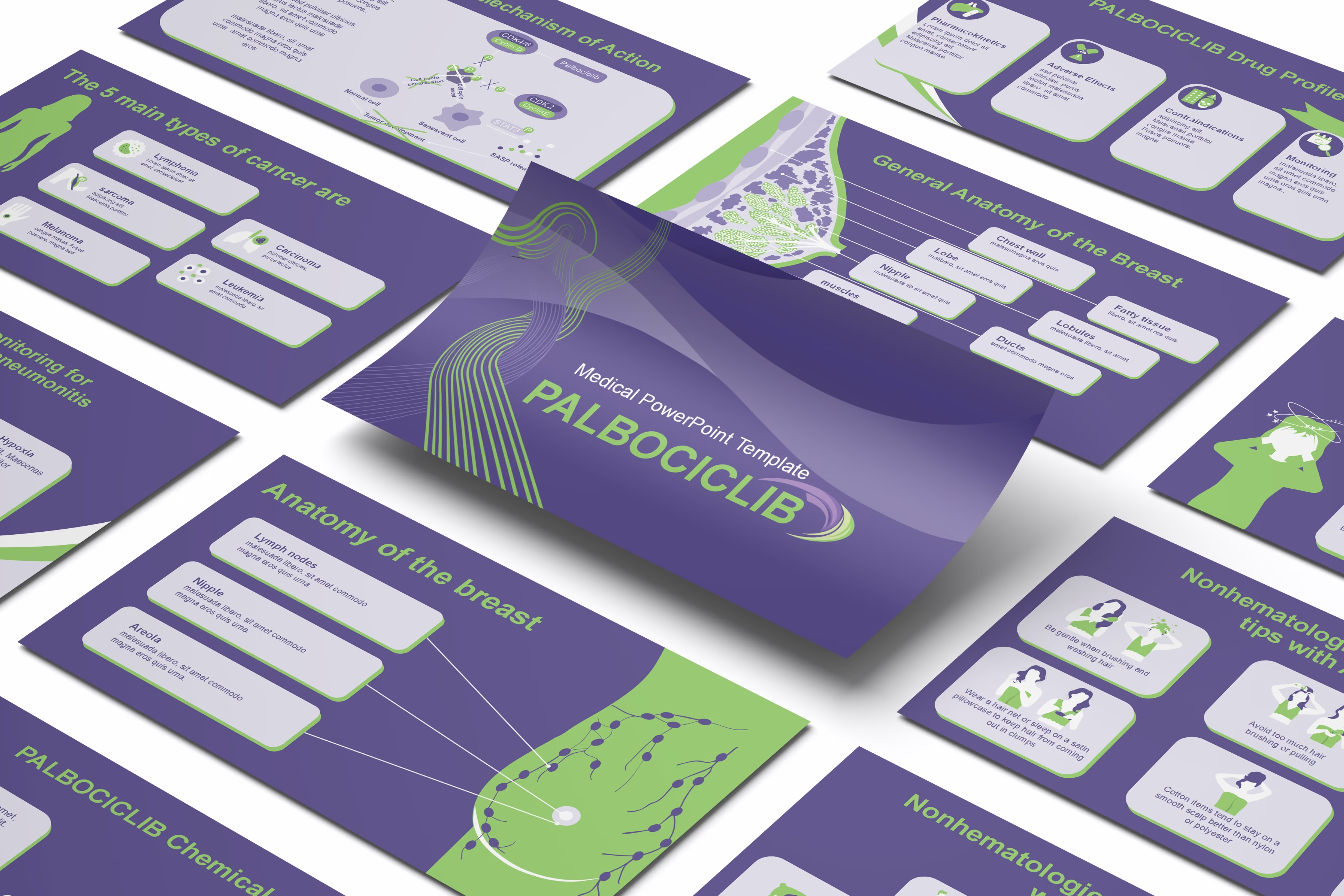
The Breast Cancer PowerPoint template opens with cover slides featuring the pink awareness ribbon and an editable table of contents before animated illustrations detail breast anatomy, including the lymph nodes, ribs, adipose tissue, ducts, areola, and lobules. A further slide illustrates breast cancer as a disease in which cells grow out of control, establishing this cellular picture before the presentation moves into prevalence data.
An animated infographic visualizes epidemiology on global and local levels across genders and ages, with each figure editable for a specific dataset, before customizable medical icons cover risk factors including age, gender, family history, and personal history. Illustrated slides then present symptoms such as nipple or breast skin changes, swelling, pain, and underarm lumps or swollen lymph nodes.
Animated medical illustrations explain the pathology behind overexpression of estrogen, progesterone, and HER2 neu receptors, along with metastasis to the lungs, bones, and liver. Establishing this cellular mechanism first gives the sequence a foundation before comparative illustrations contrast normal duct cells, hyperplasia, atypical hyperplasia, ductal carcinoma, and micro invasion across the disease's grades and stages.
The presentation template covers diagnostic methods before animated slides detail treatment options including radical mastectomy and breast conserving surgery, alongside the mechanisms of monoclonal antibodies such as trastuzumab, selective estrogen receptor modulators like tamoxifen, and aromatase inhibitors like anastrozole. A self examination slide closes the clinical content, followed by a dedicated set of editable medical illustrations and icons for customizing the presentation.
Ready To Transform Your Presentation ?
Pay once, use forever