Liver Cancer PowerPoint Template

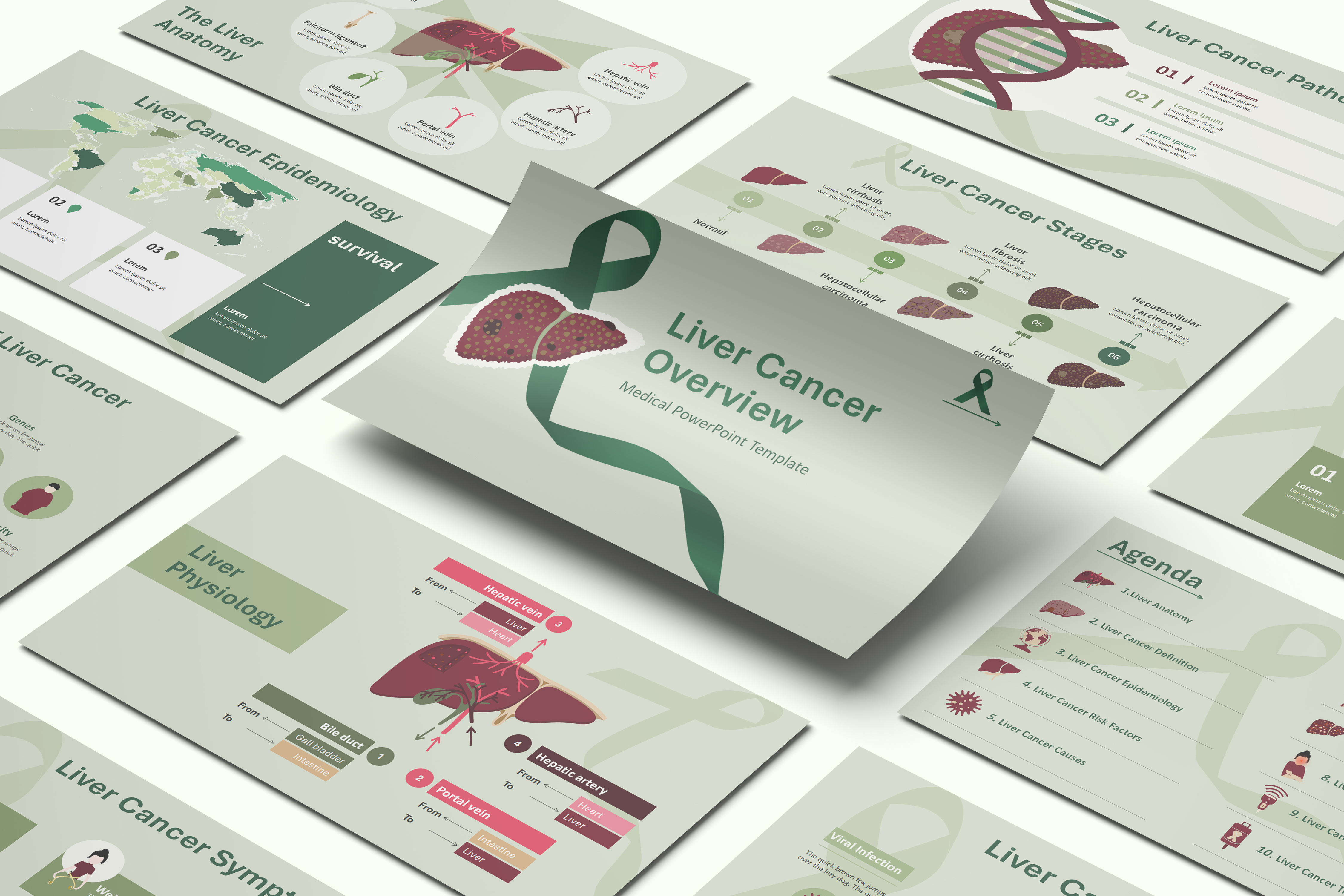




Template Preview
Designed for healthcare professionals creating clear and structured medical presentations.
Ideal for doctors, medical educators, and pharmaceutical teams preparing lectures, clinical education, product presentations, and training.
Fully editable in PowerPoint, allowing you to customize diagrams, charts, and slide layouts with your own medical content
Ready-to-use presentation structure that saves time and helps you build professional healthcare presentations quickly.
Fully Animated
Built-in animations help you present medical information clearly and make complex concepts easier to understand.
Editable Colors and Shapes
Editable colors and shapes help you easily customize the slides to match your content and presentation style, just drag and drop your content.
Professional medical layouts
Professional medical layouts help you organize clinical information, medical data, and treatment insights in a clear and structured way.

Created by Medical Professionals
This template prioritizes medical accuracy, clarity, and real-world usability. Each slide is designed with a medical audience in mind, helping you present clinical information, data, and treatment insights in a way that is structured, credible, and easy for healthcare professionals to understand.
Medical Training for Pharmaceutical & Life Sciences Companies
Oncology and hepatology sales teams can build Liver Cancer onboarding around the template's labeled hepatic anatomy, covering the portal vein, hepatic artery, and bile ducts, before a single therapy conversation begins. Representatives study the fibrosis-to-cirrhosis-to-carcinoma progression and the primary-versus-secondary classification, alongside the surgery, chemotherapy, radiotherapy, and targeted-therapy treatment overview, before they are cleared to discuss a product with oncologists and hepatologists. The risk-factor content, covering viral hepatitis, fatty liver disease, and alcohol use, gives trainers a complete etiology-to-treatment foundation without commissioning new hepatic artwork. New hires reach the field able to place a given therapy within the full arc from cirrhosis to advanced-stage management.

Medical Congress & Scientific Conference Presentations
Oncologists and hepatology Key Opinion Leaders preparing a liver cancer congress session can start from the template's animated cellular-transformation sequence, tracing neoplastic migration into the bloodstream, instead of assembling pathogenesis illustrations from separate sources. A medical professor lecturing on classification can adapt the primary-versus-secondary comparison slides to walk through the diagnostic distinction in sequence. The epidemiology-and-survival data slide gives a clinical case presentation a structured path from incidence to prognosis. Presenters build their talk around the existing progression, adding their own imaging or outcomes data without redrawing a single diagram.

Pharmaceutical Product & Medical Affairs Presentations
Medical Affairs teams supporting an oncology or hepatology portfolio can adapt the template's staging and treatment slides to position a therapy within liver cancer management, from surveillance through surgical, locoregional, or systemic therapy. Medical Science Liaisons carry the resulting materials into scientific exchange with oncologists and hepatologists, referencing the same fibrosis-to-cirrhosis staging those clinicians already use to guide treatment decisions. Because the viral, metabolic, and alcohol-related risk-factor content is organized separately, Medical Affairs can shift emphasis toward a specific etiology without commissioning new illustrations. The template supplies the scientific foundation; each company still applies its own medical and compliance review before the materials reach the field.
eLearning & SCORM Training Modules
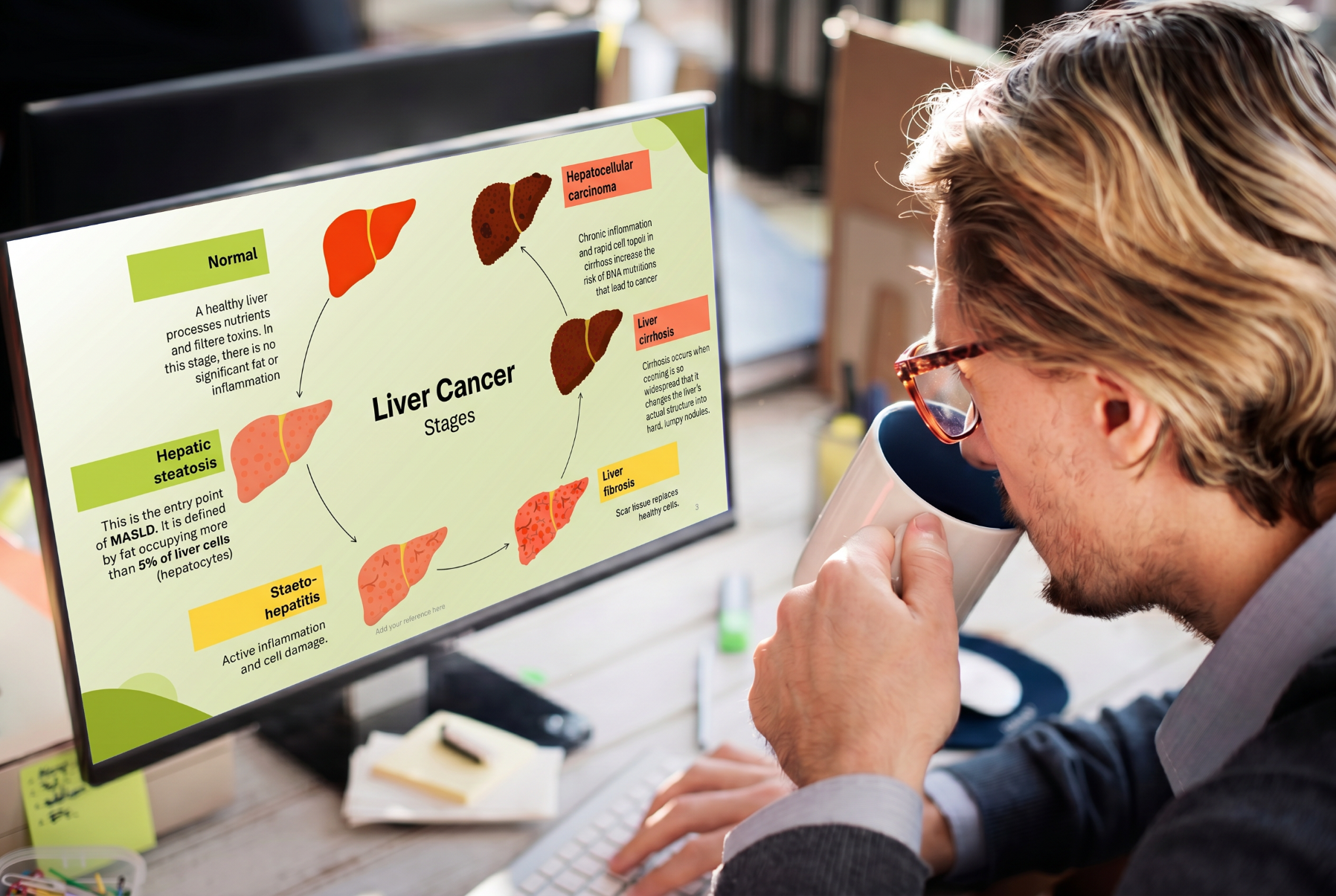
Oncology and hepatology nurse educators can customize the Liver Cancer template with their own institutional staging protocols, then optionally convert the finished presentation into a SCORM-compliant module for nursing staff or GI fellows on an LMS. Out of the box, the 40-plus-slide template is a comprehensive reference set rather than a paced course. Because the anatomy, epidemiology, pathogenesis, staging, and treatment content already builds in a clinical progression, a customized version reaches certification-ready SCORM status without restructuring the underlying sequence. For programs with different needs, the RxSlides team can also adjust scope, depth, or branding, or design a fully custom oncology presentation from scratch.
Medical & Healthcare Education
Oncology and hepatology faculty teaching liver malignancy can use the template's labeled hepatic anatomy to establish normal structure and function before introducing pathology, instead of assembling reference diagrams from multiple sources. Continuing education providers preparing CME on hepatocellular carcinoma benefit from the same fibrosis-to-cirrhosis staging content, instead of rebuilding a progression slide for every course. Editable risk-factor and prevention slides let an instructor adjust emphasis for an oncology, hepatology, or public-health audience. Students leave with a structured understanding of how liver cancer develops from chronic liver disease to advanced malignancy.
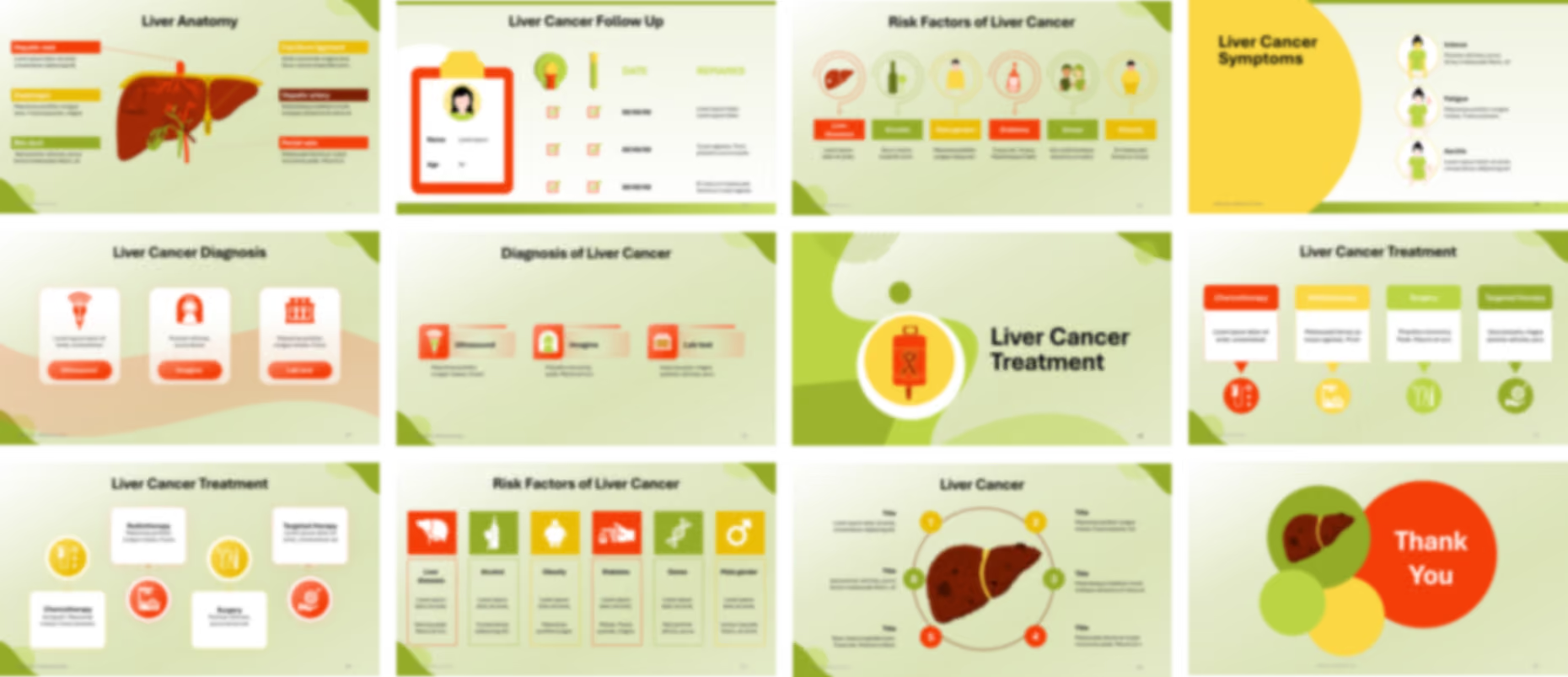
The Liver Cancer PowerPoint template opens with three title slide options and an agenda before labeled diagrams identify key hepatic structures, including the portal vein, hepatic artery, bile ducts, and falciform ligament. An infographic then summarizes liver physiology, covering metabolism, detoxification, synthesis, and bile secretion, before a definition slide distinguishes primary hepatic malignancies from secondary metastatic lesions.
A data driven slide with editable maps summarizes global and regional incidence, prevalence, and survival rates before the template details risk factors such as liver disease, obesity, alcohol use, and genetic predisposition. Establishing this risk profile first gives educators a shared reference point before an infographic covers causes including viral infections, fatty liver, alcohol, and certain medications.
Animated visuals illustrate cellular transformation and neoplastic migration into the bloodstream before a timeline layout tracks diseased tissue progression across the liver. Symmetrical illustrations then compare primary and secondary liver cancer, and further slides stage the disease from fibrosis through cirrhosis to hepatocellular carcinoma.
Animated illustrations highlight symptoms such as abdominal pain, weight loss, fatigue, ascites, and jaundice before the template outlines a diagnostic workflow spanning ultrasound, CT or MRI imaging, and laboratory confirmation. The presentation template closes with editable treatment tables covering surgery, chemotherapy, radiotherapy, and targeted therapy, plus a structured follow up table for tracking clinical status over time.
Ready To Transform Your Presentation ?
Pay once, use forever