Psoriasis PowerPoint Template





Template Preview
Designed for healthcare professionals creating clear and structured medical presentations.
Ideal for doctors, medical educators, and pharmaceutical teams preparing lectures, clinical education, product presentations, and training.
Fully editable in PowerPoint, allowing you to customize diagrams, charts, and slide layouts with your own medical content
Ready-to-use presentation structure that saves time and helps you build professional healthcare presentations quickly.
Fully Animated
Built-in animations help you present medical information clearly and make complex concepts easier to understand.
Editable Colors and Shapes
Editable colors and shapes help you easily customize the slides to match your content and presentation style, just drag and drop your content.
Professional medical layouts
Professional medical layouts help you organize clinical information, medical data, and treatment insights in a clear and structured way.

Created by Medical Professionals
This template prioritizes medical accuracy, clarity, and real-world usability. Each slide is designed with a medical audience in mind, helping you present clinical information, data, and treatment insights in a way that is structured, credible, and easy for healthcare professionals to understand.
Medical Training for Pharmaceutical & Life Sciences Companies
Dermatology and immunology training teams onboarding new sales reps can structure introductory sessions around this 50-plus-slide Psoriasis template's skin-anatomy foundation, epidermis, dermis, and subcutaneous tissue, before moving into the disease-specific immune-mediated mechanism. New hires get a visual reference for the six-type classification, plaque, nail, guttate, inverse, pustular, and erythrodermic, alongside the five-cause framework spanning infection through genetics. The four-modality treatment content, topical treatments, lifestyle changes, systemic medications, and UVB phototherapy, gives trainees a structured reference for how management escalates by severity. New reps finish training able to connect the T-cell-driven pathogenesis to why psoriasis produces scaly, flaky patches specifically.
Medical Congress & Scientific Conference Presentations
Dermatologists and rheumatologists preparing a conference session can build around this Psoriasis template's T-cell-activation animation, tracing immune overactivation through white blood cell infiltration to accelerated skin cell growth, rather than assembling immune-pathway diagrams independently. The six-type comparative content gives a speaker a ready framework for a differential-presentation discussion. A Key Opinion Leader presenting at a dermatology conference can pair the existing epidemiology content, including gender-based prevalence differences, with their own institutional case data. The complication content, psoriatic arthritis, cardiovascular disease, and kidney disorders, keeps the discussion clinically current for a specialist audience.
Pharmaceutical Product & Medical Affairs Presentations
Medical Affairs teams supporting a systemic therapy, biologic, or broader dermatology portfolio can use this Psoriasis presentation as disease-state groundwork for scientific exchange, covering the immune-mediated pathogenesis and six-type classification before any product-specific data enters the conversation. Medical Science Liaisons can reference the complication content when a scientific exchange conversation calls for context on why psoriasis carries systemic, not just cutaneous, risk. Immune-mediated disease biology, not a product message, is the substance here, and Medical Affairs still routes it through the customer's own medical and compliance team before any audience sees it. Dermatology and rheumatology teams gain a consistent scientific reference spanning cause, pathogenesis, diagnosis, and treatment.
eLearning & SCORM Training Modules
Dermatology residency programs and nursing schools building a psoriasis module can customize this template with their own case studies, then convert the finished presentation into a SCORM-compliant module for their learning management system when self-paced study fits the curriculum better. The T-cell-activation and pathogenesis animations translate naturally into interactive checkpoints within a broader dermatology course. When a program needs a narrower scope, such as the six-type classification content alone or a version tailored for nursing versus physician learners, the RxSlides team can adjust the template's coverage and branding. When the catalog doesn't already fit, the RxSlides team can build a presentation completely from scratch to meet the training objective.
Medical & Healthcare Education
Medical and nursing faculty teaching dermatology can use this template's skin-anatomy slides to establish normal skin-cell turnover before introducing how immune-mediated overactivation accelerates it in psoriasis. The six-type classification gives students a clear structure for recognizing that psoriasis presents differently depending on subtype and location. The complication content connects classroom dermatology to the systemic health risks, cardiovascular disease and psoriatic arthritis among them, students will need to screen for. Students leave with a structured understanding of psoriasis spanning cause, pathogenesis, diagnosis, and treatment.
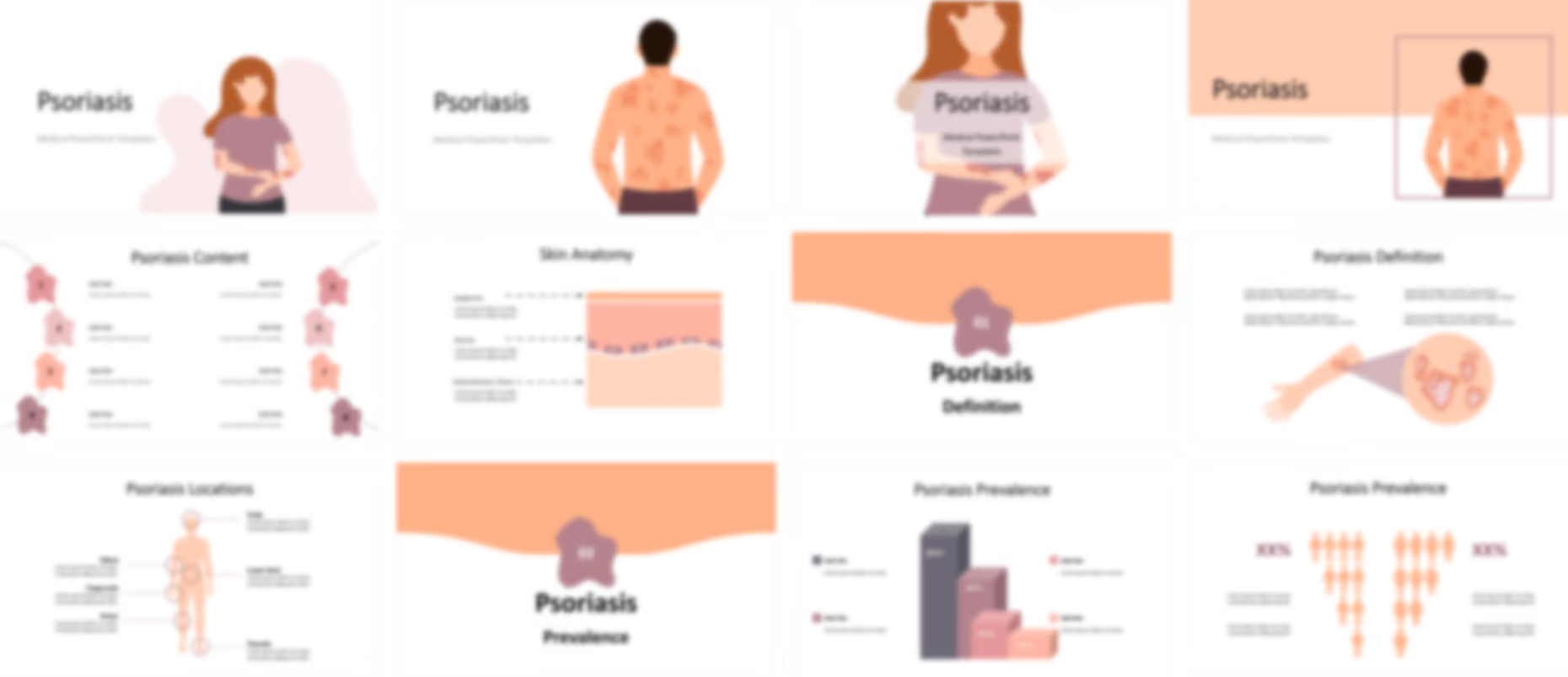

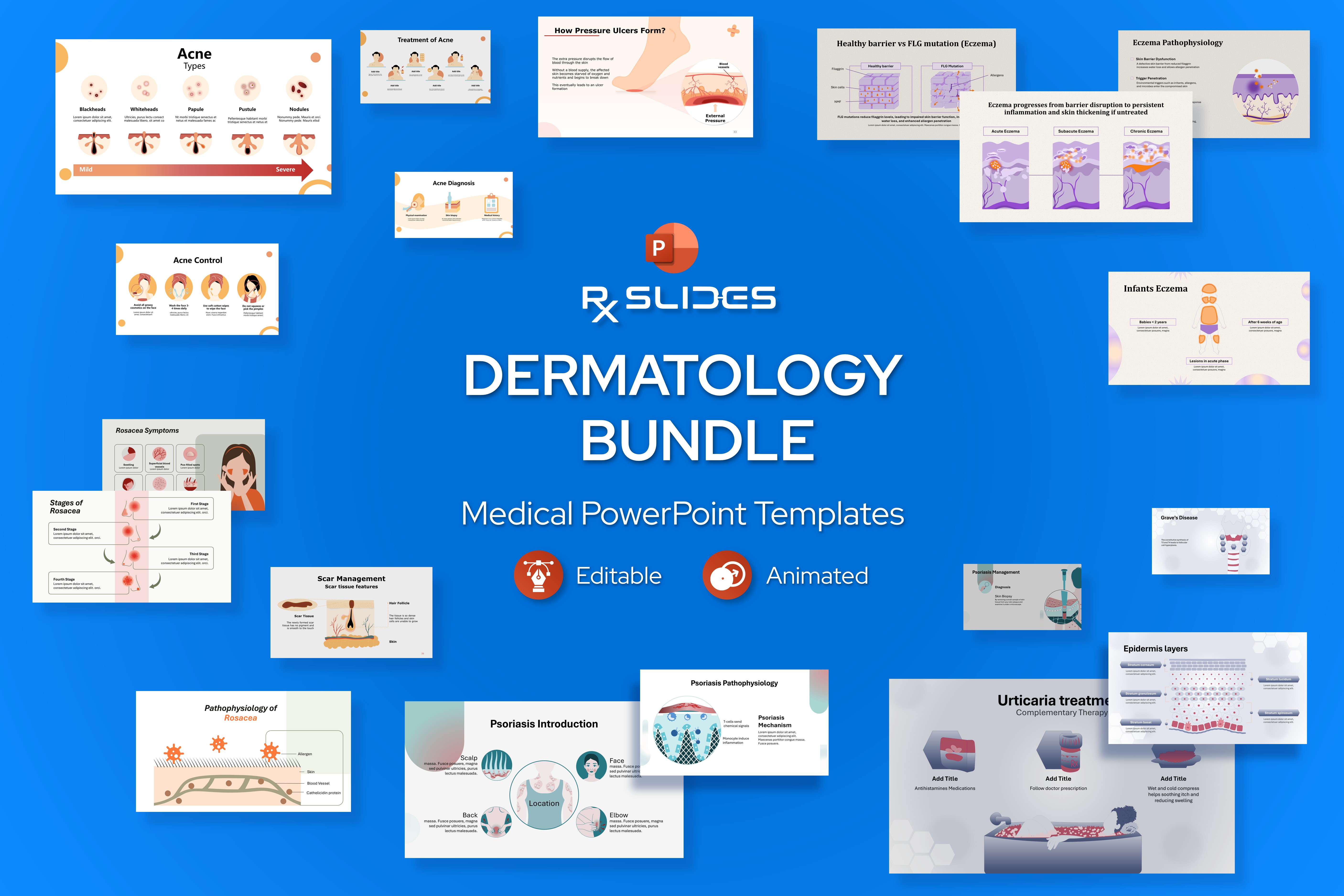
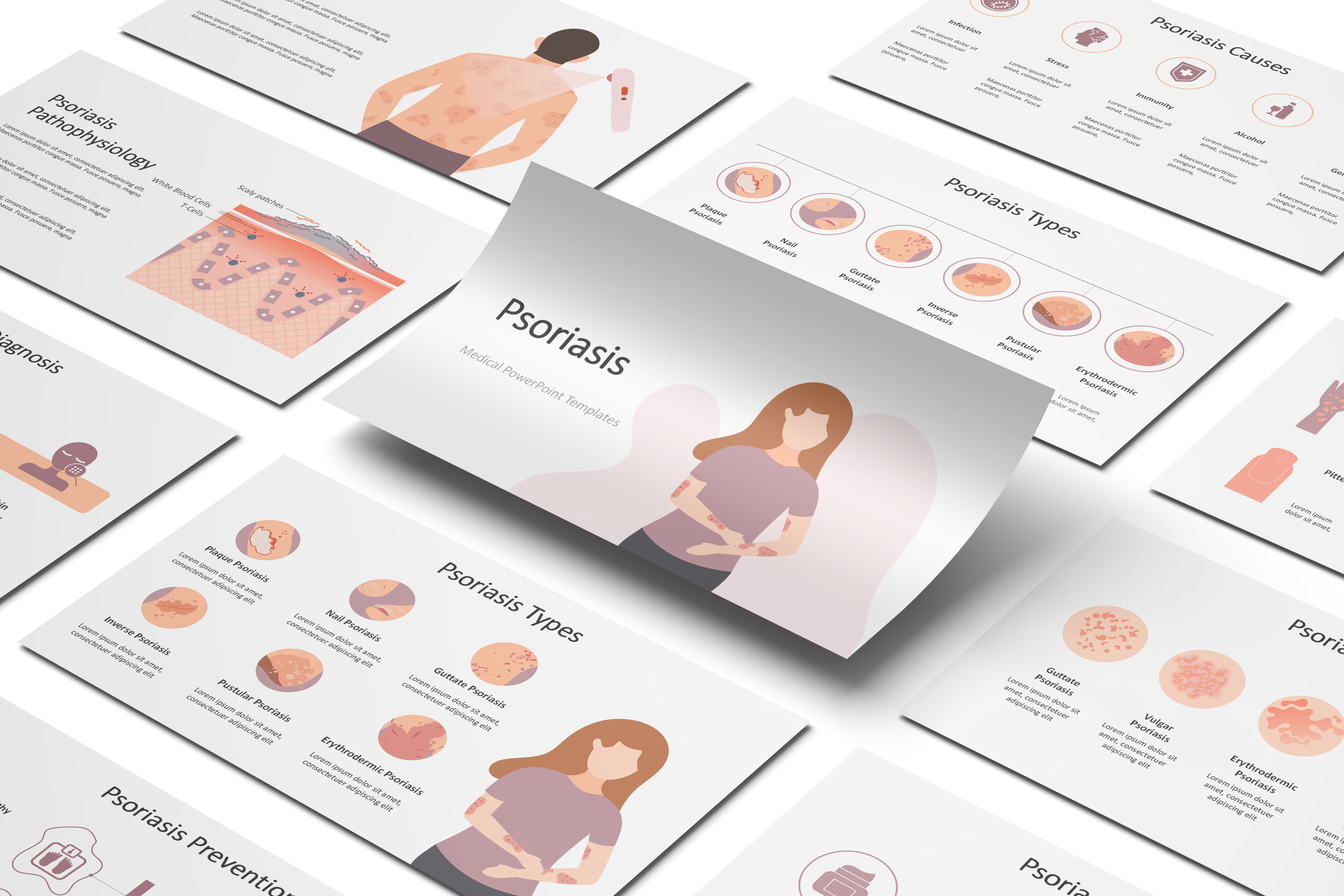
The Psoriasis PowerPoint template opens with cover slides before illustrations define the condition as an overactive immune response that causes abnormal skin cell production, mapping affected locations such as the scalp, elbows, and knees alongside the epidermis, dermis, and subcutaneous tissue. A prevalence infographic with adjustable percentages then visualizes differences in disease rates between genders.
Comparative illustrations distinguish plaque, nail, guttate, inverse, pustular, and erythrodermic psoriasis types, in this editable medical presentation template. Medical icons then cover causes including infection, stress, immunity, alcohol, and genetics.
An animated mechanism explains how T cells become overactivated and attack the skin, recruiting white blood cells that cause inflammation. Establishing this immune mechanism first gives educators a shared reference point before medical icons visualize symptoms including red skin, joint pain and swelling, pitted nails, and dry skin.
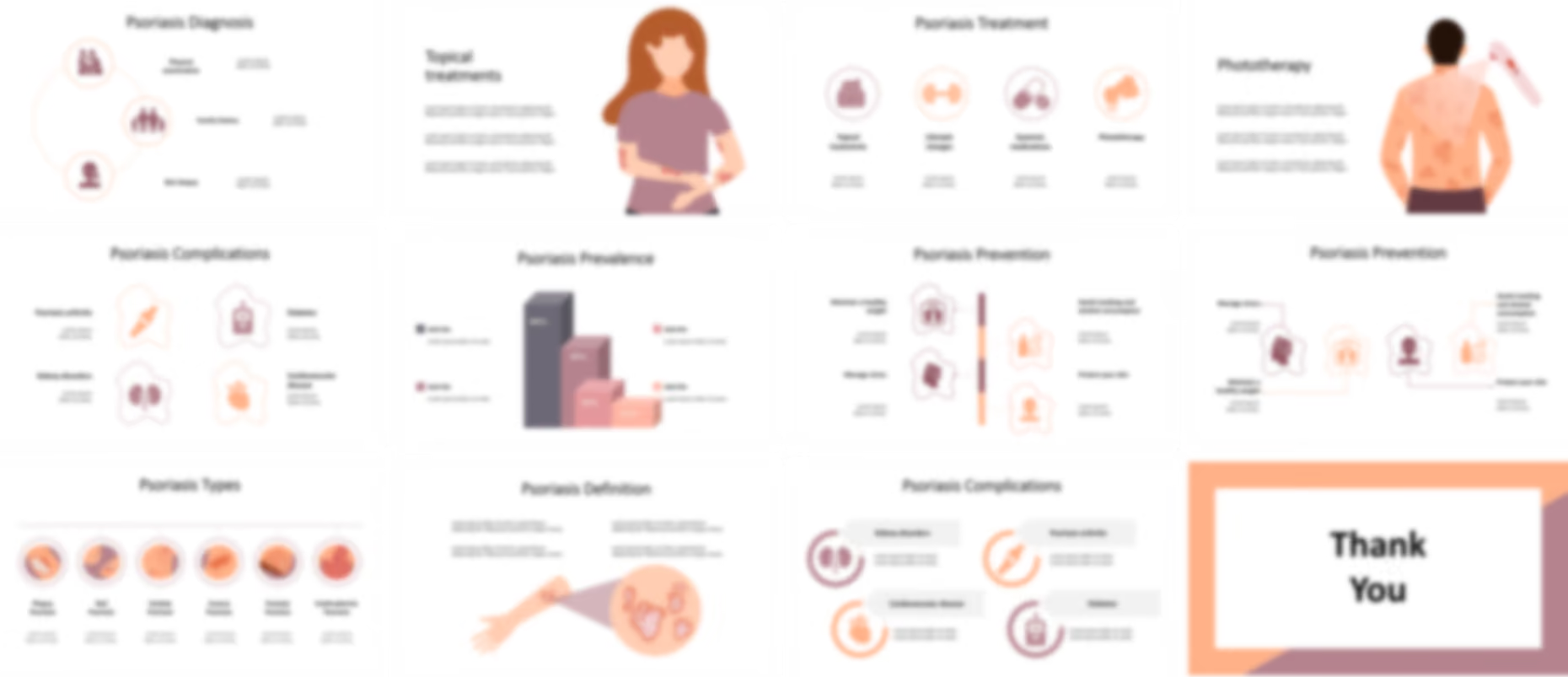
Medical illustrations present diagnostic methods including physical examination, family history, and skin biopsy, before treatment content covers topical treatments, systemic medications, and ultraviolet B phototherapy. The template closes with prevention icons covering stress management and skin protection, alongside complications such as psoriatic arthritis and cardiovascular disease, plus a set of customizable icons and illustrations for dermatology education.
Ready To Transform Your Presentation ?
Pay once, use forever