How to Present Epiglottitis in PowerPoint from Pathophysiology to Airway Management
Epiglottitis is a rapidly progressive, life-threatening infection of the epiglottis that can lead to acute airway obstruction. Early recognition and urgent intervention are critical. Epiglottitis PowerPoint Template translates anatomy, inflammatory pathophysiology, and clinical urgency into clear visual education suitable for healthcare professionals, students, and caregivers.
1. Anatomy and Function
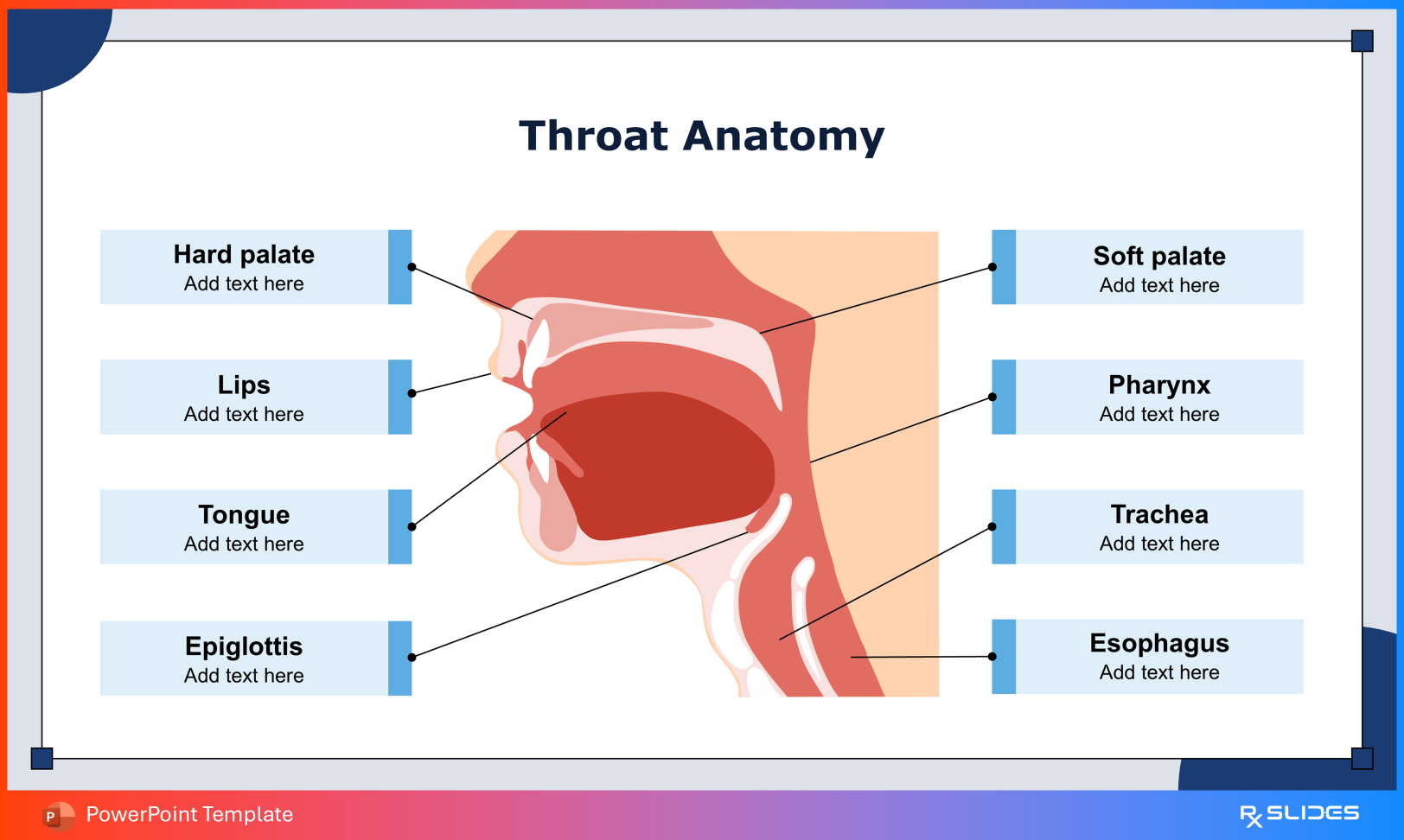
Begin with the Throat Anatomy slide to label the different parts of the throat, such as the hard and soft palate, lips, tongue, pharynx, trachea, and esophagus.
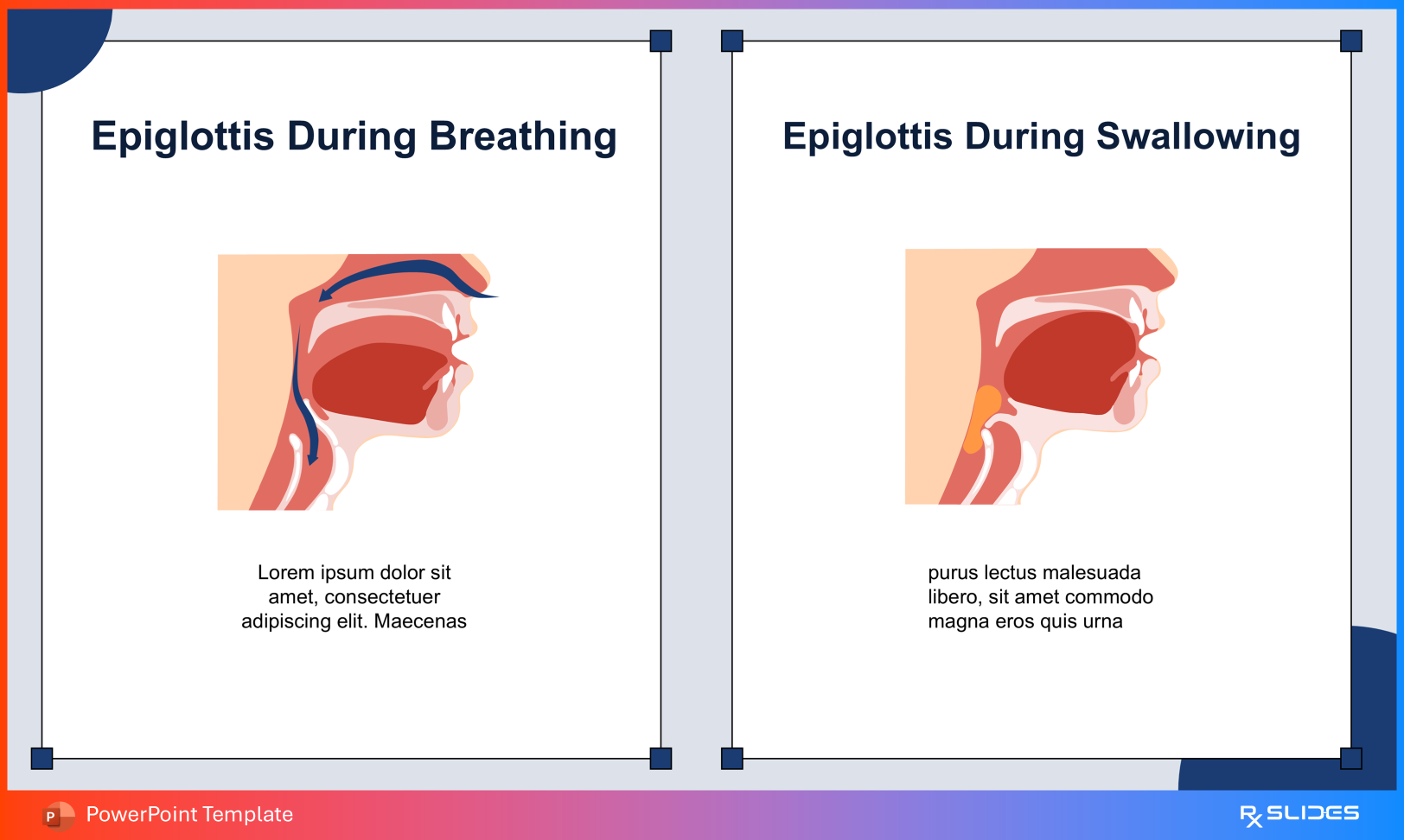
Use infographic Slides to demonstrate how the epiglottis covers the laryngeal inlet to prevent aspiration and reopens during breathing. Animated sequences illustrate its “trapdoor” function, establishing a baseline for understanding airway compromise.
These slides eliminate the need to create custom anatomy diagrams and allow educators to explain airway mechanics in seconds, ideal for foundational teaching, bedside education, and exam preparation.
2. Rapid Diagnosis: Recognizing Classic Signs
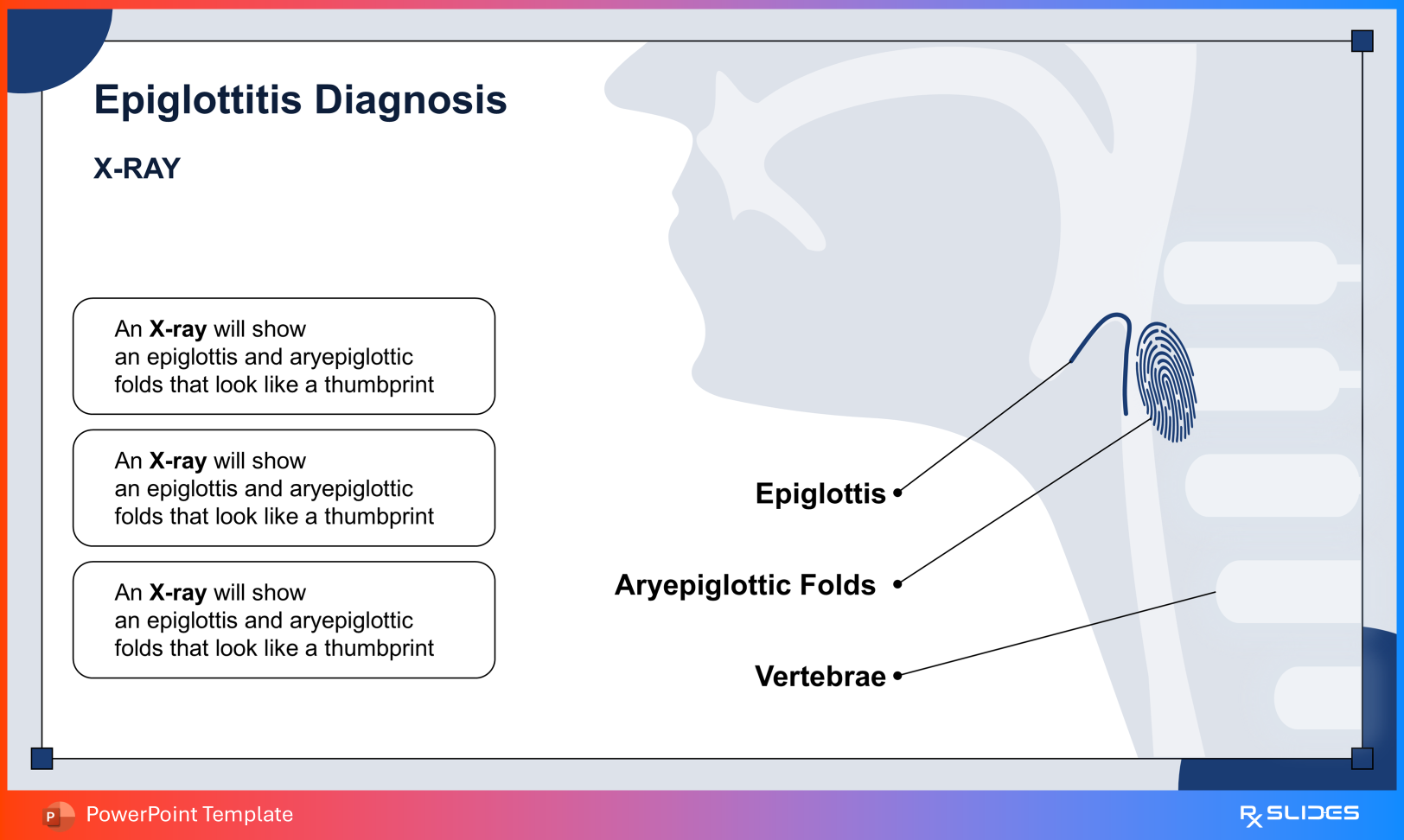
Radiographic slides highlight the classic lateral neck “thumbprint sign,” representing swelling of the epiglottis and aryepiglottic folds. Endoscopic visuals show the characteristic cherry-red, inflamed epiglottis, supporting learning for ENT trainees, emergency teams, and advanced medical students.
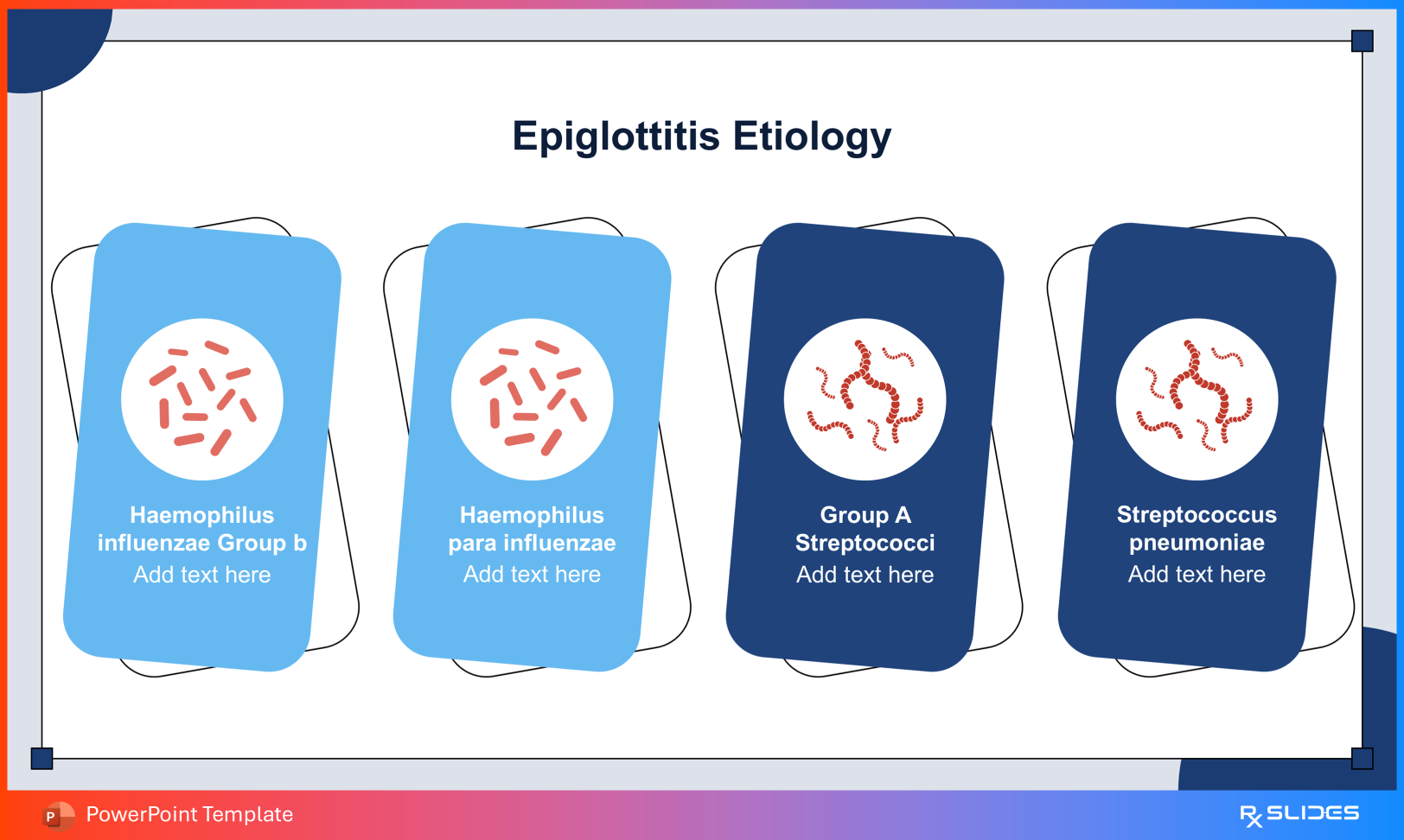
Slides outline causative organisms, primarily Haemophilus influenzae type b, with additional pathogens such as Streptococcus pneumoniae and Group A streptococci.
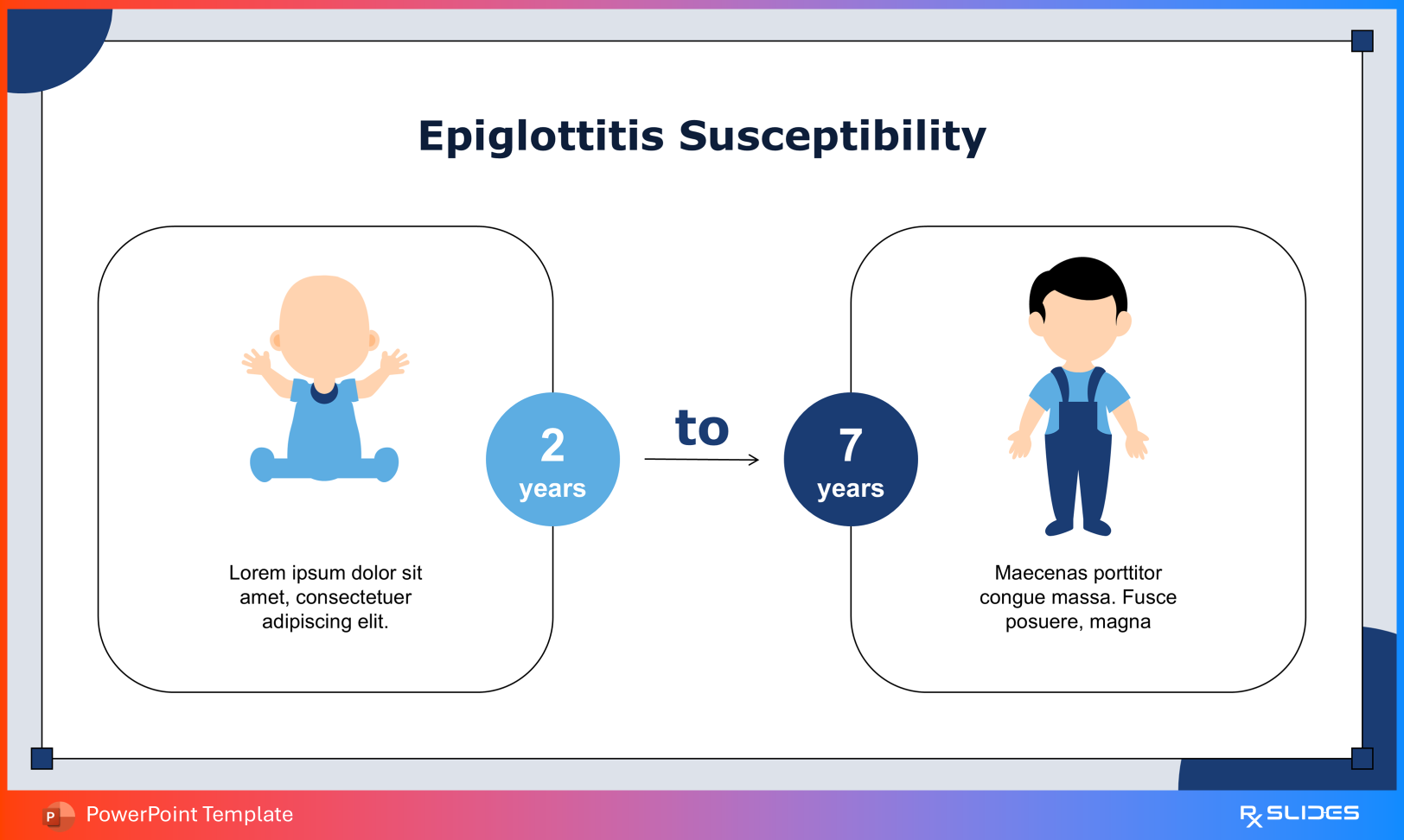
Transmission occurs via respiratory droplets or direct contact, with peak incidence historically observed in children aged 2–7 years.
5. Symptom Recognition
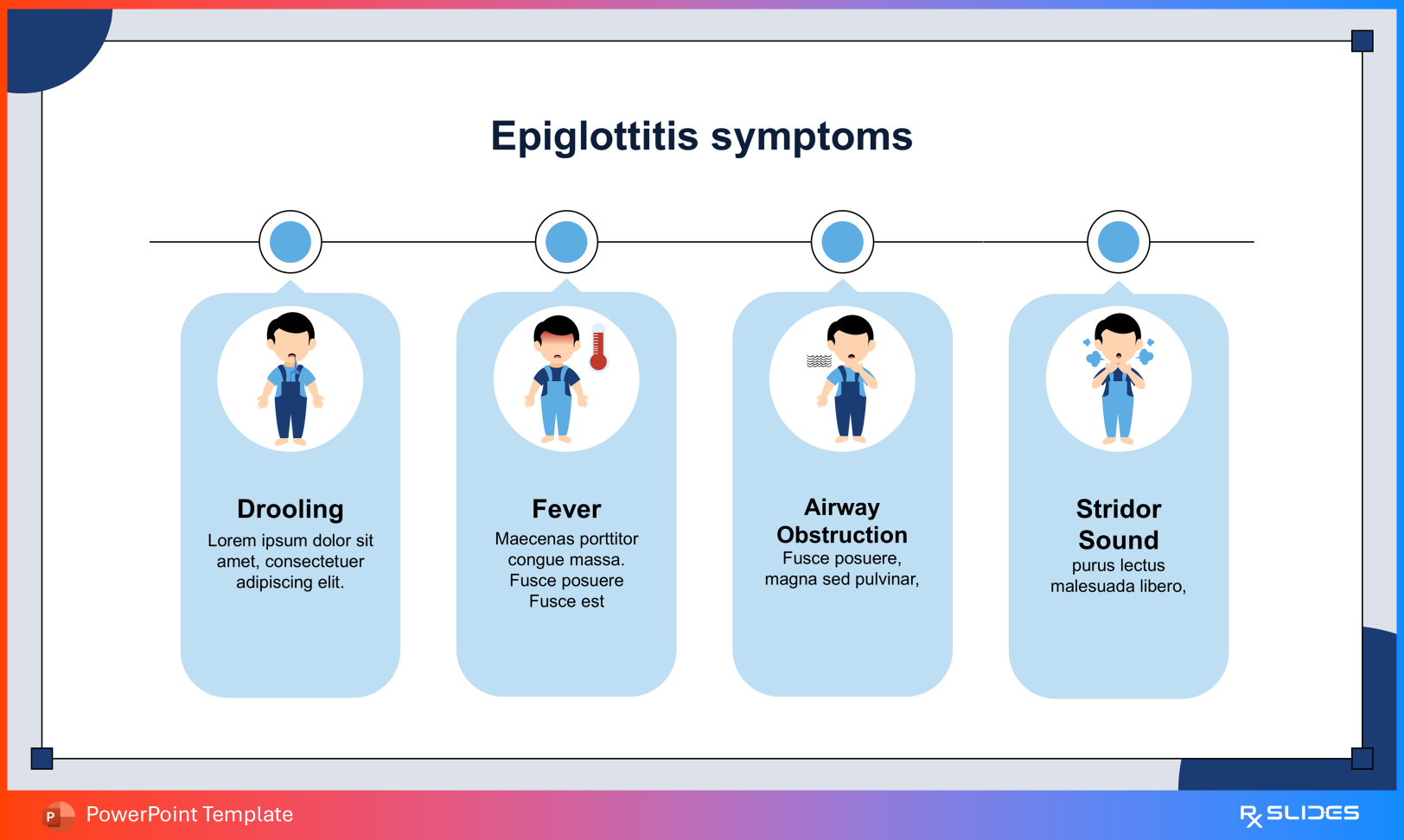
Visual checklists emphasize key clinical features: drooling, dysphagia, distress with stridor, and dangerous airway obstruction. These slides support rapid recognition by parents, primary care providers, and emergency staff.
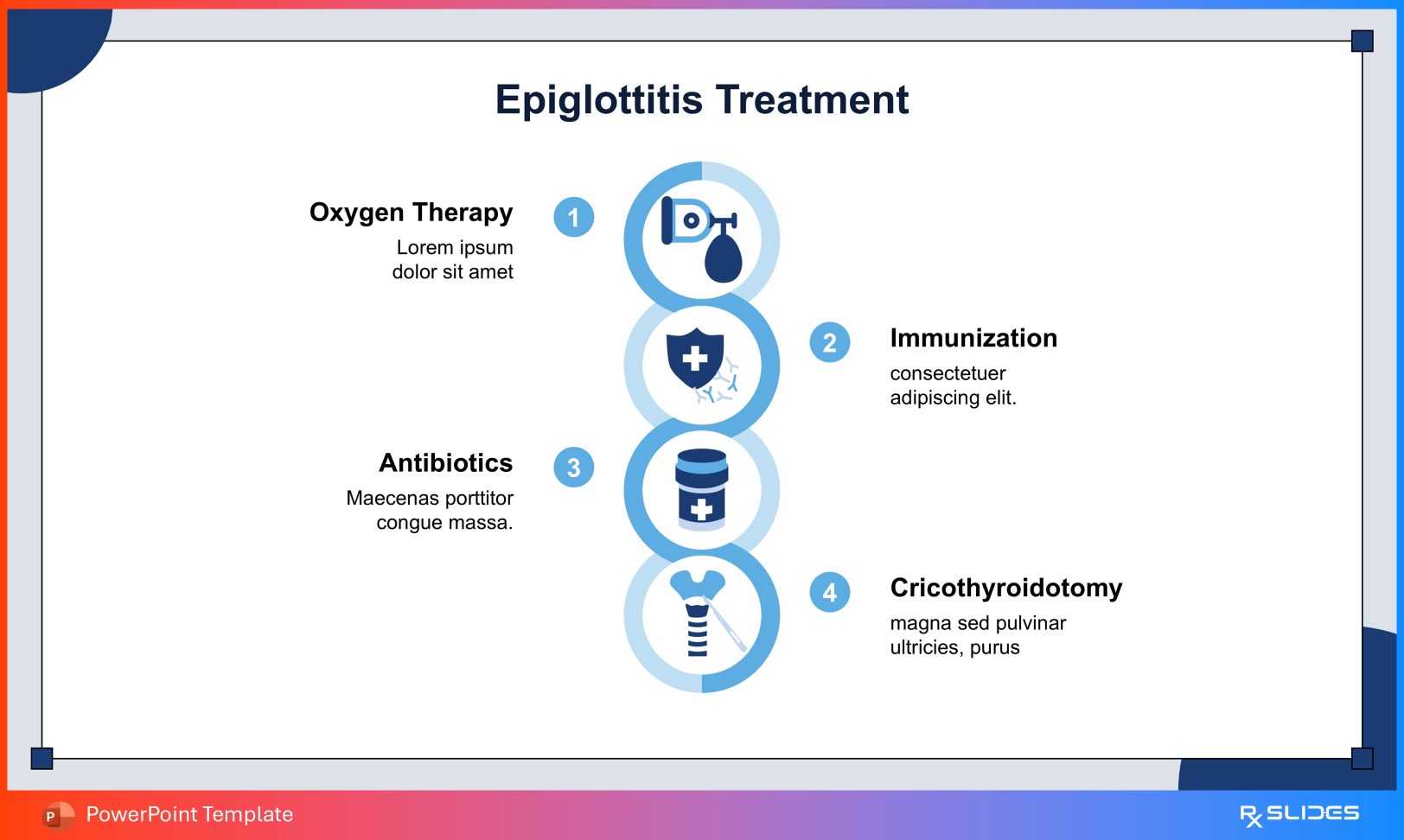
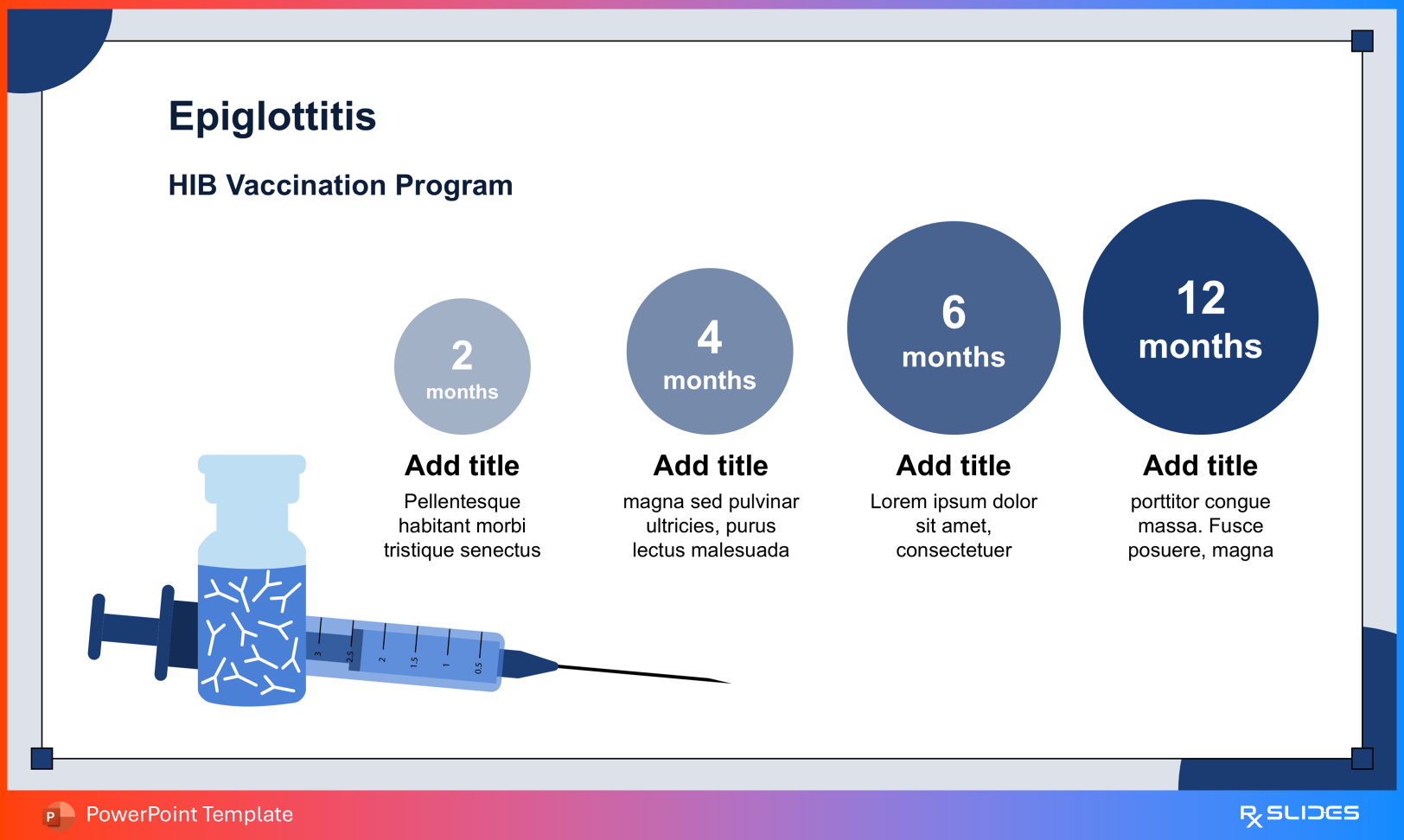
Emergency management focuses on airway stabilization, oxygen therapy, and intravenous antibiotics, with endotracheal intubation or cricothyrotomy reserved for severe obstruction. Vaccination slides reinforce the Hib immunization schedule at 2, 4, 6, and 12 months, highlighting prevention as a lifesaving strategy.
This Epiglottitis PowerPoint Template provides a complete, clinically structured teaching solution, linking anatomy and cellular inflammation to real-world airway emergencies. By integrating pathophysiology, diagnosis, symptom recognition, acute management, and prevention into ready-to-use visual slides, the template supports:
Medical education and exam preparation
Emergency and ENT training
Public health and vaccination awareness
Rapid clinical teaching without extensive slide preparation
For educators and clinicians who need to communicate complex airway pathology clearly and efficiently, this template offers a practical, time-saving, and medically accurate presentation framework.