Epiglottitis PowerPoint Template

Epiglottitis PowerPoint Template
No items found.

The Epiglottitis Presentation: Medical PowerPoint Template

  • The Epiglottitis PPT template is an animated medical PowerPoint template that will help you realize the full potential of your presentation.
  • Our carefully designed slides, which include medical animations and infographics, will attract your audience.
  • You can rely on our demonstrated infographics to provide a dynamic and appealing Epiglottitis presentation to your audience.
  • Go beyond basic Respiratory Diagrams with our interactive Respiratory System Templates, which allow you to represent more profoundly, promoting deeper engagement and understanding.

Epiglottitis PowerPoint Template Content

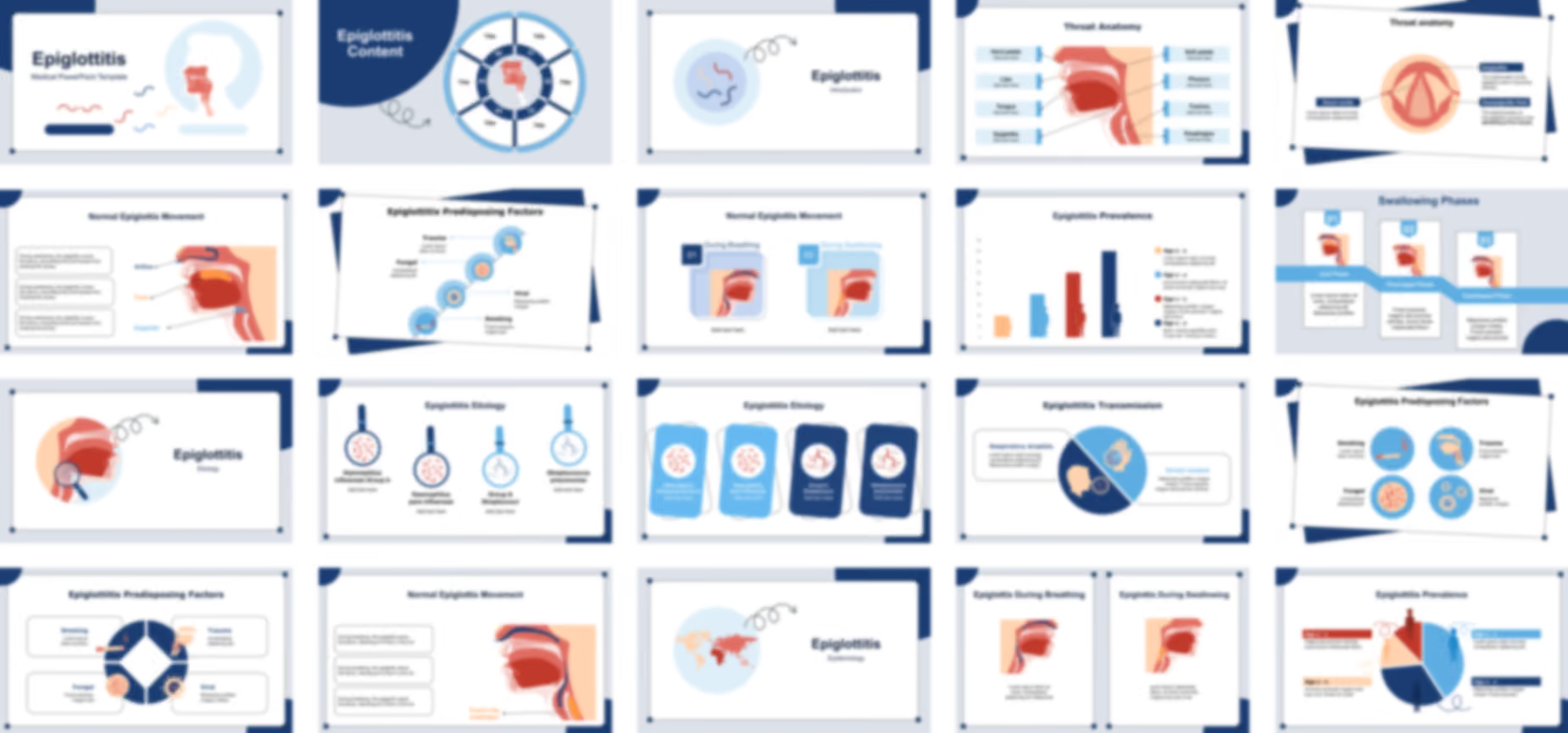
Slide 1 - Epiglottitis Introduction (Title Slide)

Epiglottitis Introduction (Title Slide)
  • introduces the presentation on Epiglottitis with a professional and engaging medical design.
  • The slide prominently features a simplified anatomical cross-section of the head and throat.

Slide 2 - Epiglottitis Table of Contents (Navigation)

Epiglottitis Table of Contents (Navigation)
  • organizes the presentation and clearly outline six main discussion points for your audience.
  • The design features a central graphic of the affected throat area surrounded by six numbered content sections.

Slide 3 - Introduction Section Divider

Introduction Section Divider
  • divider slide to clearly signal the start of the Introduction section for the Epiglottitis presentation.
  • The design features stylized, curved bacterial shapes in the corner, visually representing the infectious nature of the medical topic without relying on complex diagrams.

Slide 4 - Throat Anatomy Diagram

Throat Anatomy Diagram
  • illustrates the Throat Anatomy relevant to the Epiglottitis presentation.
  • The slide features a large, detailed cross-section of the head and throat with eight distinct anatomical features clearly pointed out, including the Epiglottis itself.

Slide 5 - Detailed Throat Anatomy (Epiglottis View)

Detailed Throat Anatomy (Epiglottis View)
  • provides a detailed, close-up look at the Epiglottis and surrounding structures.
  • The diagram clearly labels the Epiglottis, Vocal Cords, and the Aryepiglottic Fold.

Slide 6 - Normal Epiglottis Function

Normal Epiglottis Function
  • explains the Normal Movement and crucial protective function of the epiglottis during swallowing.
  • The visual highlights the path of Airflow and Food.

Slide 7 - Normal Epiglottis Movement (Breathing)

Normal Epiglottis Movement (Breathing)
  • explains the Normal Movement of the epiglottis when a person is breathing.
  • The visual clearly demonstrates the wide open pathway for air into the larynx, contrasting this movement with the protective closure shown in the previous slide.
  • This slide clarifies the dual function of the epiglottis.

Slide 8 - Comparison of Normal Epiglottis Movement

Comparison of Normal Epiglottis Movement
  • summarizes the two essential, normal functions of the epiglottis for your audience.
  • The visual features two distinct, numbered diagrams (01 and 02) illustrating the open state During Breathing and the closed state During Swallowing.

Slide 9 - Detailed Functional Comparison

Detailed Functional Comparison
  • comparison slide to reinforce the critical difference in epiglottis function between Breathing and Swallowing.
  • The slide features large, clear anatomical diagrams placed side-by-side with separate titles.

Slide 10 - Swallowing Phases Breakdown

Swallowing Phases Breakdown
  • This slide shows sequential timeline to clearly explain the three distinct Swallowing Phases: Oral, Pharyngeal, and Esophageal.
  • The slide features numbered steps (01, 02, 03) corresponding to separate anatomical diagrams.

Slide 11 - Etiology Section Divider

Etiology Section Divider
  • divider slide to clearly transition to the Etiology (causes) section of your Epiglottitis presentation.
  • The visual features a magnified view of the throat, showing bacteria under a magnifying glass, which instantly communicates the infectious origin of the condition.

Slide 12 - Key Etiological Agents

Key Etiological Agents
  • presents the primary bacteria responsible for Epiglottitis Etiology.
  • The slide features four separate magnifying glass icons, each illustrating and labeling a key pathogen, including Haemophilus influenzae and Streptococcus pneumoniae.

Slide 13 - Etiological Agents (Block Style)

Etiological Agents (Block Style)
  • presents the four primary bacteria responsible for Epiglottitis Etiology in a highly modern and organized format.
  • The slide features four distinct, curved boxes, each showcasing the bacterial illustration and the pathogen's name, such as Haemophilus influenzae and Streptococcus pneumoniae.

Slide 14 - Predisposing Factors Section Divider

Predisposing Factors Section Divider
  • divider slide to smoothly transition to the section covering the Predisposing Factors of Epiglottitis.
  • The visual highlights the throat area with stylized viral icons attached to the epiglottis, suggesting the role of prior conditions or susceptibility in the development of the illness.

Slide 15 - Key Predisposing Factors

Key Predisposing Factors
  • presents the major Predisposing Factors that increase the risk of developing Epiglottitis.
  • The visual includes distinct, easily recognizable icons for factors like Smoking and Trauma, alongside illustrations of Fungal and Viral causes.

Slide 16 - Predisposing Factors (Wheel Layout)

Predisposing Factors (Wheel Layout)
  • showcases the four primary Predisposing Factors of Epiglottitis in a highly organized and interconnected way.
  • The slide divides the information into four clear quadrants, featuring icons for Smoking, Trauma, Fungal infections, and Viral triggers.

Slide 17 - Predisposing Factors (Vertical Timeline)

Predisposing Factors (Vertical Timeline)
  • Presents the four key Predisposing Factors of Epiglottitis in a progressive and structured list.
  • The design organizes factors like Trauma and Smoking using distinct icons within circular nodes

Slide 18 - Epidemiology Section Divider

Epidemiology Section Divider
  • divider slide to effectively introduce the Epidemiology section, covering the global distribution and study of Epiglottitis.
  • The visual prominently features a world map with areas highlighted in varying shades of red, clearly communicating data related to prevalence or incidence.

Slide 19 - Epiglottitis Prevalence Data

Epiglottitis Prevalence Data
  • Shows a four-column bar chart to powerfully present Epiglottitis Prevalence data across different demographic groups or categories.
  • The chart utilizes distinct colors and human figures to represent and compare four key data points.

Slide 20 - Epiglottitis Prevalence (Pie Chart)

Epiglottitis Prevalence (Pie Chart)
  • breaks down Epiglottitis Prevalence data into four distinct categories, likely representing different age groups.
  • The chart clearly segments the data using four colors and corresponding human silhouettes.

Slide 21 - Epiglottitis Transmission

Epiglottitis Transmission
  • illustrates the two main methods of Epiglottitis Transmission to your audience.
  • The visual distinctly separates the concepts of Respiratory droplets (shown via an infected silhouette) and Direct contact (shown via a hand icon).

Slide 22 - Transmission Methods (Dual Boxes)

Transmission Methods (Dual Boxes)
  • Emphasizes the two major ways Epiglottitis Transmission occurs: Respiratory droplets and Direct contact.
  • The slide features two distinct, rounded boxes, each containing a dedicated icon (silhouette for breathing, hand for contact).

Slide 23 - Epiglottitis Susceptibility (Age Range)

Epiglottitis Susceptibility (Age Range)
  • highlights the primary age group most susceptible to Epiglottitis, spanning from 2 to 7 years.
  • The slide features charming child illustrations and large, distinct labels for "2 years" and "7 years," immediately communicating the highest-risk demographic.

Slide 24 - Susceptibility Age Range (Circular Format)

Susceptibility Age Range (Circular Format)
  • emphasizes the primary age range of Epiglottitis Susceptibility, from two years to seven years.
  • The slide uses engaging, separate circular icons with child figures for the "2 years" and "7 years" labels, connected by a bold directional arrow.

Slide 25 - Pathogenesis Section Divider

Pathogenesis Section Divider
  • divider slide to smoothly transition to the Pathogenesis section.
  • The visual features a detailed, inflamed view of the epiglottis area, with clear signs of swelling and damage (represented by the dark blue shapes).

Slide 26 - Pathogenesis of Bacterial Epiglottitis

Pathogenesis of Bacterial Epiglottitis
  • explains the core mechanism and pathology of Bacterial Epiglottitis.
  • The visual highlights the Inflamed epiglottis and surrounding tissues, showing the dramatic swelling and infection caused by the Bacteria (represented by the dark blue shapes).

Slide 27 - Pathogenesis (Cellular Level)

Pathogenesis (Cellular Level)
  • illustrates the initial steps in the Pathogenesis of Bacterial Epiglottitis.
  • The visual shows the Bacteria penetrating the Epiglottis Epithelium layer.

Slide 28 - Pathogenesis (Immune Response)

Pathogenesis (Immune Response)
  • explains the body's Immune Response during the Pathogenesis of Bacterial Epiglottitis.
  • The visual highlights how immune cells, such as T-Cells, and inflammatory molecules like TNF-alpha react to the invading bacteria within the tissue layers.

Slide 29 - Pathogenesis (Inflammation Result)

  • illustrates how inflammation and swelling, the key problems in Epiglottitis, develop at the blood vessel level.
  • The visual focuses on a Blood vessel in the epiglottis, demonstrating how inflammatory substances like TNF-alpha increase permeability.

Slide 30 - Pathogenesis (Airway Obstruction)

Pathogenesis (Airway Obstruction)
  • explains the life-threatening consequence of the Pathogenesis of Bacterial Epiglottitis: airway obstruction.
  • The visual features a side-view of the throat showing restricted Airflow due to the Inflamed epiglottis, alongside a diagram showing the dangerous buildup of CO2 in the blood vessels.

Slide 31 - Pathogenesis (Consequence Summary)

Pathogenesis (Consequence Summary)
  • shows the two most serious consequences of the Pathogenesis of Bacterial Epiglottitis.
  • The slide features the key visual elements: the Inflamed epiglottis restricting Airflow and the Blood vessel showing dangerous CO2 retention.

Slide 32 - Normal vs. Epiglottitis Comparison

Normal vs. Epiglottitis Comparison
  • This slide shows a comparison to instantly demonstrate the difference between the Normal airway and an airway affected by Epiglottitis.
  • The slide features two distinct anatomical diagrams contrasting the healthy, open passage on the left with the swollen, obstructed epiglottis on the right.

Slide 33 - Symptoms Section Divider

Symptoms Section Divider
  • divider slide to smoothly transition to the section covering the Symptoms of Epiglottitis.
  • The visual features an illustration of a child having difficulty breathing (suggesting distress and coughing).

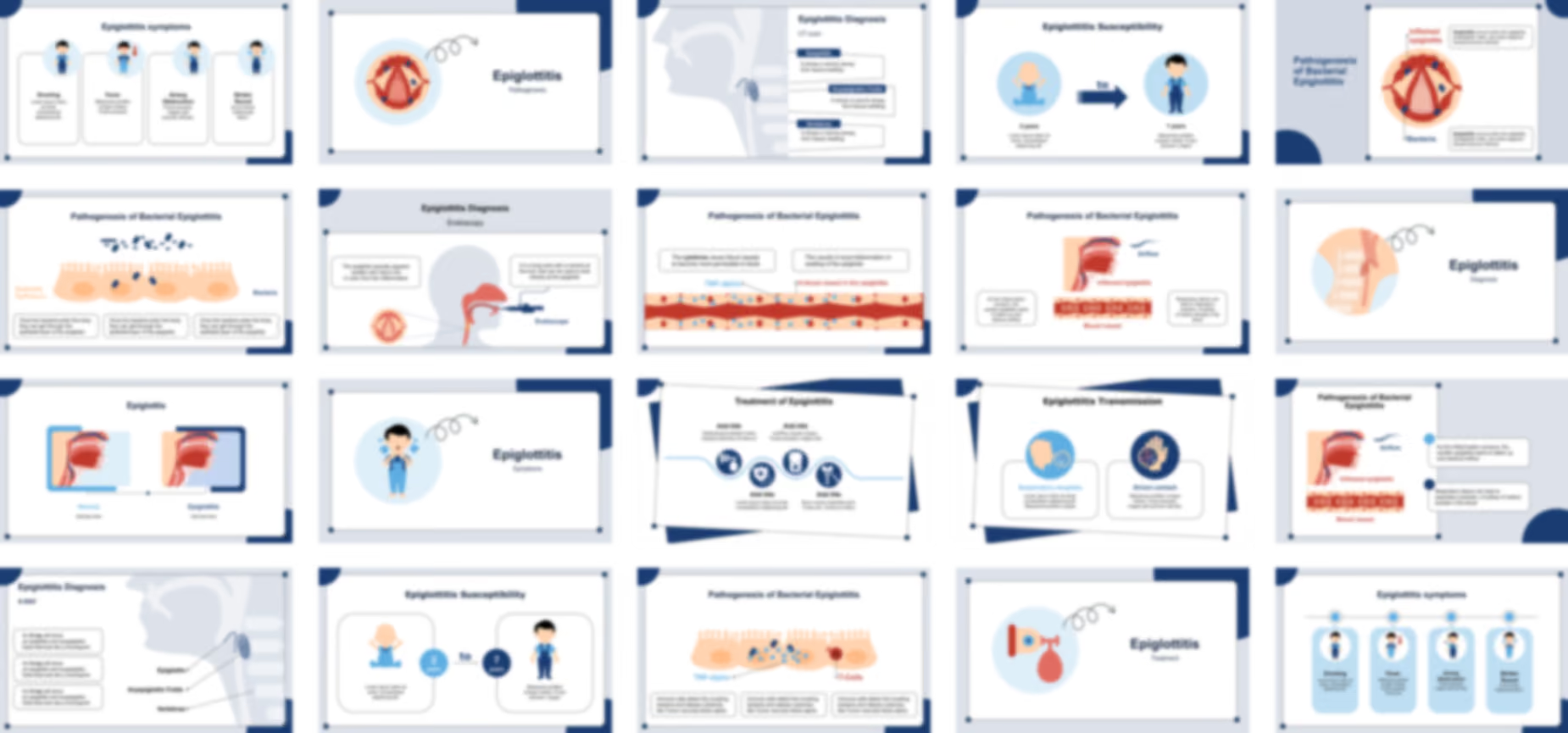
Slide 34 - Key Epiglottitis Symptoms

Key Epiglottitis Symptoms
  • presents the four most critical Symptoms of Epiglottitis.
  • The slide uses dedicated visual icons for each symptom, clearly illustrating key signs like Fever, Drooling, Airway Obstruction, and the Stridor Sound.

Slide 35 - Epiglottitis Symptoms (Boxed Icons)

Epiglottitis Symptoms (Boxed Icons)
  • presents the four key Symptoms of Epiglottitis, giving equal visual weight to each point.
  • The slide features four dedicated boxes with clear icon illustrations for Drooling, Fever, Airway Obstruction, and the Stridor Sound.

Slide 36 - Diagnosis Section Divider

Diagnosis Section Divider
  • divider slide to smoothly transition to the Diagnosis section, covering the methods used to identify Epiglottitis.
  • The visual features a diagram of the neck and throat area, highlighting the swollen epiglottis adjacent to the vertebrae.

Slide 37 - Diagnosis via X-ray (Thumbprint Sign)

Diagnosis via X-ray (Thumbprint Sign)
  • explains how an X-ray confirms Epiglottitis using the distinctive "thumbprint sign."
  • The visual features a diagram of the swollen epiglottis next to the vertebrae, with the epiglottis itself stylized like a thumbprint to represent the finding on a lateral X-ray.

Slide 38 - Diagnosis via CT Scan

Diagnosis via CT Scan
  • explains how a CT Scan is used to confirm Epiglottitis by identifying airway narrowing.
  • The visual highlights the Epiglottis and surrounding Aryepiglottic Folds.

Slide 39 - Diagnosis via Endoscopy

Diagnosis via Endoscopy
  • explains the procedure and findings of Endoscopy, a key technique for diagnosing Epiglottitis.
  • The visual shows an Endoscope being inserted into the throat, with a magnified inset illustrating the typical swollen, cherry-red appearance of the inflamed epiglottis.

Slide 40 - Treatment Section Divider

Treatment Section Divider
  • divider slide to smoothly transition to the Treatment section.
  • The visual features a striking illustration of a resuscitation bag or Ambu-bag.

Slide 41 - Treatment Options Overview

Treatment Options Overview
  • summarizes the major Treatment Options for managing Epiglottitis.
  • The slide features four distinct icons placed along a wave-like line, representing key areas like Airway Management, Antibiotics, and potentially Vaccination or supportive care.

Slide 42 - Key Epiglottitis Treatment Methods

Key Epiglottitis Treatment Methods
  • presents the four essential Treatment Methods for managing Epiglottitis.
  • The slide features dedicated icons and clear labels for Oxygen Therapy, Immunization, Antibiotics, and Cricothyroidotomy, covering the critical steps from supportive care to emergency surgery.

Slide 43 - Alternative Treatment Slide

Alternative Treatment Slide
  • 43 slide is an alternative slide for 42

Slide 44 - Endotracheal Intubation

Endotracheal Intubation
  • explains the process of Endotracheal Intubation, the key procedure for securing the airway in severe Epiglottitis.
  • The visual features a side-view of the throat showing the Endotracheal tube being inserted past the epiglottis to ensure continuous, safe airflow.

Slide 45 - Prevention Section Divider

Prevention Section Divider
  • divider slide to smoothly transition to the Prevention section.
  • The visual features a striking illustration of a child with a red circle and line (a "no" symbol) over the throat.

Slide 46 - HiB Vaccination Program (Prevention)

HiB Vaccination Program (Prevention)
  • presents the critical HiB Vaccination Program schedule.
  • The visual features a cute baby alongside four distinct boxes detailing the recommended administration months: 2 Months, 4 Months, 6 Months, and 12 Months.

Slide 47 - HiB Vaccination Schedule (Circular Layout)

HiB Vaccination Schedule (Circular Layout)
  • presents the four recommended doses of the HiB Vaccination Program.
  • The slide features a prominent illustration of a syringe and vaccine vial next to four large, color-coded circles marking the critical vaccination months: 2, 4, 6, and 12 months.

Slide 48- HiB Vaccination Schedule (Three-Dose Layout)

HiB Vaccination Schedule (Three-Dose Layout)
  • presents a slightly simplified version of the HiB Vaccination Program, focusing on the 2 month, 4 month, and 12 month doses.
  • The slide features three charming baby icons, each sitting above a blue block indicating the crucial administration time points.

Slide 49 - HiB Vaccination Program (Alternate Three-Dose Layout)

HiB Vaccination Program (Alternate Three-Dose Layout)
  • highlights the key time points of the HiB Vaccination Program for Epiglottitis prevention.
  • The slide features three cute, expressive baby figures placed below three distinct, large blue boxes that specify the crucial administration times: 2 months, 4 months, and 12 months.

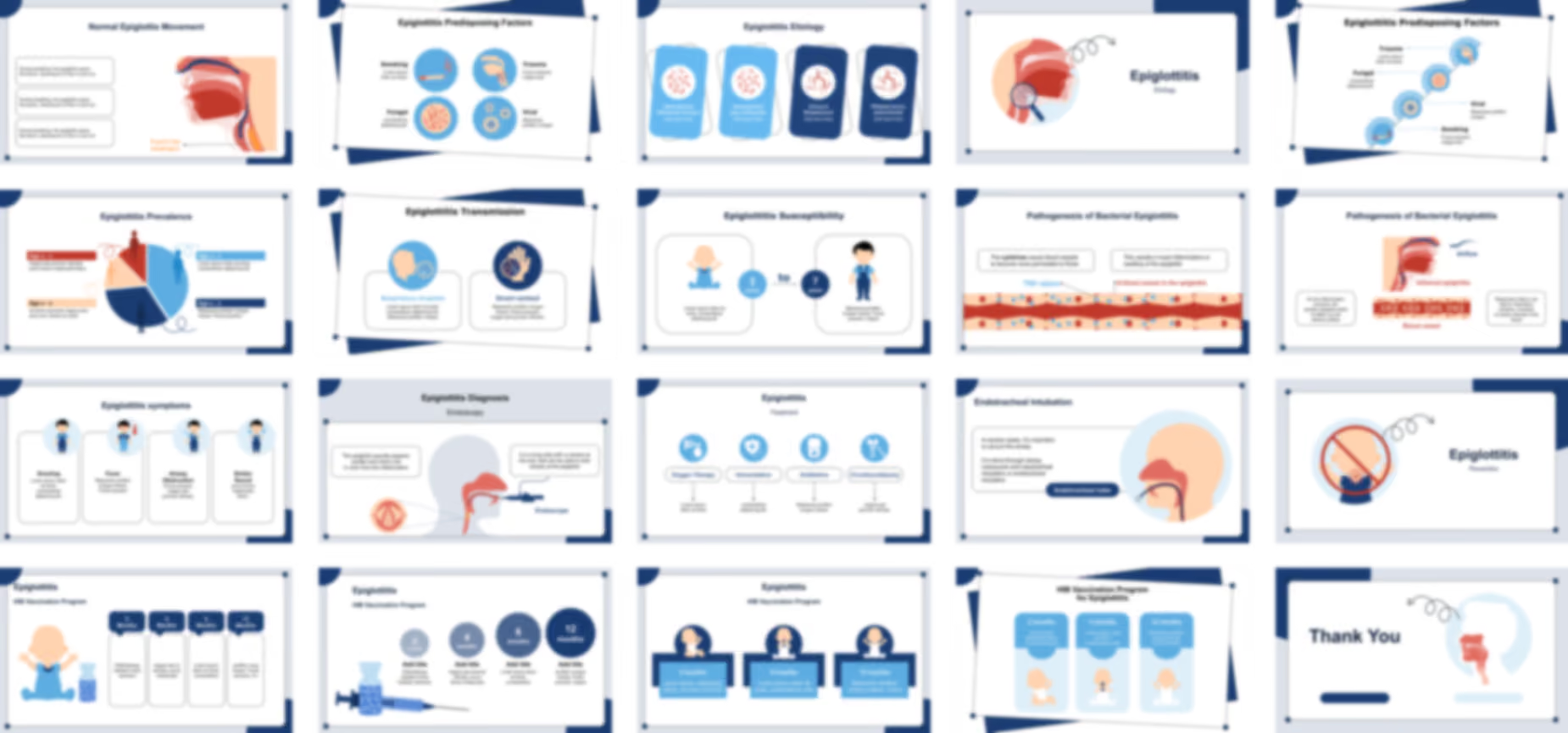
Slide 50 - Thank You/Conclusion Slide

Thank You/Conclusion Slide
  • concludes the presentation with a thank you message.
  • The visual features a large, clear "Thank You" title alongside the prominent throat anatomy graphic.

Features of the Template

- 100% editable PowerPoint template.
- Editable colors, you can change according to your presentation style and company branding guidelines.