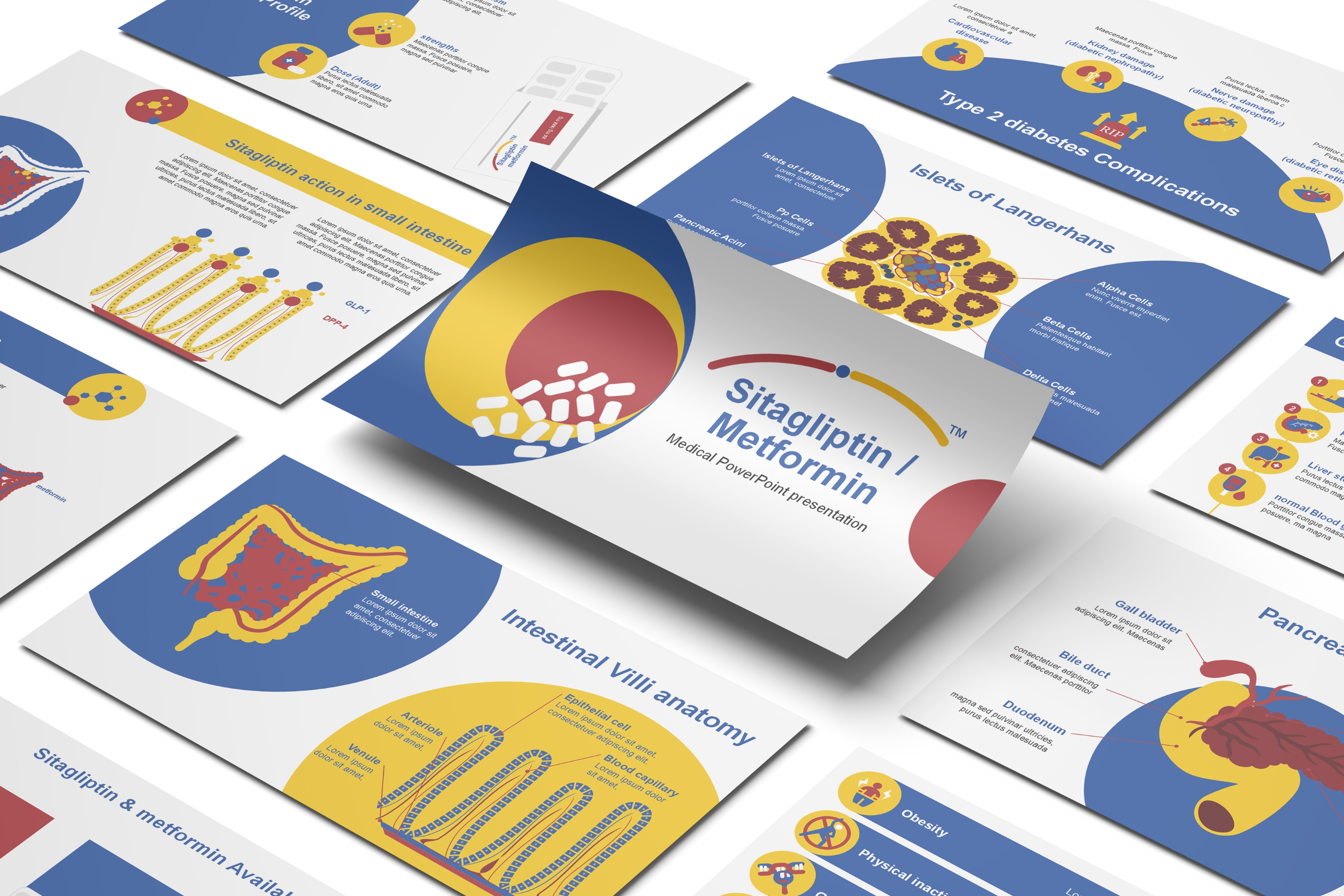
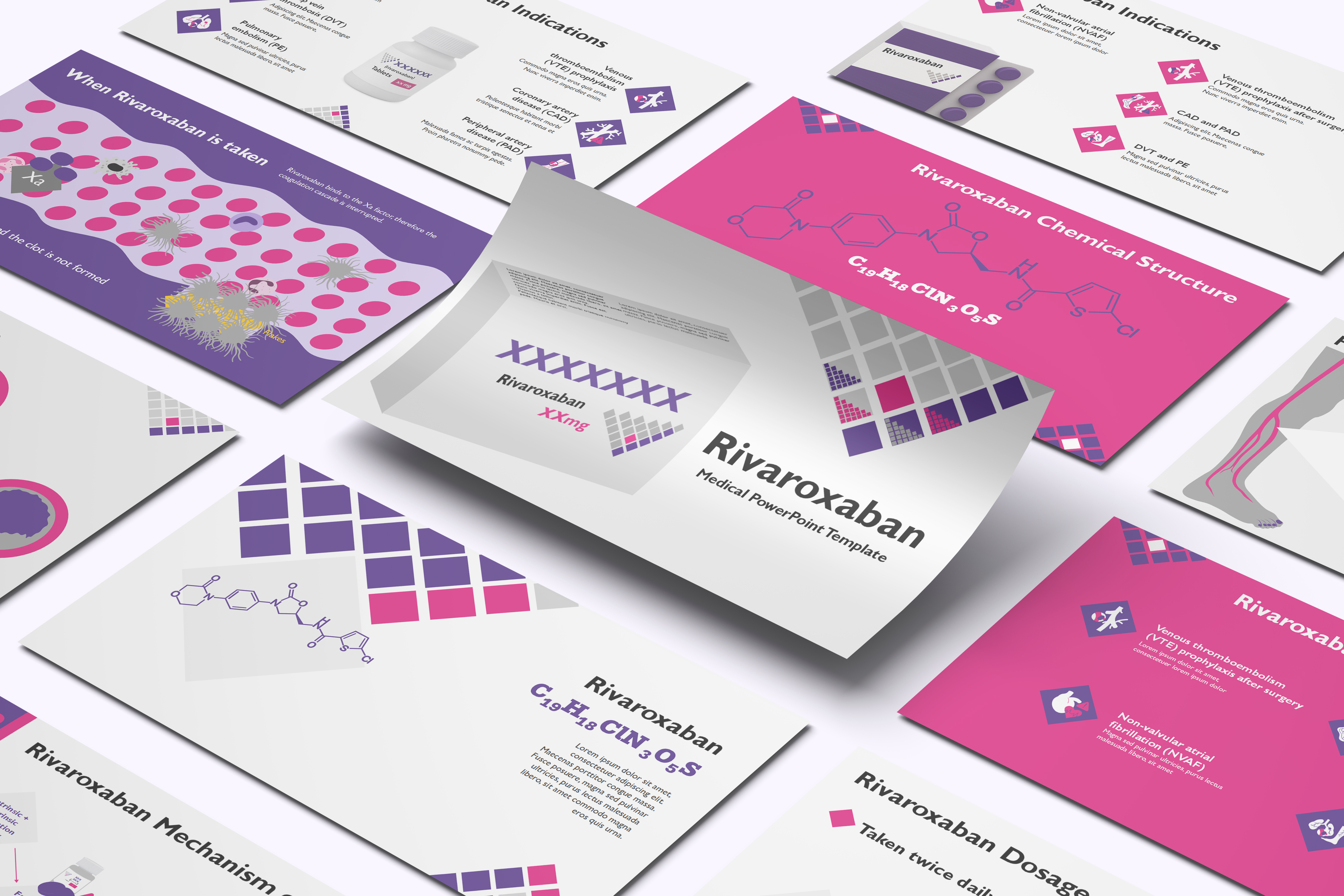
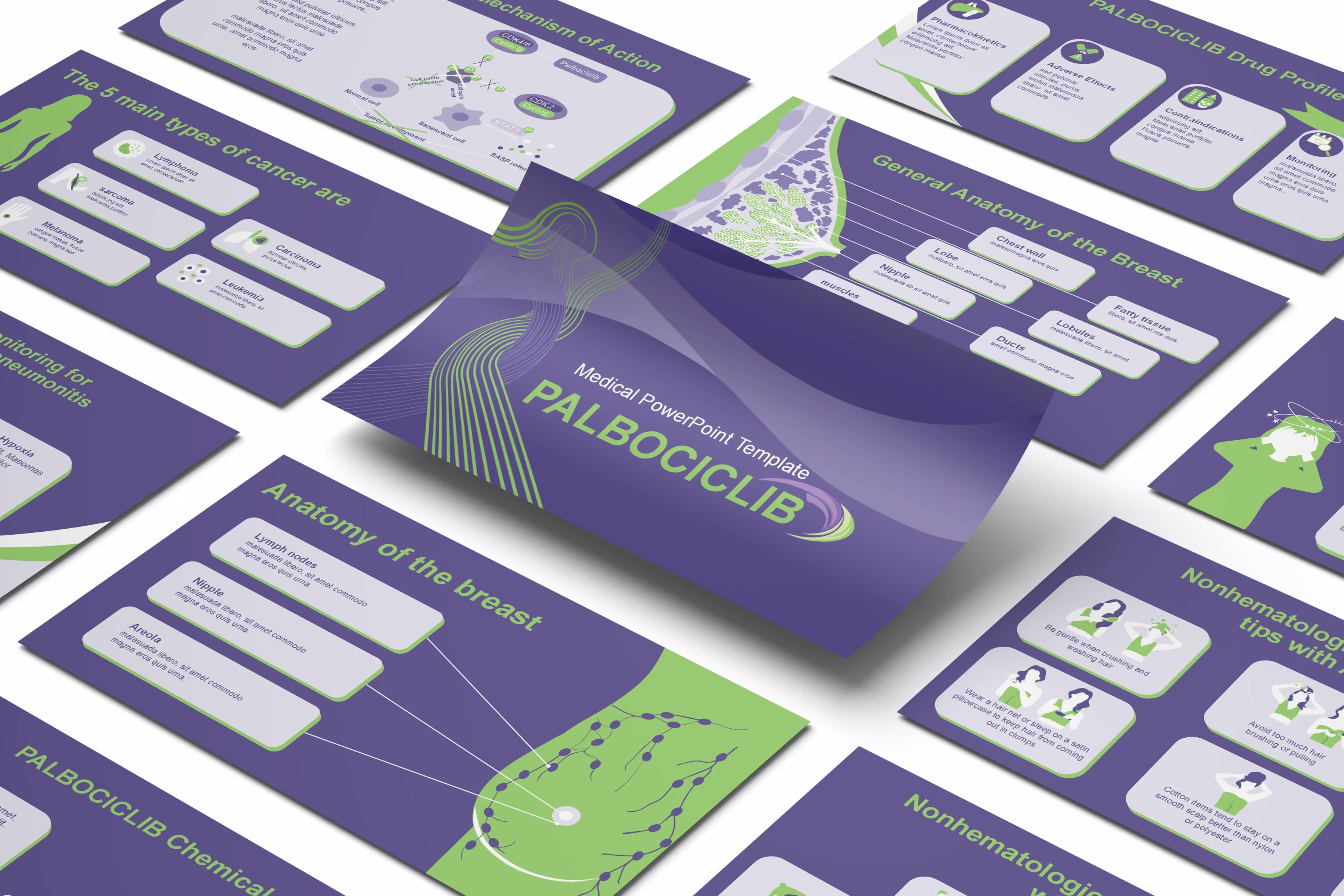
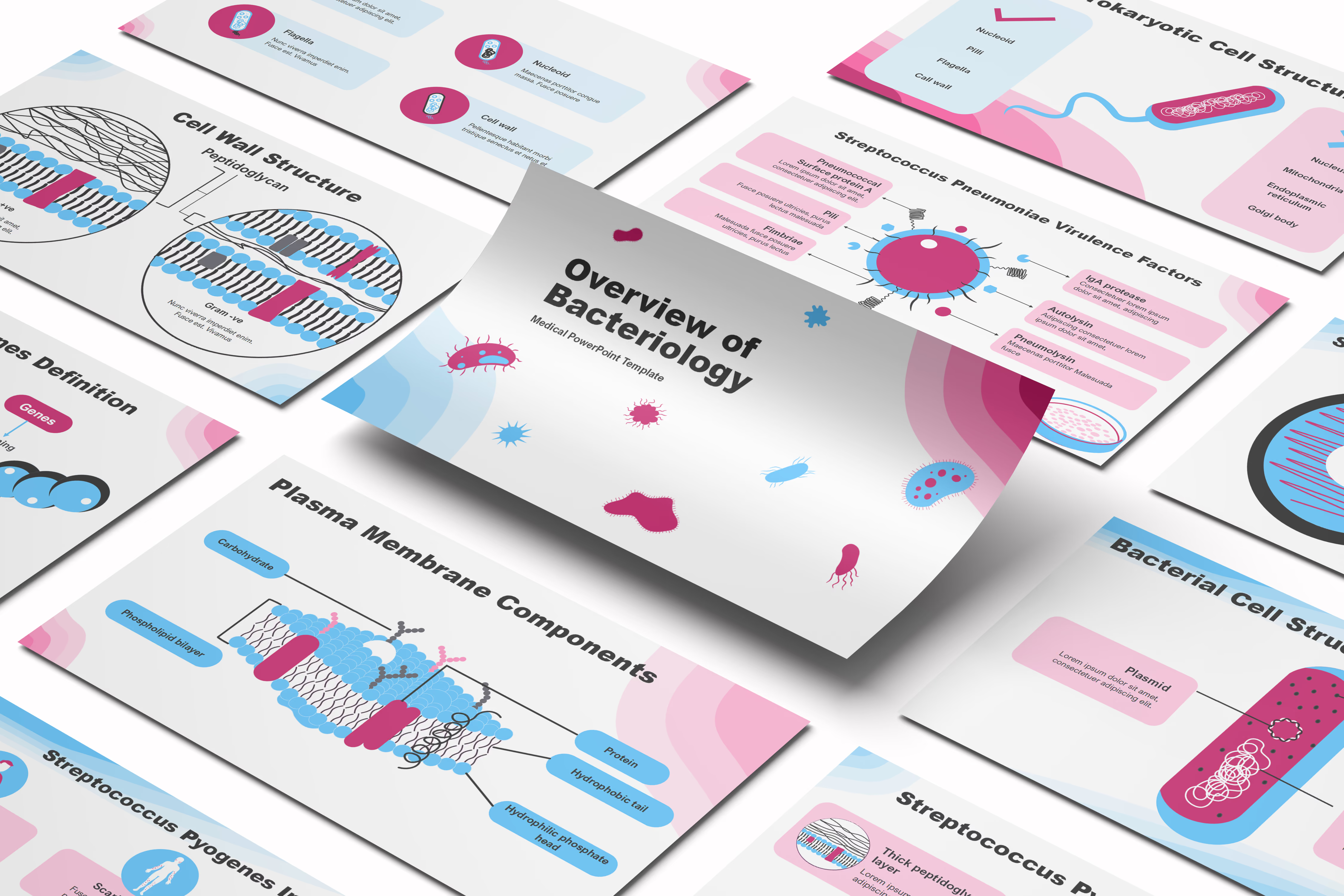
Azelastine Overview Presentation Template






Template Preview
Designed for healthcare professionals creating clear and structured medical presentations.
Ideal for doctors, medical educators, and pharmaceutical teams preparing lectures, clinical education, product presentations, and training.
Fully editable in PowerPoint, allowing you to customize diagrams, charts, and slide layouts with your own medical content
Ready-to-use presentation structure that saves time and helps you build professional healthcare presentations quickly.
Fully Animated
Built-in animations help you present medical information clearly and make complex concepts easier to understand.
Editable Colors and Shapes
Editable colors and shapes help you easily customize the slides to match your content and presentation style, just drag and drop your content.
Professional medical layouts
Professional medical layouts help you organize clinical information, medical data, and treatment insights in a clear and structured way.

Created by Medical Professionals
This template prioritizes medical accuracy, clarity, and real-world usability. Each slide is designed with a medical audience in mind, helping you present clinical information, data, and treatment insights in a way that is structured, credible, and easy for healthcare professionals to understand.
Pharmaceutical Product & Medical Affairs Presentations
Medical Affairs teams supporting an antihistamine or allergy portfolio can use this Azelastine Overview template's dual-mechanism content, H1 receptor blockade paired with mast cell stabilization, as scientific groundwork before any product-specific data enters a conversation. MSLs can reference the nasal-spray and ophthalmic-formulation content when a scientific exchange calls for context on route-specific use in seasonal or vasomotor rhinitis. The onset-of-action and adult-versus-pediatric dosing content gives Medical Affairs a ready reference without commissioning new pharmacology slides. Allergy and ENT-facing teams gain a consistent scientific reference spanning mechanism, formulation, and safety.
Medical Congress & Scientific Conference Presentations
Allergists and ENT specialists preparing a congress session can build around this Azelastine Overview template's dual-acting mechanism sequence, histamine H1 receptor blockade alongside mast cell stabilization, rather than assembling receptor-pharmacology diagrams from scratch. A Key Opinion Leader presenting on rhinitis management can adapt the seasonal-versus-vasomotor rhinitis content to a differential-diagnosis discussion. A presenter's own patient-outcomes data layers into the existing formulation and dosing content without disturbing the underlying illustrations. The safety-profile slides, covering nasal irritation, bitter taste, and temporary drowsiness, keep the discussion clinically current for a specialist audience.
Medical Training for Pharmaceutical & Life Sciences Companies
Allergy and ENT sales teams onboarding new representatives can structure introductory sessions around this Azelastine Overview template's dual mechanism, working from histamine H1 blockade and mast cell stabilization through to symptom relief before a single dosing conversation begins. Representatives study the nasal-spray and ophthalmic-formulation content, alongside adult and pediatric dosing, before they are cleared to discuss the product with allergists, ENT specialists, and pharmacists. The seasonal-versus-vasomotor rhinitis content gives trainees a structured framework for indication-specific conversations. New hires reach the field able to connect mechanism, formulation, and indication into a single coherent story.
eLearning & SCORM Training Modules
Allergy and pharmacy programs building an antihistamine module can customize this Azelastine Overview template with their own case studies, then convert the finished presentation into a SCORM-compliant module for a learning management system. The dual-mechanism animation translates naturally into interactive checkpoints within a broader allergic-rhinitis pharmacology course. When a program needs a narrower scope, such as the ophthalmic-formulation content alone, the RxSlides team can adjust the template's depth and branding. The RxSlides team can also build a fully custom, from-scratch presentation whenever a training objective isn't yet covered by the catalog.
Medical & Healthcare Education
Pharmacy and medical faculty teaching allergic rhinitis management can use this template's dual-mechanism sequence to walk students from histamine H1 blockade and mast cell stabilization through to clinical symptom relief. The nasal-spray and ophthalmic-formulation content gives students a clear framework for connecting route of administration to indication. The safety-profile content connects classroom pharmacology to the patient-counseling conversations students will have at the bedside. Students leave with a structured understanding of azelastine spanning mechanism, formulation, dosing, and safety.
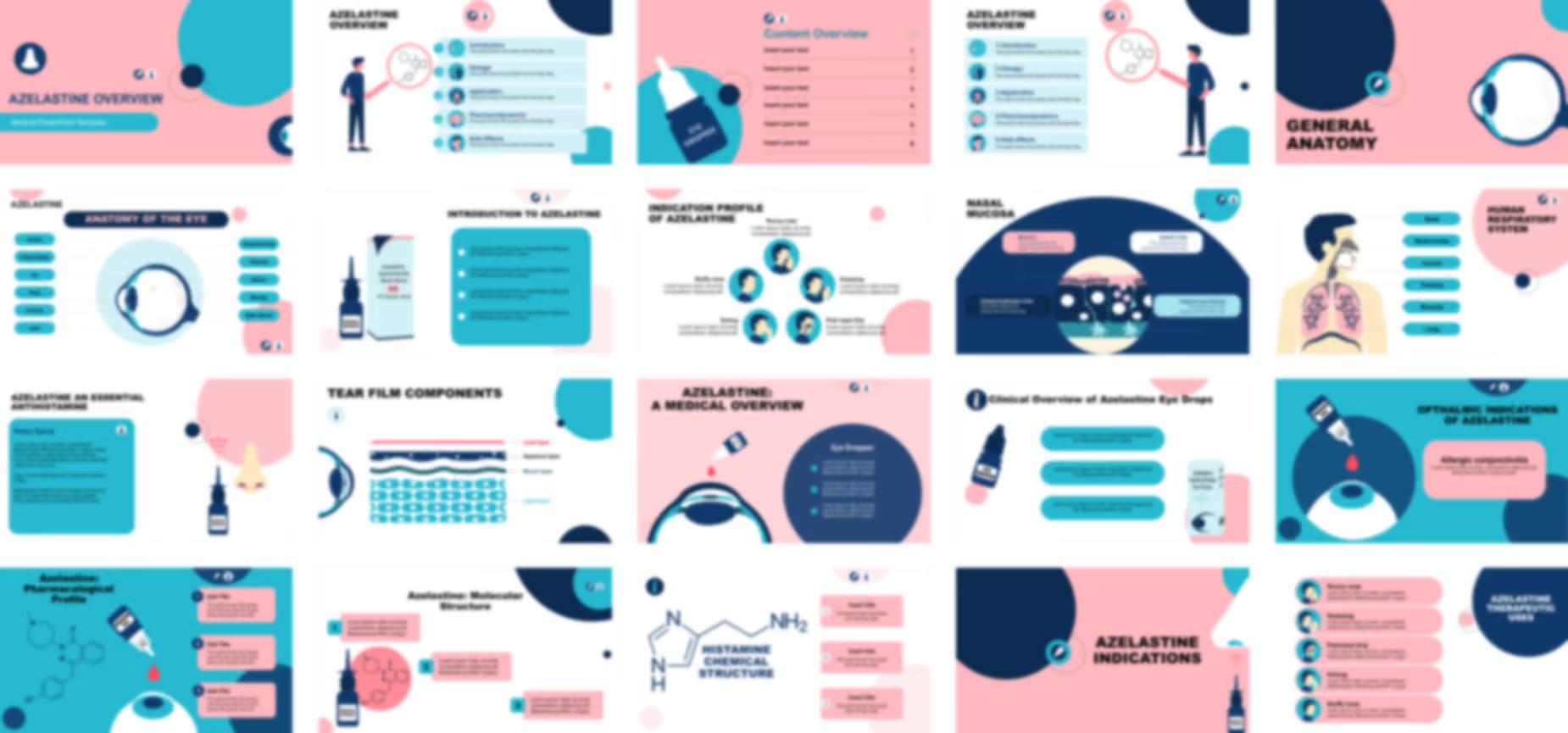
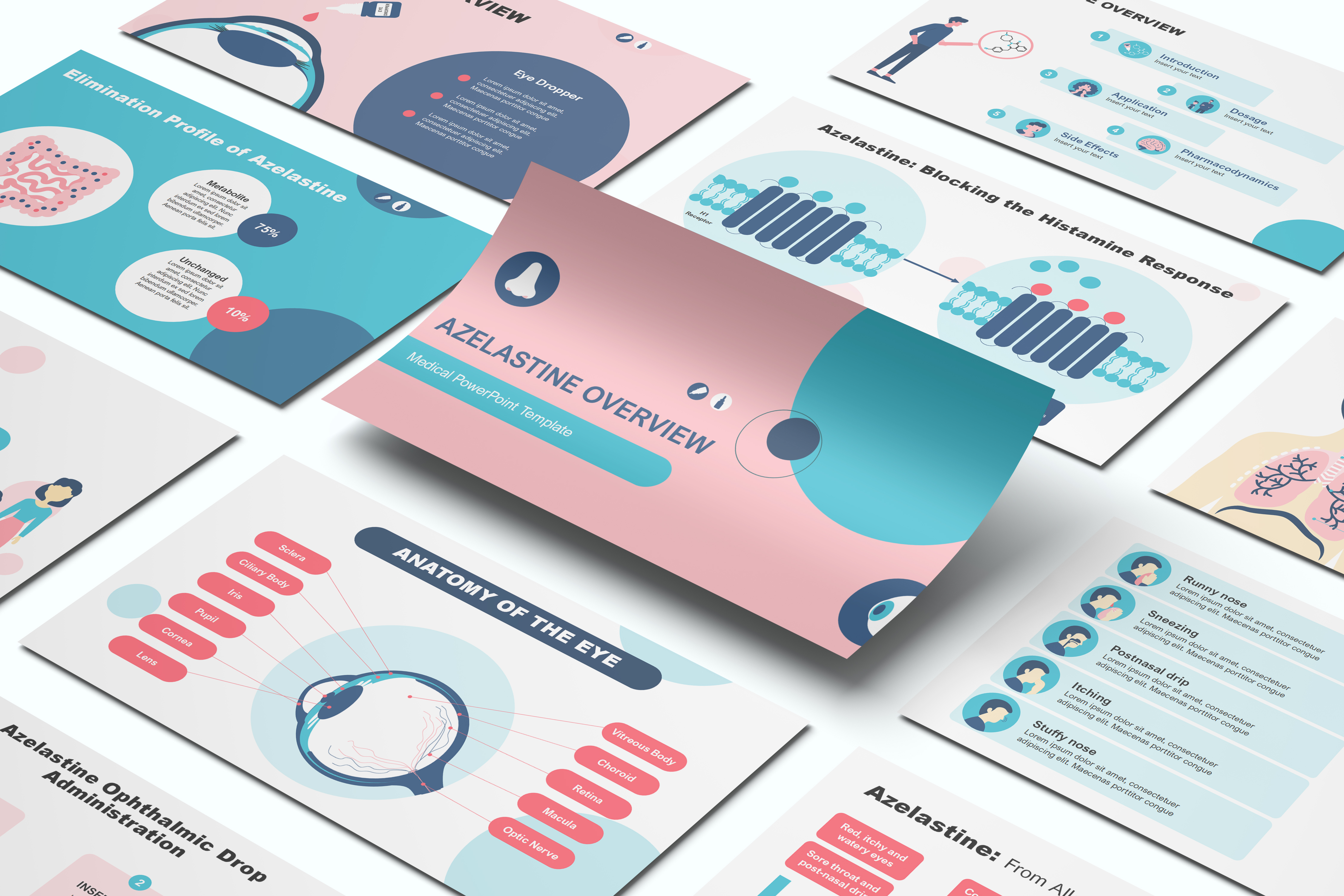
The Azelastine Overview Presentation Template opens with a content overview agenda before introductory slides describe the drug as an essential antihistamine available as a nasal spray and eye dropper, illustrating its molecular structure and relation to the histamine molecule. Indications then cover nasal symptoms including runny nose, itching, stuffy nose, sneezing, and post-nasal drip, alongside the ophthalmic indication of allergic conjunctivitis.
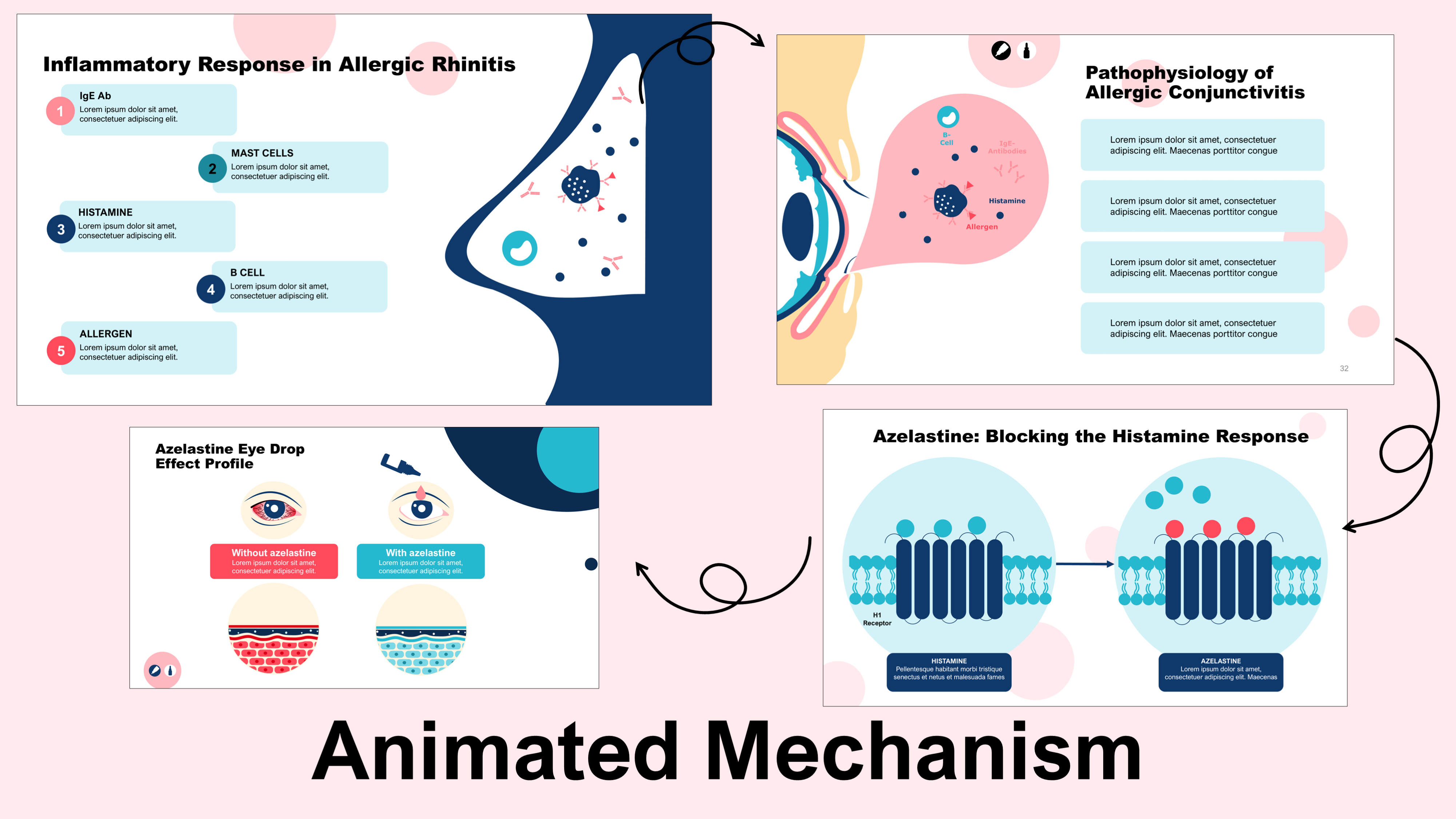
An animated mechanism traces the inflammatory response in allergic rhinitis and conjunctivitis, showing how allergen exposure activates B cells to produce IgE antibodies that bind mast cells and trigger histamine release. Establishing this allergic cascade first gives educators a shared reference point before the sequence shows how azelastine blocks the H1 receptor on the cell membrane, preventing histamine from binding.
Dosing slides cover nasal administration of two sprays per nostril daily for adults and one spray for children, alongside ophthalmic dosing of one drop in each eye twice daily, with step by step application guides for both forms, in this editable medical presentation template. Pharmacokinetic content then covers 40 percent bioavailability, 88 percent plasma protein binding, metabolism to desmethyl azelastine, and an elimination profile split between fecal and renal routes.
Medical icons visualize side effects including drowsiness, headache, nose bleeding, dry mouth, and nose stinging, before a comparison chart contrasts azelastine with fluticasone and loratadine across onset of action and anti-inflammatory effect. The template closes with clinical study data showing up to 90 percent of patients reporting overall symptom relief and a 32.9 percent improvement in total nasal symptom score, plus a set of customizable icons and illustrations for allergy education.
Ready To Transform Your Presentation ?
Pay once, use forever