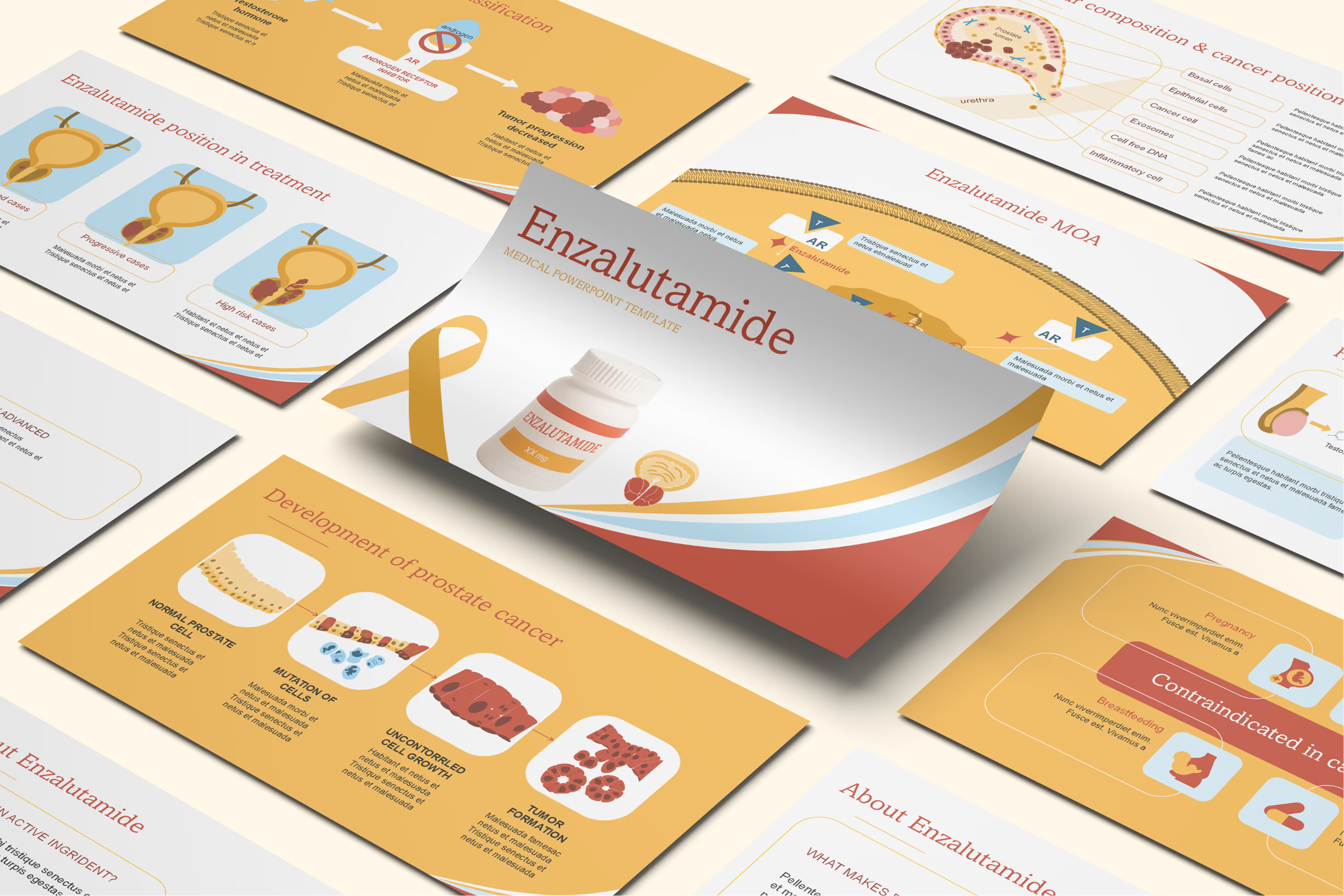
Otitis Media Overview PowerPoint Template

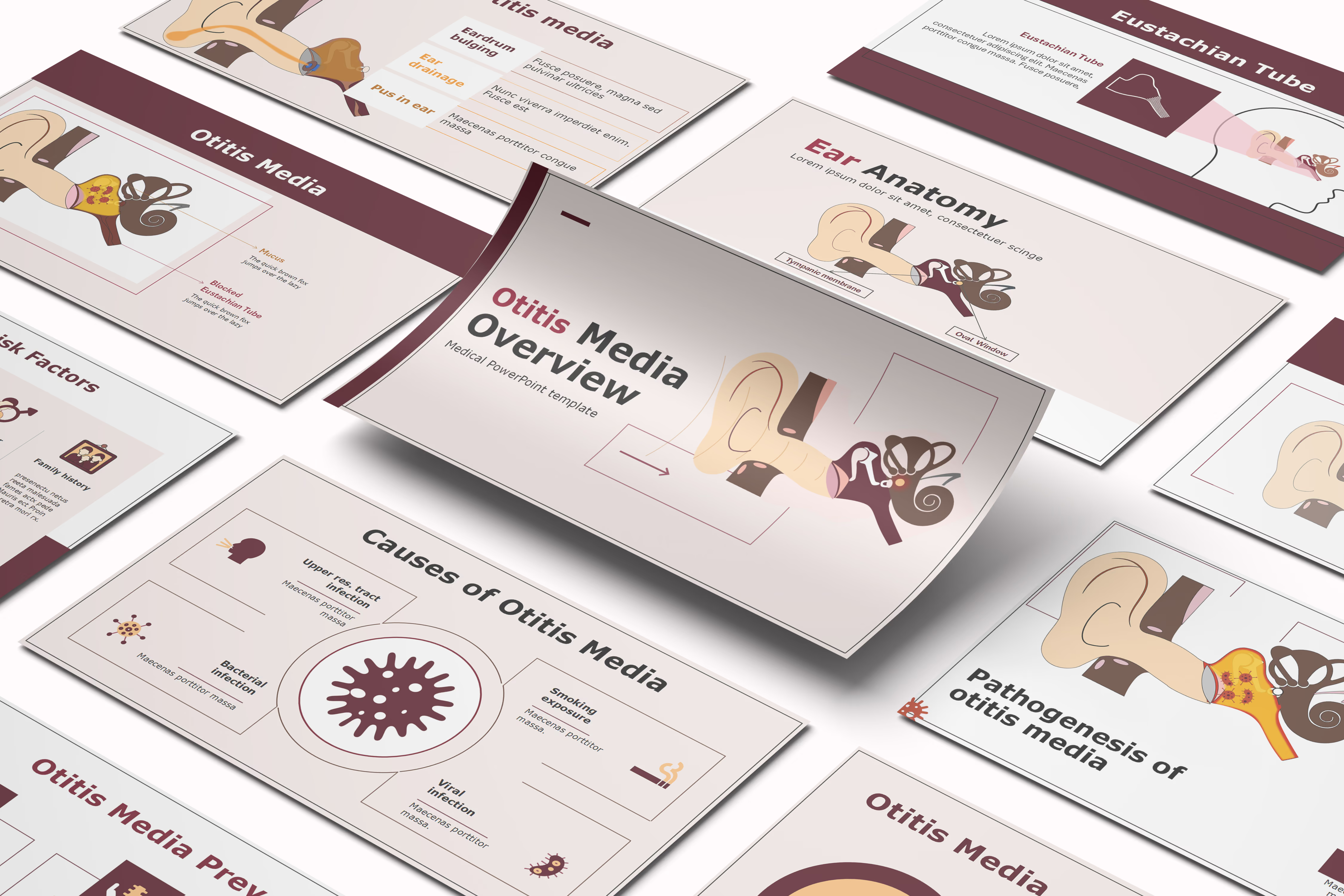




Template Preview
Designed for healthcare professionals creating clear and structured medical presentations.
Ideal for doctors, medical educators, and pharmaceutical teams preparing lectures, clinical education, product presentations, and training.
Fully editable in PowerPoint, allowing you to customize diagrams, charts, and slide layouts with your own medical content
Ready-to-use presentation structure that saves time and helps you build professional healthcare presentations quickly.
Fully Animated
Built-in animations help you present medical information clearly and make complex concepts easier to understand.
Editable Colors and Shapes
Editable colors and shapes help you easily customize the slides to match your content and presentation style, just drag and drop your content.
Professional medical layouts
Professional medical layouts help you organize clinical information, medical data, and treatment insights in a clear and structured way.

Created by Medical Professionals
This template prioritizes medical accuracy, clarity, and real-world usability. Each slide is designed with a medical audience in mind, helping you present clinical information, data, and treatment insights in a way that is structured, credible, and easy for healthcare professionals to understand.
Medical Training for Pharmaceutical & Life Sciences Companies
Pediatric and ENT sales and training teams onboarding new hires can structure introductory sessions around this Otitis Media Overview template's ear-anatomy sequence, distinguishing the outer, middle, and inner ear before a single symptom is introduced. New hires study the eustachian-tube-blockage pathogenesis, mucus buildup leading to bacterial or viral infection and inflammation, alongside the acute, effusion, and chronic suppurative subtypes, before they are cleared to discuss a product with pediatricians and ENT specialists. The risk-factor content, bottle feeding, pacifier use, smoking exposure, and family history, gives trainees a structured foundation without commissioning new pediatric-otology artwork. New reps finish training able to distinguish the three otitis media subtypes by both mechanism and clinical presentation.

Medical Congress & Scientific Conference Presentations
ENT specialists and pediatricians preparing a congress session can build around this Otitis Media Overview template's eustachian-tube-dysfunction pathogenesis instead of assembling middle-ear imagery from separate sources. A medical professor lecturing on pediatric ENT can adapt the tympanometry and otoscope diagnostic content to walk through the differential between acute otitis media and otitis media with effusion. The complications content, hearing loss, speech delay, and eardrum rupture, gives a case presentation a clear clinical stakes anchor. A presenter's own case data layers into the existing tympanostomy-tube treatment content without disturbing the underlying anatomy illustrations.

Pharmaceutical Product & Medical Affairs Presentations
Medical Affairs teams supporting an antibiotic or ENT portfolio can use this Otitis Media Overview template as disease-level groundwork for scientific exchange, covering eustachian-tube pathogenesis and the three clinical subtypes before any product-specific data enters the conversation. Medical Science Liaisons can reference the antibiotics-versus-observation treatment content when a scientific exchange calls for context on antimicrobial stewardship in pediatric ear infection. Middle-ear pathophysiology, not a branded message, is the substance of this presentation, and it still needs the customer's own medical and compliance sign-off before Medical Affairs uses it with any audience. Pediatric and ENT teams gain a consistent scientific reference spanning anatomy, pathogenesis, and treatment.

eLearning & SCORM Training Modules
Pediatric and nursing programs building an ENT module can customize this Otitis Media Overview template with their own case studies, then convert the finished presentation into a SCORM-compliant module for a learning management system. The eustachian-tube-dysfunction pathogenesis sequence translates naturally into interactive checkpoints within a broader pediatric ENT course. When a program needs a narrower scope, such as the diagnosis-and-otoscopy content alone, the RxSlides team can adjust the template's depth and branding. The RxSlides team can also build a fully custom, from-scratch presentation whenever a training objective isn't yet covered by the catalog.
Medical & Healthcare Education
Medical and nursing faculty teaching pediatric otolaryngology can use this template's ear-anatomy sequence to walk students from the outer, middle, and inner ear through eustachian-tube dysfunction to the three clinical otitis media subtypes. The risk-factor and prevention content gives students a clear framework for connecting patient history to disease risk. The diagnosis-and-treatment content, otoscopy, tympanometry, antibiotics, and tympanostomy tubes, connects classroom anatomy to the clinical management students will encounter at the bedside. Students leave with a structured understanding of otitis media spanning anatomy, pathogenesis, diagnosis, and treatment.
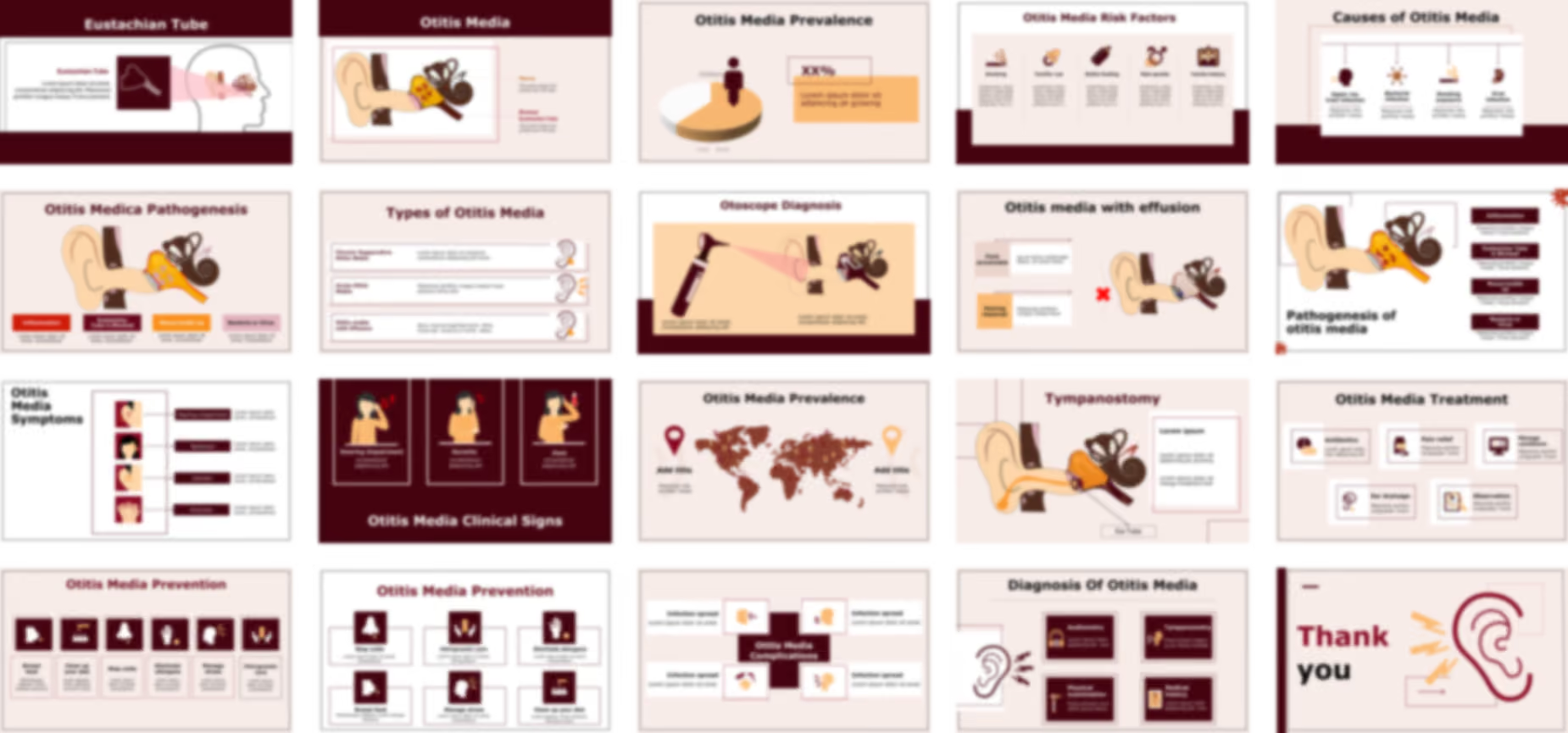
The Otitis Media Overview PowerPoint template opens with a five-part agenda before anatomy slides map the outer, middle, and inner ear, including the tympanic membrane, oval window, and eustachian tube in both adults and children. A definition then describes otitis media as the result of a blocked eustachian tube and mucus buildup in the middle ear.
Medical icons present risk factors including smoking, bottle feeding, pacifier use, family history, and male gender, alongside causes such as upper respiratory tract infection, bacterial infection, and viral infection, in this editable medical presentation template. An animated mechanism then traces the pathogenesis of otitis media, showing how a blocked eustachian tube allows mucus to build up. Establishing this blockage first gives educators a shared reference point before the sequence shows how the resulting fluid lets bacteria or a virus trigger inflammation.
Comparative illustrations distinguish acute otitis media, marked by a bulging eardrum and ear drainage, from otitis media with effusion, marked by fluid accumulation and impaired hearing, and chronic suppurative otitis media. Medical icons then visualize clinical signs and symptoms including earache, fever, hearing impairment, dizziness, and pus from the ear.
Diagnostic content covers audiometry, tympanometry, otoscope examination, and medical history, before complications content addresses hearing loss, speech delay, and eardrum rupture. The template closes with treatment options including antibiotics, pain relief, and ear tube placement, alongside prevention icons covering allergen avoidance and breastfeeding, plus a set of customizable icons and illustrations for otolaryngology education.
Ready To Transform Your Presentation ?
Pay once, use forever