Palbociclib PowerPoint Template

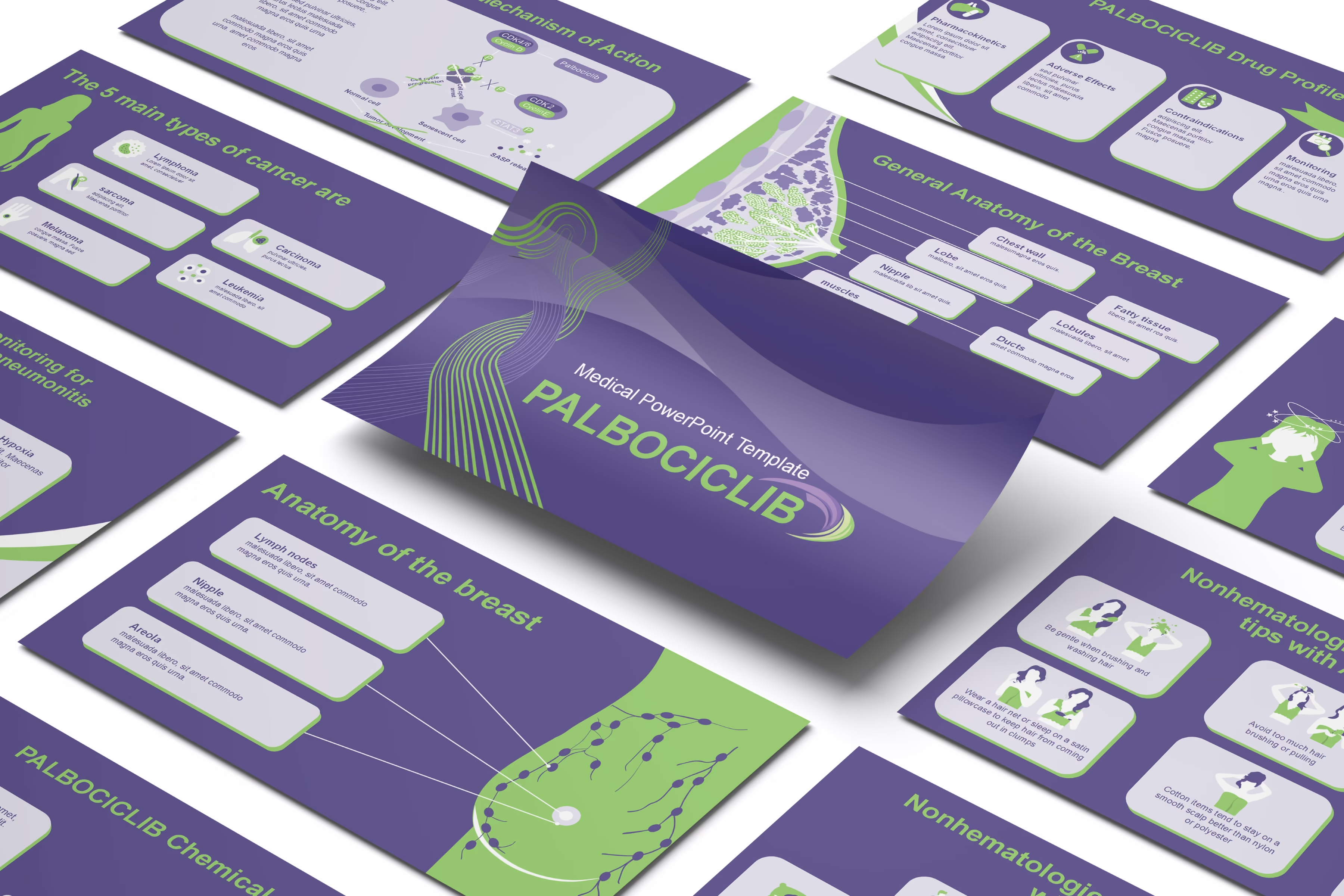




Template Preview
Designed for healthcare professionals creating clear and structured medical presentations.
Ideal for doctors, medical educators, and pharmaceutical teams preparing lectures, clinical education, product presentations, and training.
Fully editable in PowerPoint, allowing you to customize diagrams, charts, and slide layouts with your own medical content
Ready-to-use presentation structure that saves time and helps you build professional healthcare presentations quickly.
Fully Animated
Built-in animations help you present medical information clearly and make complex concepts easier to understand.
Editable Colors and Shapes
Editable colors and shapes help you easily customize the slides to match your content and presentation style, just drag and drop your content.
Professional medical layouts
Professional medical layouts help you organize clinical information, medical data, and treatment insights in a clear and structured way.

Created by Medical Professionals
This template prioritizes medical accuracy, clarity, and real-world usability. Each slide is designed with a medical audience in mind, helping you present clinical information, data, and treatment insights in a way that is structured, credible, and easy for healthcare professionals to understand.
Pharmaceutical Product & Medical Affairs Presentations
Medical Affairs teams supporting a CDK4/6-inhibitor or breast-cancer portfolio can use this Palbociclib template's cell-cycle mechanism, CDK4/6 inhibition arresting the G1-to-S phase transition, as scientific groundwork before any product-specific data enters a conversation. MSLs can reference the PALOMA trial content when a scientific exchange calls for context on combination use with aromatase inhibitors or fulvestrant. The neutropenia-monitoring content, complete blood count checks before treatment and on days one and fifteen of the first two cycles, gives Medical Affairs a ready reference without commissioning new safety slides. Oncology-facing teams gain a consistent scientific reference spanning mechanism, combination therapy, and monitoring.

Medical Congress & Scientific Conference Presentations
Oncologists preparing a congress session can build around this Palbociclib template's CDK4/6-inhibition mechanism, tracing the G1/S cell-cycle checkpoint, rather than assembling cell-cycle diagrams from scratch. A Key Opinion Leader presenting on HR-positive, HER2-negative breast cancer can adapt the PALOMA trial content to an endocrine-combination-therapy discussion. A presenter's own institutional neutropenia-management data layers into the existing 125-to-100-to-75-mg dose-modification content without disturbing the underlying mechanism illustrations. The 21-days-on/7-days-off dosing schedule keeps the discussion clinically current for a specialist audience.

Medical Training for Pharmaceutical & Life Sciences Companies
Oncology sales teams onboarding new representatives can structure introductory sessions around this Palbociclib template's CDK4/6-inhibition mechanism, working from cell-cycle arrest through to tumor growth suppression before a single dosing conversation begins. Representatives study the 125-mg, 21-days-on/7-days-off dosing schedule and its combination use with aromatase inhibitors or fulvestrant, alongside the PALOMA trial evidence, before they are cleared to discuss the product with oncologists. The neutropenia-monitoring and dose-modification content gives trainees a structured foundation for safety conversations. New hires reach the field able to connect mechanism, dosing, and monitoring into a single coherent story.

eLearning & SCORM Training Modules
Oncology and pharmacy programs building a CDK4/6-inhibitor module can customize this Palbociclib template with their own case studies, then convert the finished presentation into a SCORM-compliant module for a learning management system. The cell-cycle-inhibition animation translates naturally into interactive checkpoints within a broader oncology pharmacology course. When a program needs a narrower scope, such as the neutropenia-monitoring content alone, the RxSlides team can adjust the template's depth and branding. The RxSlides team can also build a fully custom, from-scratch presentation whenever a training objective isn't yet covered by the catalog.
Medical & Healthcare Education
Medical and pharmacy faculty teaching targeted breast-cancer therapy can use this template's CDK4/6-inhibition sequence to walk students through the G1/S cell-cycle checkpoint and its role in tumor growth arrest. The PALOMA trial content gives students a clear evidence base for combination therapy with endocrine agents. The neutropenia-monitoring and dose-modification content connects classroom pharmacology to the safety-monitoring reasoning students will need at the bedside. Students leave with a structured understanding of palbociclib spanning mechanism, dosing, evidence, and safety.
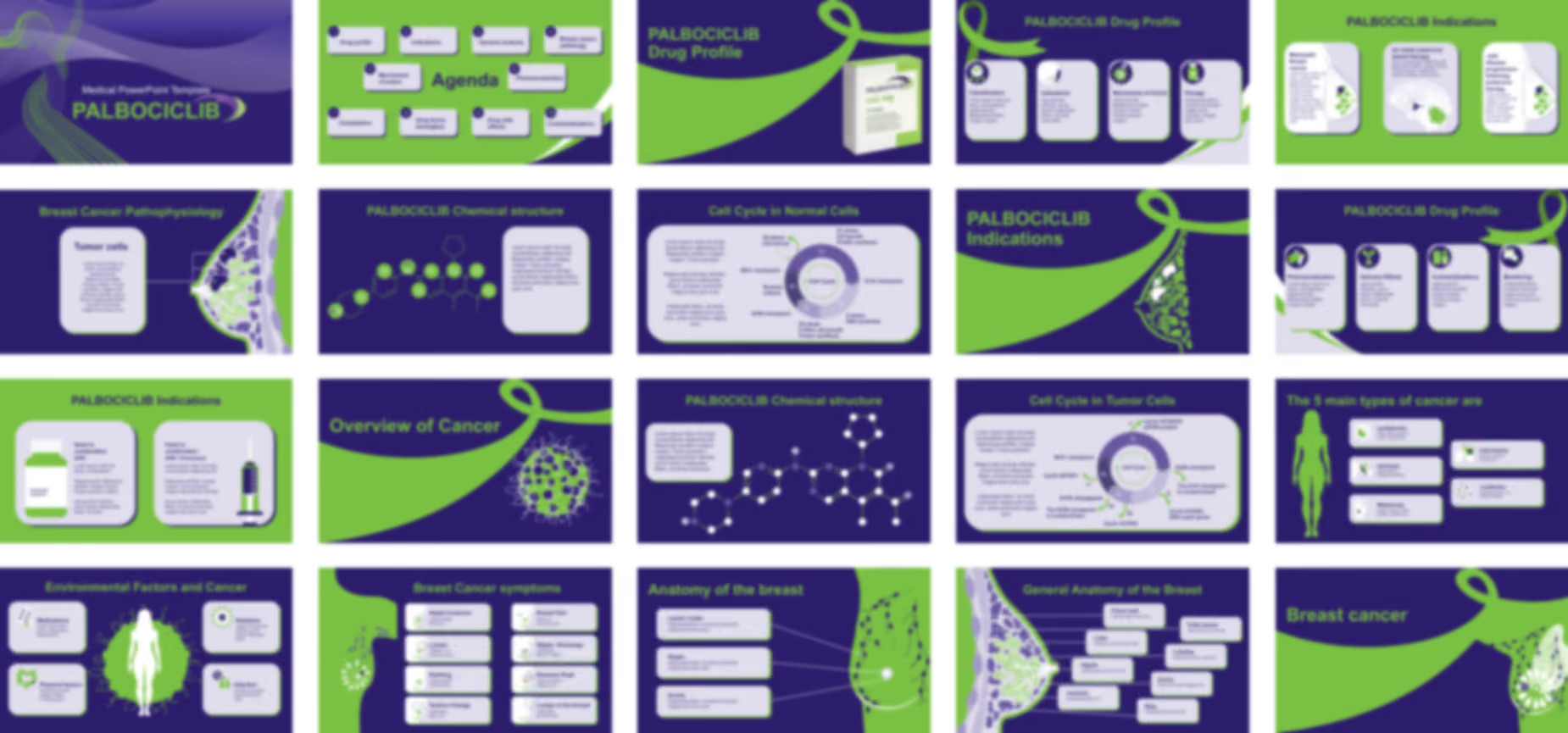
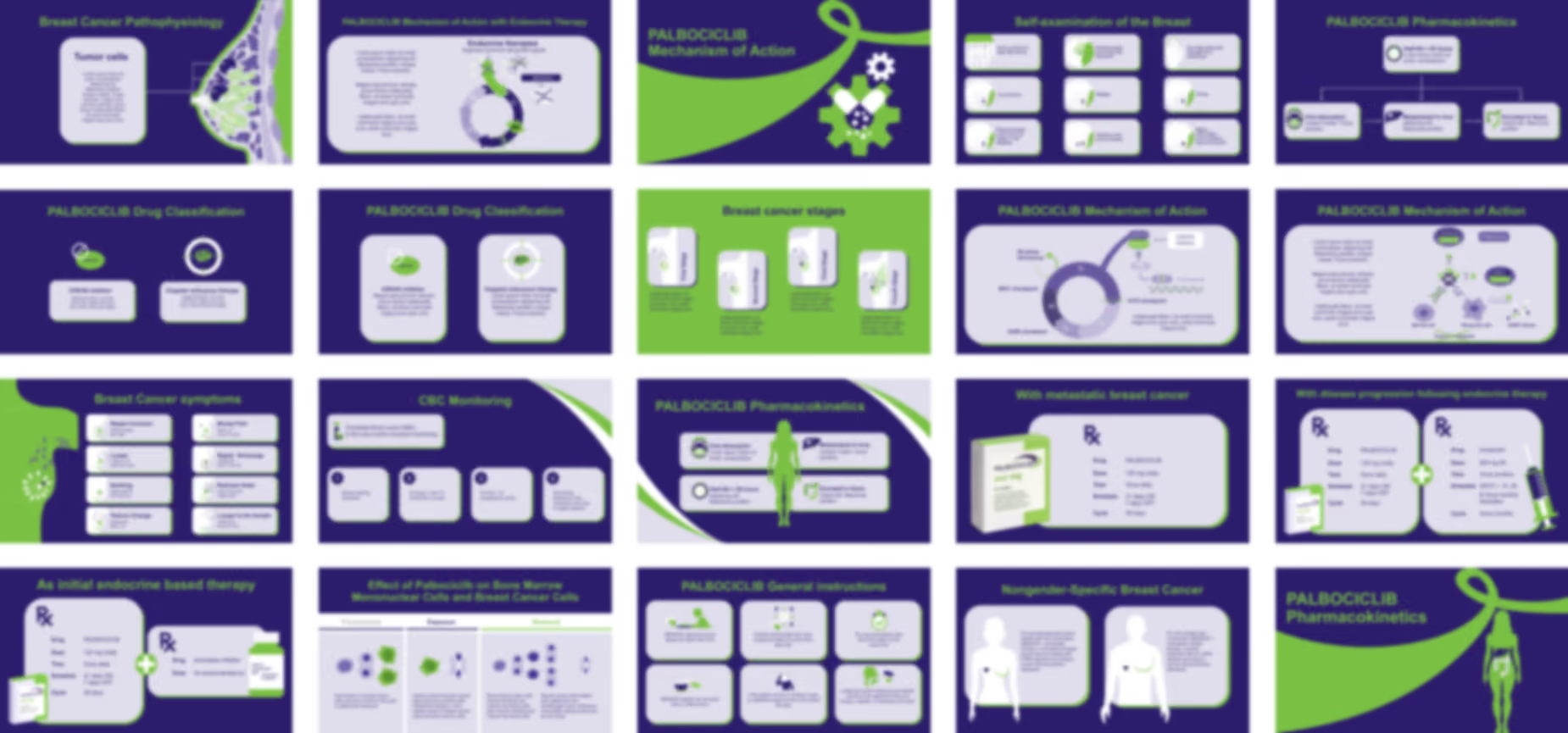
The Palbociclib PowerPoint template opens by classifying the drug as a CDK4/6 inhibitor used as a targeted anticancer therapy, in this editable medical presentation template. It then maps the indicated uses across metastatic breast cancer with disease progression following endocrine therapy and as initial endocrine based therapy, each shown in combination with fulvestrant or an aromatase inhibitor.
Dosage tables outline palbociclib at 125 mg orally once daily on a 21 days on, 7 days off schedule across a 28 day cycle, paired with fulvestrant 500 mg intramuscularly on days 1, 15, and 29 and monthly thereafter, or with an aromatase inhibitor as recommended. Establishing this regimen structure first gives learners a consistent reference point before administration guidance addresses same time daily dosing, food requirements for capsules versus tablets, and instructions for missed or vomited doses.
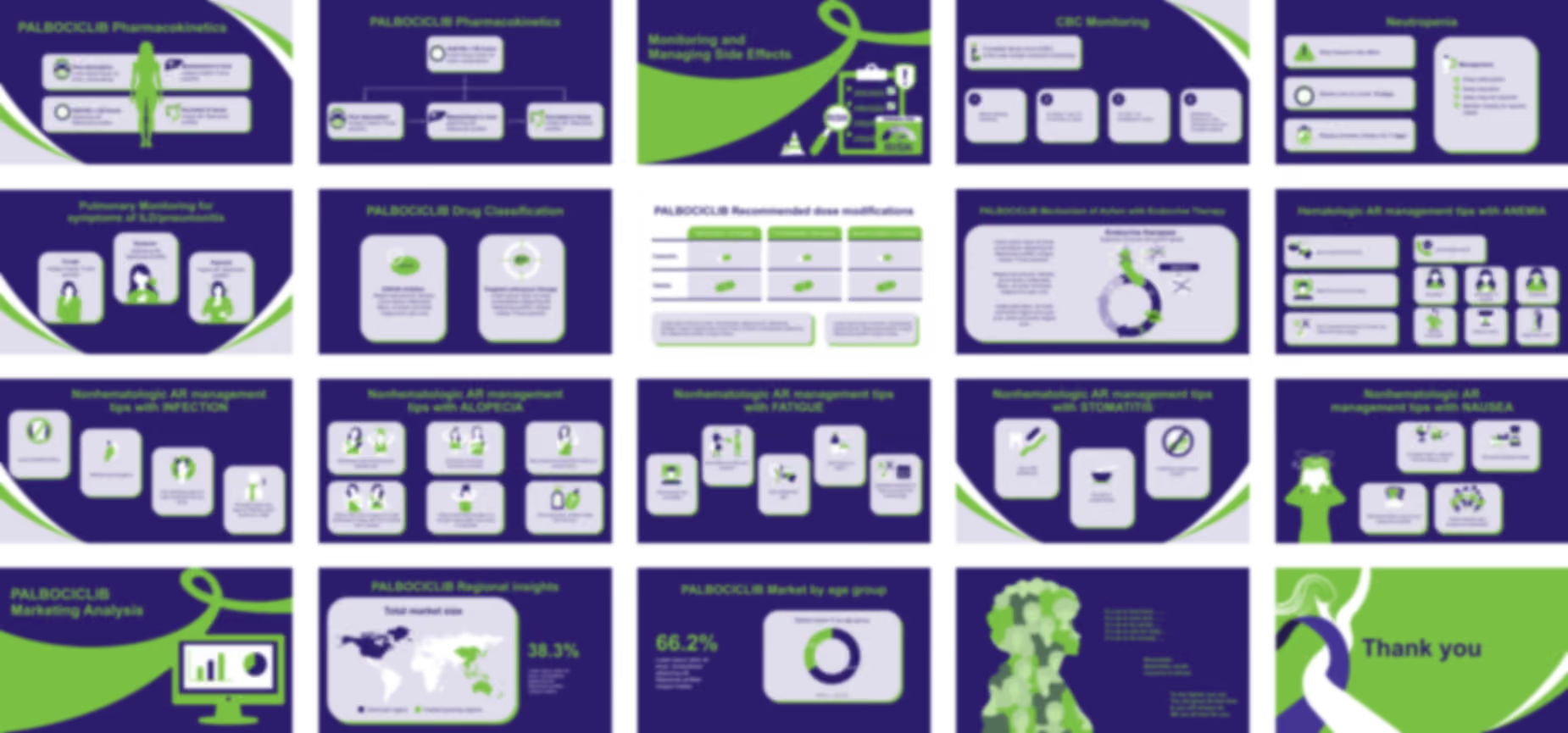
Illustrations cover oral absorption, hepatic metabolism, a half life of approximately 29 hours, and fecal excretion, alongside a complete blood count monitoring schedule checked before treatment starts, on days 1 and 15 of the first two cycles, and on day 1 of later cycles. Neutropenia is flagged as the most frequent side effect, with a median onset of 15 days and a median duration of 7 days for Grade 3 or higher cases, managed through dose interruption or reduction.
A set of patient facing tips addresses anemia, infection, alopecia, fatigue, stomatitis, and nausea, covering rest and diet strategies alongside warning signs such as dizziness, fever, or blood in stool that warrant prompt reporting. The template also charts a three step dose modification path from 125 mg to 100 mg to 75 mg per day across customizable diagrams for capsule and tablet forms.
Ready To Transform Your Presentation ?
Pay once, use forever