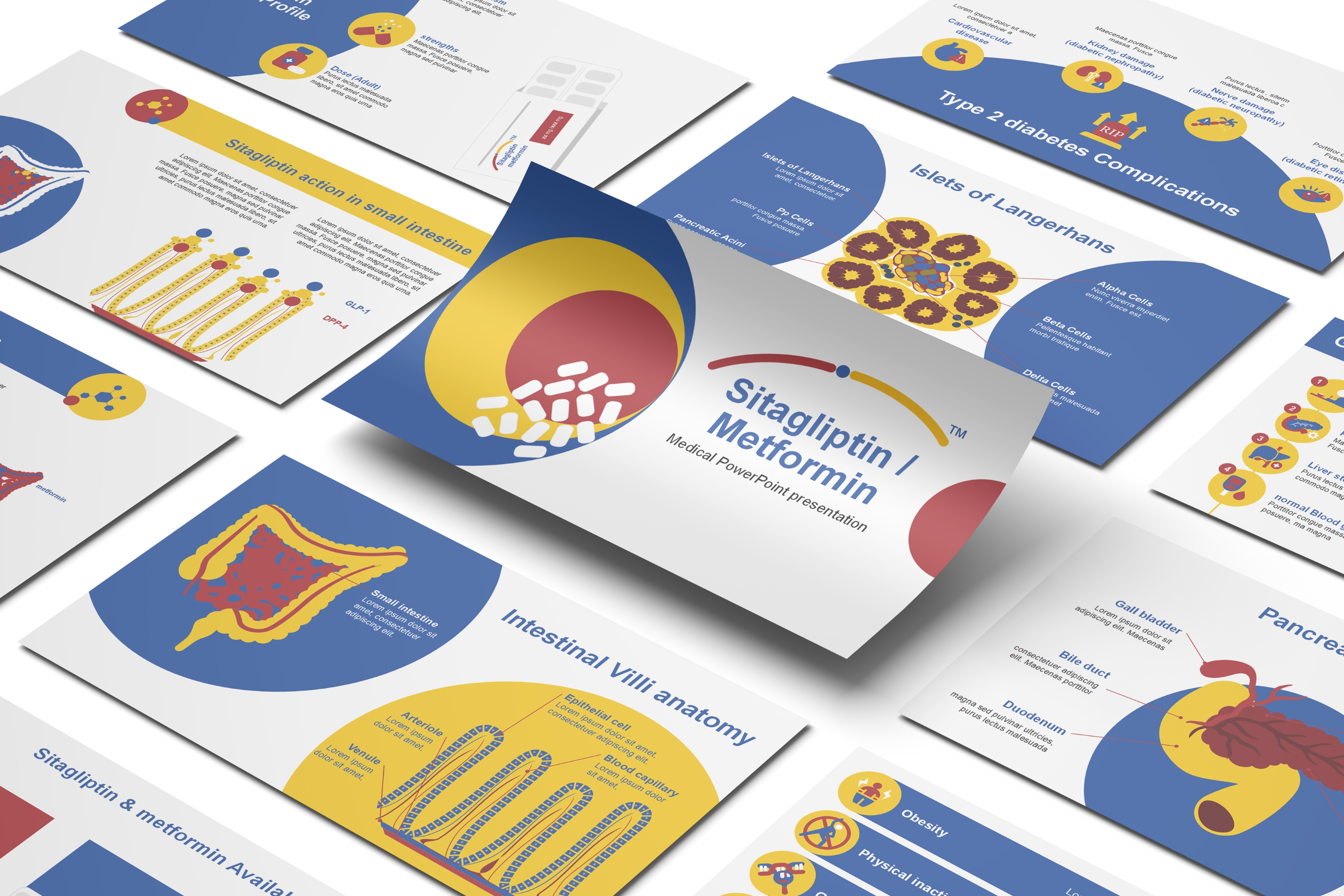
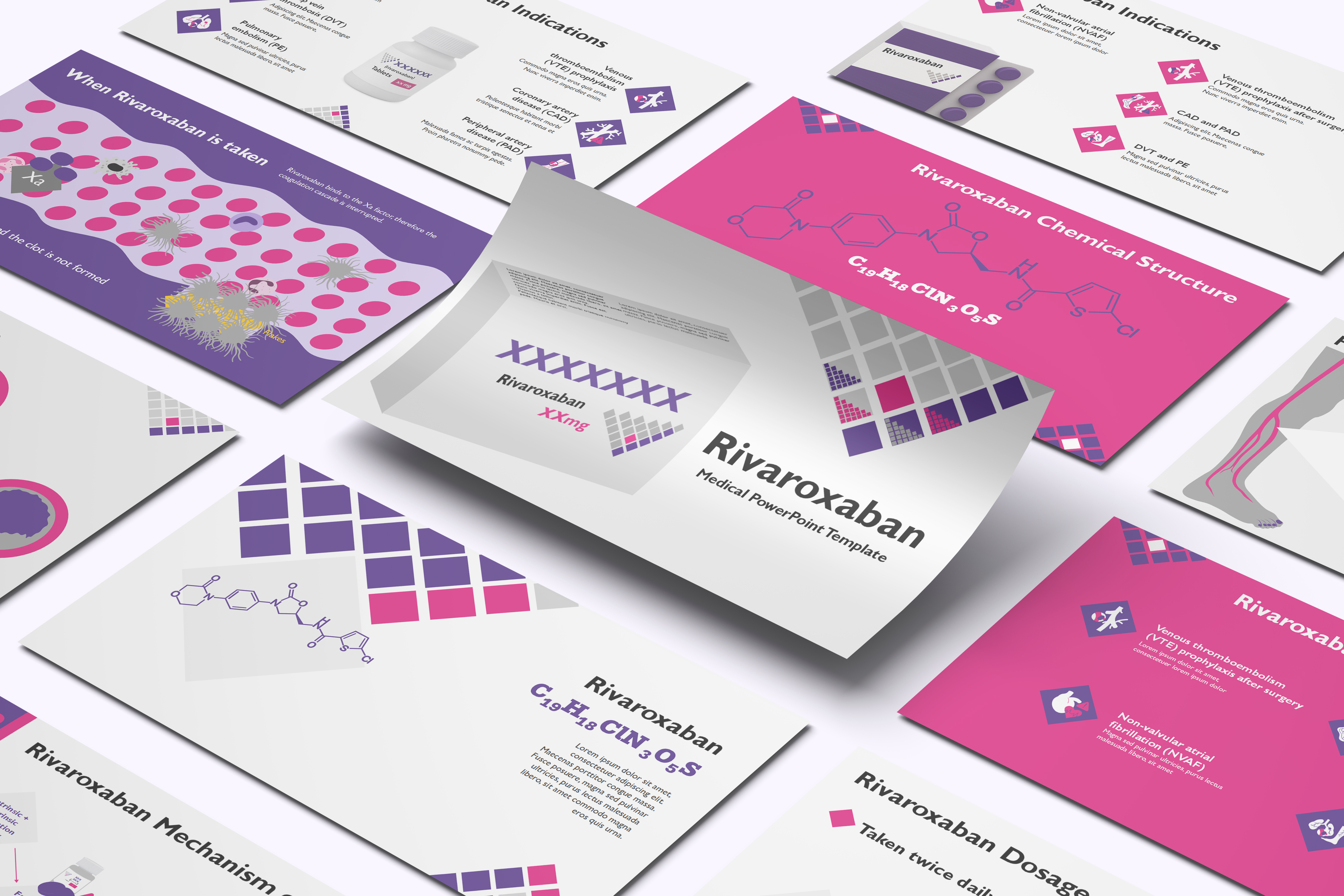
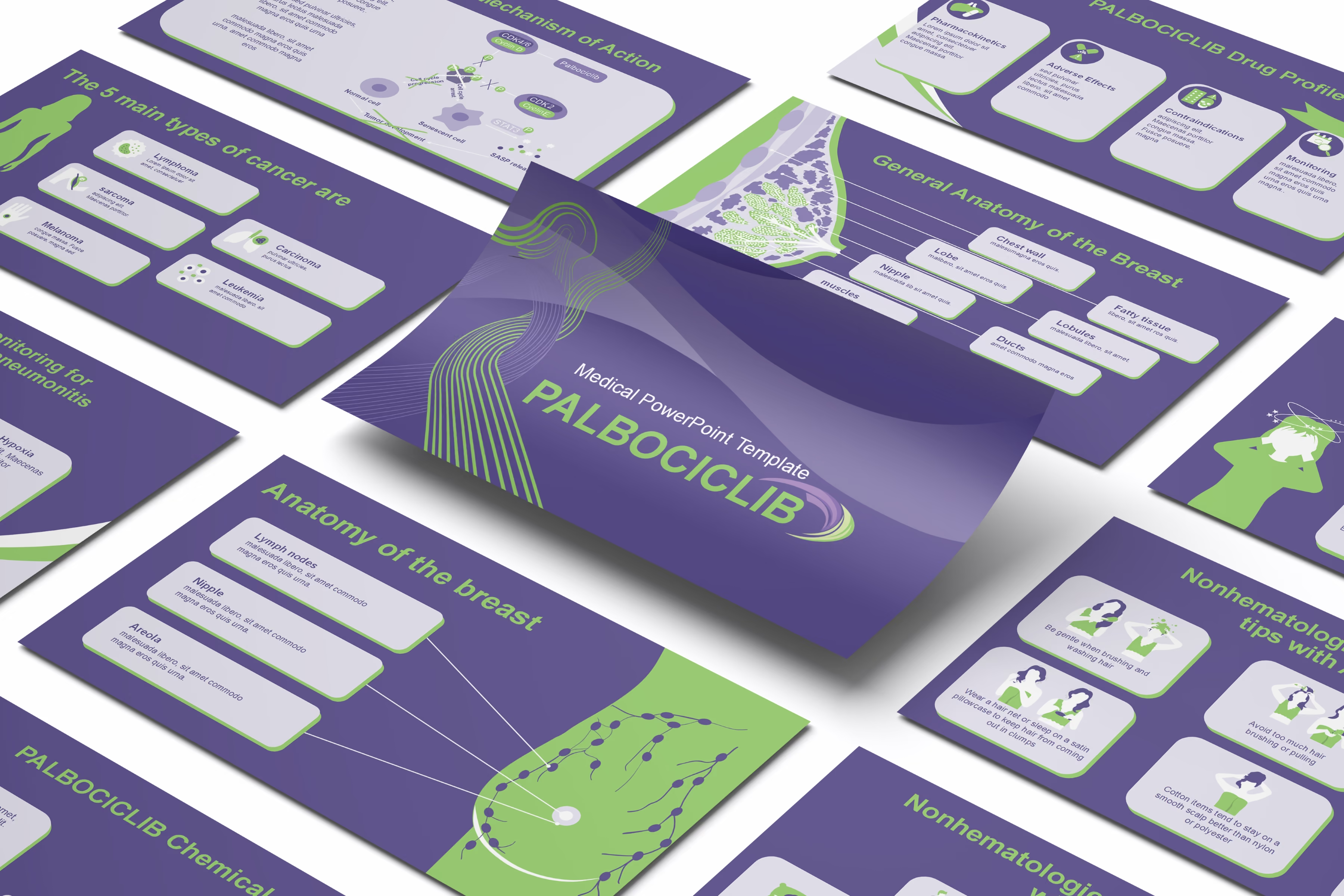
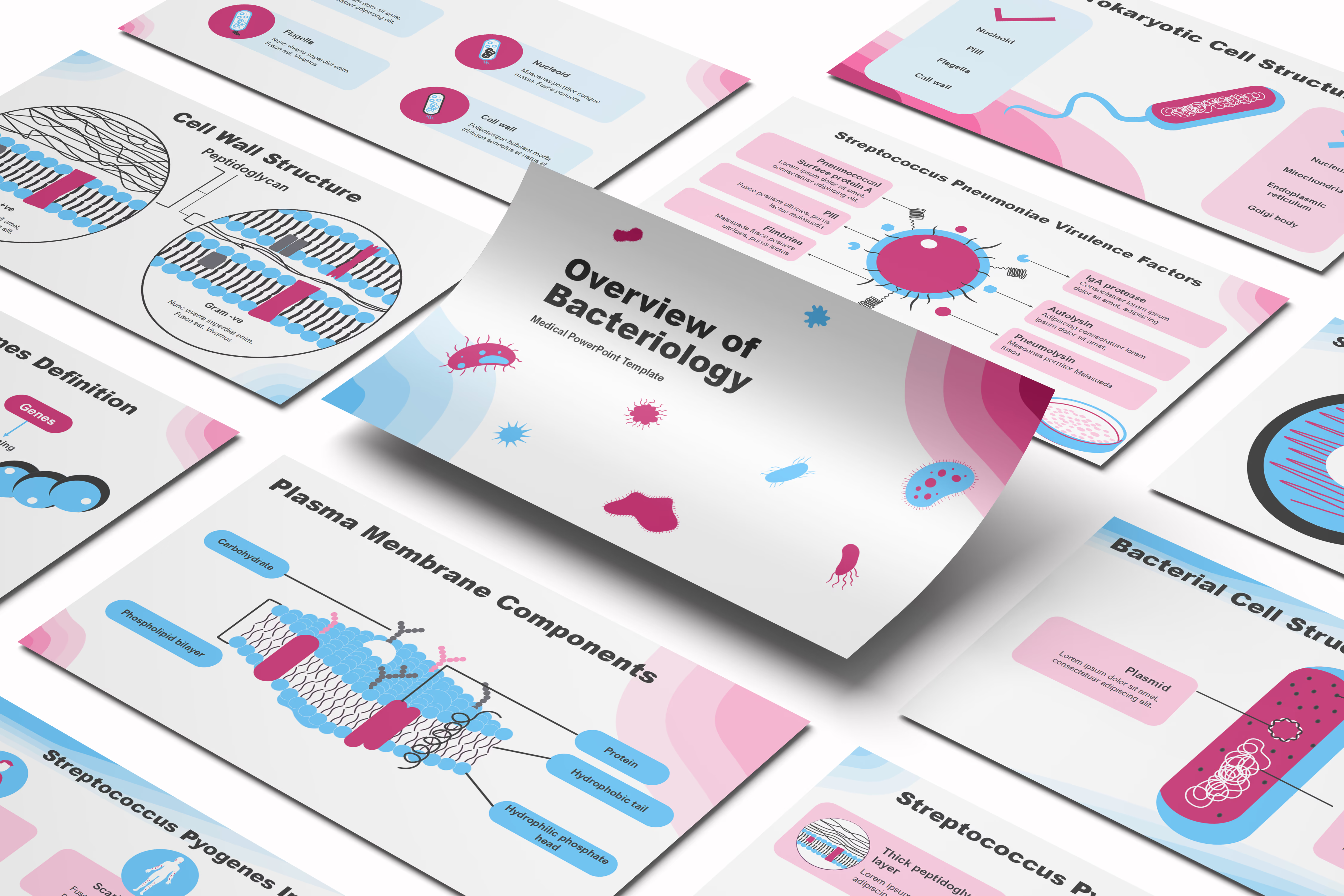
Azelastine PowerPoint Template





Template Preview
Designed for healthcare professionals creating clear and structured medical presentations.
Ideal for doctors, medical educators, and pharmaceutical teams preparing lectures, clinical education, product presentations, and training.
Fully editable in PowerPoint, allowing you to customize diagrams, charts, and slide layouts with your own medical content
Ready-to-use presentation structure that saves time and helps you build professional healthcare presentations quickly.
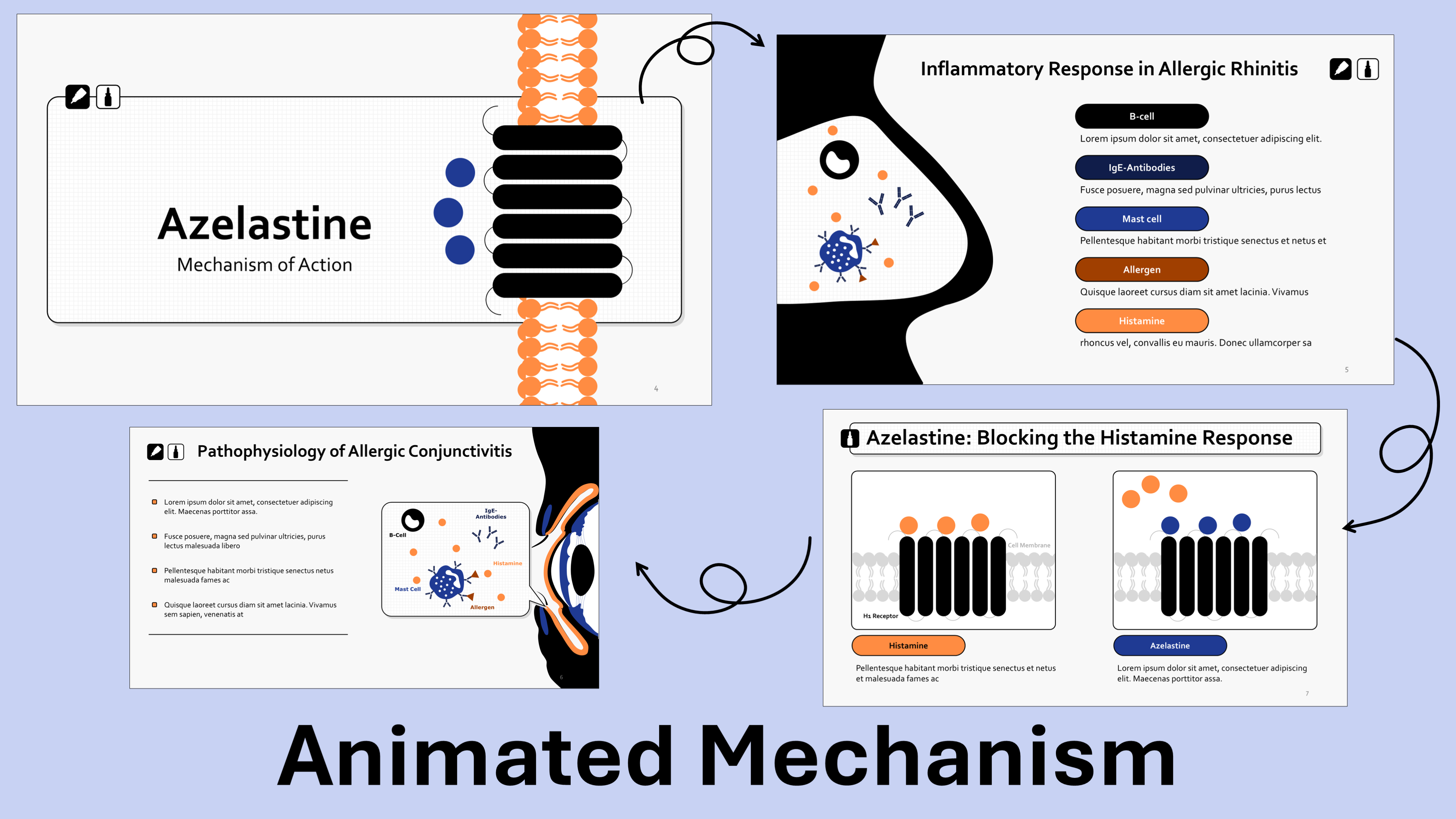
Fully Animated
Built-in animations help you present medical information clearly and make complex concepts easier to understand.
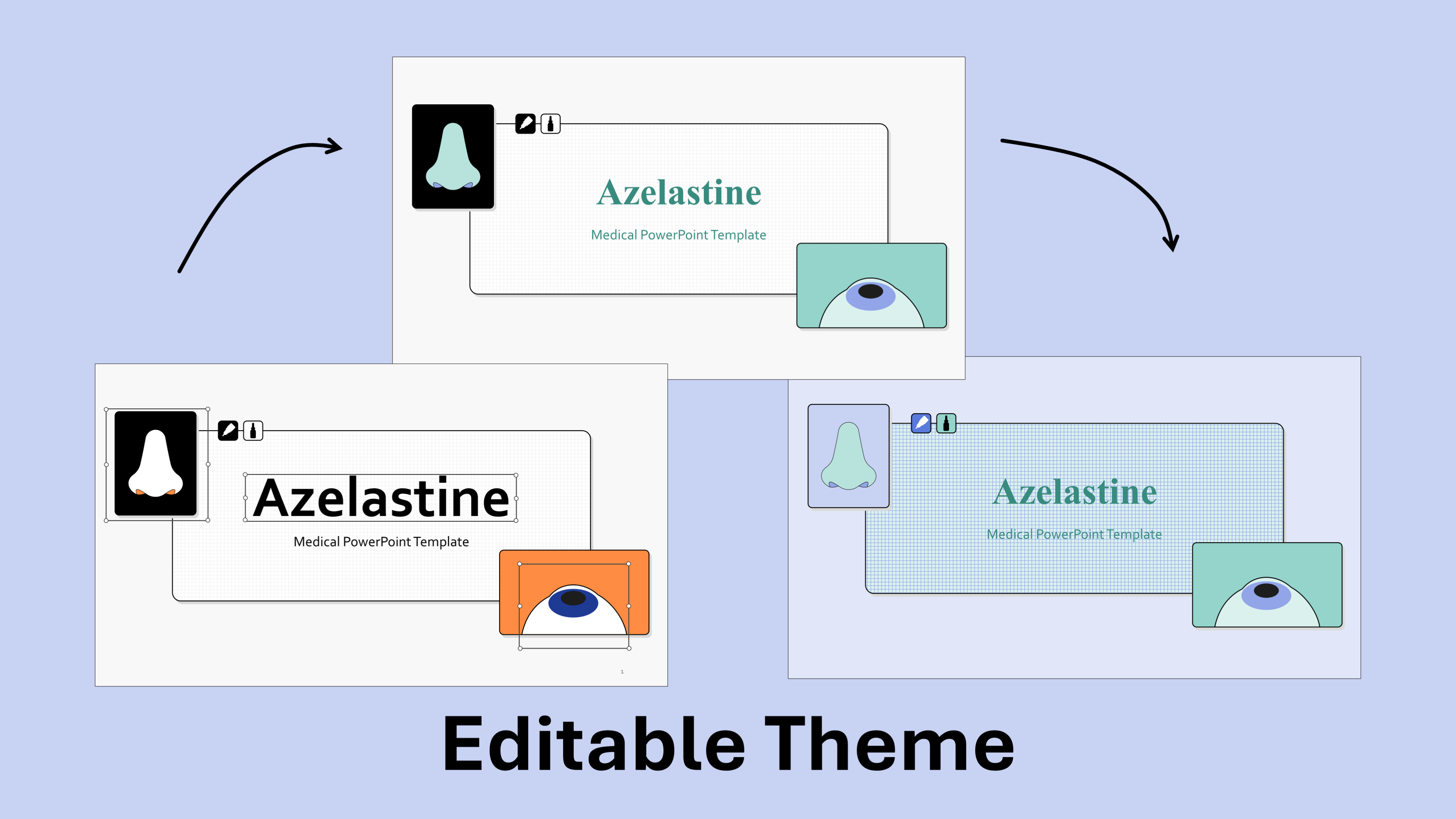
Editable Colors and Shapes
Editable colors and shapes help you easily customize the slides to match your content and presentation style, just drag and drop your content.
Professional medical layouts
Professional medical layouts help you organize clinical information, medical data, and treatment insights in a clear and structured way.

Created by Medical Professionals
This template prioritizes medical accuracy, clarity, and real-world usability. Each slide is designed with a medical audience in mind, helping you present clinical information, data, and treatment insights in a way that is structured, credible, and easy for healthcare professionals to understand.
Pharmaceutical Product & Medical Affairs Presentations
Medical Affairs and Commercial Excellence teams preparing field materials for an antihistamine brand can build from the Azelastine template's animated H1 receptor blocking sequence and its comparison matrix against Loratadine and Fluticasone. Sales representatives are trained on the finished materials before detailing allergists, ENT specialists, and pharmacists on nasal spray and ophthalmic drop administration technique, while Medical Science Liaisons carry the underlying science into scientific exchange with prescribers. Editable pharmacokinetic slides covering bioavailability, Cmax, and protein binding, plus U.S. clinical performance data, give the brand team a consistent, compliant starting point subject to internal promotional review. Consistent messaging across the salesforce shortens the time it takes to bring a refreshed product story to the field.

Medical Congress & Scientific Conference Presentations
Allergists, ENT specialists, and academic Key Opinion Leaders preparing a scientific conference talk on allergic and vasomotor rhinitis can start from slides mapping Azelastine's molecular structure and its step-by-step H1 receptor binding animation. The template's respiratory anatomy and tear film illustrations support a narrative that moves from mechanism to formulation choice between intranasal and ophthalmic delivery. Rather than rebuilding comparative efficacy tables from published literature, presenters can adapt the built-in comparison against Loratadine and Fluticasone alongside side-effect and drug interaction mapping. The result is a congress-ready scientific narrative a presenter can tailor to their own patient population before stepping on stage.
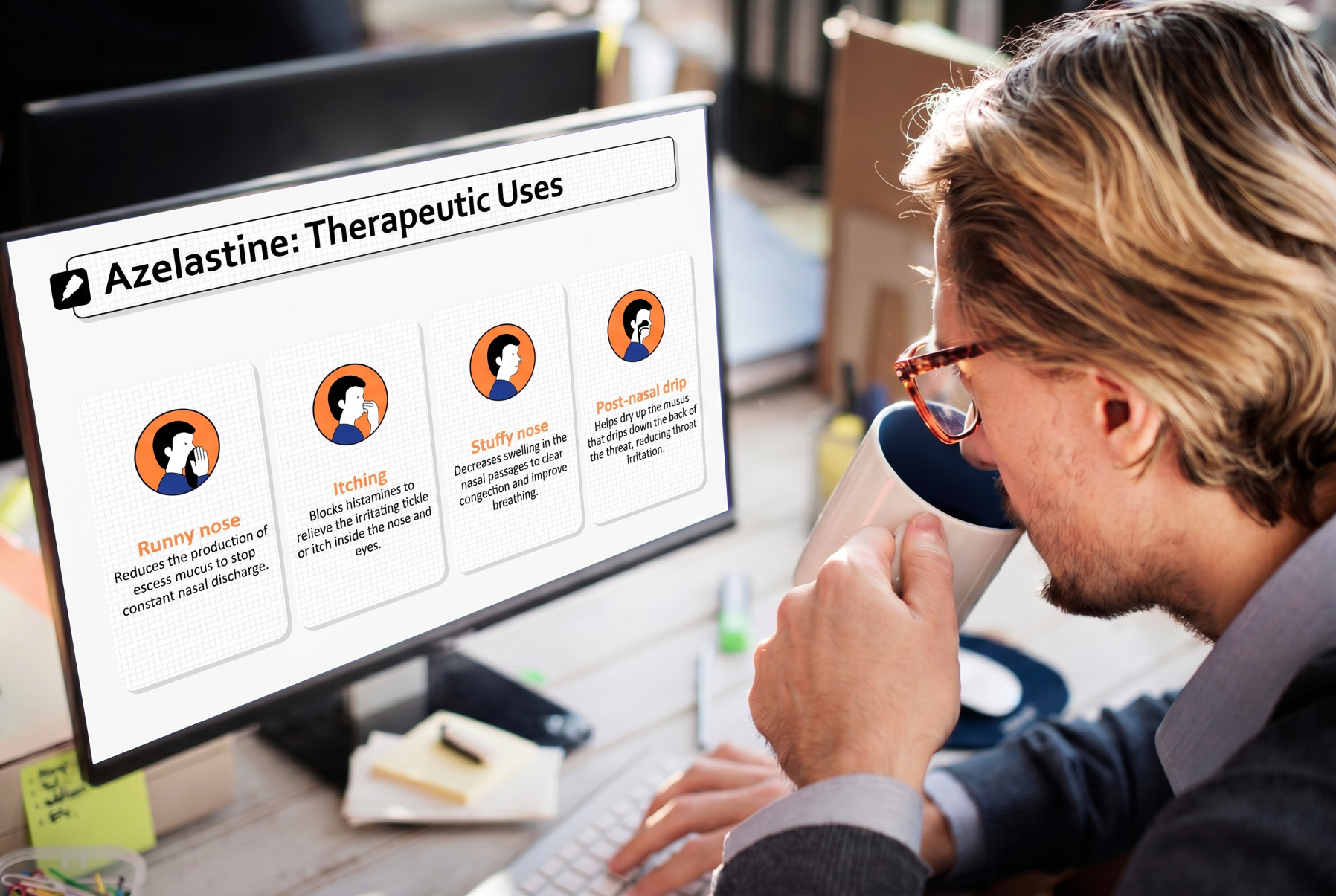
Medical Training for Pharmaceutical & Life Sciences Companies
Training and Learning and Development teams onboarding a respiratory or allergy sales team can customize the Azelastine template's nasal spray and ophthalmic drop administration walkthroughs into a structured curriculum. New representatives study the drug interaction mapping for CNS depressants and the safety and tolerability slides before they are cleared to have promotional conversations with pharmacists and healthcare professionals. Clinical trainers pair the mechanism-of-action animation with the pharmacokinetics section covering Cmax, Tmax, and metabolism to build product knowledge that holds up under HCP questioning. New hires reach field readiness faster, with fewer inconsistencies in how the drug's safety profile gets explained.

eLearning & SCORM Training Modules
Instructional designers and clinical pharmacology educators can customize the Azelastine template with their institution's own dosing protocols and patient case examples, then optionally convert that finished presentation into a SCORM-compliant module for pharmacy students or continuing education learners on an LMS. The RxSlides team can adjust the template's scope, depth, or branding for a specific pharmacy school or hospital training program. When an existing template isn't the right starting point, a fully custom presentation on antihistamine pharmacology can be designed from scratch. This sequence turns a static slide set into trackable, LMS-ready coursework without forcing a rebuild of the underlying science.
Medical & Healthcare Education
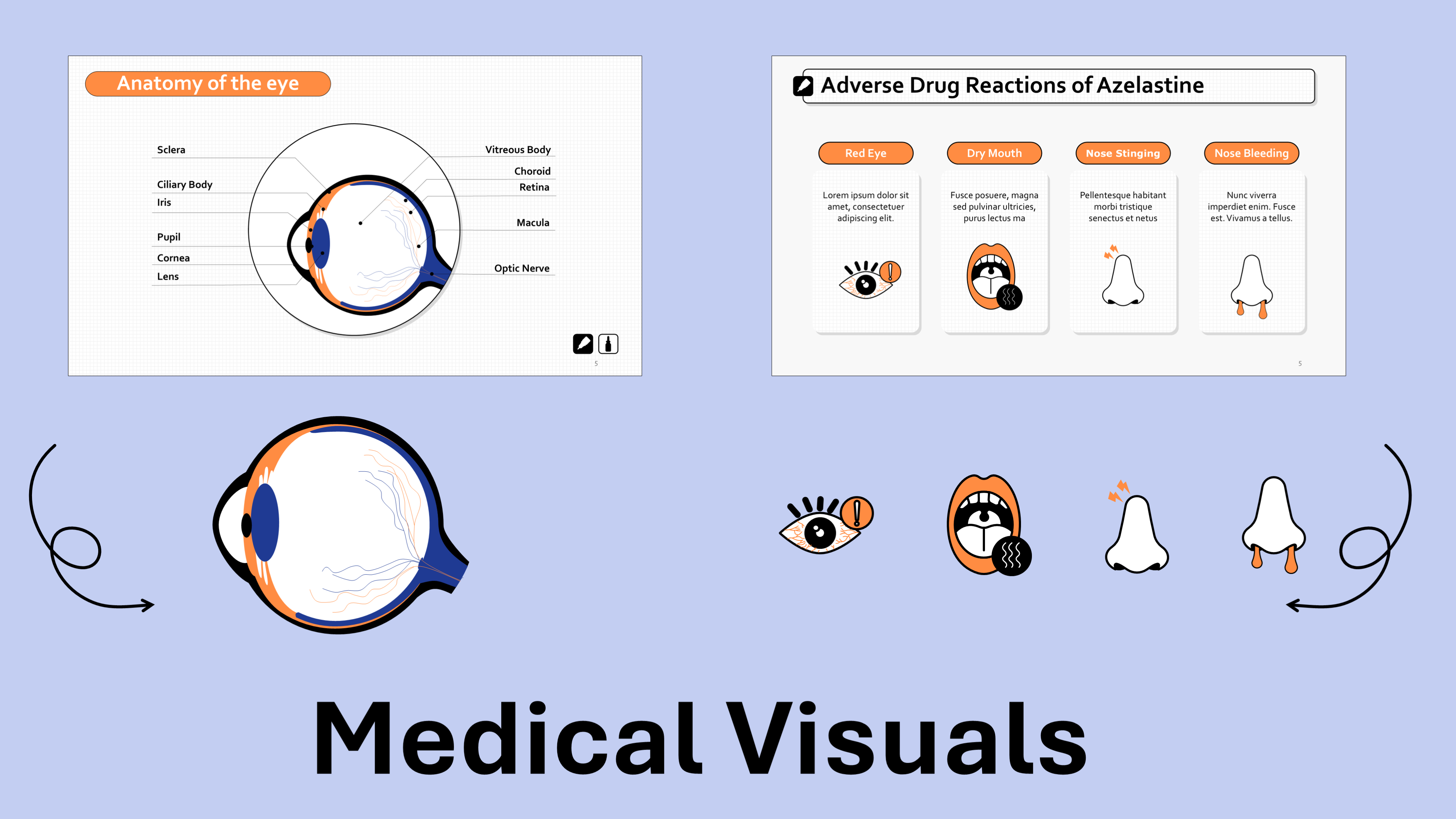
Pharmacy and medical school educators building a lecture on second-generation antihistamines can draw on the template's respiratory and ocular anatomy illustrations to ground allergic rhinitis and conjunctivitis pathophysiology for students. Continuing education providers preparing CME on H1 receptor antagonists benefit from the same visual library covering mast cell degranulation and inflammatory response, instead of recreating pharmacology diagrams for every course. Editable dosing tables for pediatric and adult nasal and ophthalmic regimens let an instructor tailor content to the audience's clinical level, whether first-year students or practicing clinicians. Students leave with a clearer picture of how Azelastine's mechanism translates into everyday prescribing decisions.
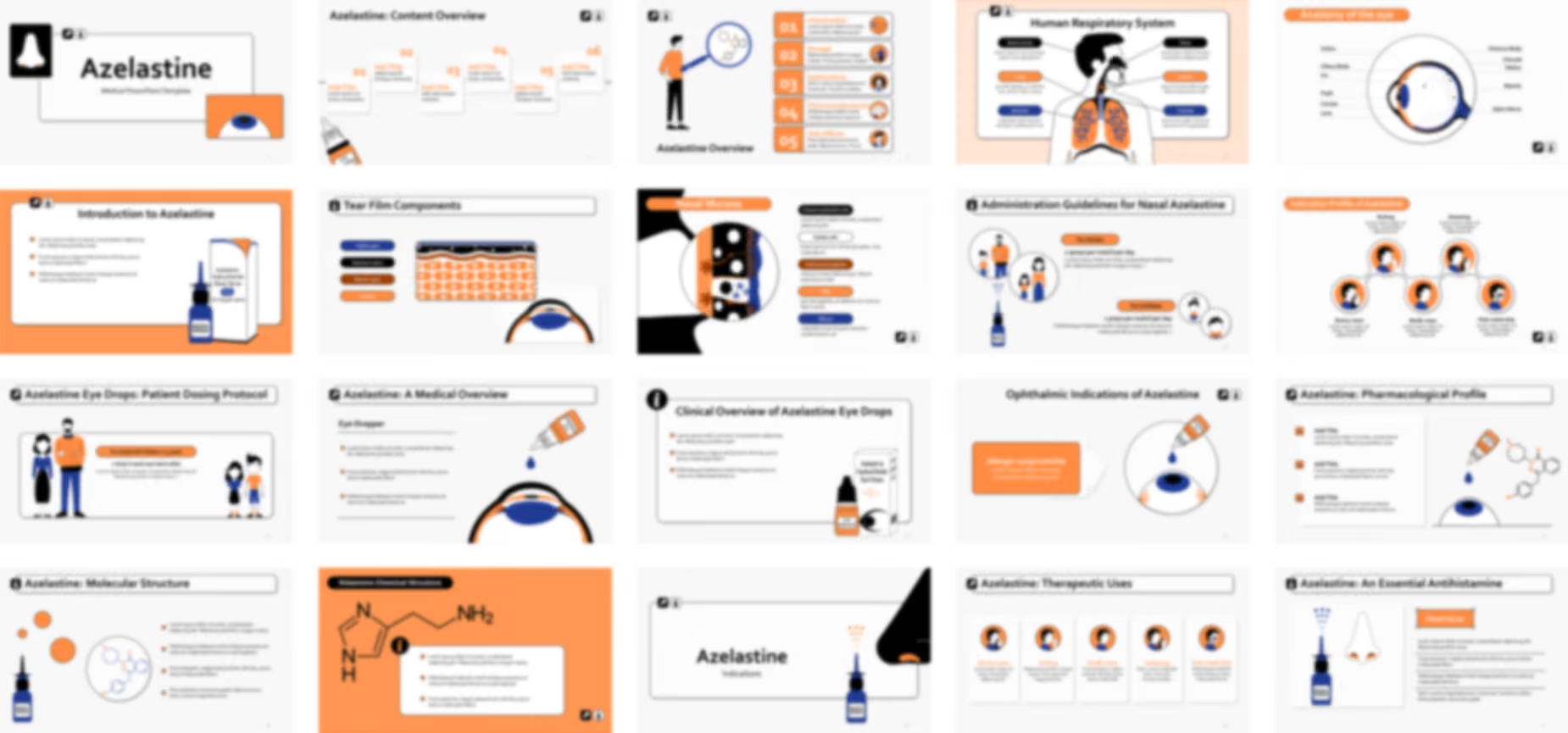
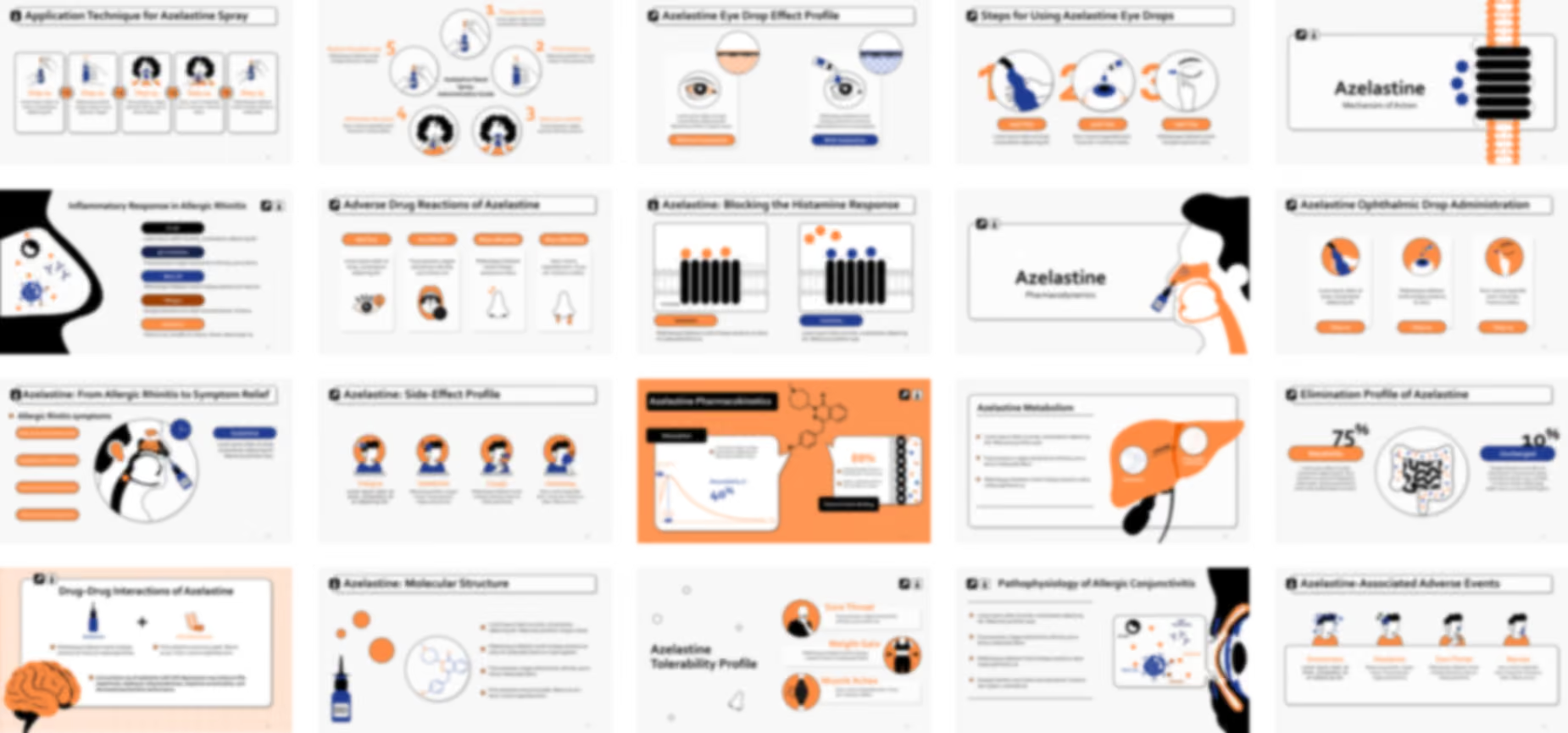
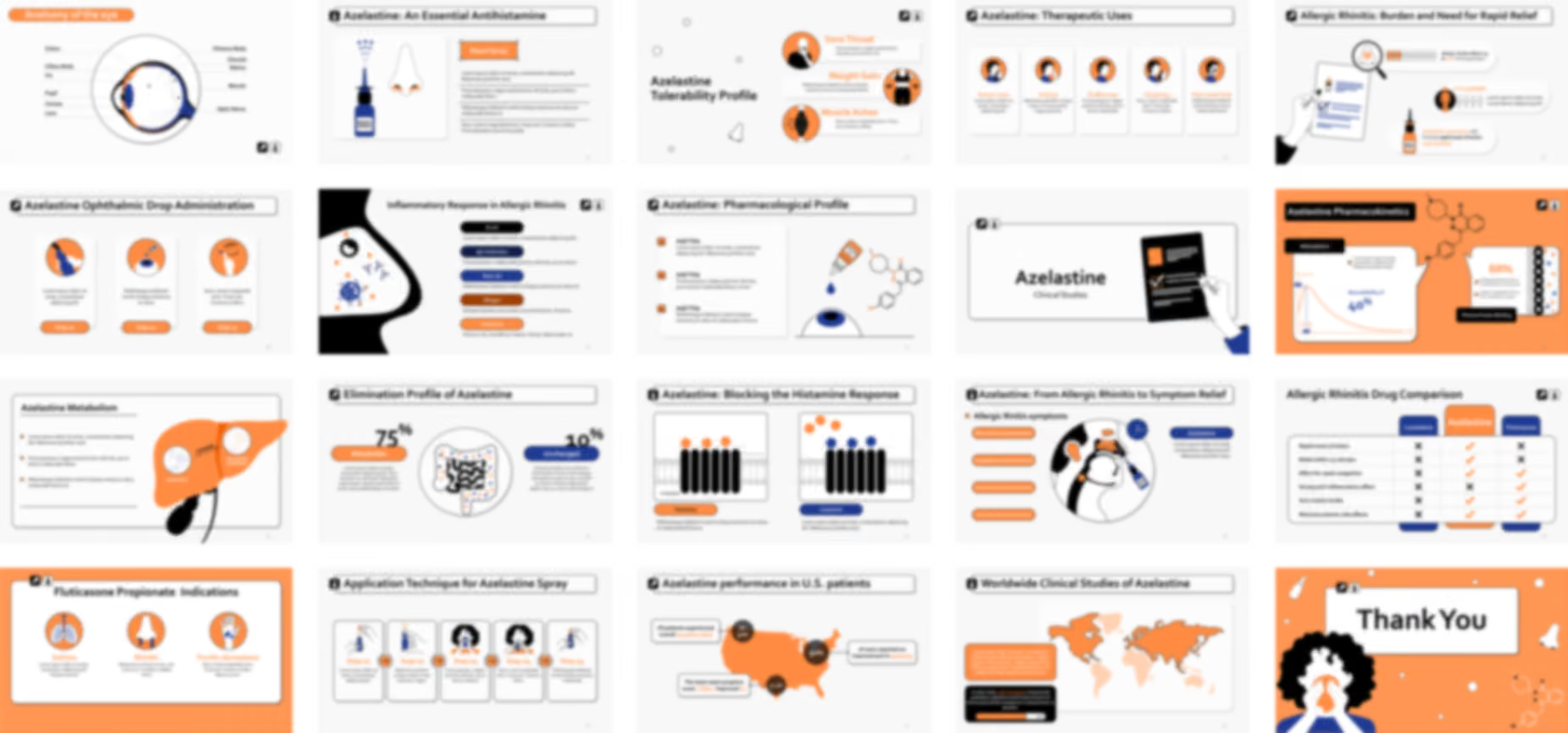
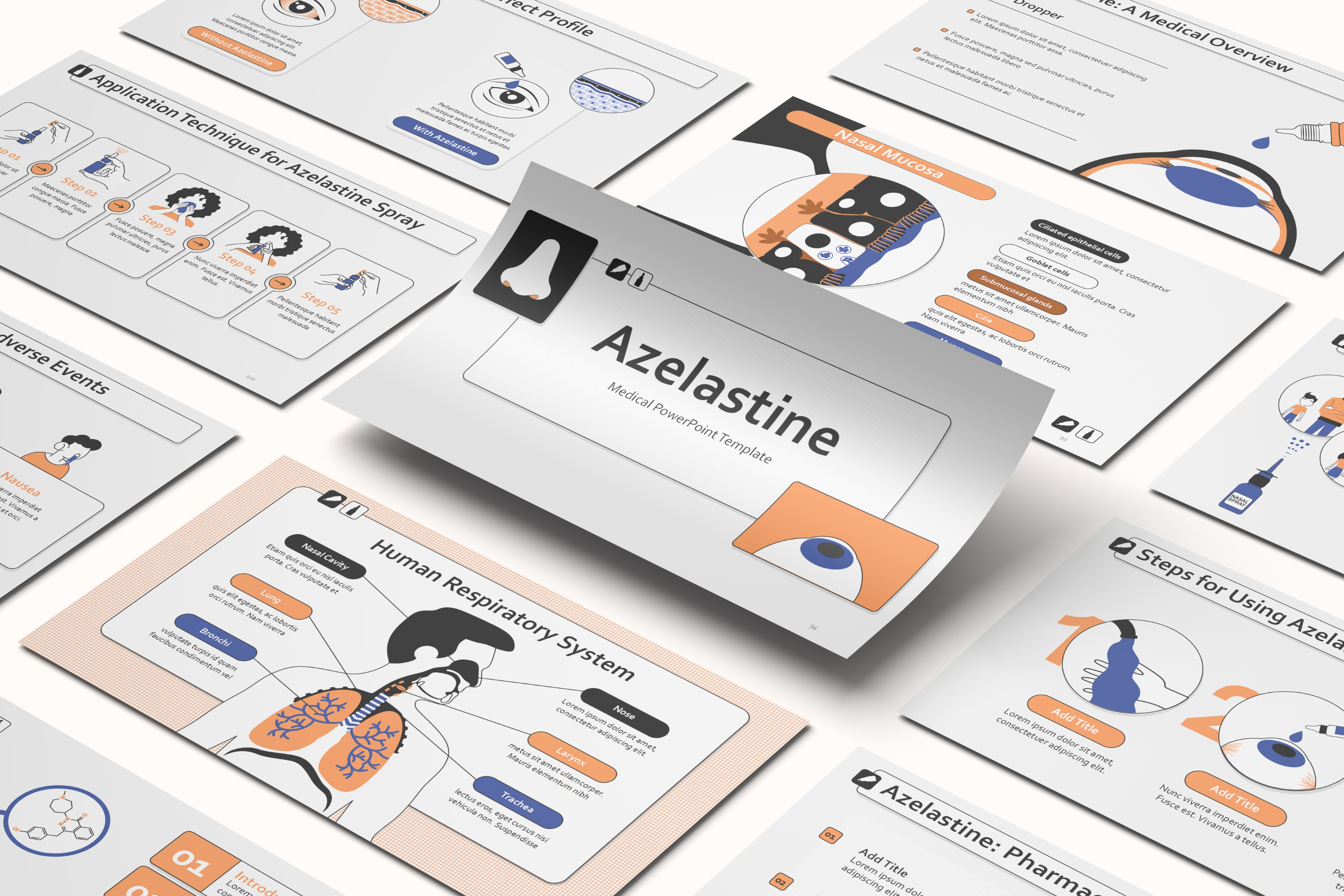
The Azelastine PowerPoint template opens with an overview and index slide before an anatomical diagram labels the nasal cavity, larynx, trachea, and bronchi to establish the respiratory context for the drug. A large scale chemical structure slide and a therapeutic indications profile then round out the introduction, using icons for runny nose, itching, stuffy nose, and sneezing to summarize what the medication treats.
The template walks through a five step circular flow diagram covering nasal spray administration, from preparing the bottle to priming the pump, before an animated illustration of the cell membrane explains how azelastine blocks histamine from binding to the H1 receptor. Establishing the delivery method first gives the presentation a shared reference point before it turns to the drug's cellular action, and further patient protocol slides cover specific adult and pediatric dosing for both nasal and ophthalmic formulations.
Pharmacokinetic slides combine a concentration time curve showing 40 percent bioavailability with plasma protein binding data, while a dedicated slide maps the safety risk of combining azelastine with CNS depressants. Additional editable medical diagrams cover the CYP450 metabolic pathway, histamine chemical structures, and a broader safety and tolerability section detailing drowsiness, headache, and nasal stinging.
A comparative matrix positions azelastine against loratadine and fluticasone, before a US focused infographic map reports 78 to 90 percent overall symptom relief and 90 percent improvement in sneezing. The presentation template closes with detailed pathophysiology slides on mast cell degranulation and the inflammatory response underlying allergic rhinitis and conjunctivitis.
Ready To Transform Your Presentation ?
Pay once, use forever