Cardiovascular System Anatomy & Physiology PowerPoint Template

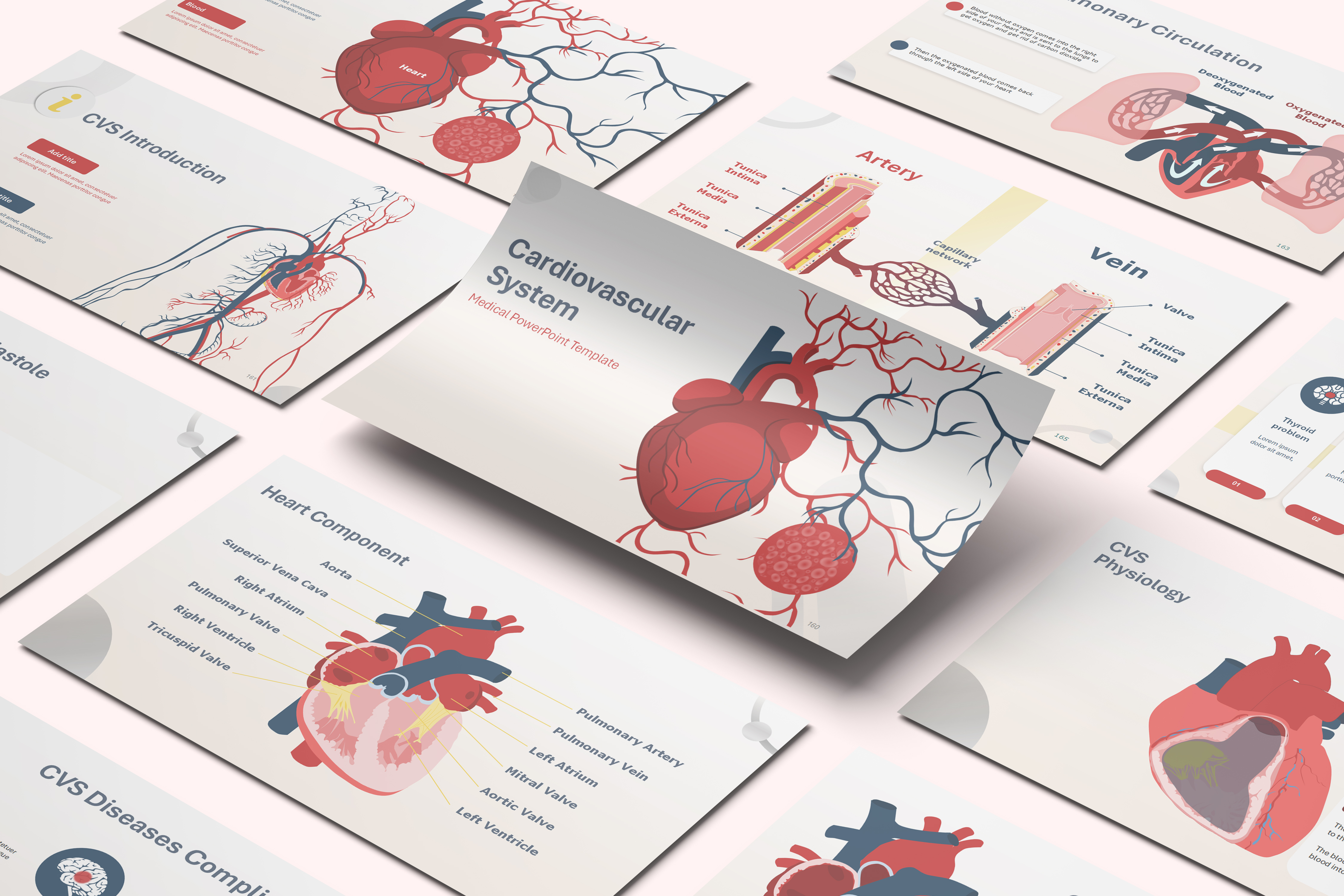




Template Preview
Designed for healthcare professionals creating clear and structured medical presentations.
Ideal for doctors, medical educators, and pharmaceutical teams preparing lectures, clinical education, product presentations, and training.
Fully editable in PowerPoint, allowing you to customize diagrams, charts, and slide layouts with your own medical content
Ready-to-use presentation structure that saves time and helps you build professional healthcare presentations quickly.
Fully Animated
Built-in animations help you present medical information clearly and make complex concepts easier to understand.
Editable Colors and Shapes
Editable colors and shapes help you easily customize the slides to match your content and presentation style, just drag and drop your content.
Professional medical layouts
Professional medical layouts help you organize clinical information, medical data, and treatment insights in a clear and structured way.

Created by Medical Professionals
This template prioritizes medical accuracy, clarity, and real-world usability. Each slide is designed with a medical audience in mind, helping you present clinical information, data, and treatment insights in a way that is structured, credible, and easy for healthcare professionals to understand.
Medical Training for Pharmaceutical & Life Sciences Companies
The template's conduction system diagram, tracing the electrical impulse from the SA node through the AV node, bundle of His, and Purkinje fibers, gives cardiology-focused training teams a ready foundation for onboarding before any single cardiovascular product enters the conversation. New hires study the valve anatomy and cardiac cycle content, covering systole and diastole, ahead of holding conversations that reference how a therapy affects heart rhythm or contractility. The artery-vein-capillary cross-sections give trainers a scientifically accurate vascular baseline without needing an anatomy illustrator on staff. New hires build the shared cardiovascular vocabulary that every later disease-specific training draws on.

Medical Congress & Scientific Conference Presentations
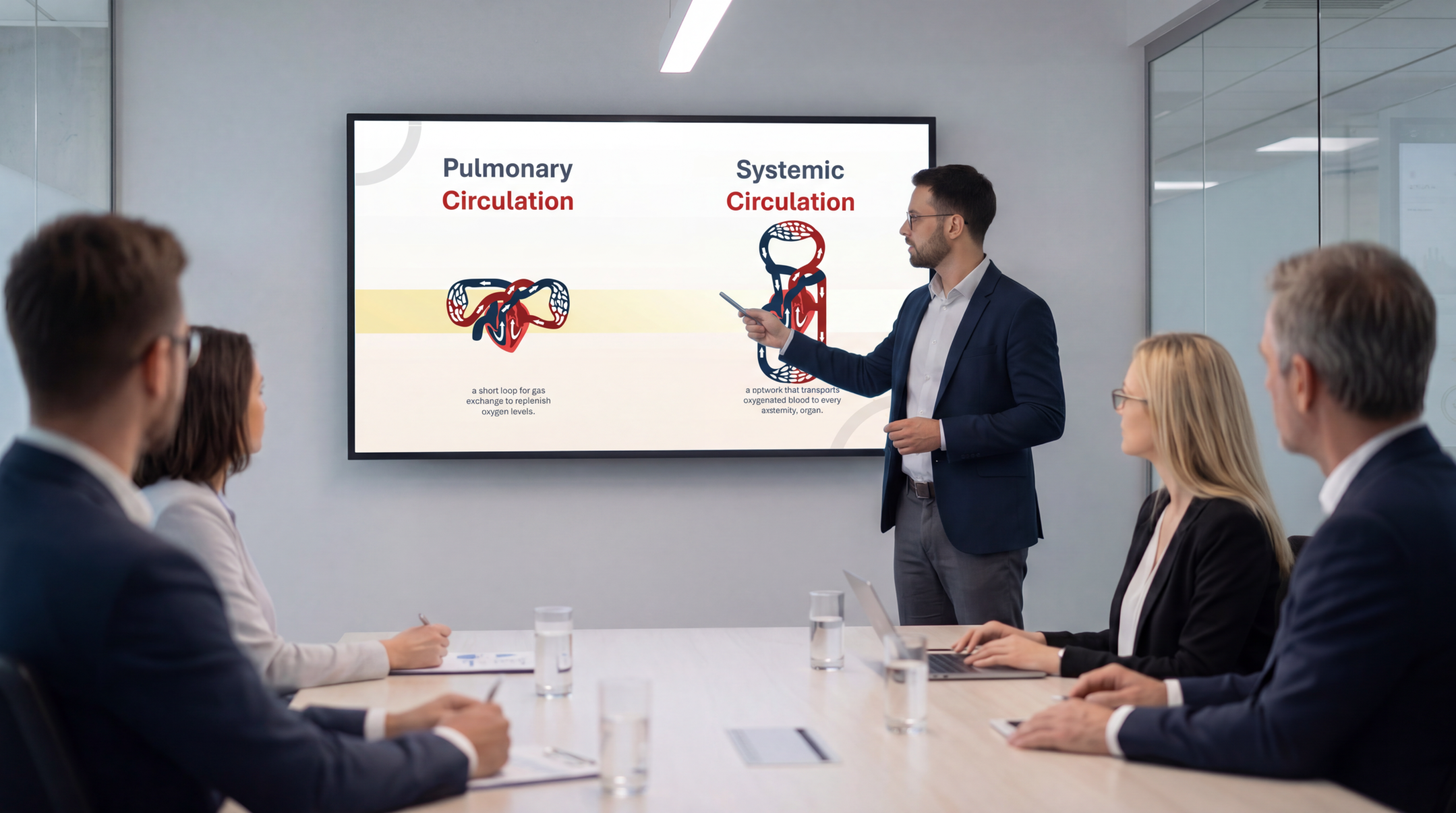
Multi-speaker cardiology symposia need shared anatomical and physiological terminology before speakers move into disease-specific talks, and the template's heart chamber, valve, and conduction system diagrams give cardiologists and academic Key Opinion Leaders that foundation without assembling references from separate anatomy atlases. A medical professor opening a program can use the cardiac output formula and hemodynamics content to set shared quantitative language before individual speakers take the floor. The pulmonary-versus-systemic circulation comparison gives an anatomy-heavy session a clear visual anchor before clinical correlation begins. This template works best as the common physiological ground a multi-speaker cardiology program builds on.
Pharmaceutical Product & Medical Affairs Presentations
The template's chamber, valve, and conduction system slides give Medical Affairs teams building foundational content for a cardiovascular drug program a ready anatomical and physiological base to work from. Medical Science Liaisons use the resulting materials as a shared reference point in scientific exchange with cardiologists, grounding mechanism discussions in the same hemodynamic terminology, cardiac output, preload, afterload, those clinicians already use. Because the anatomy, cardiac cycle, and hemodynamics content is organized separately, Medical Affairs can adjust which physiological concept receives emphasis depending on a compound's mechanism. The template supplies the physiological groundwork; any therapy-specific claims still go through the customer's own promotional review.
eLearning & SCORM Training Modules
Turning this Cardiovascular System template into LMS-ready coursework starts with customization: nursing and allied health educators build in their own institutional curriculum sequencing, then can optionally convert the result into a SCORM-compliant module for students. As delivered, the template functions as a comprehensive reference set rather than a paced course. Because the content already moves from gross anatomy through the cardiac cycle to quantitative hemodynamics, a customized version reaches certification-ready SCORM status without reordering the underlying material. Where a curriculum calls for a narrower or broader scope, the RxSlides team can adjust depth and branding, or build a fully custom cardiovascular anatomy presentation from scratch.
Medical & Healthcare Education
Medical and nursing school faculty teaching cardiovascular physiology can use the template's conduction system and valve diagrams to walk students through how the heart generates and times its own electrical signal, instead of assembling reference diagrams from multiple sources. Allied health programs covering hemodynamics benefit from the same cardiac output and venous return content, without rebuilding the quantitative relationships every semester. Editable vascular histology slides let an instructor go as deep as a course level requires, from a basic artery-vein comparison to full three-layer vessel wall anatomy. Students leave with a structured foundation connecting heart anatomy to circulatory function.
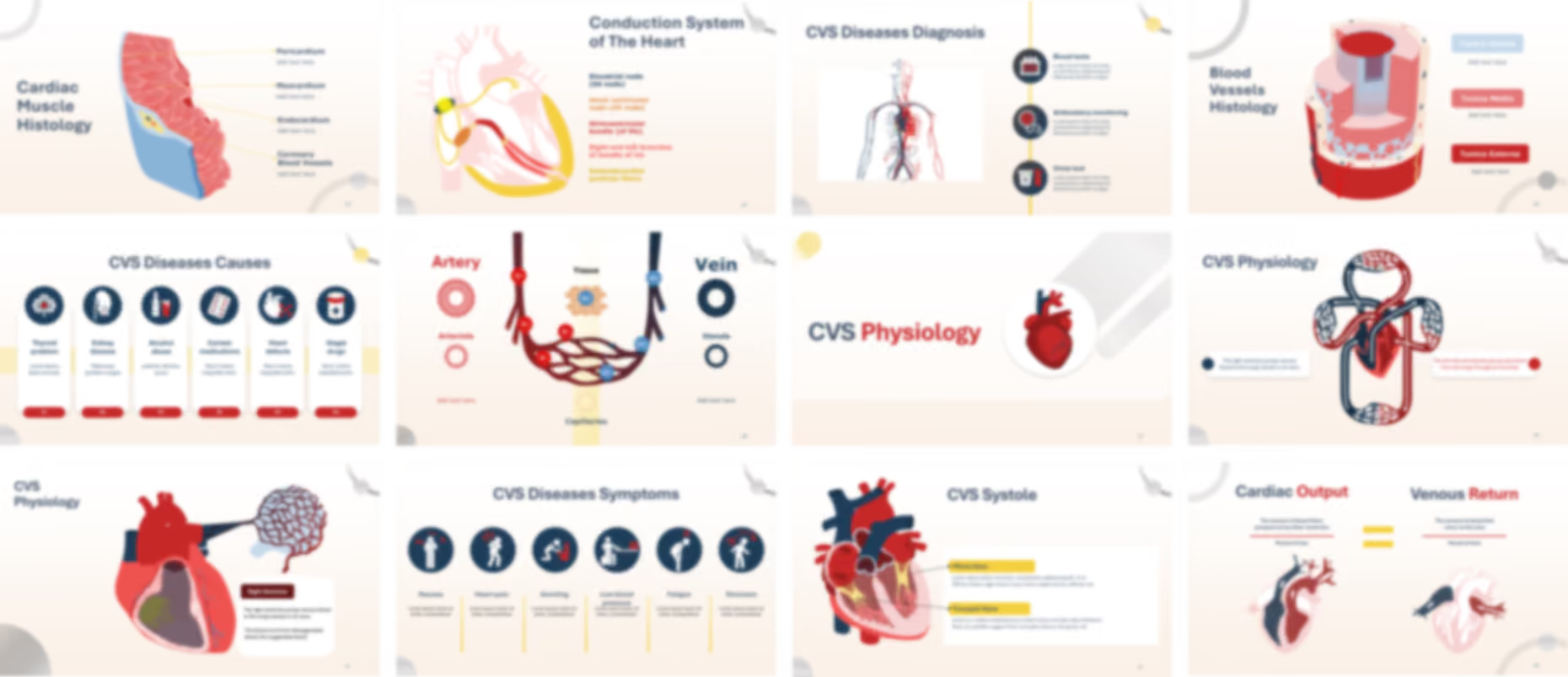
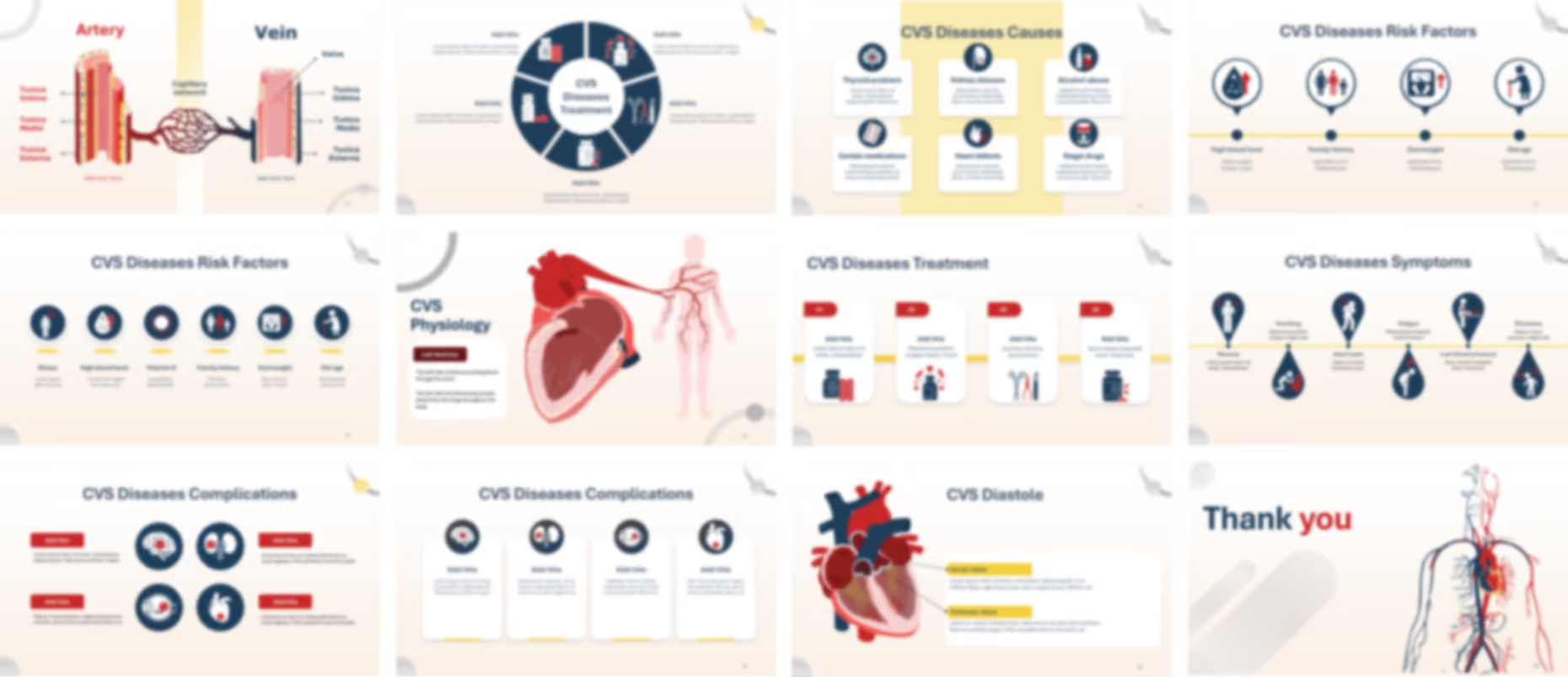
The Cardiovascular System Anatomy and Physiology PowerPoint template opens with a title slide before introductory diagrams explain the network of arteries and veins that deliver oxygen and remove waste throughout the body. Further slides identify the heart, blood vessels, and blood as the system's three core components and compare the pulmonary and systemic circulation loops that move blood between the heart, lungs, and the rest of the body.
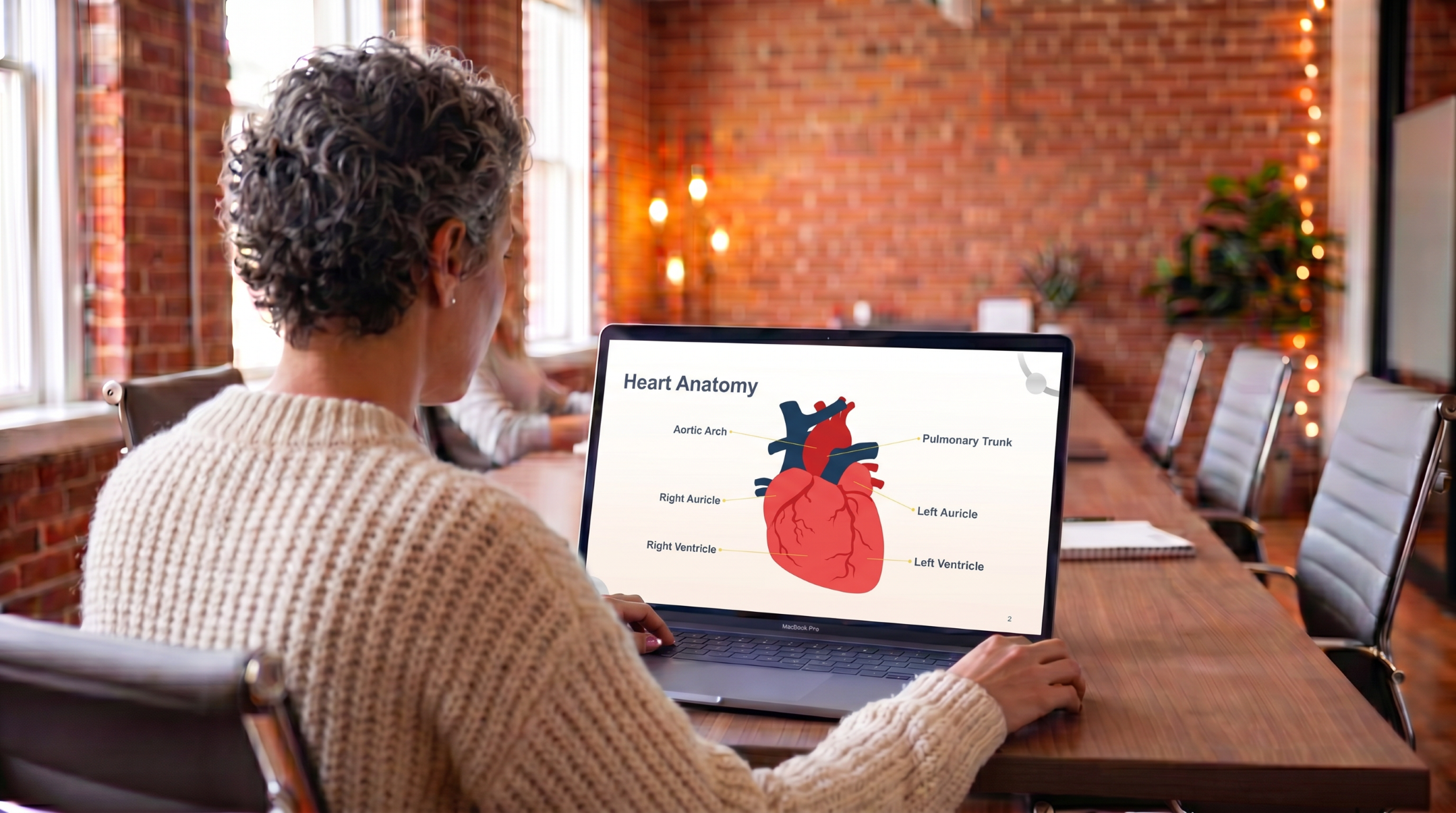
A dedicated section labels the heart's external structures and chambers before an isometric cross section identifies eleven internal features, including the four valves, and a histology diagram breaks down the pericardium, myocardium, and endocardium layers. The template then traces the heart's electrical conduction pathway from the SA node to the purkinje fibers and details blood vessel histology, comparing the artery, vein, and capillary network in editable medical diagrams.
Animated diagrams explain the heart's function as a dual pump, tracing how the right ventricle sends blood to the lungs while the left ventricle propels it throughout the body. Establishing this dual pump function first gives educators a shared reference point before the sequence details valve behavior during systole and diastole and defines cardiac output and venous return.
Editable PowerPoint icons cover six causes and risk factors of cardiovascular disease, including thyroid problems, stress, and family history, before six icon grids detail symptoms such as heart pain and dizziness and diagnostic tools including CT scan, echocardiogram, and cardiac catheterization. The presentation template closes with four major complications, including stroke and kidney failure, and a four step treatment pathway covering medication and surgical intervention.
Ready To Transform Your Presentation ?
Pay once, use forever