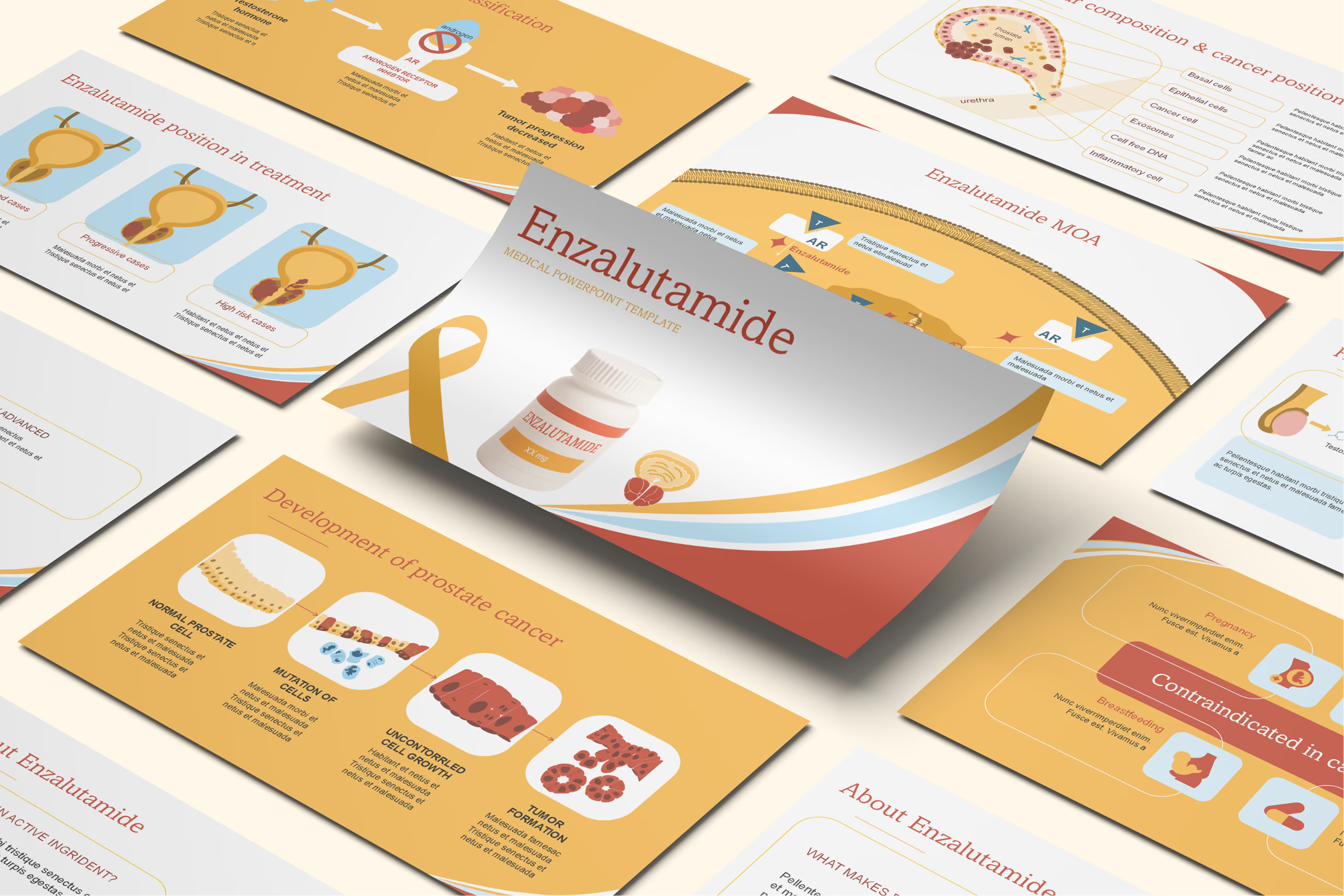
Diabetic Retinopathy PowerPoint Template

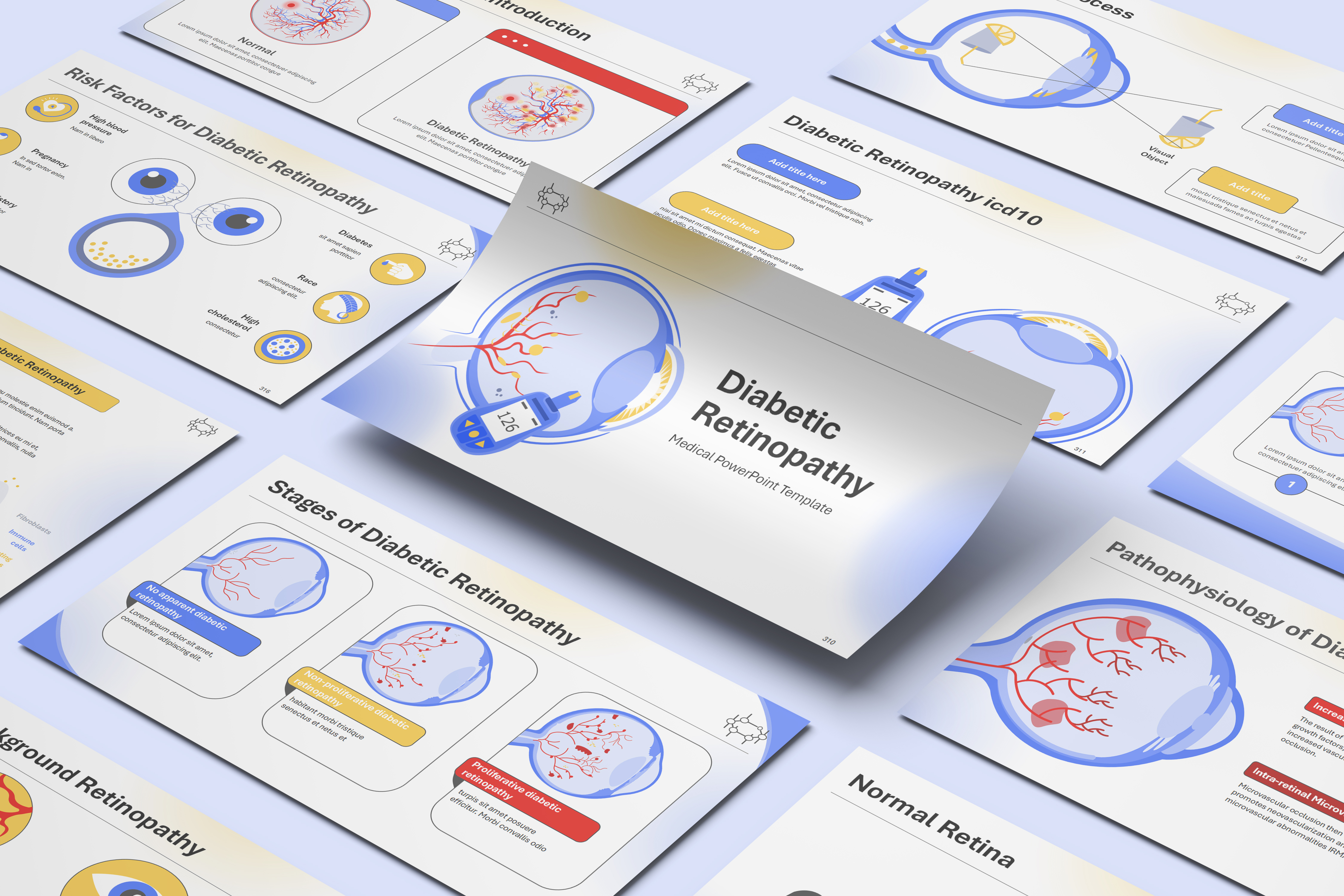




Template Preview
Designed for healthcare professionals creating clear and structured medical presentations.
Ideal for doctors, medical educators, and pharmaceutical teams preparing lectures, clinical education, product presentations, and training.
Fully editable in PowerPoint, allowing you to customize diagrams, charts, and slide layouts with your own medical content
Ready-to-use presentation structure that saves time and helps you build professional healthcare presentations quickly.
Fully Animated
Built-in animations help you present medical information clearly and make complex concepts easier to understand.
Editable Colors and Shapes
Editable colors and shapes help you easily customize the slides to match your content and presentation style, just drag and drop your content.
Professional medical layouts
Professional medical layouts help you organize clinical information, medical data, and treatment insights in a clear and structured way.

Created by Medical Professionals
This template prioritizes medical accuracy, clarity, and real-world usability. Each slide is designed with a medical audience in mind, helping you present clinical information, data, and treatment insights in a way that is structured, credible, and easy for healthcare professionals to understand.
Medical Training for Pharmaceutical & Life Sciences Companies
Before a new hire on an ophthalmology or diabetes-care sales team can discuss a therapy's fit within diabetic retinopathy management, product training needs to cover both the NPDR-versus-PDR staging system and the anti-VEGF and laser treatment options, content the template's retinal cross-sections and mechanism diagrams already provide. Representatives study the pericyte-damage and vascular-permeability pathophysiology before they are cleared to hold promotional conversations with ophthalmologists and endocrinologists. The four-diagnostic-test overview, dilated exam, fundus photography, OCT, and fluorescein angiography, gives trainers a complete clinical-pathway foundation without needing an ophthalmic illustrator on staff. New hires reach the field able to place a given therapy at the correct point in the NPDR-to-PDR progression.

Medical Congress & Scientific Conference Presentations
A retina-focused congress session on diabetic eye disease can move straight from pathophysiology to clinical management using the template's oxidative-stress flowchart and NPDR-versus-PDR comparison, rather than ophthalmologists and endocrinologists assembling staging criteria from separate sources. A medical professor lecturing on anti-VEGF therapy can adapt the VEGF-receptor mechanism slides to walk through drug binding at the cellular level. The complication overview, macular edema, neovascular glaucoma, retinal detachment, gives a clinical case presentation a structured path from diagnosis to long-term risk. What starts as a staging and mechanism template becomes a full clinical talk with the presenter's own screening data layered in.

Pharmaceutical Product & Medical Affairs Presentations
Positioning an anti-VEGF or steroid-implant therapy within diabetic retinopathy management is easier when the NPDR-versus-PDR staging and VEGF mechanism-of-action slides are already built in, content Medical Affairs teams supporting an ophthalmology portfolio can adapt rather than construct from published pharmacology. Medical Science Liaisons use the resulting materials in scientific exchange with ophthalmologists and endocrinologists, referencing the same complication and staging data those clinicians already apply when choosing between laser, injection, and surgical options. Because the pathophysiology, staging, and treatment content is organized separately, Medical Affairs can shift emphasis toward a specific therapy class without commissioning new retinal artwork. That scientific foundation stays accurate on its own, with promotional decisions left entirely to the customer's review process.

eLearning & SCORM Training Modules
Institution-specific screening protocols and patient cases turn this Diabetic Retinopathy template into customized coursework for optometry and ophthalmology educators, who can then optionally convert the finished presentation into a SCORM-compliant module for students or vision-care staff on an LMS. On its own, the template is a comprehensive clinical reference, not a finished course. Because the anatomy, staging, pathophysiology, and treatment content already builds in a teaching sequence, a customized version reaches certification-ready SCORM status without restructuring the underlying material. For programs with more specific needs, the RxSlides team can also adjust the template's scope, depth, or branding, or design a fully custom ophthalmology presentation from scratch.
Medical & Healthcare Education
Explaining how high blood sugar damages the retina no longer means sourcing separate vascular illustrations for each stage --- the template's NPDR-to-PDR progression sequence already walks students through microaneurysms, hemorrhages, and neovascularization in order. Continuing education providers preparing CME on diabetic eye screening benefit from the same four-test diagnostic overview, instead of rebuilding a testing-methods slide for every course. Patient educators adapting the risk-factor and prevention content for community diabetes sessions can simplify the same material while keeping the underlying pathophysiology accurate. Students and patients alike leave with a clearer picture of how diabetic retinopathy progresses from early vascular change to vision-threatening complication.
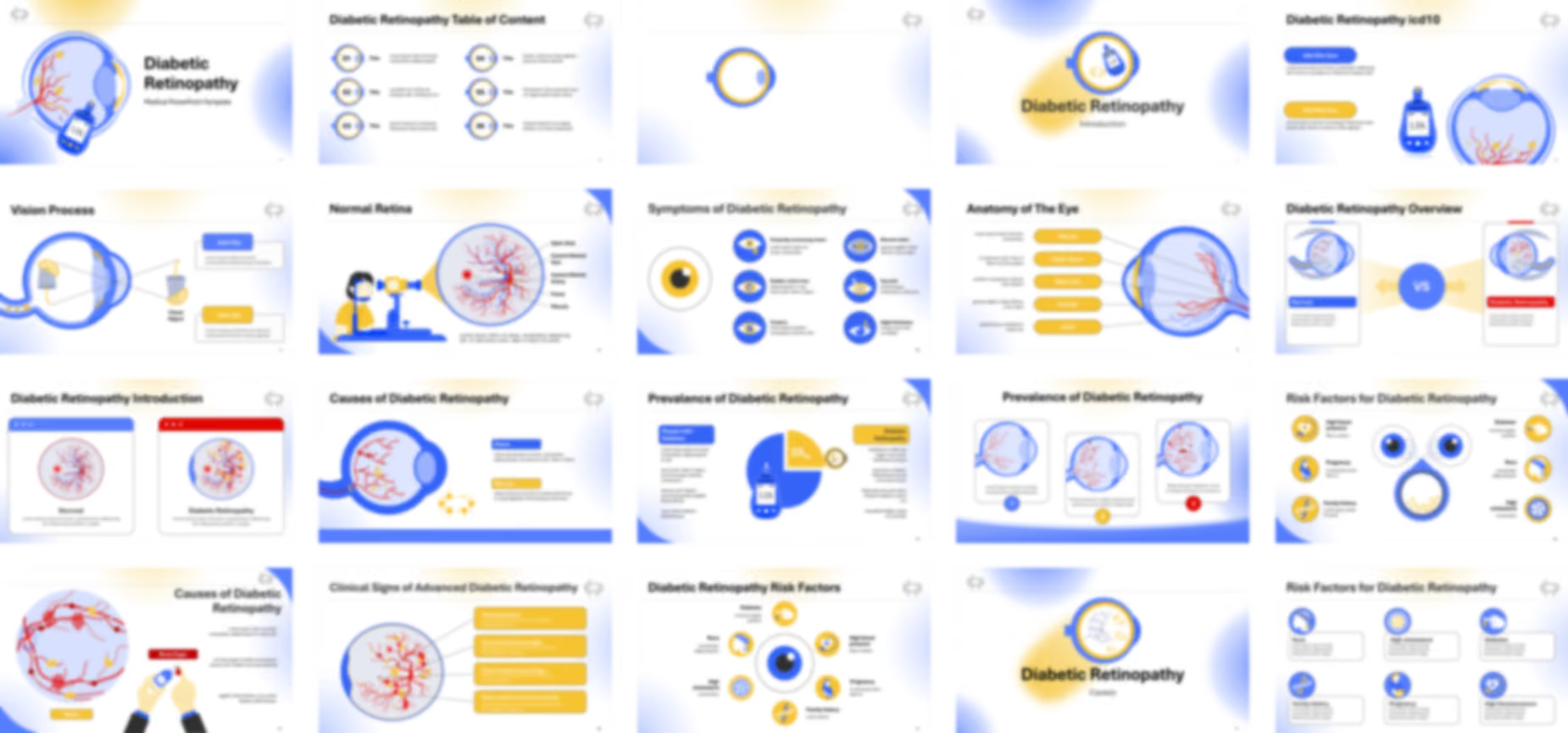
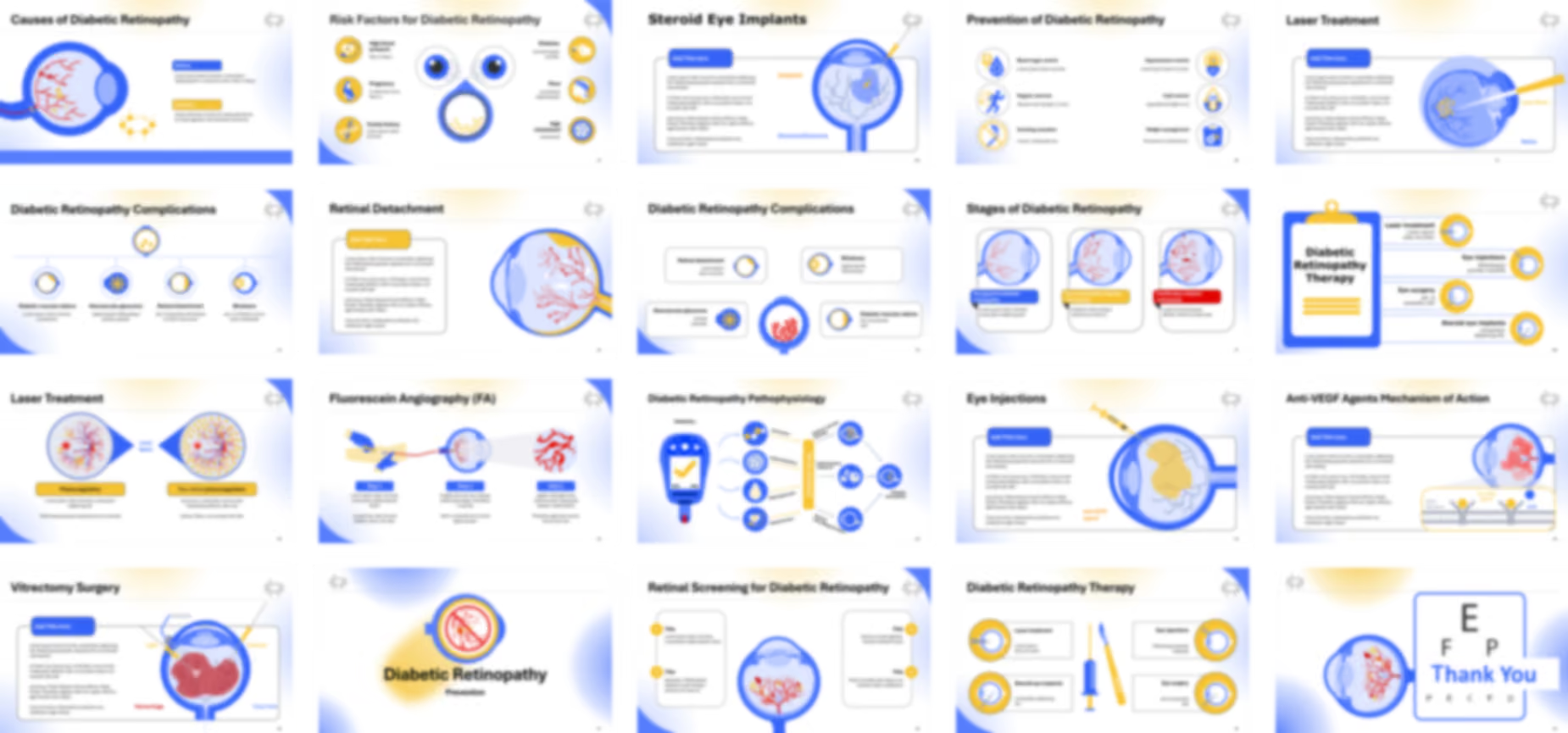
The Diabetic Retinopathy PowerPoint template opens with a title slide and table of contents before illustrations explain the vision process and label the eye's anatomy, including the iris, lens, retina, macula, and optic nerve. Side by side comparisons then contrast a normal eye and retina with one affected by diabetic retinopathy, highlighting hemorrhages, hard exudates, and abnormal blood vessels in a set of editable medical diagrams.
A pie chart and glucose meter graphic highlight the high rate of diabetic retinopathy among people with diabetes before diagrams trace how uncontrolled blood sugar damages retinal vessels. Six icons then cover risk factors such as high blood pressure, family history, and pregnancy, and six more illustrate symptoms including blurred vision, eye pain, and floaters.
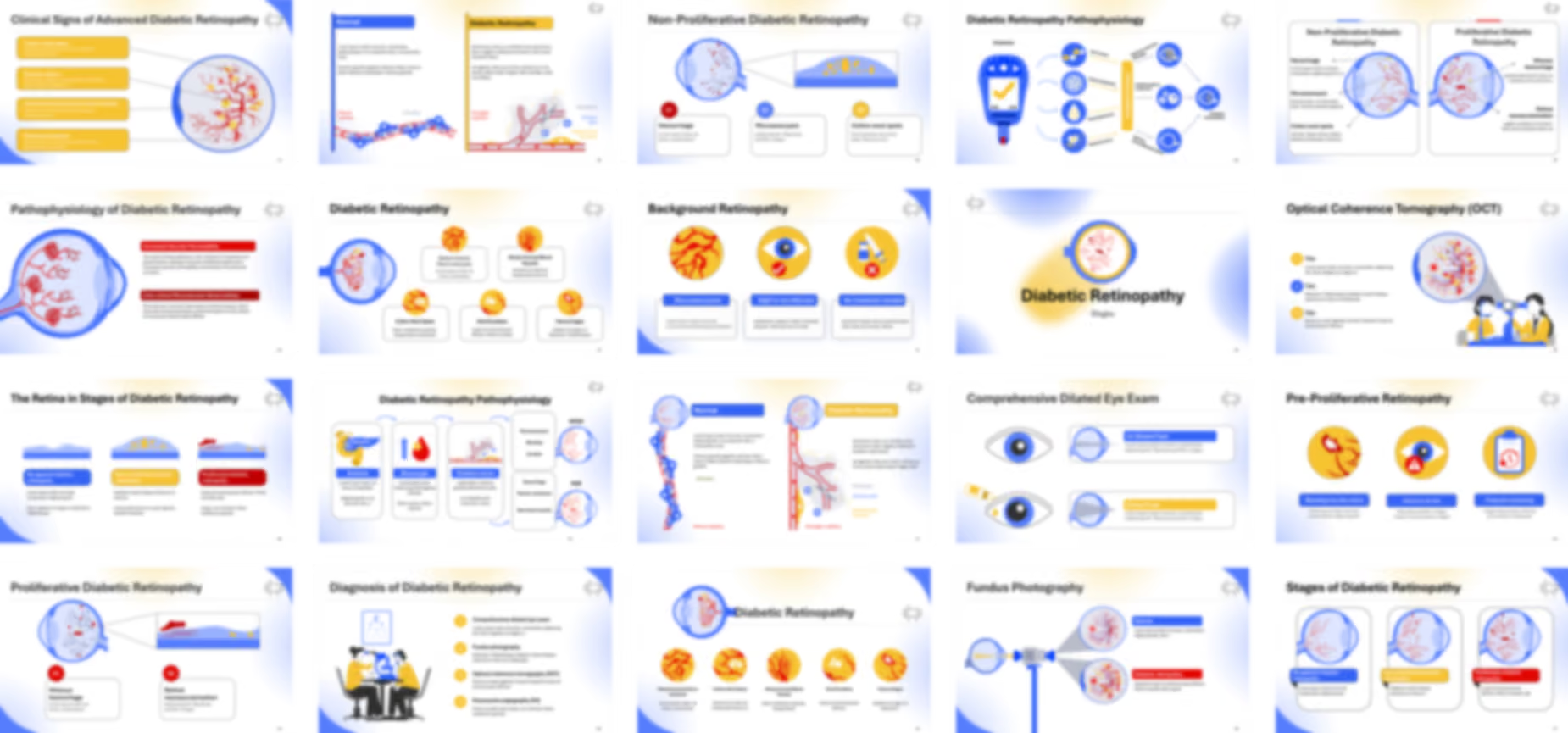
Flowchart diagrams explain the underlying mechanisms of increased vascular permeability and microvascular abnormalities, contrasting normal capillaries with damaged, degenerating ones. Establishing this cellular mechanism first gives educators a shared reference point before three numbered eye diagrams stage the disease's progression from no apparent retinopathy through non-proliferative to proliferative retinopathy.
The presentation template outlines four diagnostic tests, comprehensive dilated eye exam, fundus photography, optical coherence tomography, and fluorescein angiography, before covering four complications, including retinal detachment and diabetic macular edema. The presentation closes with editable PowerPoint slides on four treatment options, laser treatment, eye injections, steroid implants, and surgery, plus six preventive actions such as blood sugar and blood pressure control.
Ready To Transform Your Presentation ?
Pay once, use forever