Peripheral Arterial Disease Overview Presentation Template

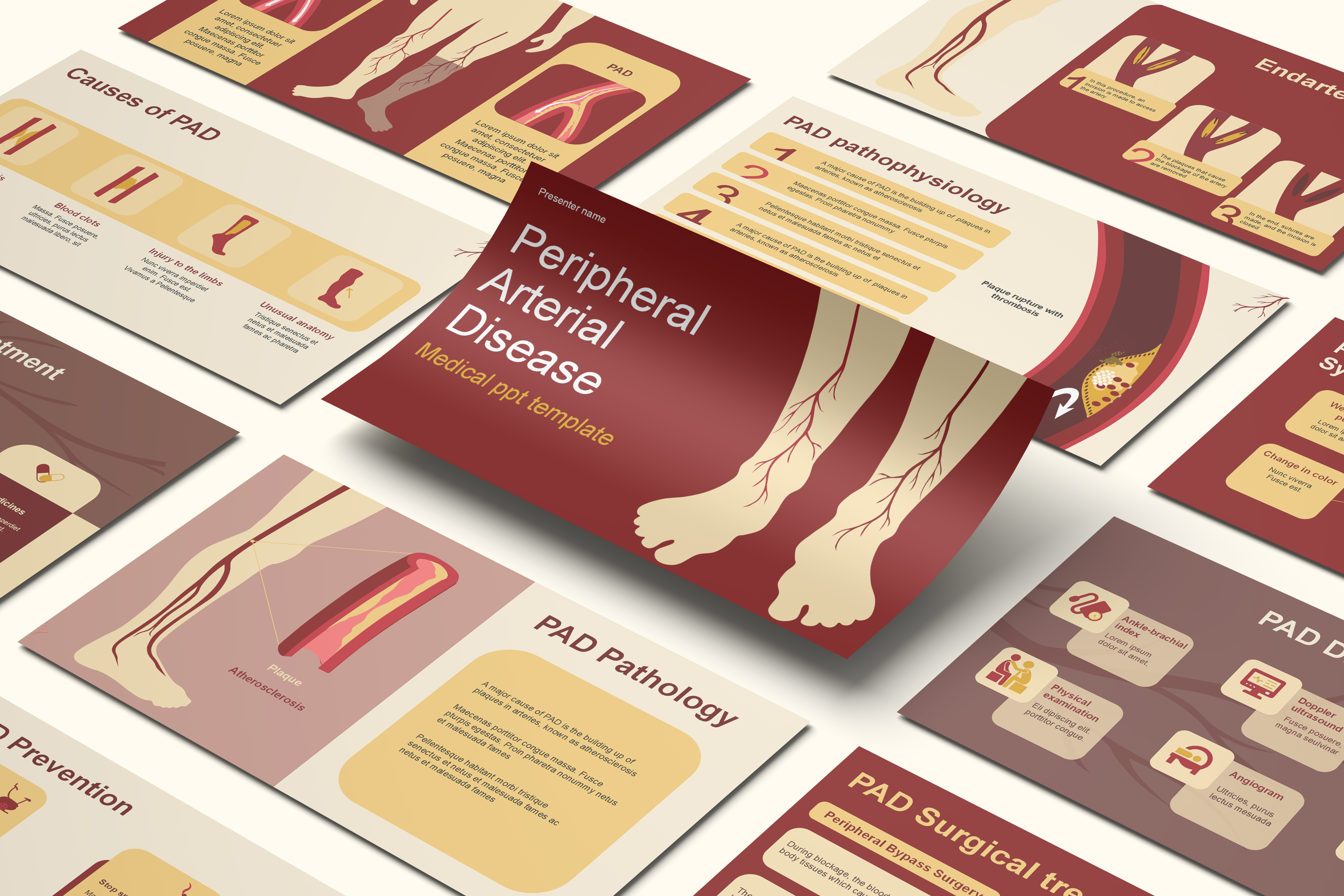




Template Preview
Designed for healthcare professionals creating clear and structured medical presentations.
Ideal for doctors, medical educators, and pharmaceutical teams preparing lectures, clinical education, product presentations, and training.
Fully editable in PowerPoint, allowing you to customize diagrams, charts, and slide layouts with your own medical content
Ready-to-use presentation structure that saves time and helps you build professional healthcare presentations quickly.
Fully Animated
Built-in animations help you present medical information clearly and make complex concepts easier to understand.
Editable Colors and Shapes
Editable colors and shapes help you easily customize the slides to match your content and presentation style, just drag and drop your content.
Professional medical layouts
Professional medical layouts help you organize clinical information, medical data, and treatment insights in a clear and structured way.

Created by Medical Professionals
This template prioritizes medical accuracy, clarity, and real-world usability. Each slide is designed with a medical audience in mind, helping you present clinical information, data, and treatment insights in a way that is structured, credible, and easy for healthcare professionals to understand.
Medical Training for Pharmaceutical & Life Sciences Companies
Medical Affairs and Training teams building cardiovascular onboarding content can use this Peripheral Arterial Disease presentation to cover the full disease arc, from atherosclerosis and plaque formation in the femoral and popliteal arteries through the five-stage progression to plaque rupture and thrombosis. New sales trainees and Medical Science Liaisons supporting a vascular or cardiology portfolio get a structured introduction to ankle-brachial index testing, duplex ultrasound, angioplasty, stenting, and bypass surgery, all illustrated with normal-versus-narrowed artery comparisons. Trainers can slot the template directly into an existing curriculum rather than sourcing vascular illustrations separately. New hires finish the module able to speak knowledgeably about PAD risk factors and diagnostic workup.
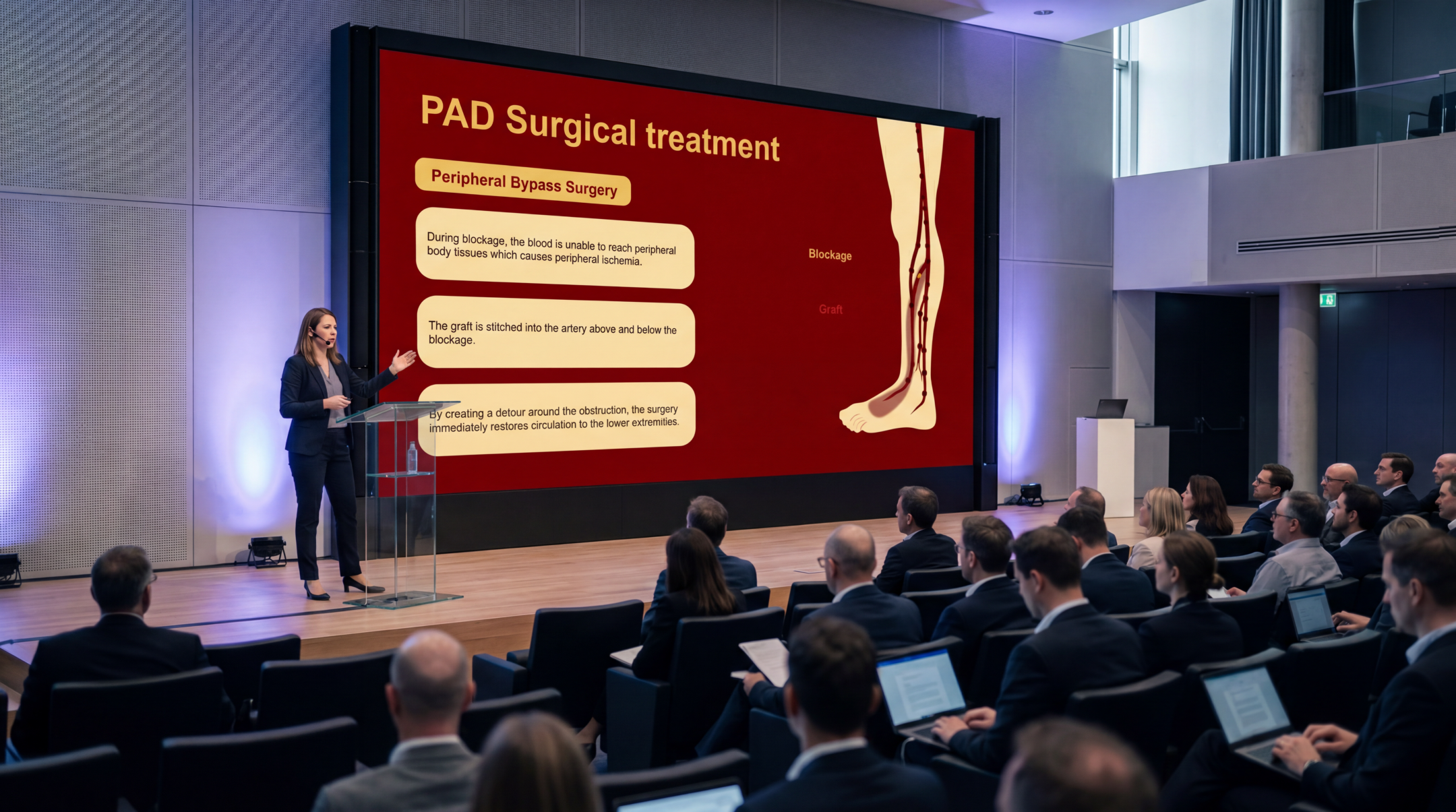
Medical Congress & Scientific Conference Presentations
Vascular surgeons, cardiologists, and interventional radiologists preparing a symposium presentation on PAD can build on this editable template instead of recreating stage-by-stage disease illustrations for each talk. The five-stage progression graphic, paired with symptom-mapping visuals linking pain location to the affected artery, gives a speaker a clear teaching sequence that pairs naturally with their own outcomes data or case discussion. Diagnostic and procedural slides covering ABI, duplex ultrasound, angioplasty, and endarterectomy support a technically detailed session for a specialist audience, while the underlying narrative still works for a broader internal medicine or CME crowd. A Key Opinion Leader speaking at multiple vascular conferences can adjust slide depth across sessions from one source file.

Pharmaceutical Product & Medical Affairs Presentations
Medical Affairs teams supporting a cardiovascular or antiplatelet product can use this PAD presentation as disease-state groundwork for scientific exchange, laying out atherosclerosis pathophysiology, risk factors such as smoking, diabetes, and hyperlipidemia, and the clinical rationale behind statin and antiplatelet therapy before any brand-specific discussion. Medical Science Liaisons can deliver the customized material at advisory boards or KOL meetings to establish shared clinical context ahead of a scientific exchange conversation. Because the presentation remains disease-focused, it offers Medical Affairs a starting point that still requires the customer's own compliance and medical review before any field use. Vascular and cardiology teams gain a consistent scientific reference across multiple therapeutic discussions.

eLearning & SCORM Training Modules
Learning & Development teams training vascular clinic staff or new cardiology fellows can customize this PAD template with institution-specific protocols, then convert the finished presentation into a SCORM-compliant module for their learning management system when a self-paced course fits the training need better than a live session. The staged disease-progression graphics and procedural walkthroughs of angioplasty, stenting, and bypass surgery translate naturally into interactive checkpoints within an e-learning course. Where a program needs a narrower focus, such as diagnosis alone, or different content for physician assistants versus vascular technologists, the RxSlides team can adjust the template's scope and branding. A fully custom presentation can also be designed from scratch when no existing template matches the training objective.
Medical & Healthcare Education
Medical and nursing faculty teaching vascular medicine can use this template to walk students through the anatomy and staged progression of Peripheral Arterial Disease without assembling normal-versus-narrowed artery comparisons independently. The symptom-mapping slide, which links pain location to the specific involved artery such as the popliteal or common femoral, gives students a practical framework for connecting anatomy to clinical presentation. Diagnostic content on ABI interpretation and imaging modalities supports case-based teaching in an internal medicine or cardiology rotation. Faculty can extend the same slides into exam review sessions covering PAD staging and management options.
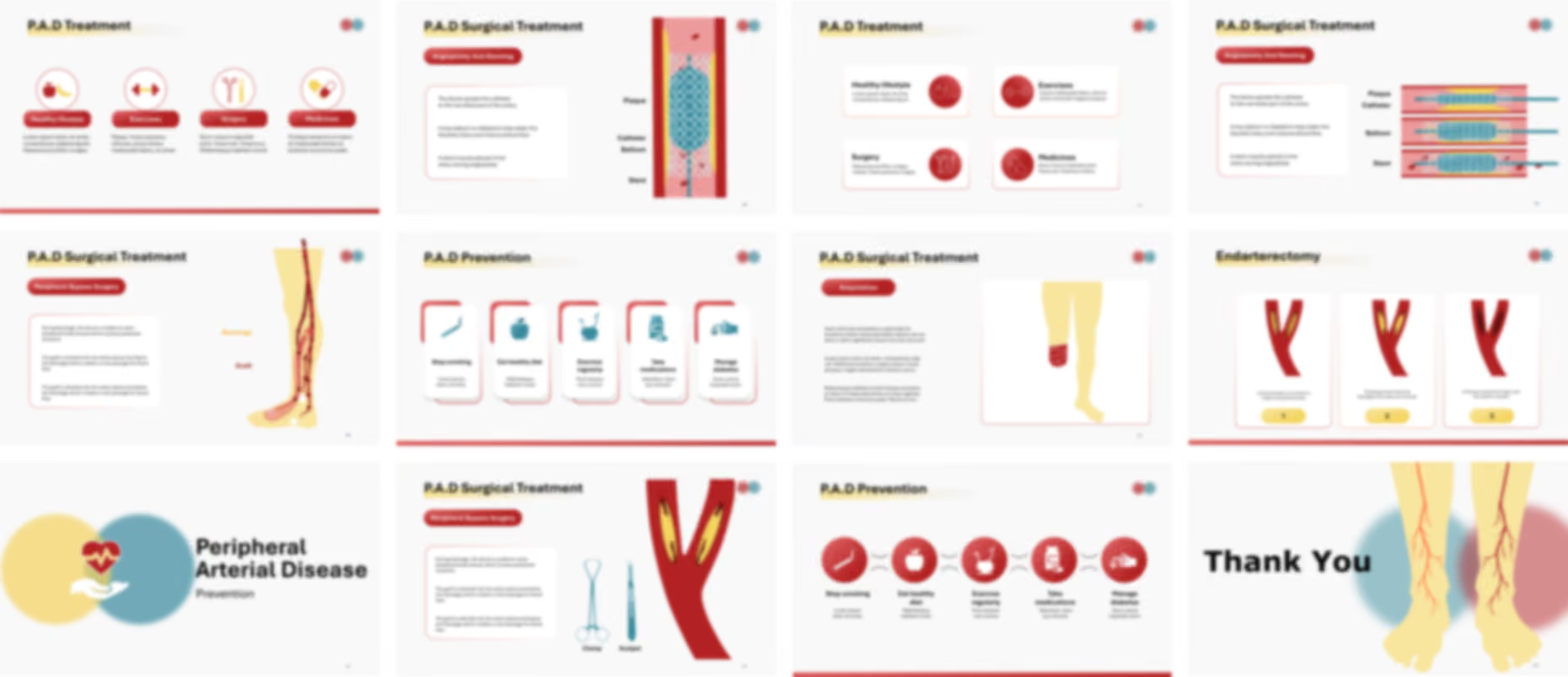
The Peripheral Arterial Disease Overview Presentation Template opens with a comparative illustration contrasting a normal artery against a narrowed artery in the lower extremity to establish the foundational definition of PAD as reduced blood flow to the limbs. A detailed human silhouette then maps common pain locations, including the hips, thighs, calves, and feet, against the corresponding involved artery, such as the popliteal or common femoral, illustrated in a set of editable PowerPoint slides.
Medical icons depict causes including atherosclerosis, blood clots, limb injury, and unusual anatomy before an anatomical cross section illustrates the pathophysiology of plaque buildup restricting arterial function. Establishing this mechanism first gives educators a shared reference point before a five step visual progression stages the disease from a normal artery through fatty streak formation and stable plaque to plaque rupture and thrombosis.
A structured layout identifies key risk factors including smoking, diabetes, high cholesterol, high blood pressure, and age above sixty years, essential for discussing patient screening. The presentation template then outlines the diagnostic workup, covering ankle brachial index, Doppler ultrasound, angiogram, and blood tests.
Step by step diagrams illustrate angioplasty and stenting through catheter guidance, balloon inflation, and stent placement, before further illustrations detail peripheral bypass grafting and endarterectomy as advanced surgical options when revascularization is not feasible. The presentation template closes with a summary of lifestyle and medical management goals, including regular exercise, smoking cessation, healthy diet, and diabetes management, in a set of editable medical diagrams.
Ready To Transform Your Presentation ?
Pay once, use forever