Influenza PowerPoint Template

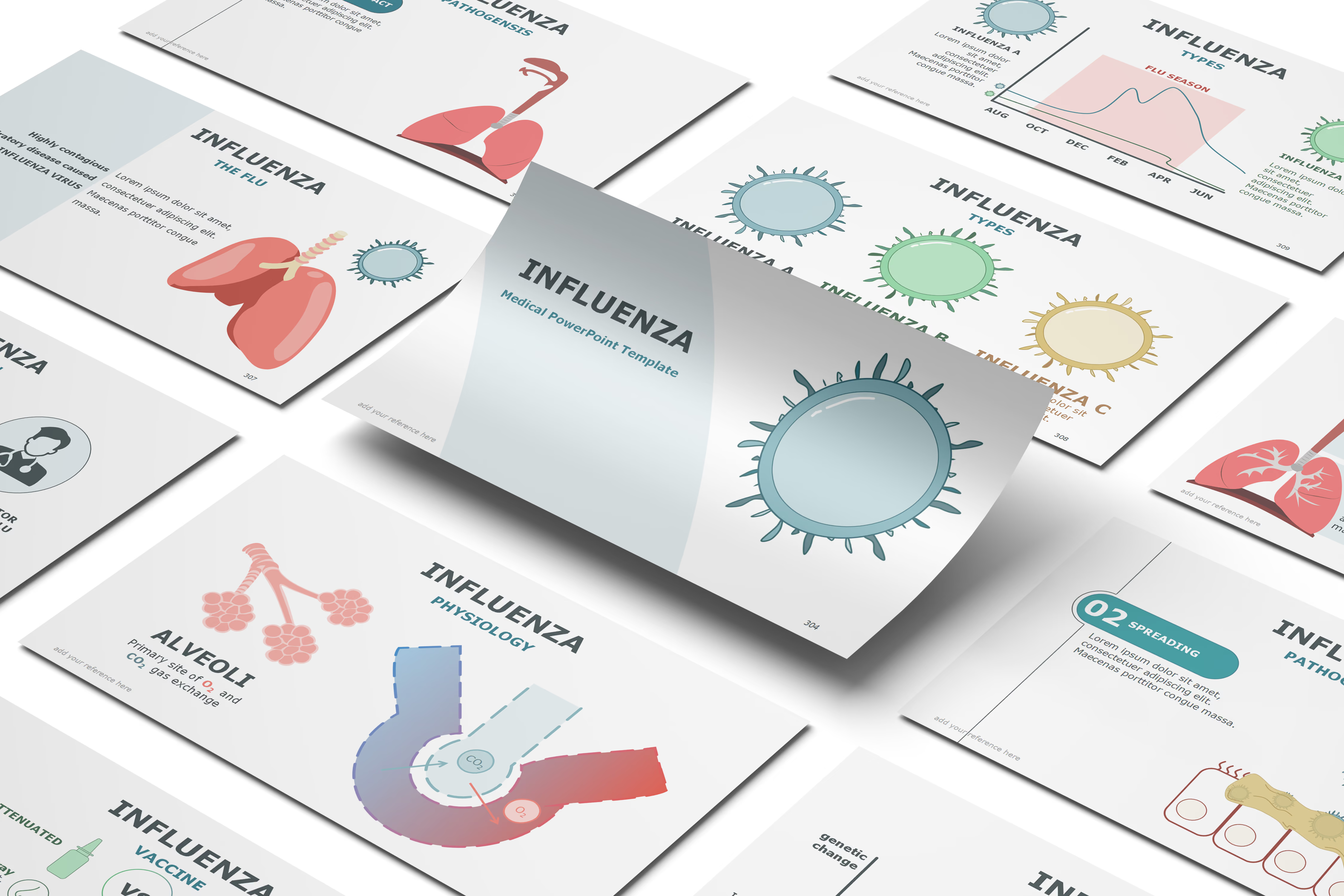




Template Preview
Designed for healthcare professionals creating clear and structured medical presentations.
Ideal for doctors, medical educators, and pharmaceutical teams preparing lectures, clinical education, product presentations, and training.
Fully editable in PowerPoint, allowing you to customize diagrams, charts, and slide layouts with your own medical content
Ready-to-use presentation structure that saves time and helps you build professional healthcare presentations quickly.
Fully Animated
Built-in animations help you present medical information clearly and make complex concepts easier to understand.
Editable Colors and Shapes
Editable colors and shapes help you easily customize the slides to match your content and presentation style, just drag and drop your content.
Professional medical layouts
Professional medical layouts help you organize clinical information, medical data, and treatment insights in a clear and structured way.

Created by Medical Professionals
This template prioritizes medical accuracy, clarity, and real-world usability. Each slide is designed with a medical audience in mind, helping you present clinical information, data, and treatment insights in a way that is structured, credible, and easy for healthcare professionals to understand.
Medical Training for Pharmaceutical & Life Sciences Companies
Infectious disease and primary care training teams onboarding new sales reps can structure introductory sessions around this 50-plus-slide Influenza template's viral-classification foundation, distinguishing influenza A, B, and C by their clinical severity and epidemic potential, before moving into the transmission-and-pathogenesis pathway. New hires get a visual reference for how antigenic drift and antigenic shift produce, respectively, seasonal variation and pandemic potential. The inactivated-versus-live-attenuated vaccine comparison gives trainees a structured reference for how the two vaccine platforms differ in administration and immune response. New reps finish training able to explain why influenza vaccines require reformulation twice a year.
Medical Congress & Scientific Conference Presentations
Infectious disease physicians preparing a conference session can build around this Influenza template's viral-evolution animation, tracing antigenic drift and point-mutation accumulation through to the reassortment events that trigger pandemics, rather than assembling virology diagrams independently. The trivalent-versus-quadrivalent vaccine-valency comparison gives a speaker a ready framework for a vaccination-strategy discussion. A Key Opinion Leader presenting at an infectious disease conference can pair the existing hemagglutinin-sialic-acid virulence content with their own institutional surveillance data. The inactivated-versus-live-attenuated vaccine content keeps the discussion clinically current for a specialist audience.
Pharmaceutical Product & Medical Affairs Presentations
Medical Affairs teams supporting an antiviral, vaccine, or broader infectious disease portfolio can use this Influenza presentation as disease-state groundwork for scientific exchange, covering viral classification and the transmission-to-pathogenesis pathway before any product-specific data enters the conversation. Medical Science Liaisons can reference the antigenic-drift-versus-antigenic-shift distinction when a scientific exchange conversation calls for context on seasonal reformulation versus pandemic risk. The scope is virology and epidemiology, not a product pitch, so Medical Affairs still needs sign-off from the customer's own medical and compliance team before it goes in front of any audience. Infectious disease and primary care teams gain a consistent scientific reference spanning transmission, complications, and prevention.
eLearning & SCORM Training Modules
Infectious disease fellowship programs and nursing schools building a respiratory-virology module can customize this Influenza template with their own case studies, then convert the finished presentation into a SCORM-compliant module for their learning management system when self-paced study fits the curriculum better. The viral-evolution and vaccine-comparison animations translate naturally into interactive checkpoints within a broader infectious disease or public health course. When a program needs a narrower scope, such as the vaccine-platform comparison alone or a version tailored for nursing versus physician learners, the RxSlides team can adjust the template's coverage and branding. The RxSlides team is also available to create a fully custom presentation from scratch for training objectives no current template addresses.
Medical & Healthcare Education
Medical and nursing faculty teaching infectious disease can use this template's viral-classification slides to establish the influenza A, B, and C distinction before introducing the transmission and pathogenesis pathway. The antigenic-drift-versus-antigenic-shift framework gives students a clear structure for understanding why seasonal flu differs mechanistically from pandemic flu. The inactivated-versus-live-attenuated vaccine comparison connects classroom virology to the immunization strategies students will discuss with patients. Students leave with a structured understanding of influenza spanning virology, transmission, prevention, and vaccination.


The Influenza PowerPoint template defines influenza viruses as members of the enveloped Orthomyxoviridae family with a segmented, negative sense RNA genome, before comparative illustrations distinguish influenza A, B, and C, noting that A and B drive the seasonal flu from September through April while C causes only mild illness. Further slides trace transmission through respiratory droplets, aerosols, and contaminated surfaces as the virus moves from the upper to the lower respiratory tract.
Animated illustrations show the pathogenesis of influenza, from initial contact with the respiratory tract through cellular spread and inflammation, highlighting hemagglutinin's binding to sialic acid as the virus's key virulence factor and covering complications such as sinus infections, ear infections, and secondary bacterial pneumonia. Establishing this progression first gives educators a shared reference point before symptom slides cover headache, runny nose, chills, and fever.
The template outlines preventive methods including vitamin intake, adequate sleep, exercise, hydration, reduced alcohol consumption, regular hand washing, and avoiding close contact with infected individuals. Animated illustrations then explain the virus's rapid evolution through antigenic drift and point mutation, which drives subtype drift, and through reassortment, which causes the antigenic shift behind pandemics, tracking these genetic changes on a medical diagram in this editable medical presentation template.
A dynamic illustration classifies vaccines by valency, comparing trivalent formulations containing two influenza A subtypes and one B subtype against quadrivalent formulations containing two of each. Medical infographics then compare inactivated vaccines, which use a killed virus and often require booster doses, against live attenuated vaccines, which use a weakened virus to produce longer lasting immunity, rounding out a set of editable PowerPoint slides for respiratory disease education.
Ready To Transform Your Presentation ?
Pay once, use forever