Iodine Deficiency PowerPoint Template

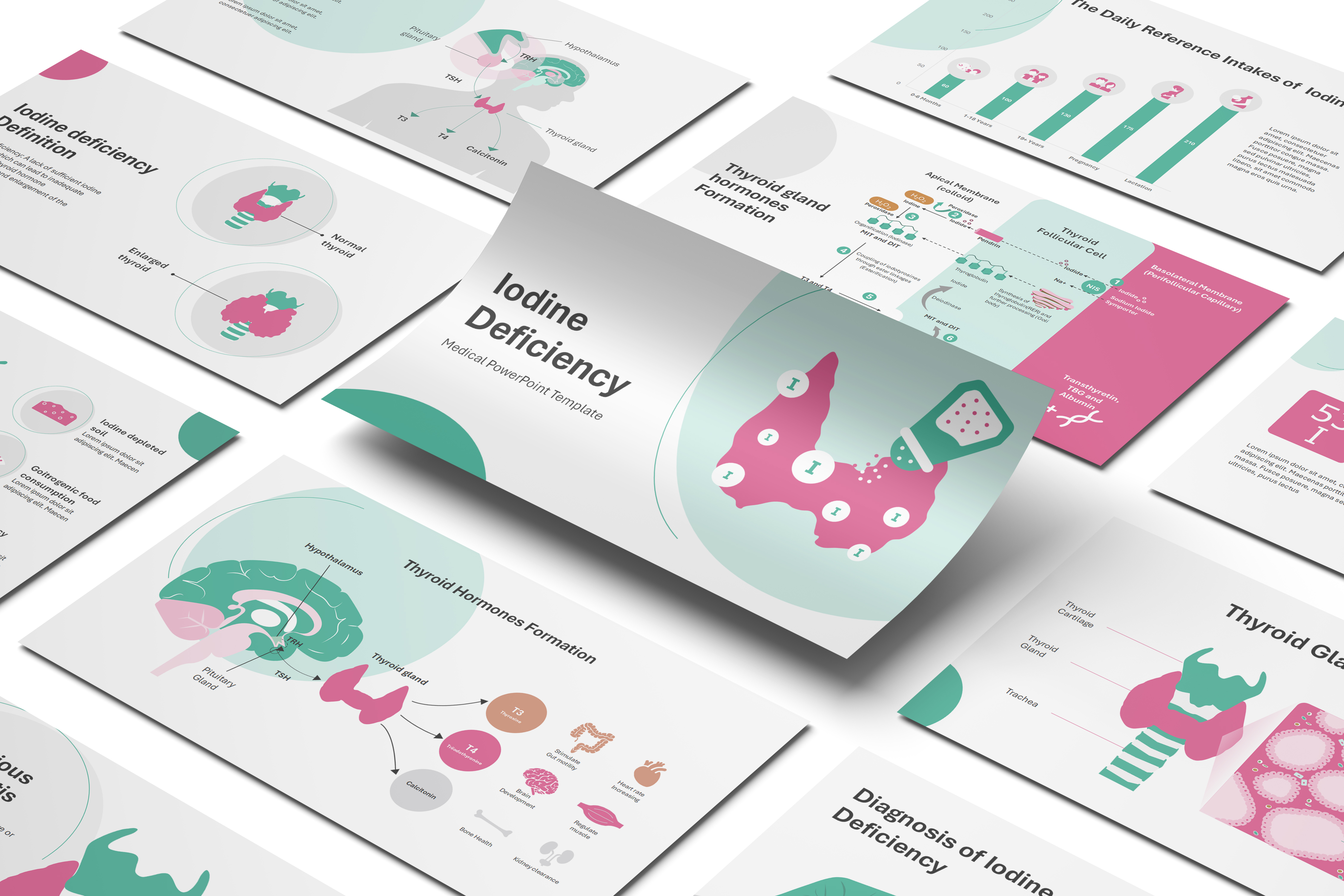




Template Preview
Designed for healthcare professionals creating clear and structured medical presentations.
Ideal for doctors, medical educators, and pharmaceutical teams preparing lectures, clinical education, product presentations, and training.
Fully editable in PowerPoint, allowing you to customize diagrams, charts, and slide layouts with your own medical content
Ready-to-use presentation structure that saves time and helps you build professional healthcare presentations quickly.
Fully Animated
Built-in animations help you present medical information clearly and make complex concepts easier to understand.
Editable Colors and Shapes
Editable colors and shapes help you easily customize the slides to match your content and presentation style, just drag and drop your content.
Professional medical layouts
Professional medical layouts help you organize clinical information, medical data, and treatment insights in a clear and structured way.

Created by Medical Professionals
This template prioritizes medical accuracy, clarity, and real-world usability. Each slide is designed with a medical audience in mind, helping you present clinical information, data, and treatment insights in a way that is structured, credible, and easy for healthcare professionals to understand.
Medical Training for Pharmaceutical & Life Sciences Companies
Endocrinology and nutrition training teams onboarding new sales reps can structure introductory sessions around this 40-plus-slide Iodine Deficiency template's thyroid-gland anatomy foundation before moving into the NIS-mediated iodide uptake mechanism that depends on it. New hires get a visual reference for how the pituitary-thyroid feedback loop drives compensatory goiter formation when iodine is scarce. The impact-on-children-and-pregnant-women content, spanning cognitive effects through cretinism, gives trainees a structured reference for why this deficiency carries outsized stakes in specific populations. New reps finish training able to connect the six risk factors, from goitrogenic foods to iodine-depleted soil, to why prevalence still varies so much by region.
Medical Congress & Scientific Conference Presentations
Endocrinologists and public health physicians preparing a conference session can build around this Iodine Deficiency template's hormone-synthesis animation, tracing NIS-mediated iodide uptake through thyroglobulin binding to hormone formation, rather than assembling thyroid-biochemistry diagrams independently. The compensatory-goiter mechanism gives a speaker a ready framework for explaining why the thyroid enlarges rather than shrinks under iodine restriction. A Key Opinion Leader presenting at an endocrinology or global health conference can pair the existing prevalence-trend content with their own institutional data. The pregnancy-and-pediatric-impact content keeps the discussion clinically current for a specialist audience.
Pharmaceutical Product & Medical Affairs Presentations
Medical Affairs teams supporting an iodine supplement or broader thyroid-health portfolio can use this Iodine Deficiency presentation as disease-state groundwork for scientific exchange, covering iodine's biochemical role and the hormone-synthesis pathway before any product-specific data enters the conversation. Medical Science Liaisons can reference the risk-factor content when a scientific exchange conversation calls for context on which populations warrant closer monitoring. The content stops at nutritional endocrinology, not a specific product, so it's a foundation the customer's own medical and compliance function still has to sign off on before it's used with any audience. Endocrinology and maternal health teams gain a consistent scientific reference spanning mechanism, risk, and treatment.
eLearning & SCORM Training Modules
Endocrinology and public health nutrition programs building an iodine-deficiency module can customize this template with their own case studies, then convert the finished presentation into a SCORM-compliant module for their learning management system when self-paced study fits the curriculum better. The iodide-uptake and goiter-formation animations translate naturally into interactive checkpoints within a broader endocrinology or nutrition science course. When a program needs a narrower scope, such as the pregnancy-and-pediatric-impact section alone or a version tailored for nursing versus physician learners, the RxSlides team can adjust the template's coverage and branding. For training needs the catalog doesn't yet cover, the RxSlides team can still develop a fully custom presentation from scratch.
Medical & Healthcare Education
Medical and nursing faculty teaching endocrinology or nutrition science can use this template's iodine-characteristics slides to establish the element's biochemical role before introducing its function in thyroid hormone synthesis. The NIS-mediated uptake mechanism gives students a clear framework for understanding how the thyroid actively concentrates iodide against a gradient. The pregnancy-and-pediatric-impact content connects classroom endocrinology to the population-specific stakes students will encounter in maternal and child health settings. Students leave with a structured understanding of iodine deficiency spanning mechanism, risk, diagnosis, and treatment.
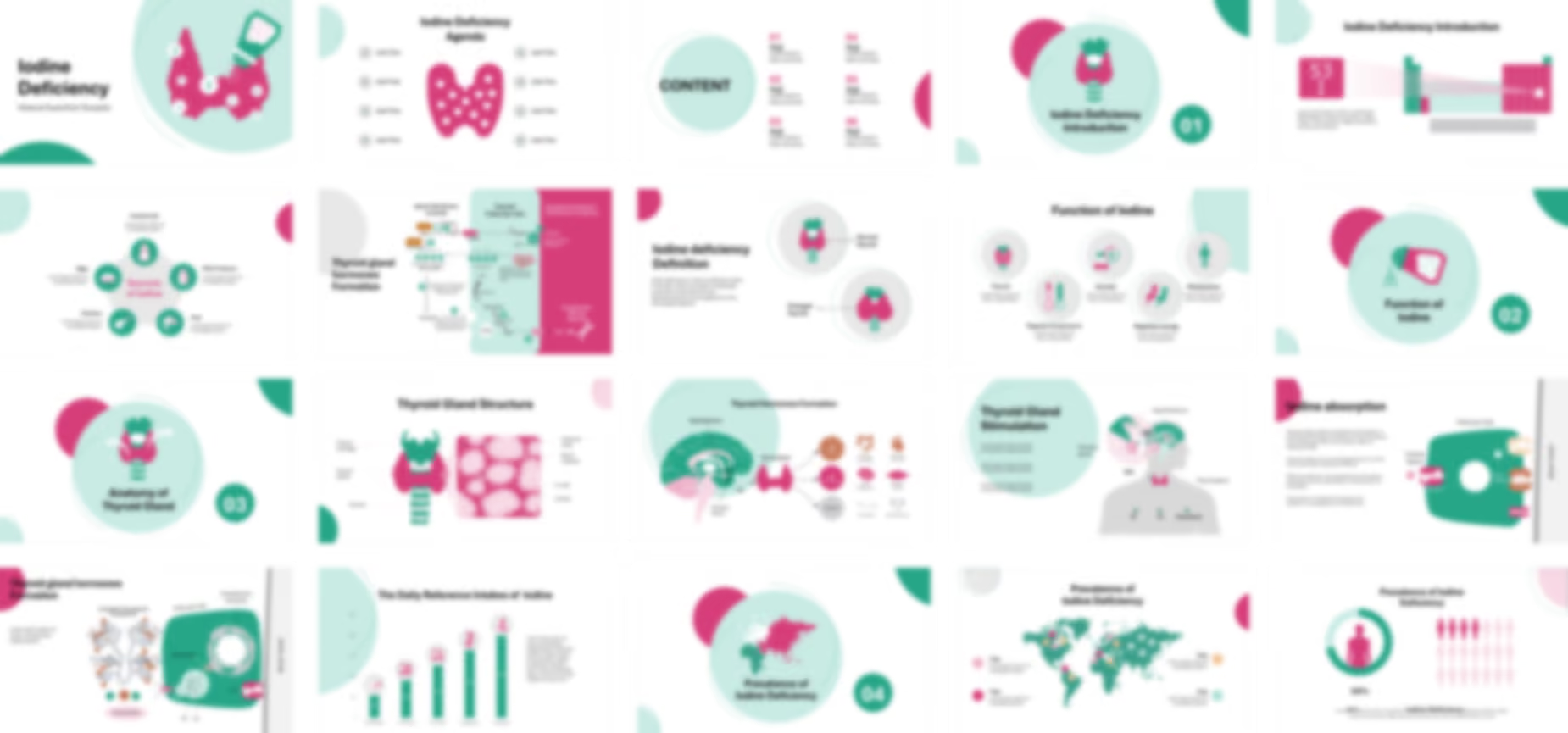
The Iodine Deficiency PowerPoint template opens with cover slides and an editable table of contents before introductory slides describe iodine's chemical structure and atomic number 53 on the periodic table. Medical icons then cover iodine's functions in thyroid activity, growth, temperature regulation, energy level, and metabolism, followed by anatomical illustrations of the thyroid gland alongside the surrounding thyroid cartilage and trachea.
Animated illustrations trace the active uptake of iodide from capillary blood into the thyroid gland's follicular cells, its binding to thyroglobulin, and its role in forming thyroid hormones, alongside the pituitary gland's release of thyroid stimulating hormone. Medical icons then cover dietary iodine sources such as iodized salt, milk, eggs, chicken, and shellfish, with a chart showing the daily reference intake.
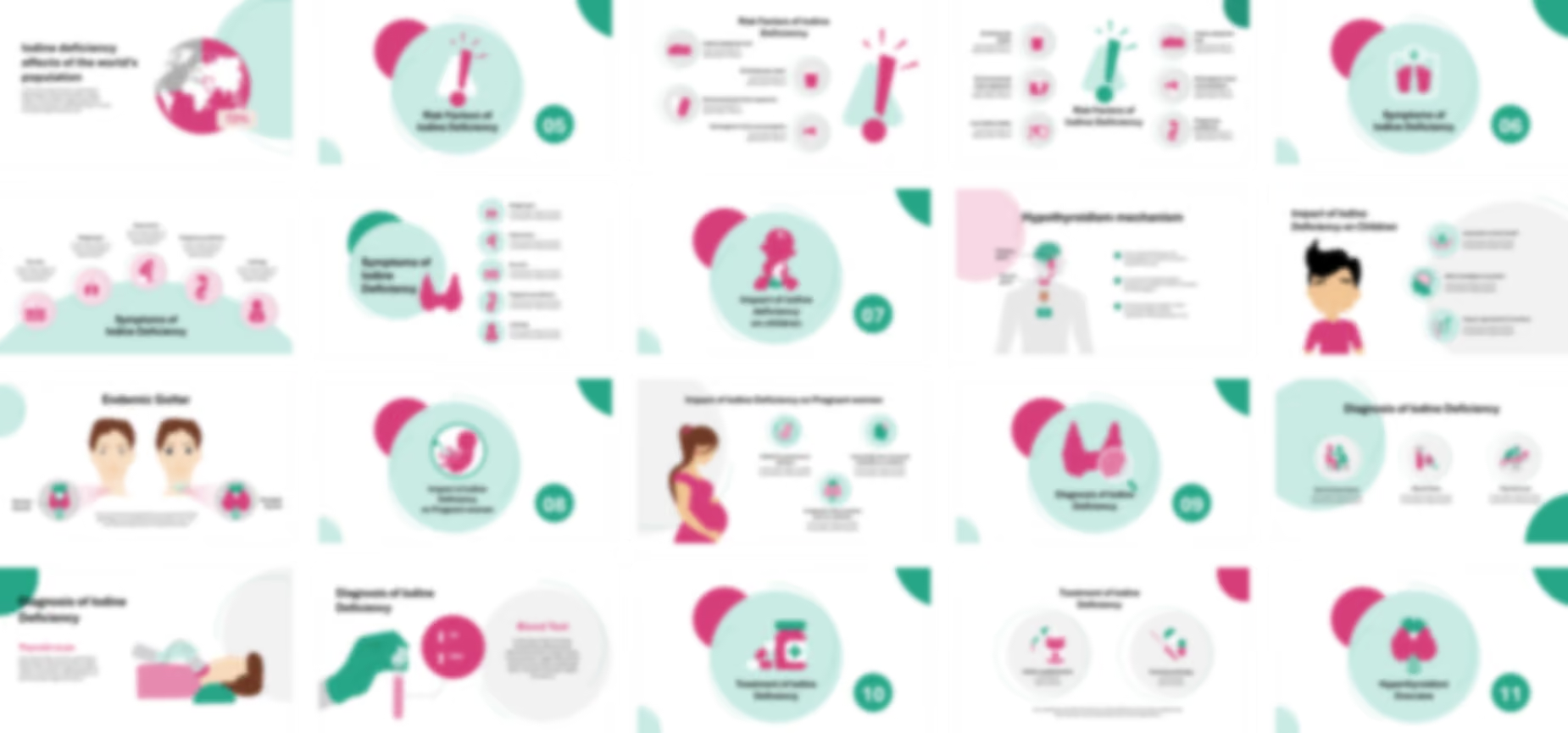
An animated illustration shows how iodine deficiency enlarges the thyroid gland into a goiter as it attempts to capture more iodide, comparing normal and enlarged glands, before a related mechanism traces how the resulting hormone shortage prompts the pituitary gland to release more thyroid stimulating hormone. Establishing this mechanism first gives educators a shared reference point before medical icons cover risk factors such as goitrogenic food, iodine depleted soil, and low iodine intake, alongside symptoms including weight gain, depression, lethargy, and dry skin, in this editable medical presentation template.
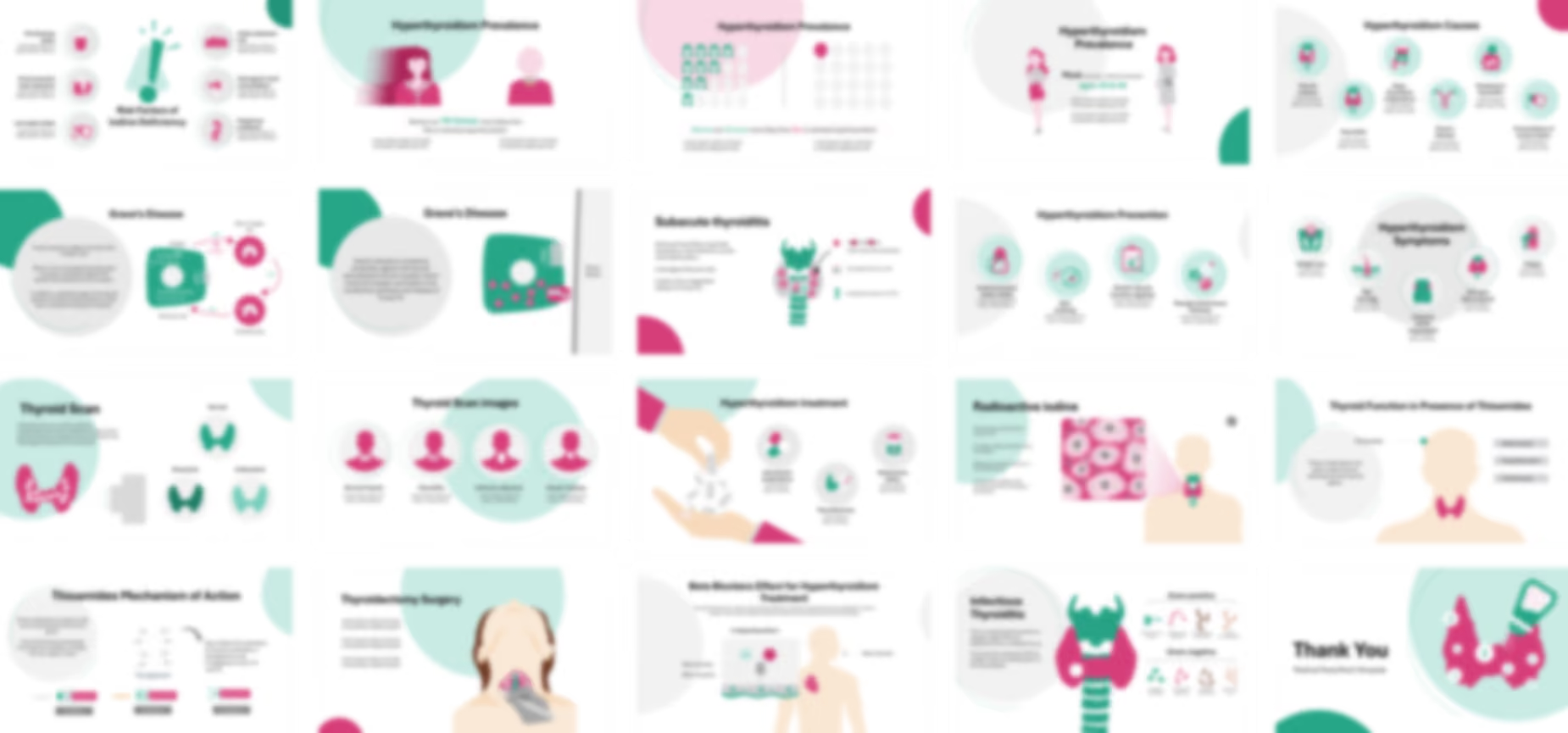
Medical icons illustrate the impact of iodine deficiency on children, including effects on mental health, intelligence quotient, and reproductive function, and on pregnant women, including stillbirth, spontaneous abortion, and cretinism. The template closes with diagnostic methods such as thyroid ultrasound and blood testing, alongside treatment options including iodine supplements, iodine solution administration, and hormone therapy, rounding out a set of customizable icons for endocrinology education.
Ready To Transform Your Presentation ?
Pay once, use forever