Lactose Intolerance PowerPoint Template






Template Preview
Designed for healthcare professionals creating clear and structured medical presentations.
Ideal for doctors, medical educators, and pharmaceutical teams preparing lectures, clinical education, product presentations, and training.
Fully editable in PowerPoint, allowing you to customize diagrams, charts, and slide layouts with your own medical content
Ready-to-use presentation structure that saves time and helps you build professional healthcare presentations quickly.
Fully Animated
Built-in animations help you present medical information clearly and make complex concepts easier to understand.
Editable Colors and Shapes
Editable colors and shapes help you easily customize the slides to match your content and presentation style, just drag and drop your content.
Professional medical layouts
Professional medical layouts help you organize clinical information, medical data, and treatment insights in a clear and structured way.

Created by Medical Professionals
This template prioritizes medical accuracy, clarity, and real-world usability. Each slide is designed with a medical audience in mind, helping you present clinical information, data, and treatment insights in a way that is structured, credible, and easy for healthcare professionals to understand.
Medical Training for Pharmaceutical & Life Sciences Companies
GI and nutrition-focused sales teams can build Lactose Intolerance onboarding around the template's enterocyte and microvilli diagram, which shows exactly where the lactase enzyme normally breaks lactose down before absorption. Representatives study the four-type cause breakdown, primary, secondary, congenital, and developmental deficiency, alongside the differential-diagnosis slides distinguishing intolerance from milk allergy by symptom onset time, before they are cleared to hold promotional conversations with gastroenterologists and dietitians. The enzyme-replacement-therapy slides give trainers a complete symptom-management foundation without needing a GI illustrator on staff. New hires leave onboarding able to explain not just what causes lactose intolerance, but exactly where in digestion it originates.

Medical Congress & Scientific Conference Presentations
Gastroenterologists and nutrition-focused Key Opinion Leaders preparing a digestive-health congress session can start from the template's malabsorption pathway, tracing the full physiological journey from ingestion to bloating, cramps, and diarrhea, instead of assembling a mechanism diagram from separate sources. A medical professor lecturing on secondary causes can adapt the Crohn's-disease, Celiac-disease, and gastroenteritis content to walk through how gut-lining damage produces acquired intolerance. The global prevalence map, color-coded from low- to high-risk regions, gives a case presentation a structured epidemiological anchor before the discussion turns to management. The presenter's own screening data and case examples fold into the existing narrative without altering the underlying visuals.

Pharmaceutical Product & Medical Affairs Presentations
Medical Affairs teams supporting a GI or nutrition portfolio can adapt the template's malabsorption-pathway and diagnostic-test slides to position an enzyme-replacement or dietary-management product within lactose intolerance care. Medical Science Liaisons carry the resulting materials into scientific exchange with gastroenterologists and dietitians, referencing the same hydrogen-breath-test and biopsy data those clinicians already use to confirm a diagnosis. Because the primary, secondary, and congenital cause content sits in separate sections, Medical Affairs can shift emphasis toward a specific patient population without commissioning new illustrations. Promotional review of the finished materials remains entirely the customer's own responsibility.

eLearning & SCORM Training Modules
Nutrition and GI nurse educators can customize this Lactose Intolerance template with their own institutional dietary protocols and patient case examples, then optionally convert the finished presentation into a SCORM-compliant module for nutrition students or nursing staff on an LMS. Out of the box, the 53-slide template is a comprehensive reference set rather than a paced course. Because the biochemistry, pathophysiology, diagnosis, and dietary-management content already builds in a teaching sequence, a customized version reaches certification-ready SCORM status without restructuring the underlying material. For programs with different needs, the RxSlides team can also adjust scope, depth, or branding, or design a fully custom nutrition presentation from scratch.
Medical & Healthcare Education
The enterocyte and microvilli diagram built into this template gives nutrition and gastroenterology faculty a ready physiological anchor for teaching carbohydrate digestion, without sourcing new cellular imagery each term. Continuing education providers preparing CME on differential diagnosis benefit from the same allergy-versus-intolerance comparison, built around symptom-onset timing, instead of rebuilding a comparison slide for every course. Dietitians and patient educators adapting the lactose-source and labeling-comparison content for patient-facing sessions can simplify the same material while keeping the underlying science accurate. Students and patients alike leave with a clearer picture of how lactose intolerance moves from enzyme deficiency to dietary management.
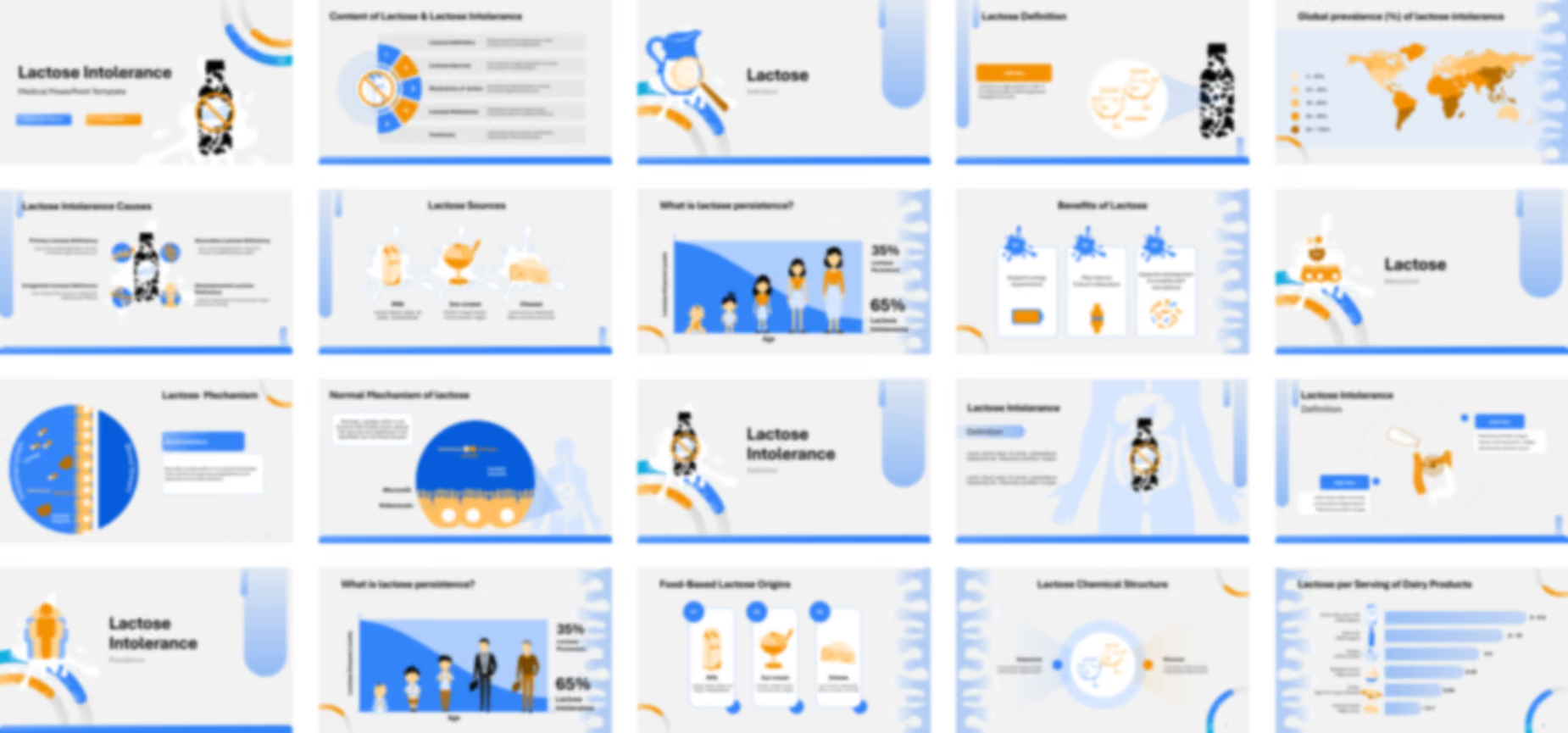
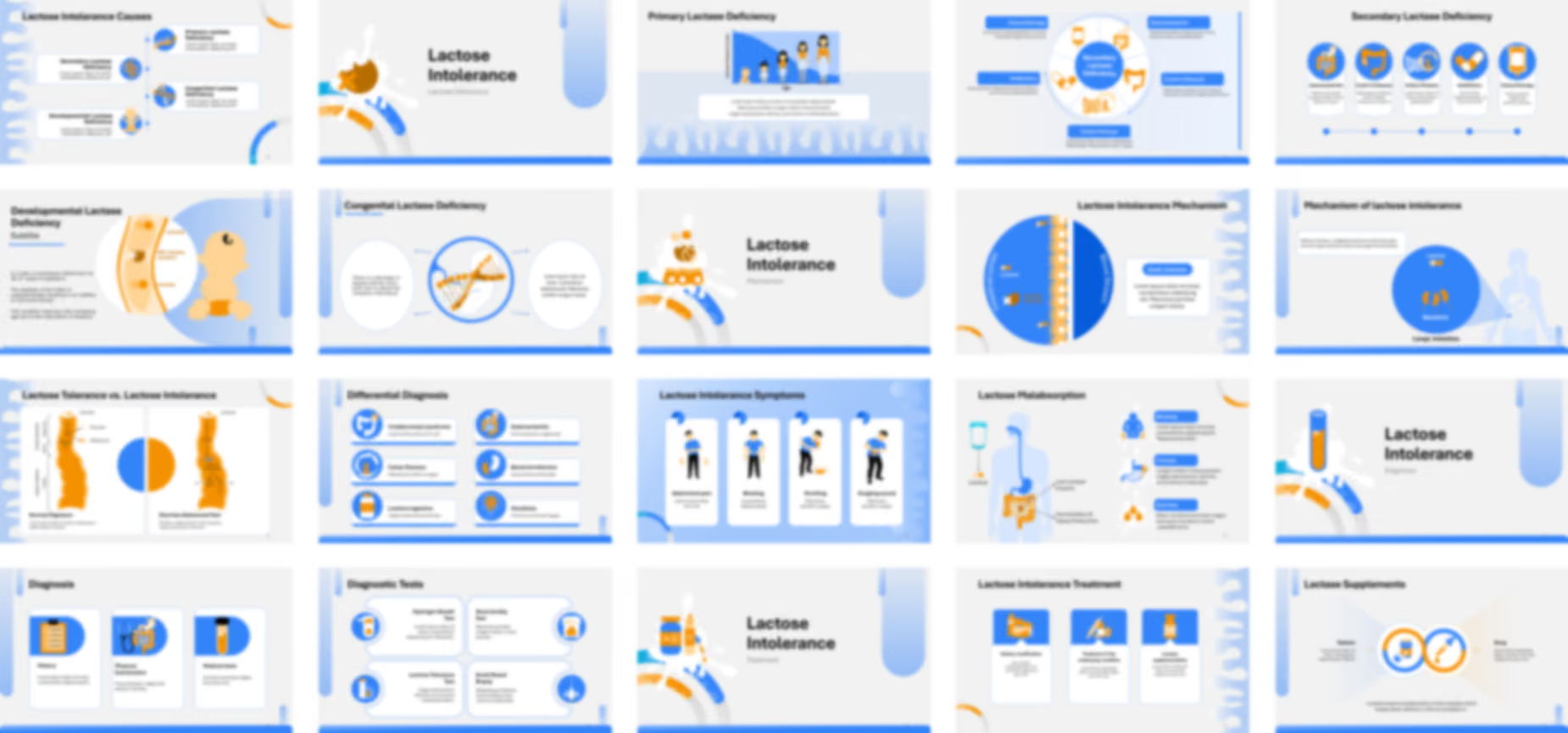
The Lactose Intolerance PowerPoint template opens with a scientific breakdown of the lactose disaccharide, showing its glucose and galactose units, before a physiological diagram of an enterocyte illustrates how the lactase enzyme normally hydrolyzes lactose for absorption. A circular diagram then traces undigested milk into the large intestine, and a split screen comparison contrasts tolerance with intolerance, linking the absence of lactase to bacterial fermentation and gas production through editable PowerPoint diagrams.
A color coded world map visualizes global prevalence, comparing low prevalence regions with high risk populations reaching eighty to one hundred percent. Establishing this global picture first gives educators a shared reference point before the template categorizes four types of deficiency, primary, secondary, congenital, and developmental, and details secondary causes such as Crohn's disease, celiac disease, and gastroenteritis that damage the gut lining.
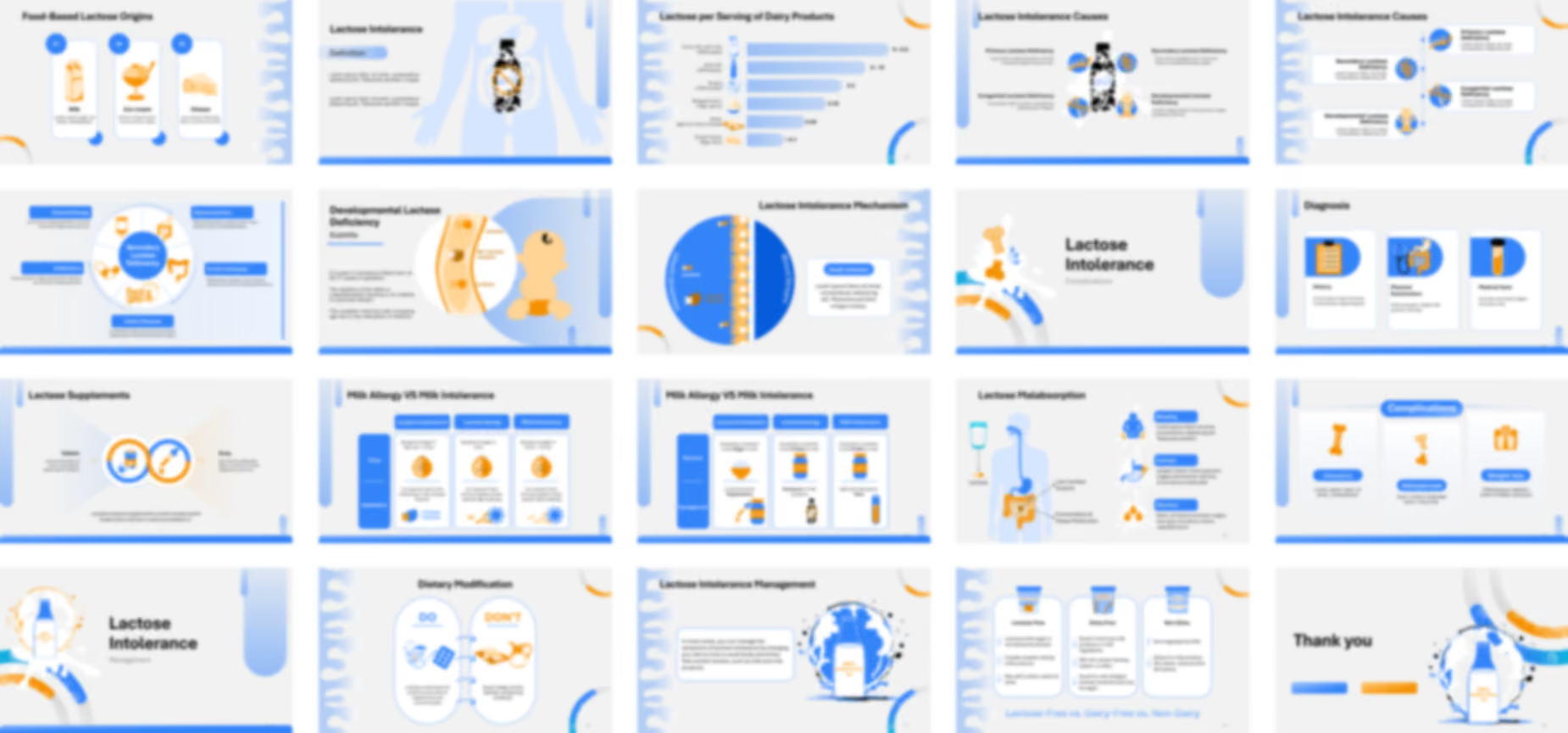
A stopwatch icon comparison distinguishes lactose intolerance from milk allergy by symptom onset time before four diagnostic tests, the hydrogen breath test, stool acidity test, tolerance test, and biopsy, are each represented by a specialized medical icon. The presentation template also includes clinical assessment slides for taking patient history and performing physical examinations.
An infinity loop graphic highlights enzyme replacement therapy, comparing tablets for meals with drops for pre-digestion, before the medical presentation template covers long term complications such as osteopenia, osteoporosis, and weight loss. The presentation closes with practical dietary management slides, including food labeling comparisons and lifestyle modification strategies.
Ready To Transform Your Presentation ?
Pay once, use forever