Lisdexamfetamine PPT Template: Animated Medical PowerPoint
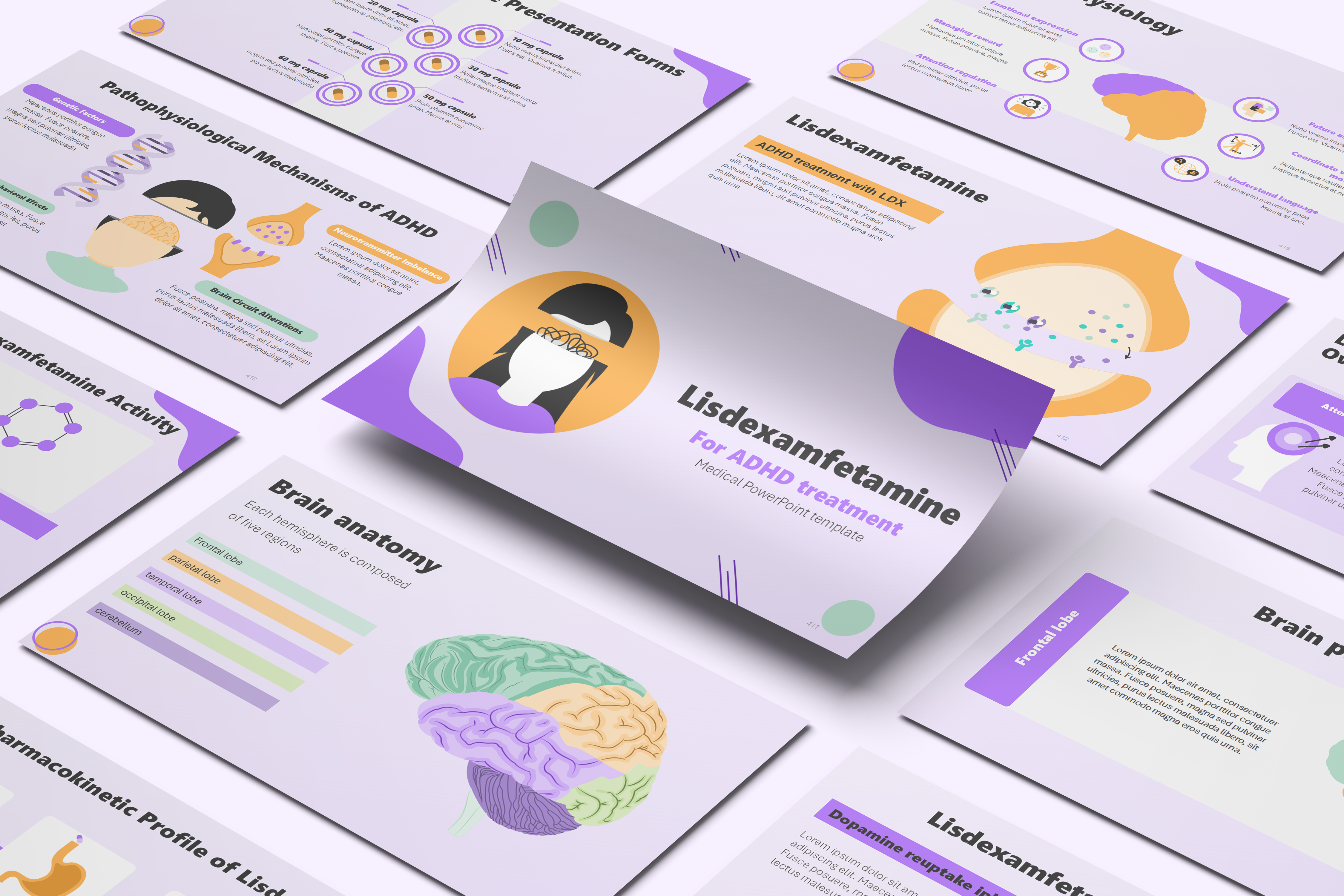
The Lisdexamfetamine PPT template is an animated medical PowerPoint designed by medical professionals to ensure correct and updated content.
This presentation template provides you with animation to bring complex concepts to life.
You can see the impressive interplay of neurotransmitters as you explore the medication's journey through the body, all within a clear, concise and visually attractive format.
Engage your audience and explore the mechanism of action of Lisdexamfetamine more deeply with our dynamic, medically accurate PowerPoint template, designed by RxSlides' team for healthcare professionals.
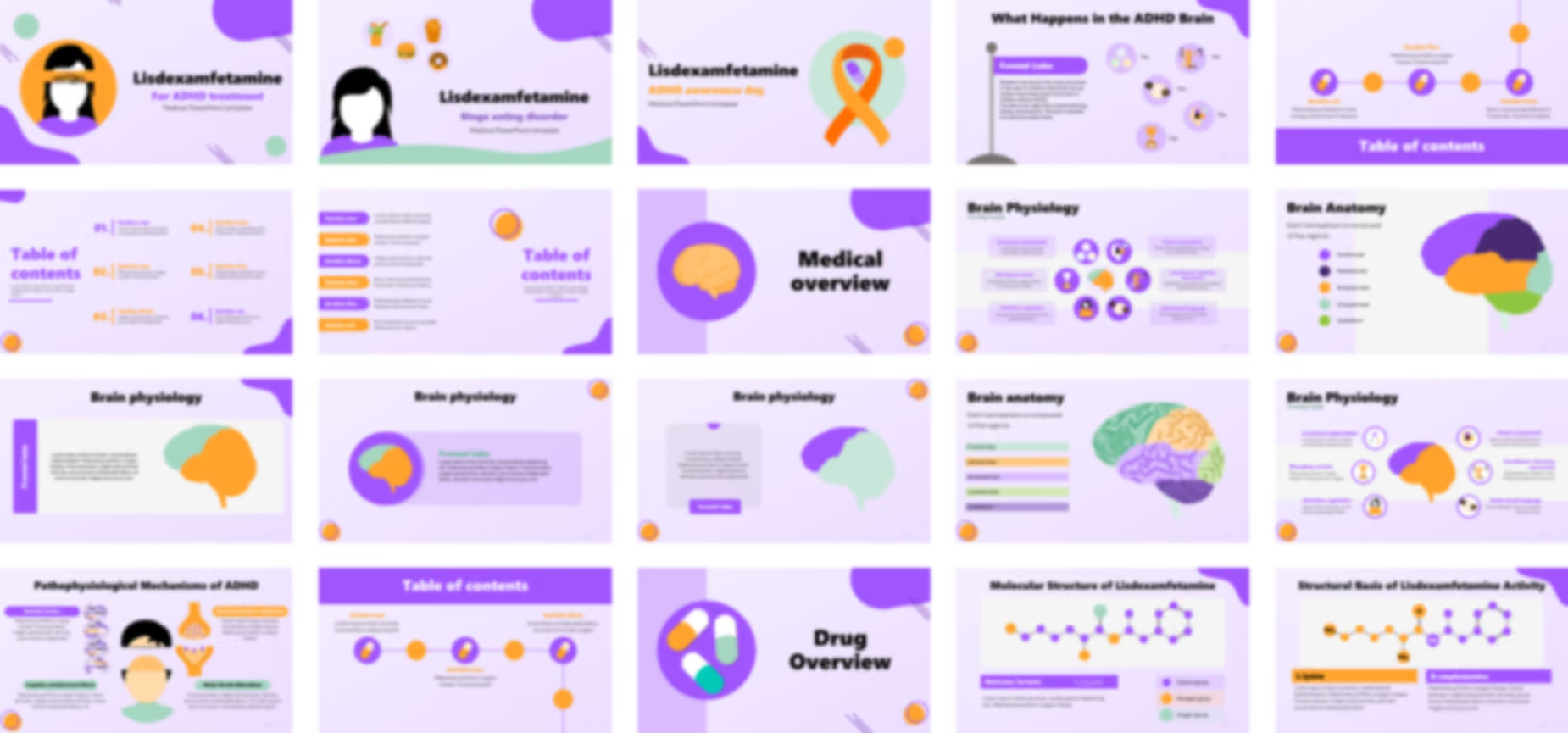
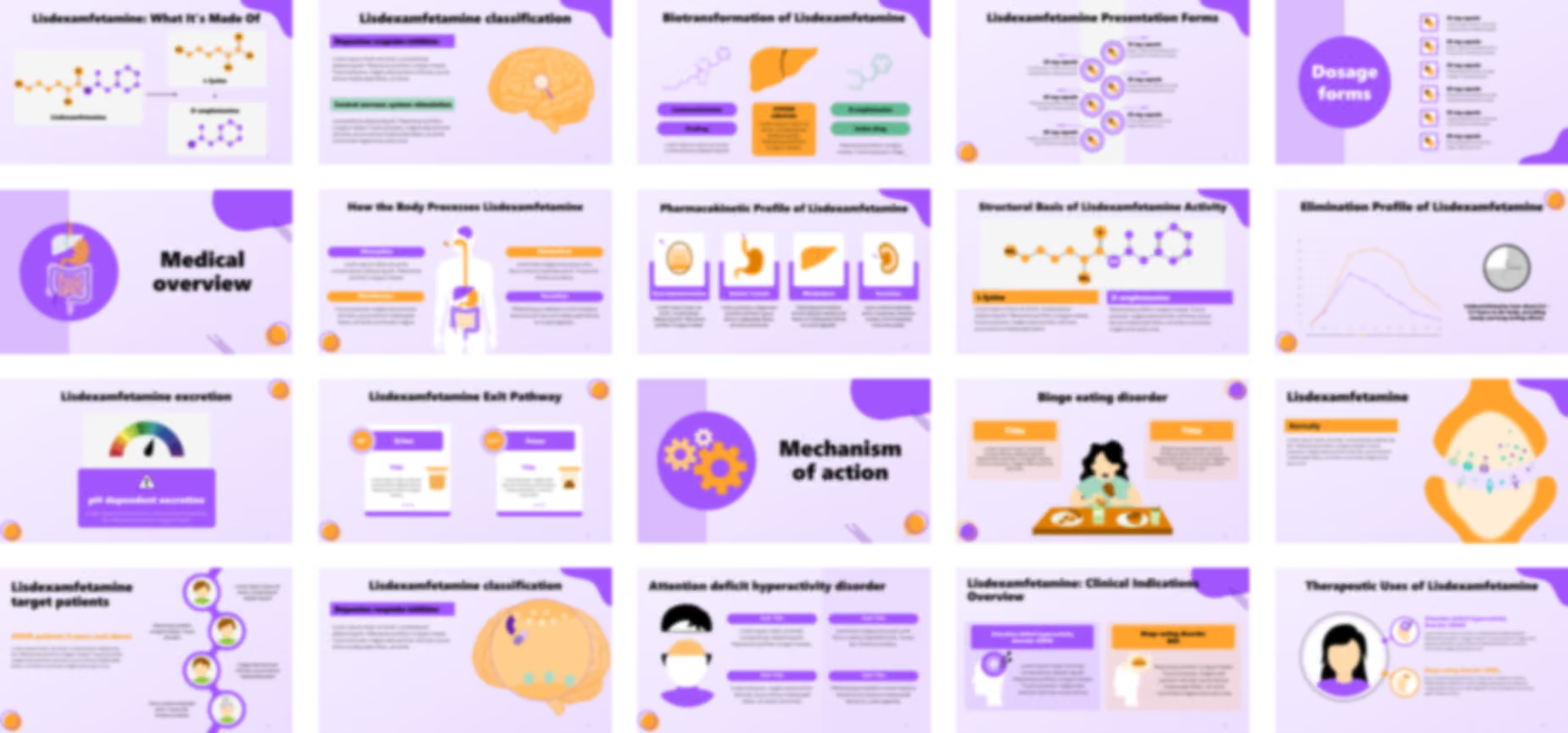
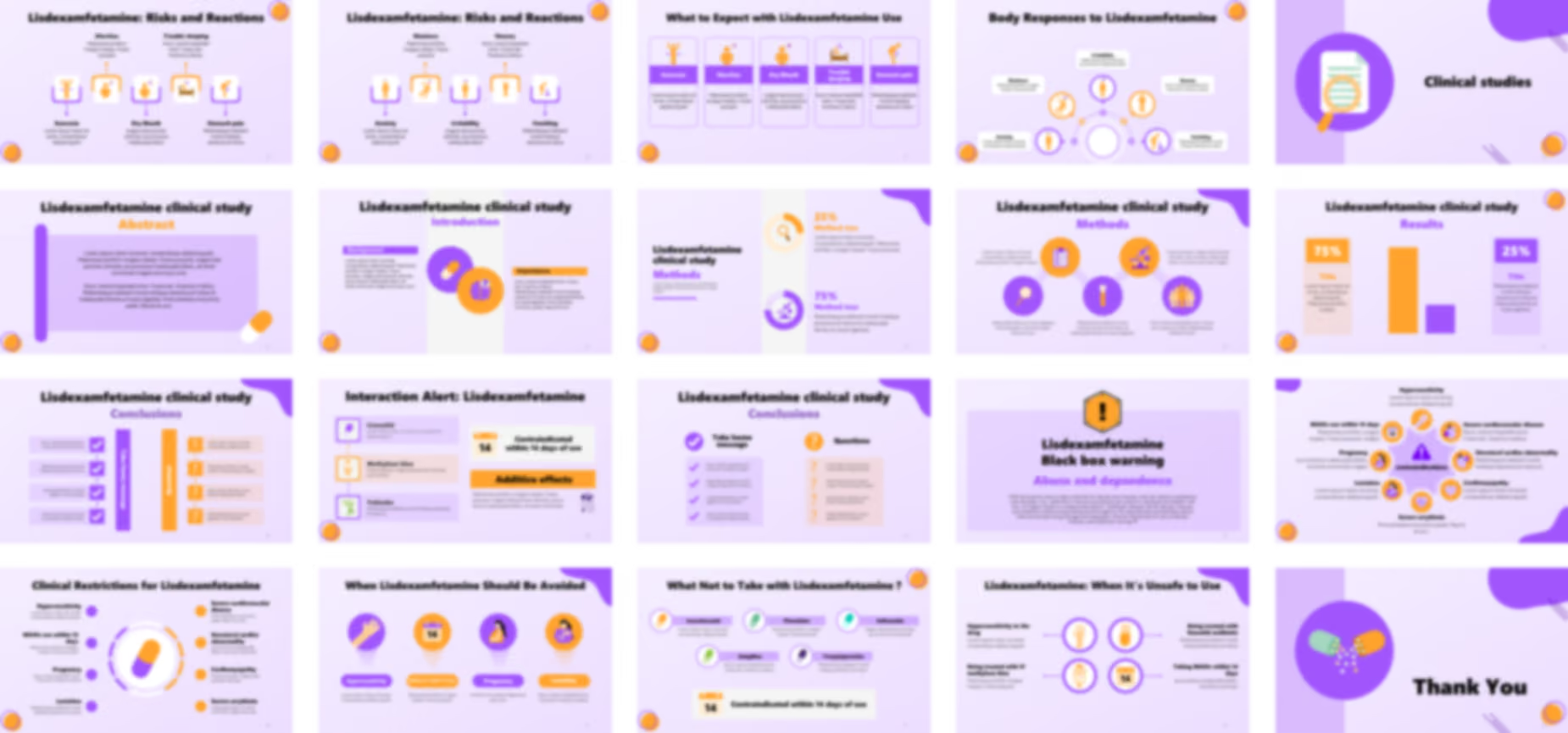
Lisdexamfetamine PPT Template Content
Slide 1 - Title Slide: Lisdexamfetamine for ADHD Treatment
Illustration of a cross-section of a human head, with the forehead/skull removed to reveal a tangled, chaotic mass of lines representing brain activity.
Visible on the brain illustration is a bright, centralized focus point (like a yellow dot).
A prominent blood glucose reading "Focused" or "126" is included in the lower part of the illustration.
Slide 2 - Title Slide: Lisdexamfetamine for Binge Eating Disorder
Title Slide: Lisdexamfetamine for Binge Eating Disorder
Shows female figure with her head tilted, visually representing a patient struggling with the condition.
Four icons of high-calorie foods (ice cream, hamburger, fries, donut) clustered above the figure.
Slide 3 - Lisdexamfetamine for ADHD Awareness Day
Lisdexamfetamine for ADHD Awareness Day
Highlights Lisdexamfetamine and ADHD awareness day.
The slide features a large, central orange awareness ribbon intertwined with a purple capsule.
The design uses large, bold text to highlight Lisdexamfetamine and ADHD awareness day.
Slide 4 - Table of Contents (Presentation Roadmap)
Table of Contents (Presentation Roadmap)
Outlines the main sections of the Lisdexamfetamine presentation.
The design features a linear flow chart connecting three main sections (Section one, Section two, Section three), visually represented by purple circles containing Lisdexamfetamine capsules.
Slide 5 - Table of Contents (Continuation)
Table of Contents (Continuation)
Outlines the remaining sections of the Lisdexamfetamine presentation, continuing the visual roadmap.
The design features a linear flow chart connecting three final sections (Section six, Section five, Section four), represented by purple circles containing Lisdexamfetamine capsules.
Slide 6 - Table of Contents (Detailed List)
Table of Contents (Detailed List)
Presents the six key sections of the presentation in a numbered, column layout for maximum clarity.
The design uses large, brightly colored numbers (01. to 06.).
Slide 7 - Table of Contents (Block Format)
Table of Contents (Block Format)
Lists the six key sections of the presentation using stacked content blocks.
The design utilizes vertical pairs of colored blocks (alternating purple and orange).
Slide 8 - Medical Overview (Section Divider)
Medical Overview (Section Divider)
Section divider to transmit to Medical overview.
The slide features a large, detailed illustration of the human brain in a yellow-orange tone, centered in a purple circle.
Slide 9 - Brain Anatomy (Five Regions)
Brain Anatomy (Five Regions)
Anatomy of the human brain, setting the context for where Lisdexamfetamine exerts its therapeutic effects.
The design features a large, color-coded illustration of the brain's lateral view, segmenting the Frontal, Parietal, Temporal, Occipital lobes, and Cerebellum.
Slide 10 - Brain Anatomy (Alternative slide of slide 9)
Brain Anatomy (Alternative slide of slide 9)
Anatomy of the human brain, setting the neurological context for Lisdexamfetamine's mechanism.
The design features a large, color-coded illustration of the brain's lateral view, segmenting the Frontal, Parietal, Temporal, Occipital lobes, and Cerebellum using distinct colors.
Slide 11 - Brain Physiology (Frontal Lobe Focus)
Brain Physiology (Frontal Lobe Focus)
Brain Physiology, specifically detailing the role of the Frontal Lobe.
Highlights the Frontal Lobe in a vibrant orange color on the brain illustration.
Slide 12 - Brain Physiology (Frontal Lobe Details, alternative slide)
Shows large, circular graphic containing the colored (green-orange) brain illustration.
Slide 13 - Brain Physiology (Frontal Lobe Highlight, alternative slide)
Brain Physiology (Frontal Lobe Highlight, alternative slide)
Details a content about Frontal Lobe.
The design clearly highlights the Frontal Lobe in purple on the large brain illustration, drawing immediate attention to the drug's therapeutic target.
Shows A purple text box with the title "frontal lobe" down the box.
The design features a central brain illustration surrounded by six content nodes with icons covering key areas like Attention regulation, Emotional expression, Managing reward, and Future assessment.
Slide 15 - Frontal Lobe Functions (Core Capabilities Alternative slide)
Frontal Lobe Functions (Core Capabilities Alternative slide)
Details the six primary functions of the Frontal Lobe.
The design features a central brain illustration with the Frontal Lobe highlighted in purple, surrounded by six content nodes with icons covering key areas like Attention regulation, Emotional expression, Managing reward, and Future assessment.
Slide 16 - Pathophysiological Mechanisms of ADHD (Core Factors)
Pathophysiological Mechanisms of ADHD (Core Factors)
The design organizes the mechanisms around a central figure with an exposed brain, linking concepts like Genetic Factors (DNA helix icon) and Neurotransmitter Imbalance (synapse icon) to the underlying issues.
Slide 17 - What Happens in the ADHD Brain (Frontal Lobe Deficits)
What Happens in the ADHD Brain (Frontal Lobe Deficits)
Explains how the Frontal Lobe is implicated in ADHD.
The design uses a visual flow that links the Frontal Lobe flag to the text detailing its role in controlling thinking, feeling, and behavior.
Slide 18 - Drug Overview (Section Divider)
Drug Overview (Section Divider)
Section divider to transmit to Drug Overview of Lisdexamfetamine.
The slide features a large, centralized graphic of three multi-colored capsules.
Slide 19 - Molecular Structure of Lisdexamfetamine
The design features a large, color-coded chemical diagram showing the arrangement of the Carbon (purple), Nitrogen (orange), and Oxygen (green) groups.
Slide 20 - Structural Basis of Lisdexamfetamine Activity
The design visually divides the molecular structure into two distinct, color-coded sections (orange for L-lysine and purple for D-amphetamine).
Slide 21 - Lisdexamfetamine: What It's Made Of (Prodrug Action)
Lisdexamfetamine: What It's Made Of (Prodrug Action)
Shows how Lisdexamfetamine is broken down in the body.
The design shows the complete Lisdexamfetamine molecule on the left, leading to an arrow that separates it into the two resulting products on the right: the inactive L-lysine and the active therapeutic agent, D-amphetamine.
Provides a more detailed visual explanation of how Lisdexamfetamine acts as a Dopamine reuptake inhibitor.
The design features a large brain graphic with a magnified section showing the synapse.
Slide 24 - Lisdexamfetamine Presentation Forms (Dosage Range)
Lisdexamfetamine Presentation Forms (Dosage Range)
Outlines the six available capsule dosages for Lisdexamfetamine.
The design uses a flowing, circular graphic to list the dosages, from 10 mg up to 60 mg capsules.
Slide 25 - Dosage Forms (Visual Summary)
Dosage Forms (Visual Summary)
Summarizes the six available Lisdexamfetamine capsule dosages in a prominent list format.
The design features a large, purple circle on the left with the text "Dosage forms", while the right side lists the range from 10 mg to 60 mg.
Slide 26 - Medical Overview (GI System Focus)
Medical Overview (GI System Focus)
Section divider to transmit to Medical overview of Lisdexamfetamine.
The slide features a large, centralized graphic of the Liver and GI system (stomach and intestines) within a purple circle.
Slide 27 - How the Body Processes Lisdexamfetamine (PK Overview)
How the Body Processes Lisdexamfetamine (PK Overview)
Explains the four stages of Lisdexamfetamine pharmacokinetics: Absorption, Distribution, Metabolism, and Excretion (ADME).
The design features a large illustration of the human body, visually mapping the drug's journey from the stomach (Absorption) to the liver (Metabolism) and then out through the kidneys (Excretion).
Slide 28 - Pharmacokinetic Profile of Lisdexamfetamine (Metabolism Sites)
Pharmacokinetic Profile of Lisdexamfetamine (Metabolism Sites)
Illustrates the multiple sites of metabolism for Lisdexamfetamine within the body.
The design uses four squared blocks, each featuring a different organ icon: the Mouth/GI tract, Stomach/Intestines, Liver, and Kidney, all labeled "Metabolism".
Slide 29 - Biotransformation of Lisdexamfetamine (CYP2D6 Role)
Biotransformation of Lisdexamfetamine (CYP2D6 Role)
The design illustrates the transformation, showing the Lisdexamfetamine Prodrug on the left and the resulting D-amphetamine Active drug on the right, separated by a large Liver icon.
Slide 30 - Elimination Profile of Lisdexamfetamine (Duration of Effect)
Elimination Profile of Lisdexamfetamine (Duration of Effect)
Demonstrates the drug's controlled-release profile and explains the duration of its long-lasting therapeutic effects.
The design features a pharmacokinetic time-concentration curve showing the plasma levels of both Lisdexamfetamine and Dextroamphetamine over a 24-hour period.
Presents the two primary clinical indications for Lisdexamfetamine: Attention deficit hyperactivity disorder (ADHD) and Binge eating disorder (BED).
The design uses two colored blocks, each featuring a specific patient-related icon: a head with arrows showing lack of focus for ADHD, and a head with a food item for BED.
Slide 40 - Therapeutic Uses of Lisdexamfetamine (Visual Summary)
Therapeutic Uses of Lisdexamfetamine (Visual Summary)
Summarizes the Therapeutic Uses of Lisdexamfetamine, focusing on the two main conditions: ADHD and Binge eating disorder (BED).
The design features a large central female figure connected by lines to two circular graphics, one illustrating the lack of focus for ADHD and the other the food-seeking behavior of BED.
Lists the four key symptoms or areas of focus when discussing the use of Lisdexamfetamine for ADHD treatment.
The design features a schematic illustration of a patient's head with an exposed brain.
Slide 42 - Binge Eating Disorder (BED)
Binge Eating Disorder (BED)
Defines and discusses the use of Lisdexamfetamine for Binge Eating Disorder (BED) treatment.
The design features a large, centralized illustration of a woman enthusiastically eating food (including a hamburger and a drumstick) at a table with other plates.
The two orange content blocks provide dedicated space for detailing the core criteria or clinical features of BED, ensuring a structured overview of the condition targeted by the drug.
Slide 43 - Lisdexamfetamine Target Patients
Lisdexamfetamine Target Patients
Defines the patient population.
The design features a visual pathway of patient avatars connected by a purple line, representing the broad age range of users, from children to older adults.
Slide 44 - Side Effects (Section Divider)
Side Effects (Section Divider)
Dynamic section divider to clearly transition your presentation into the critical Side Effects section.
The slide features a large, centralized graphic of a human figure losing balance, with a spinning atom (representing dizziness or confusion) over their head.
Slide 45 - Lisdexamfetamine: Risks and Reactions (Common Side Effects)
Lisdexamfetamine: Risks and Reactions (Common Side Effects)
The design uses a row of five boxed icons, each connected by a line to a side effect title, covering issues like Diarrhea, Trouble sleeping, Dry Mouth, Stomach pain, and Anorexia.
Slide 46 - Lisdexamfetamine: Risks and Reactions (Neuropsychiatric Effects)
Lisdexamfetamine: Risks and Reactions (Neuropsychiatric Effects)
Lists a second set of five common side effects of Lisdexamfetamine.
The design uses a row of five boxed icons connected by a line to a side effect title, covering issues like Dizziness, Nausea, Anxiety, Irritability, and Vomiting.
Slide 47 - What to Expect with Lisdexamfetamine Use (Side Effect Summary)
What to Expect with Lisdexamfetamine Use (Side Effect Summary)
Summarizes and reinforces the five most common side effects that patients may experience while taking Lisdexamfetamine.
The design uses a clear, organized row of five columns, each featuring an icon and text for effects such as Anorexia, Diarrhea, Dry Mouth, Trouble sleeping, and Stomach pain.
Slide 48 - Body Responses to Lisdexamfetamine (Radial Side Effect Map)
Body Responses to Lisdexamfetamine (Radial Side Effect Map)
Maps out six key adverse reactions using a radial or circular diagram.
The design uses a central point connected by lines to six side effect blocks, covering symptoms like Dizziness, Nausea, Irritability, Anxiety, and Vomiting.
Slide 49 - Clinical Studies (Section Divider)
Clinical Studies (Section Divider)
Section divider to transmit Clinical studies section.
The slide features a large, centralized graphic of a document (report/study) overlaid with a magnifying glass.
Slide 50 - Lisdexamfetamine Clinical Study Abstract
Lisdexamfetamine Clinical Study Abstract
Presents the abstract or summary of the clinical trial data, setting the context for the efficacy and safety results that follow.
The design features a large text block framed in purple.
Slide 51 - Lisdexamfetamine Clinical Study Introduction
Lisdexamfetamine Clinical Study Introduction
Structures the Introduction of the clinical study, clearly separating the Background (why the study was needed) and the Importance (what the findings mean clinically).
The design uses a unique vertical three-panel layout to separate the content, with the central panel featuring a visual metaphor of a capsule and a brain with a question mark.
Slide 52 - Lisdexamfetamine Clinical Study Methods
Lisdexamfetamine Clinical Study Methods
Details the Methodology used in the clinical study.
The design uses a visual breakdown, with a chart.
Slide 53 - Lisdexamfetamine Clinical Study Methods (Detailed)
Lisdexamfetamine Clinical Study Methods (Detailed)
Outlines the four specific methods or phases used in the clinical study.
The design uses a flowing, circular pathway to present four key methodological components: a checklist/clipboard icon (for data collection), a magnifying glass (for examination/analysis), a test tube (for lab work), and a group of people (for participant/population analysis).
Slide 54 - Lisdexamfetamine Clinical Study Results
Lisdexamfetamine Clinical Study Results
Concluding slide to clearly present the Results of the clinical study, using a bar graph to compare two data sets.
The design features two main findings, visually represented by an orange bar (corresponding to the 75% result) and a purple bar (corresponding to the 25% result).
Slide 55 - Lisdexamfetamine Clinical Study Conclusions
Lisdexamfetamine Clinical Study Conclusions
Concluding slide to present the Take Home Message and open the floor for Questions.
A purple vertical bar features four bullet points with checkmark icons for the key takeaways, while an orange vertical bar lists four placeholder questions with question mark icons.
Slide 56 - Clinical Study Conclusions (Take Home & Q&A)
Clinical Study Conclusions (Take Home & Q&A)
Concludes the presentation, clearly highlighting the "Take home message" and dedicating space for a Questions and Answers session.
The design uses a strong visual split: the left features a large purple checkmark icon for the key summary points, while the right features a large orange question mark icon for audience inquiries.
Slide 57 - Contraindications (Section Divider)
Contraindications (Section Divider)
Section divider to transmit to Contraindications section.
The slide features a large, centralized graphic of a siren or warning light within a purple circle, visually symbolizing a high-alert safety warning.
Slide 58 - Lisdexamfetamine Black Box Warning (Abuse and Dependence)
Lisdexamfetamine Black Box Warning (Abuse and Dependence)
Presents the Black Box Warning regarding the drug's high potential for Abuse and Dependence.
The design features a large, centralized, attention-grabbing hexagonal icon with an orange exclamation mark.
Slide 59 - Lisdexamfetamine: Contraindications
Lisdexamfetamine: Contraindications
Presents the eight medical conditions or scenarios that contraindicate the use of Lisdexamfetamine, focusing on cardiac, hypersensitivity, and drug interaction risks.
The design uses a radial diagram, placing the "Contraindications" warning in the center and radiating out to eight specific issues, including Hypersensitivity, Severe cardiovascular disease, Structural cardiac abnormality, and MAOI use within 14 days.
Slide 60 - Clinical Restrictions for Lisdexamfetamine (Contraindications Summary)
Clinical Restrictions for Lisdexamfetamine (Contraindications Summary)
The design uses a radial arrangement around a central capsule icon, connecting the icon to eight distinct purple and orange circles, each representing a contraindication (e.g., Pregnancy, Lactation, MAOIs use within 14 days, Severe cardiovascular disease).
Slide 61 - When Lisdexamfetamine Should Be Avoided
When Lisdexamfetamine Should Be Avoided
Summarizes four situations that require Lisdexamfetamine to be avoided or discontinued, focusing on allergies, drug interactions, and maternal health.
The design uses four distinct icons to represent the contraindications: a hand with a rash (Hypersensitivity), a calendar with 14 days (MAOIs use within 14 days), and icons for Pregnancy and Lactation.
Slide 62 - When Lisdexamfetamine Should Be Avoided (Cardiac Focus)
When Lisdexamfetamine Should Be Avoided (Cardiac Focus)
Summarizes four key cardiac conditions that contraindicate the use of Lisdexamfetamine, emphasizing the cardiovascular safety profile of the drug.
The design uses four distinct icons to represent the contraindications: an exclamation mark over a heart (for Severe cardiovascular disease), a heart with an 'X' (for Structural cardiac abnormality), a solid heart (for Cardiomyopathy), and an ECG heartbeat line (for Severe arrhythmia).
Slide 63 - Lisdexamfetamine: When It's Unsafe to Use
Lisdexamfetamine: When It's Unsafe to Use
Lists four crucial conditions or concurrent drug uses that make Lisdexamfetamine unsafe to administer.
The design uses four distinct icons to represent the contraindications: a hand with a rash (for Hypersensitivity), a capsule (for being treated with linezolid antibiotic), an IV bag (for being treated with IV methylene blue), and a calendar with 14 (for taking MAOIs within 14 days).
Slide 64 - Drug Interactions (Section Divider)
Drug Interactions (Section Divider)
Section divider to transmit to the crucial Drug interactions section.
The slide features a large, centralized graphic of two capsules colliding within a purple circle.
Explains the danger of Additive effects or Duplicate treatment when Lisdexamfetamine is co-administered with other central nervous system (CNS) stimulants, such as Benzphetamine.
The design features visual icons for the heart and brain, symbolizing the systemic effects of the drug interaction, particularly the risk of duplicating treatment and increasing stimulation.
Explains the danger of Additive effects when Lisdexamfetamine is co-administered with another CNS stimulant, specifically Phendimetrazine.
The design features a large, purple heart icon, symbolizing the cardiovascular risk associated with combining these two stimulants and potentially resulting in additive effects on the heart.
Slide 67 - What Not to Take with Lisdexamfetamine (MAOI List)
What Not to Take with Lisdexamfetamine (MAOI List)
Provides an explicit list of the five specific Monoamine Oxidase Inhibitors (MAOIs) that are contraindicated when used with Lisdexamfetamine.
The design uses five different-colored capsule icons, each labeling a specific MAOI that must be avoided, including Isocarboxazid, Phenelzine, Safinamide, Selegiline, and Tranylcypromine.
A prominent 14-day calendar icon and text block clearly state that these drugs are Contraindicated within 14 days of use.
Highlights three critical drug and substance interactions with Lisdexamfetamine, focusing on agents that interact via the serotonergic pathway or have additive stimulant effects.
The slide features three distinct drugs/substances that interact: Linezolid, Methylene blue, and the herbal supplement Yohimbe.
Slide 69 - Thank You (Closing Slide)
Thank You (Closing Slide)
Concludes the presentation.
The design features a large, central illustration of an open capsule spilling its contents (granules) within a purple circle.
Features of the Template
- 100% editable PowerPoint template. - Editable colors, you can change according to your presentation style and company branding guidelines.
Purchase Template
Purchase the fully editable PowerPoint open file template