Pleural Effusion PowerPoint Template






Template Preview
Designed for healthcare professionals creating clear and structured medical presentations.
Ideal for doctors, medical educators, and pharmaceutical teams preparing lectures, clinical education, product presentations, and training.
Fully editable in PowerPoint, allowing you to customize diagrams, charts, and slide layouts with your own medical content
Ready-to-use presentation structure that saves time and helps you build professional healthcare presentations quickly.
Fully Animated
Built-in animations help you present medical information clearly and make complex concepts easier to understand.
Editable Colors and Shapes
Editable colors and shapes help you easily customize the slides to match your content and presentation style, just drag and drop your content.
Professional medical layouts
Professional medical layouts help you organize clinical information, medical data, and treatment insights in a clear and structured way.

Created by Medical Professionals
This template prioritizes medical accuracy, clarity, and real-world usability. Each slide is designed with a medical audience in mind, helping you present clinical information, data, and treatment insights in a way that is structured, credible, and easy for healthcare professionals to understand.
Medical Training for Pharmaceutical & Life Sciences Companies
Medical Affairs and Training teams building respiratory onboarding content can use this animated Pleural Effusion template to walk new hires through pleural space anatomy, the mechanics of pleural fluid formation, and the distinction between transudative and exudative effusions using Light's Criteria. Sales trainees and Medical Science Liaisons supporting a pulmonology portfolio get a visual reference for thoracentesis, chest tube drainage, and pleurodesis, illustrated through animated slides rather than static text. Because the volume-comparison slides show normal, small, and large fluid accumulation side by side, trainers can teach clinical severity without additional visual aids. New hires complete training able to explain both the physiology and the management options for pleural effusion.

Medical Congress & Scientific Conference Presentations
Pulmonologists, respiratory physicians, and critical care physicians preparing a conference session or grand rounds talk on pleural disease can adapt this animated template rather than rebuilding pleural anatomy diagrams for each presentation. The Light's Criteria comparison slide gives a speaker a ready diagnostic teaching tool for distinguishing transudative from exudative effusions, useful in a case-based CME session. Content on thoracentesis, catheter drainage, and pleurodesis supports a technically detailed discussion for a specialist audience, while the underlying anatomy slides remain accessible for a broader internal medicine crowd. A Key Opinion Leader presenting at multiple pulmonology meetings can reuse the animated illustrations across sessions of varying depth.

Pharmaceutical Product & Medical Affairs Presentations
Medical Affairs teams supporting a respiratory or critical care product can use this Pleural Effusion presentation as disease-state groundwork for scientific exchange, covering pleural fluid physiology, the transudative-versus-exudative classification, and underlying causes such as heart failure, malignancy, and tuberculosis without referencing a specific brand. Medical Science Liaisons can present the customized, animated slides during advisory boards or KOL discussions to establish shared clinical context before any product-specific data enters the conversation. The disease-focused framing keeps the presentation as an adaptable starting point, one that still runs through the customer's own medical and compliance review before reaching the field. Respiratory and critical care teams gain a consistent scientific reference across multiple product conversations.

eLearning & SCORM Training Modules
Training teams onboarding new pulmonology fellows or critical care nursing staff can customize this Pleural Effusion template with institution-specific protocols, then convert the finished presentation into a SCORM-compliant module for their learning management system when self-paced training suits the program better. The animated volume-comparison and Light's Criteria slides translate naturally into interactive checkpoints within an e-learning course on fluid classification. If a program needs a narrower scope, such as a diagnosis-only refresher, or a different depth for respiratory therapists versus physicians, the RxSlides team can adjust the template's coverage and branding. When none of the existing templates fit the training need, the RxSlides team can also design a fully custom presentation from scratch.
Medical & Healthcare Education
Medical and nursing faculty teaching pulmonary medicine can use this animated template to walk students through pleural anatomy and the mechanics of fluid accumulation without assembling normal-versus-effusion comparisons independently. The Light's Criteria slide gives students a clear, memorable framework for the transudative-versus-exudative distinction that is central to clinical reasoning in pulmonology rotations. Diagnostic content covering thoracentesis and imaging modalities connects the underlying physiology to procedures students will observe or perform in practice. Faculty can extend the same slide set into case-based discussion sections on respiratory disease without additional preparation time.
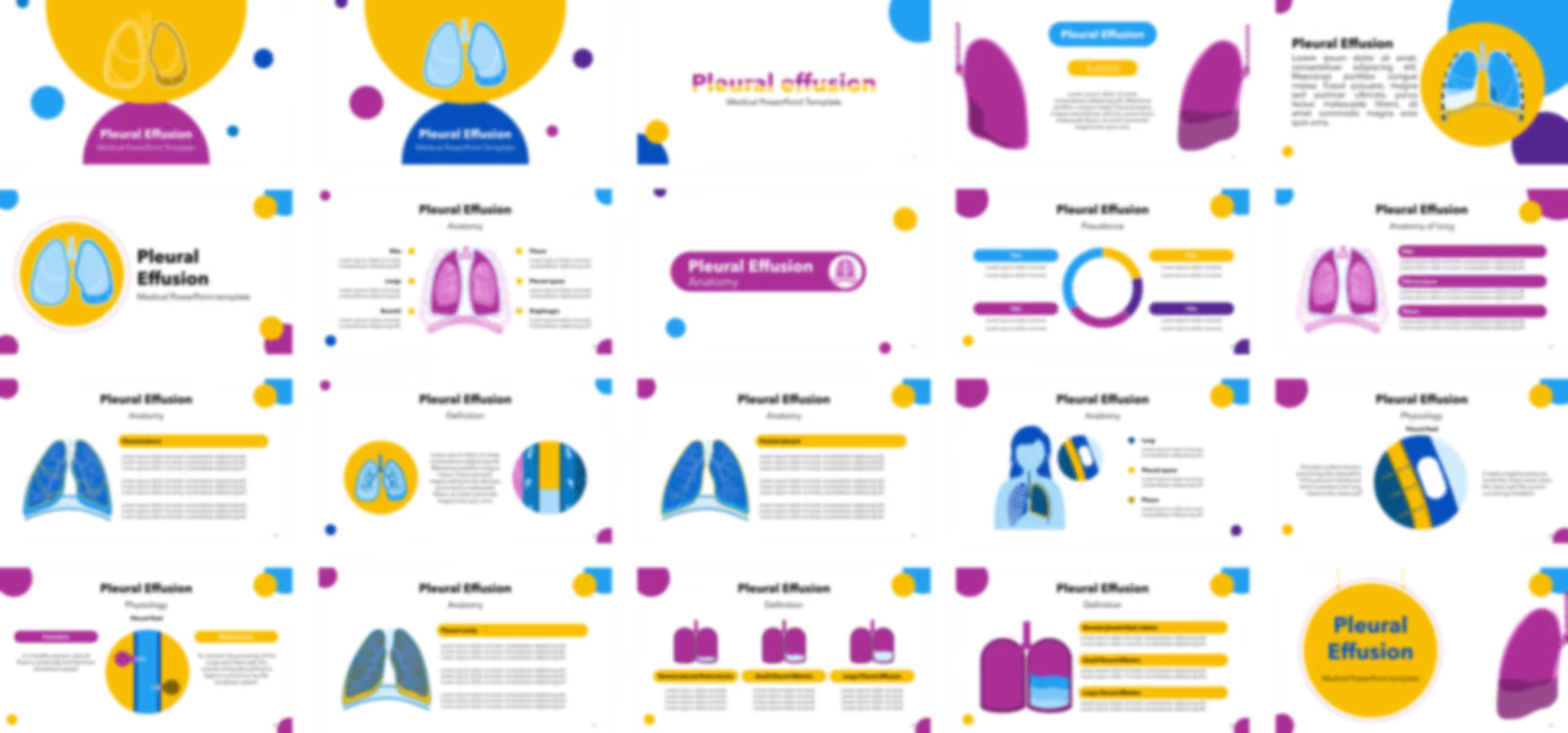
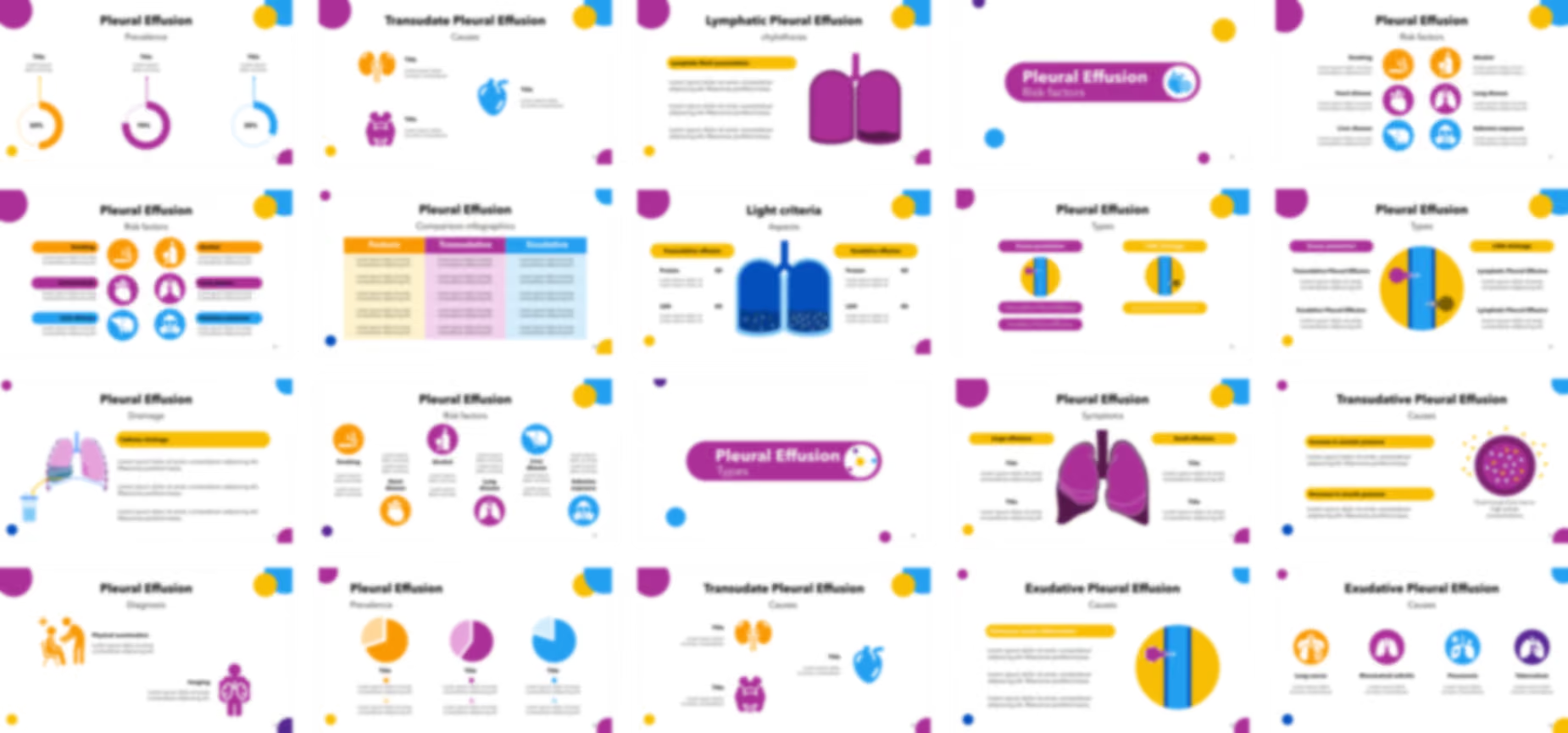

The Pleural Effusion PowerPoint template opens with a professional cover slide and introduction before a definition slide frames the pleural cavity pathology and fluid accumulation for further customization. Animated illustrations then detail lung anatomy, including the ribs, pleura, pleural space, visceral pleura, and parietal pleura, each with dedicated content slides.
The template explains how pleural fluid creates negative pressure inside the chest cavity during inhalation and provides surface tension preventing separation of the pleural membranes, describing how the lymphatic system keeps fluid volume to a minimum in a healthy person. Animated comparisons then contrast normal pleural fluid volume against small and large fluid accumulation before a data focused slide presents prevalence statistics in a set of editable infographics.
The presentation lists risk factors including smoking, heart disease, liver disease, alcohol, lung disease, and asbestos exposure before a diagram classifies the condition into excess production and reduced drainage categories. Establishing this classification first gives educators a shared reference point before a comparison table applies Light's criteria, contrasting transudative and exudative effusions by protein and LDH values.
The template details transudative causes such as increased osmotic and decreased oncotic pressure and exudative causes including lung cancer, pneumonia, tuberculosis, and rheumatoid arthritis, alongside the rarer chylothorax from lymphatic disruption. It then covers symptoms such as labored breathing and orthopnea, diagnosis through physical examination and imaging, and treatment options including thoracentesis, catheter drainage, pleurodesis, and surgical procedures such as pleurectomy and thoracotomy.
Ready To Transform Your Presentation ?
Pay once, use forever