Pneumothorax PowerPoint Template





Template Preview
Designed for healthcare professionals creating clear and structured medical presentations.
Ideal for doctors, medical educators, and pharmaceutical teams preparing lectures, clinical education, product presentations, and training.
Fully editable in PowerPoint, allowing you to customize diagrams, charts, and slide layouts with your own medical content
Ready-to-use presentation structure that saves time and helps you build professional healthcare presentations quickly.
Fully Animated
Built-in animations help you present medical information clearly and make complex concepts easier to understand.
Editable Colors and Shapes
Editable colors and shapes help you easily customize the slides to match your content and presentation style, just drag and drop your content.
Professional medical layouts
Professional medical layouts help you organize clinical information, medical data, and treatment insights in a clear and structured way.

Created by Medical Professionals
This template prioritizes medical accuracy, clarity, and real-world usability. Each slide is designed with a medical audience in mind, helping you present clinical information, data, and treatment insights in a way that is structured, credible, and easy for healthcare professionals to understand.
Medical Training for Pharmaceutical & Life Sciences Companies
Medical Affairs and Training teams building respiratory emergency onboarding can use this animated, 60-plus-slide Pneumothorax template to walk new hires through lung and pleural anatomy, the mechanism of lung collapse, and the distinctions between spontaneous, traumatic, and tension pneumothorax. Sales trainees and Medical Science Liaisons supporting an emergency medicine or thoracic surgery portfolio get a visual reference for needle decompression and chest tube insertion, illustrated with animated procedural sequences rather than static diagrams. Because causes, risk factors, and treatment content are organized into separate modules, trainers can adapt the depth of each session to their own onboarding schedule. New hires finish training able to recognize the clinical urgency that distinguishes tension pneumothorax from the other types.
Medical Congress & Scientific Conference Presentations
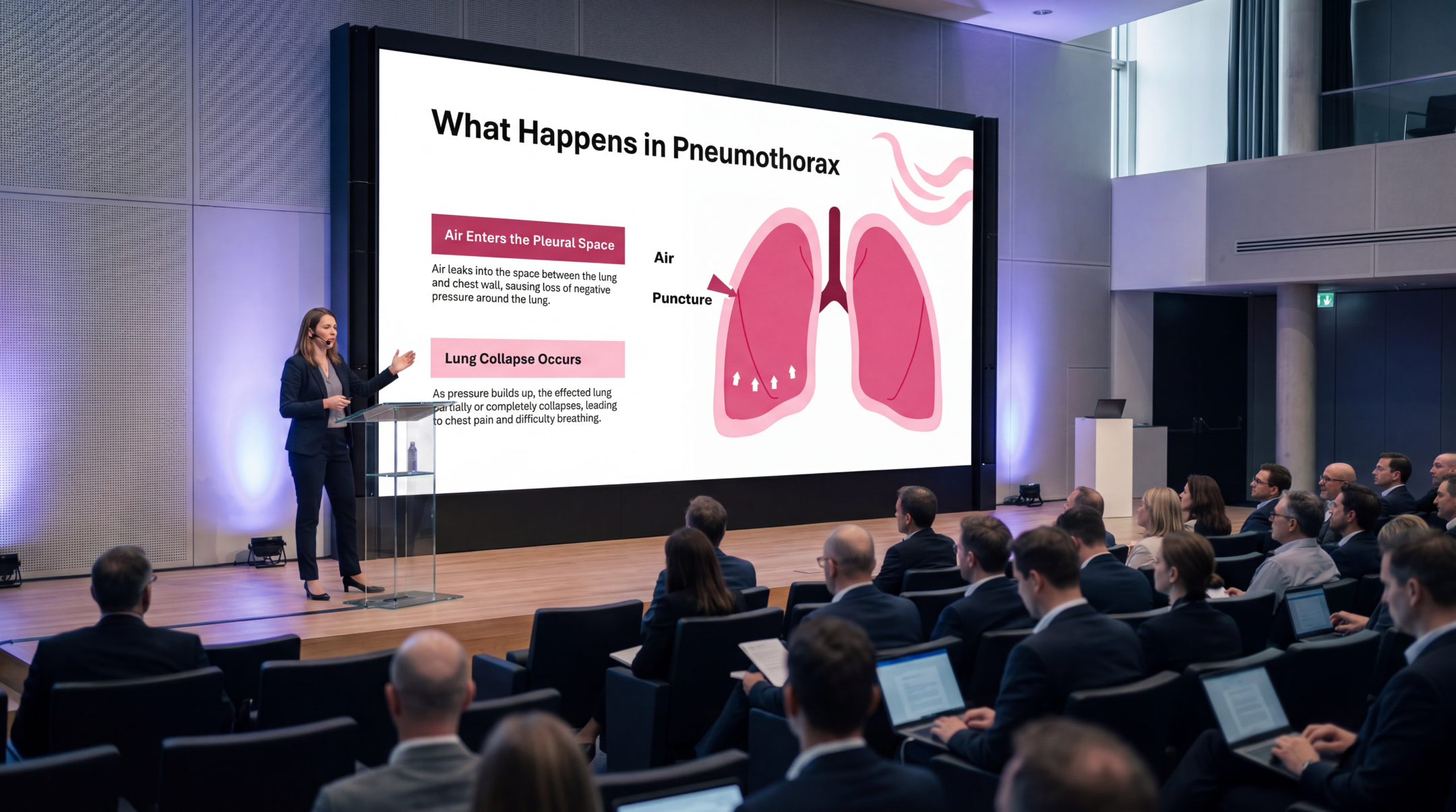
Pulmonologists, emergency medicine physicians, and thoracic surgeons preparing a conference session on respiratory emergencies can adapt this animated template rather than rebuilding lung-collapse illustrations for each talk. The comparison of spontaneous, traumatic, and tension pneumothorax gives a speaker a ready framework for a case-based discussion, while the pathogenesis slides for bullae rupture and traumatic injury support a technically detailed session for a specialist audience. Diagnostic and emergency-management content covering needle decompression and chest tube insertion pairs naturally with a presenter's own case series or outcomes data. A Key Opinion Leader speaking at multiple emergency medicine or pulmonology meetings can reuse the animated illustrations across sessions.

Pharmaceutical Product & Medical Affairs Presentations
Medical Affairs teams supporting a respiratory device or emergency medicine product can use this Pneumothorax presentation as disease-state groundwork for scientific exchange, covering pleural anatomy, the pathophysiology of lung collapse, and the clinical distinctions between pneumothorax types without referencing a specific brand. Medical Science Liaisons can present the customized, animated material during advisory boards or KOL discussions to establish shared clinical context before any product-specific data is introduced. Because the presentation stays disease-focused, it gives Medical Affairs a starting point still subject to the customer's own medical and compliance review before any field use. Emergency medicine and thoracic surgery teams gain a consistent, animated scientific reference across multiple conversations.

eLearning & SCORM Training Modules
Training teams onboarding new emergency department staff or thoracic surgery residents can customize this animated Pneumothorax template with institution-specific emergency protocols, then convert the finished presentation into a SCORM-compliant module for their learning management system when self-paced training fits better than a live session. The pathogenesis and emergency-management sequences translate naturally into interactive checkpoints within an e-learning course on respiratory emergencies. Where a program needs a narrower focus, such as needle decompression technique alone, or different depth for nursing versus physician learners, the RxSlides team can adjust the template's scope and branding. If a program's needs sit outside every existing template, the RxSlides team can build a fully custom presentation from scratch instead.
Medical & Healthcare Education
Medical and nursing faculty teaching respiratory emergencies can use this animated template's lung-collapse illustrations to establish the underlying pathophysiology before introducing clinical management, rather than sourcing anatomical comparisons from multiple sources. The side-by-side comparison of spontaneous, traumatic, and tension pneumothorax gives students a clear framework for a distinction that carries real clinical urgency, particularly for recognizing tension pneumothorax. Diagnostic and emergency-management content covering needle decompression and chest tube insertion connects the underlying science to procedures students will observe during emergency medicine rotations. Faculty can extend the same slide set into simulation-based teaching on respiratory emergencies.
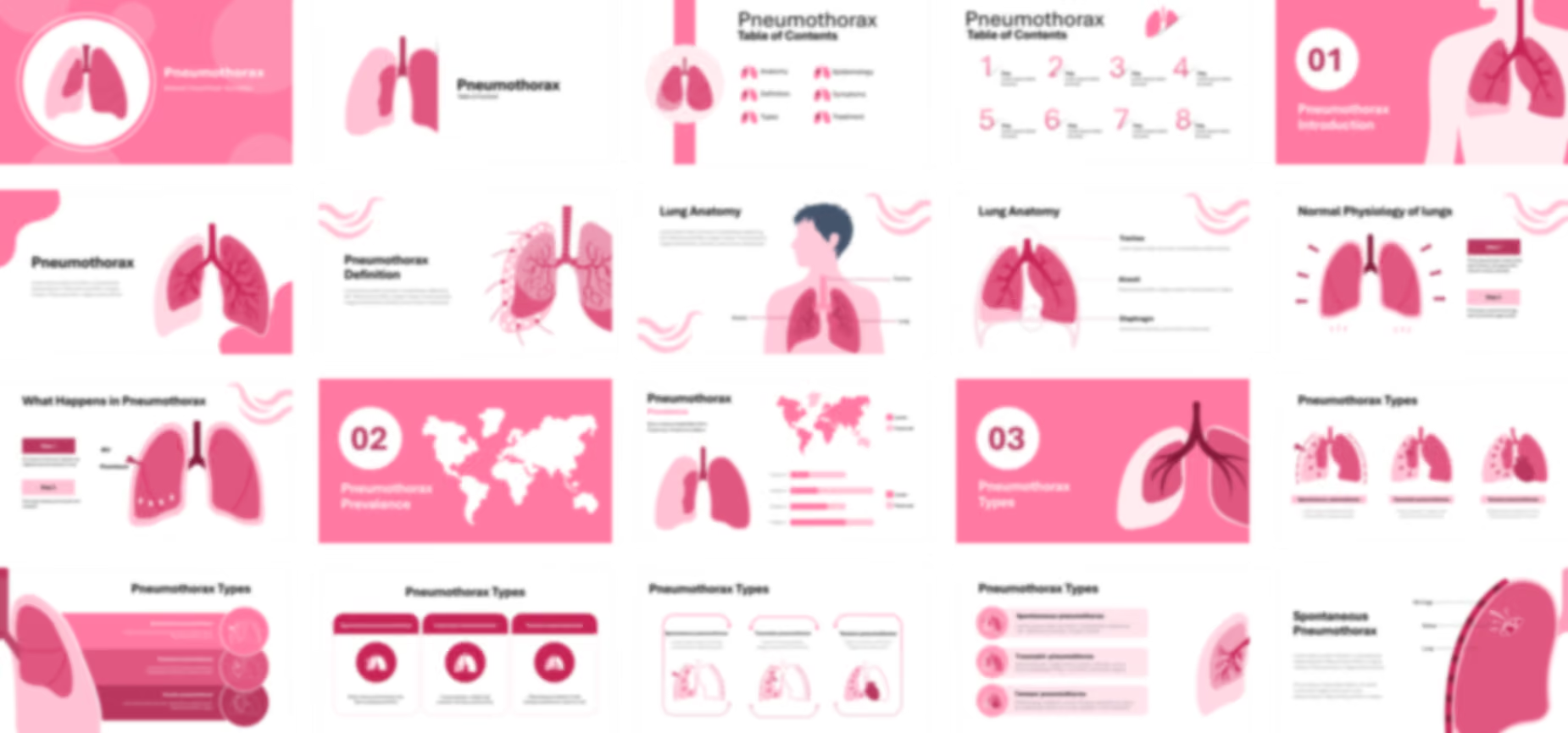
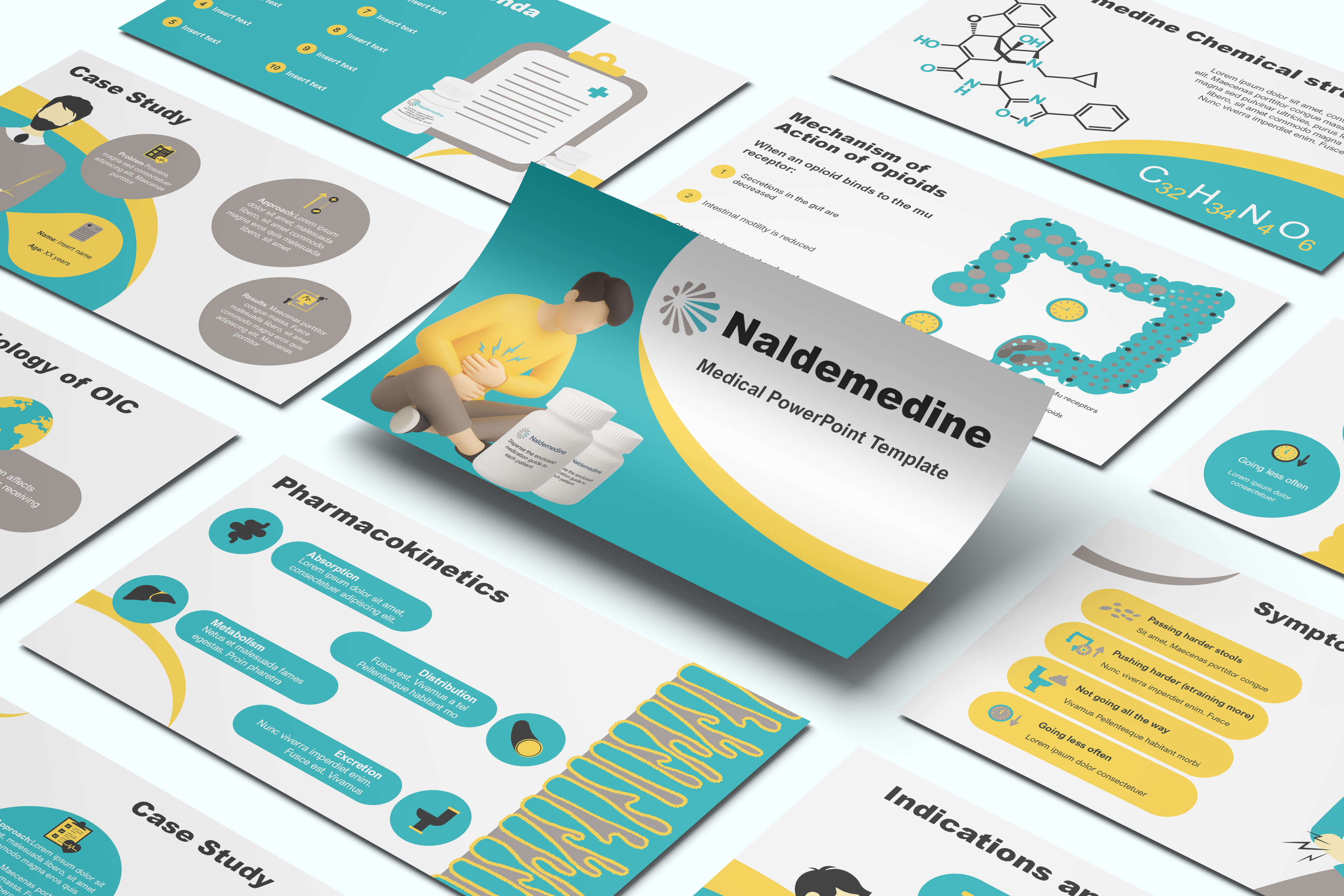
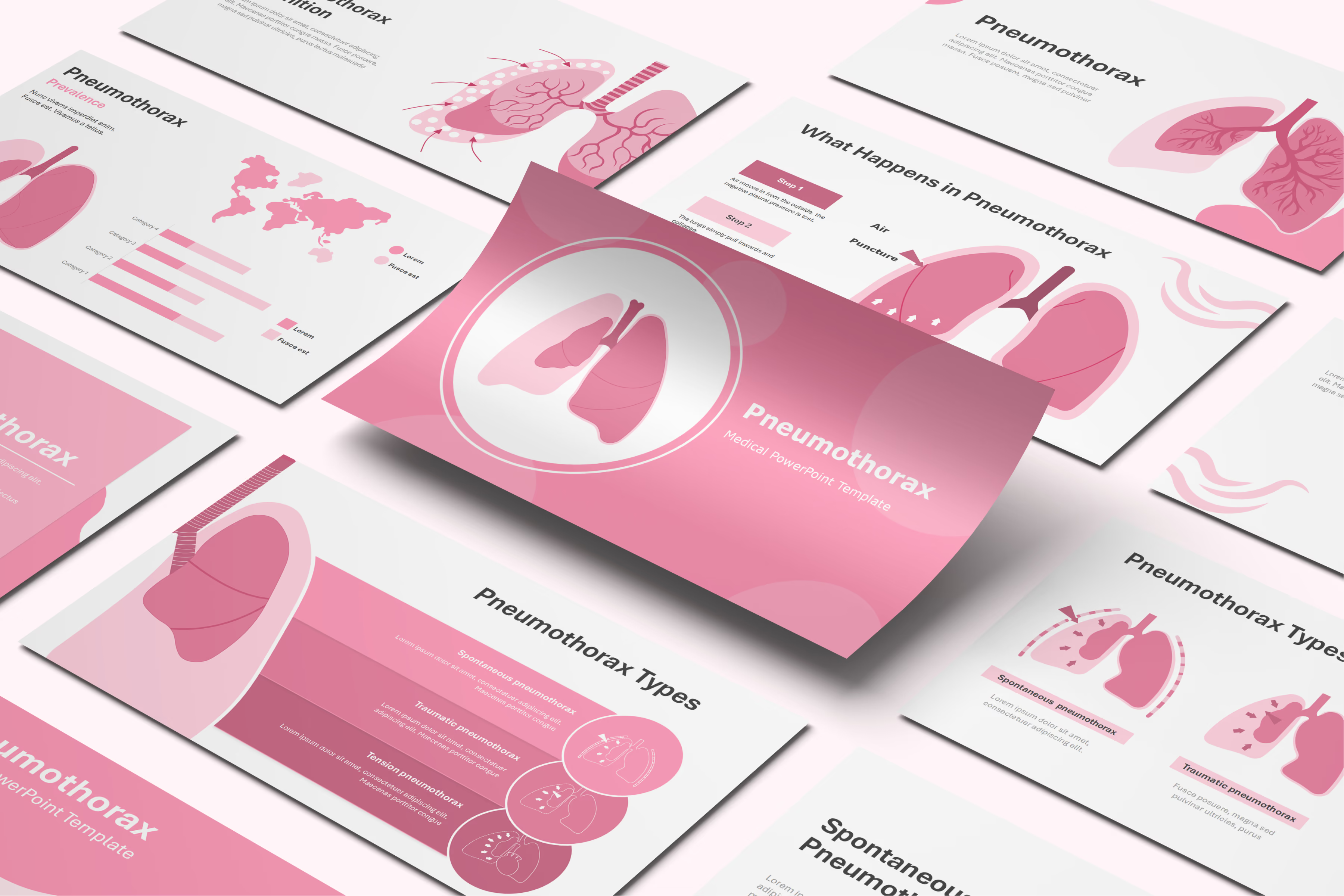
The Pneumothorax PowerPoint template opens with an introduction slide pairing a lung anatomy diagram with a customizable table of contents before a definition slide uses arrows and dotted elements to explain the condition. Animated illustrations then label the trachea, lungs, and alveoli before a two step diagram traces normal lung physiology through thoracic cavity expansion and elastic recoil in a set of editable PowerPoint slides.
An illustration contrasts normal lung function against pneumothorax, showing air entering through a puncture and causing lung collapse, before a world map and supporting statistics present global prevalence. The template then classifies the condition into spontaneous, traumatic, and tension pneumothorax, each shown through distinct lung diagrams with directional arrows illustrating airflow and pressure dynamics.
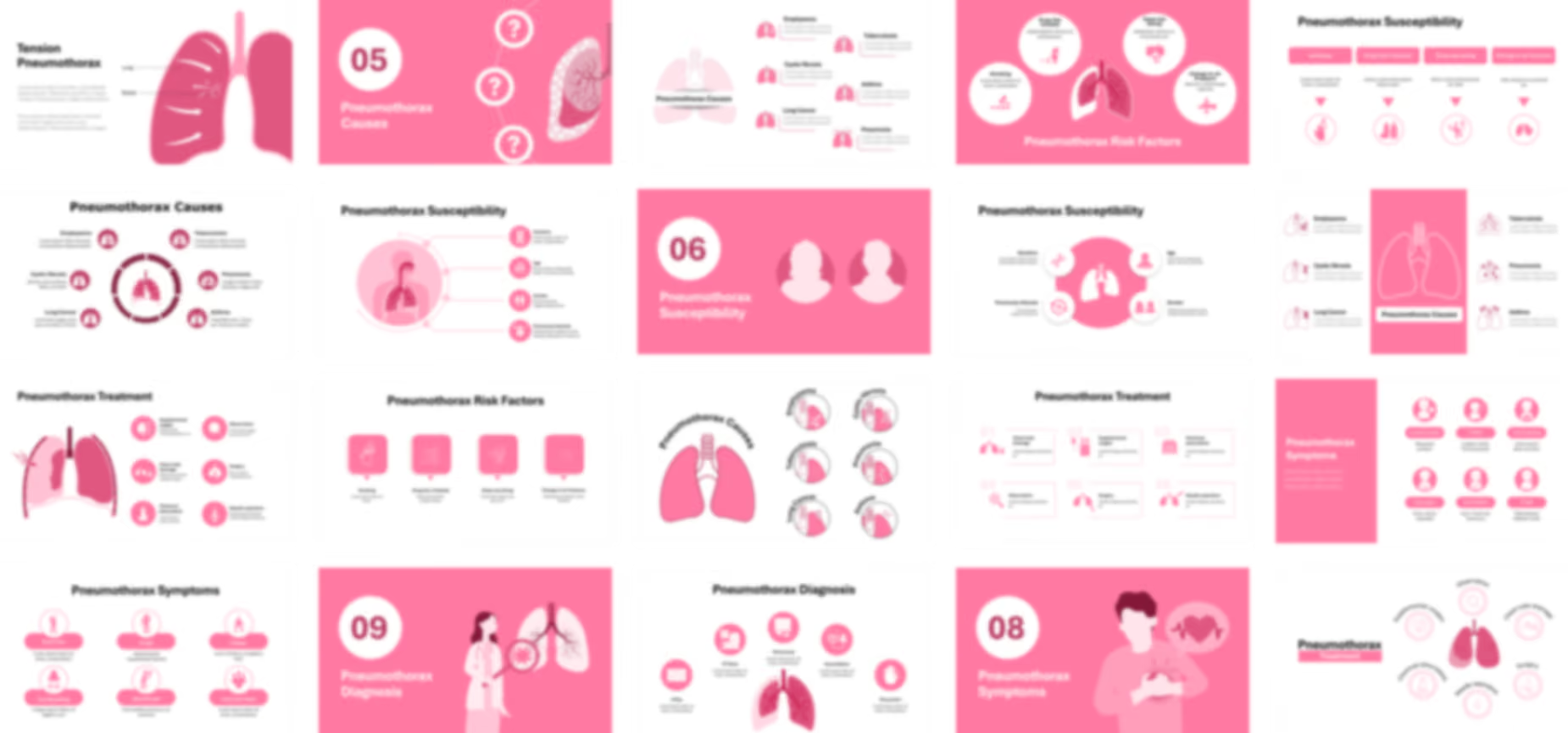
Labeled diagrams trace the pathophysiology of each type, from ruptured bullae in spontaneous pneumothorax to chest injury in the traumatic form and progressive air buildup in the tension form. Establishing these mechanisms first gives educators a shared reference point before the presentation covers six causes, including emphysema, tuberculosis, cystic fibrosis, asthma, lung cancer, and pneumonia, alongside susceptibility factors such as genetic predisposition, age, gender, and prior respiratory infection.
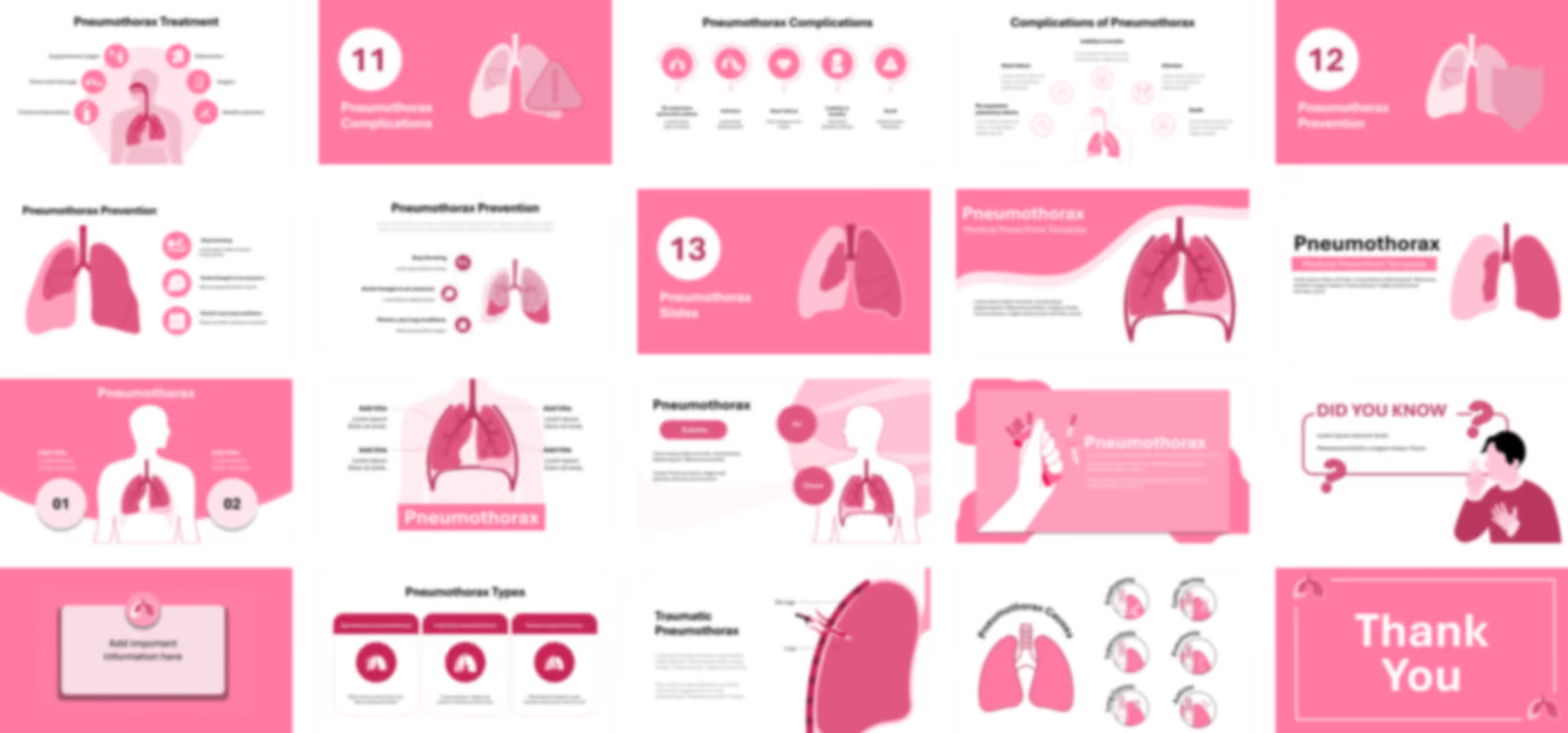
Icon based layouts cover risk factors such as smoking, drug use, diving, and pressure changes, alongside symptoms including fast heart rate, rapid breathing, chest pain, shortness of breath, and cough. The presentation template closes with diagnostic methods such as x-ray, CT scan, ultrasound, auscultation, and percussion, six treatment options including chest tube drainage, chemical pleurodesis, and needle aspiration, complications such as respiratory failure and infection, and preventive measures including smoking cessation, illustrated in a set of editable medical diagrams.
Ready To Transform Your Presentation ?
Pay once, use forever