Ranitidine PowerPoint Template

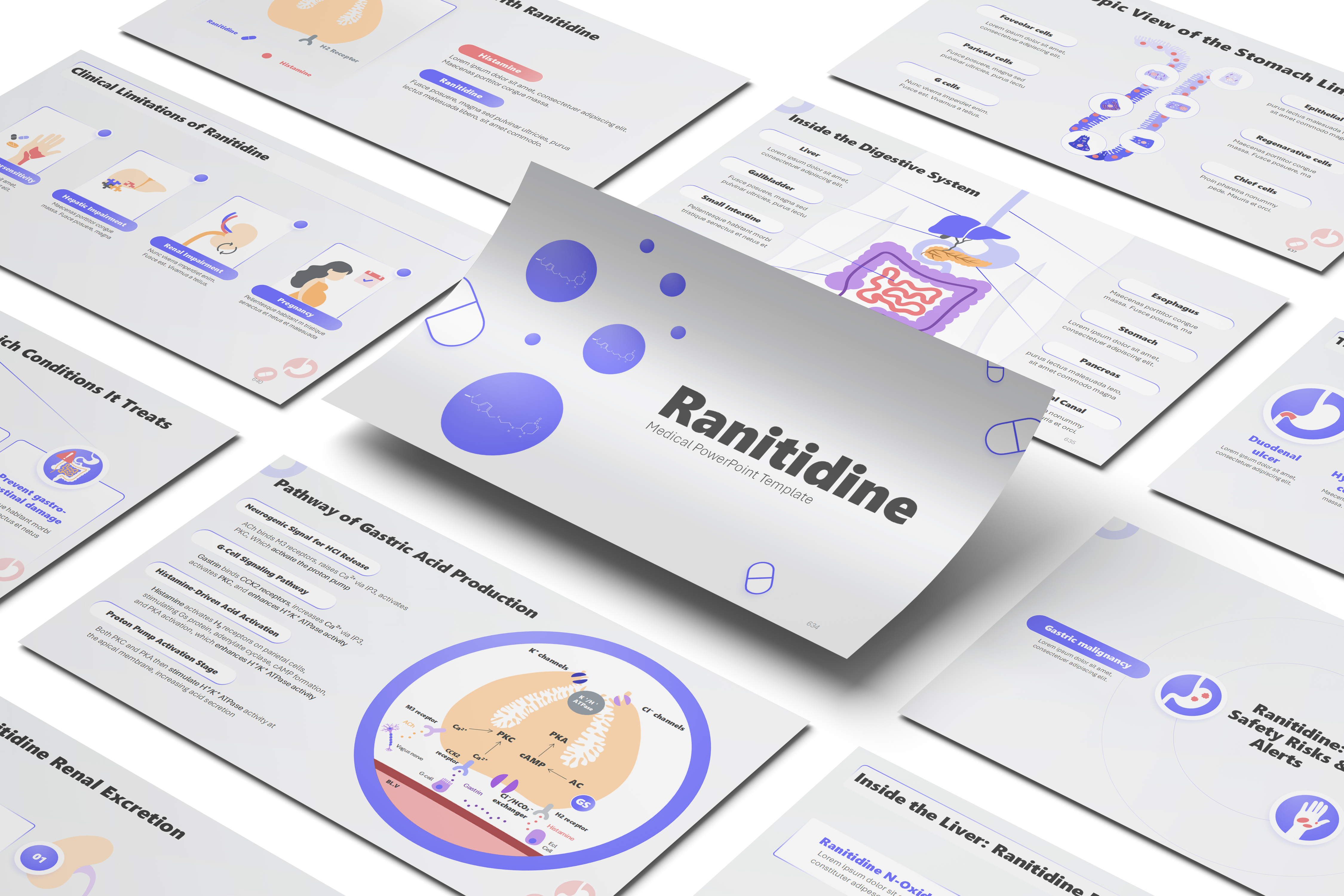




Template Preview
Designed for healthcare professionals creating clear and structured medical presentations.
Ideal for doctors, medical educators, and pharmaceutical teams preparing lectures, clinical education, product presentations, and training.
Fully editable in PowerPoint, allowing you to customize diagrams, charts, and slide layouts with your own medical content
Ready-to-use presentation structure that saves time and helps you build professional healthcare presentations quickly.
Fully Animated
Built-in animations help you present medical information clearly and make complex concepts easier to understand.
Editable Colors and Shapes
Editable colors and shapes help you easily customize the slides to match your content and presentation style, just drag and drop your content.
Professional medical layouts
Professional medical layouts help you organize clinical information, medical data, and treatment insights in a clear and structured way.

Created by Medical Professionals
This template prioritizes medical accuracy, clarity, and real-world usability. Each slide is designed with a medical audience in mind, helping you present clinical information, data, and treatment insights in a way that is structured, credible, and easy for healthcare professionals to understand.
Pharmaceutical Product & Medical Affairs Presentations
Medical Affairs and pharmacovigilance teams building a comparative H2-blocker or acid-suppression therapy scientific communication can use this 47-slide Ranitidine template to lay out its mechanism, pharmacokinetics, and eventual NDMA-related market withdrawal alongside current alternatives like famotidine and proton pump inhibitors. Medical Science Liaisons can draw on the comparative pharmacokinetics and efficacy slides when a scientific exchange conversation calls for historical context on the H2-blocker drug class. Because ranitidine itself is no longer marketed, the presentation functions as a regulatory case study and comparative-pharmacology reference rather than promotional material for an active brand, still subject to the customer's own medical and compliance review before any use. Teams gain a ready visual record of a well-documented drug safety and withdrawal timeline.
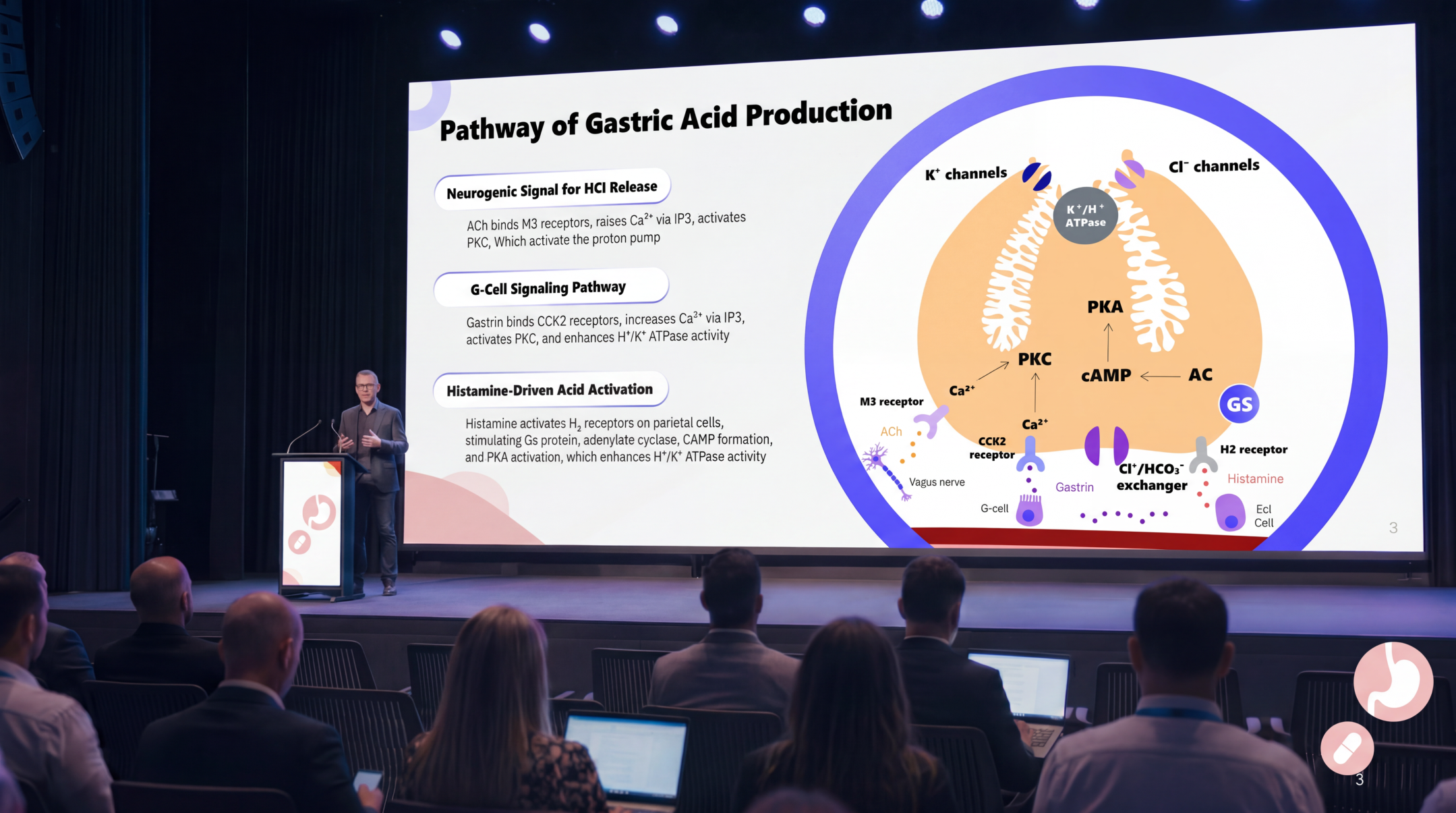
Medical Congress & Scientific Conference Presentations
Clinical pharmacists, pharmacologists, and gastroenterologists preparing a pharmacology grand rounds or conference session on acid-suppression therapy can adapt this Ranitidine template's mechanism and comparative pharmacokinetics slides instead of assembling drug-class comparison diagrams independently. The head-to-head slides comparing ranitidine, famotidine, omeprazole, and cimetidine give a speaker a ready framework for teaching the evolution of acid-suppression therapy, while the NDMA contamination and FDA withdrawal timeline supports a case-based discussion on pharmacovigilance. A Key Opinion Leader or pharmacology professor presenting at a medical or pharmacy conference can pair the existing mechanism diagrams with their own clinical commentary. The result is a scientifically detailed session without redrawing a single receptor diagram.

Medical Training for Pharmaceutical & Life Sciences Companies
Pharmacy and Medical Affairs training teams introducing new pharmacists or pharmacology-focused Medical Science Liaisons to the H2-blocker drug class can build onboarding around this Ranitidine template's mechanism-of-action and pharmacokinetics content. Trainees walk through competitive H2-receptor binding, hepatic metabolism, and the comparative pharmacokinetics profile against famotidine, gaining a reference point for understanding the broader acid-suppression drug class even though ranitidine itself is no longer marketed. The adverse-reaction and NDMA-contamination content doubles as a case study in drug safety monitoring and regulatory withdrawal, useful for training focused on pharmacovigilance. New hires finish training with a clearer picture of how H2 blockers compare to proton pump inhibitors in clinical practice.

eLearning & SCORM Training Modules
Pharmacy schools or Medical Affairs Learning & Development teams building a pharmacology module on acid-suppression therapy can customize this Ranitidine template with their own case studies or exam questions, then convert the finished presentation into a SCORM-compliant module for their learning management system when self-paced study fits the curriculum better. The comparative pharmacokinetics and adverse-reaction content translate naturally into interactive quiz checkpoints within an e-learning course on gastrointestinal pharmacology. When a program needs a narrower scope, such as the NDMA withdrawal case study alone, or a different depth for pharmacy versus nursing learners, the RxSlides team can adjust the template's coverage and branding. A fully custom presentation can also be designed from scratch when no existing template matches the curriculum's specific objective.
Medical & Healthcare Education
Pharmacy and medical school faculty teaching gastrointestinal pharmacology can use this template to walk students through H2-receptor blockade, hepatic metabolism, and comparative pharmacokinetics without building drug-mechanism diagrams independently. The head-to-head comparison with famotidine, omeprazole, and cimetidine gives students a clear framework for understanding how ranitidine fits into the broader acid-suppression drug class, both historically and pharmacologically. The NDMA contamination and FDA withdrawal content offers a real-world case study in drug safety monitoring that pharmacy and pharmacovigilance courses can build a full lecture around. Students leave with a concrete example of how a well-established drug can be withdrawn once new safety data emerges.
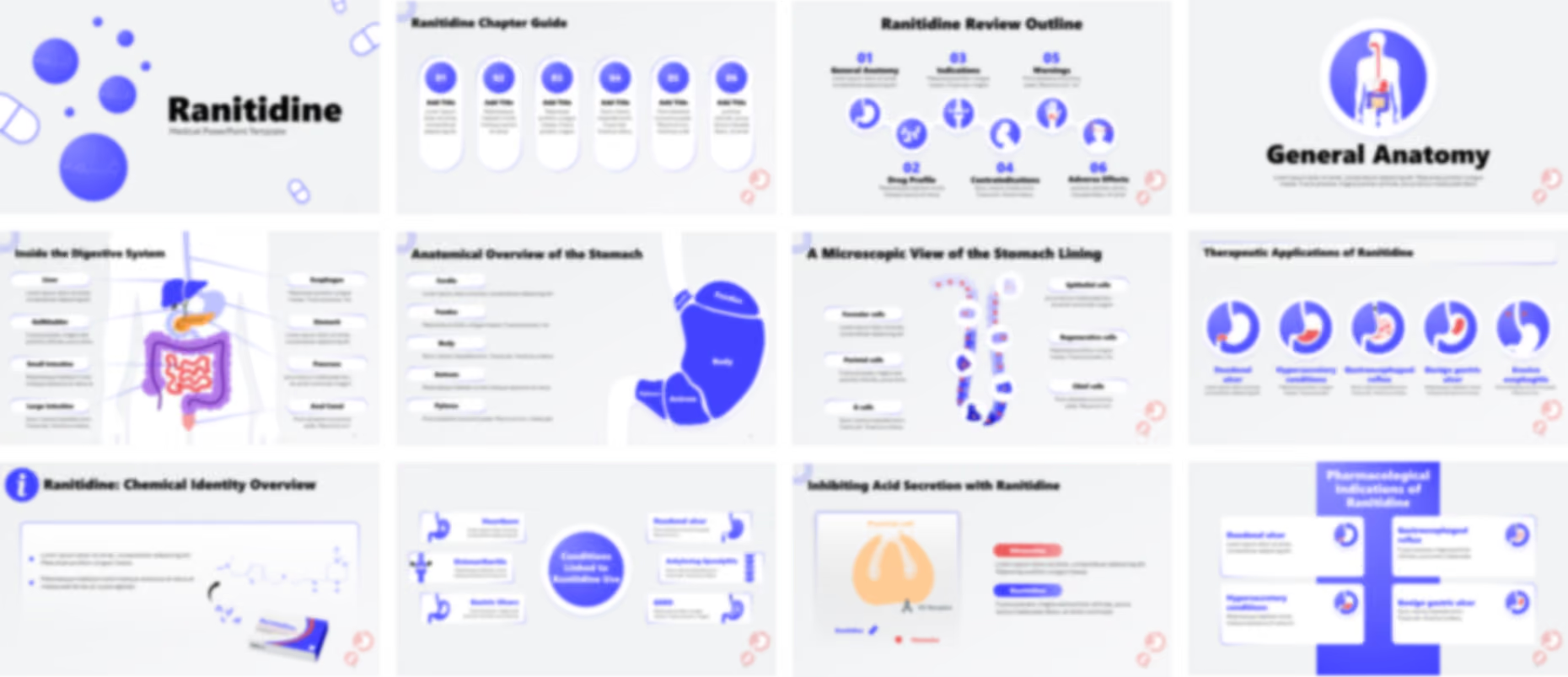
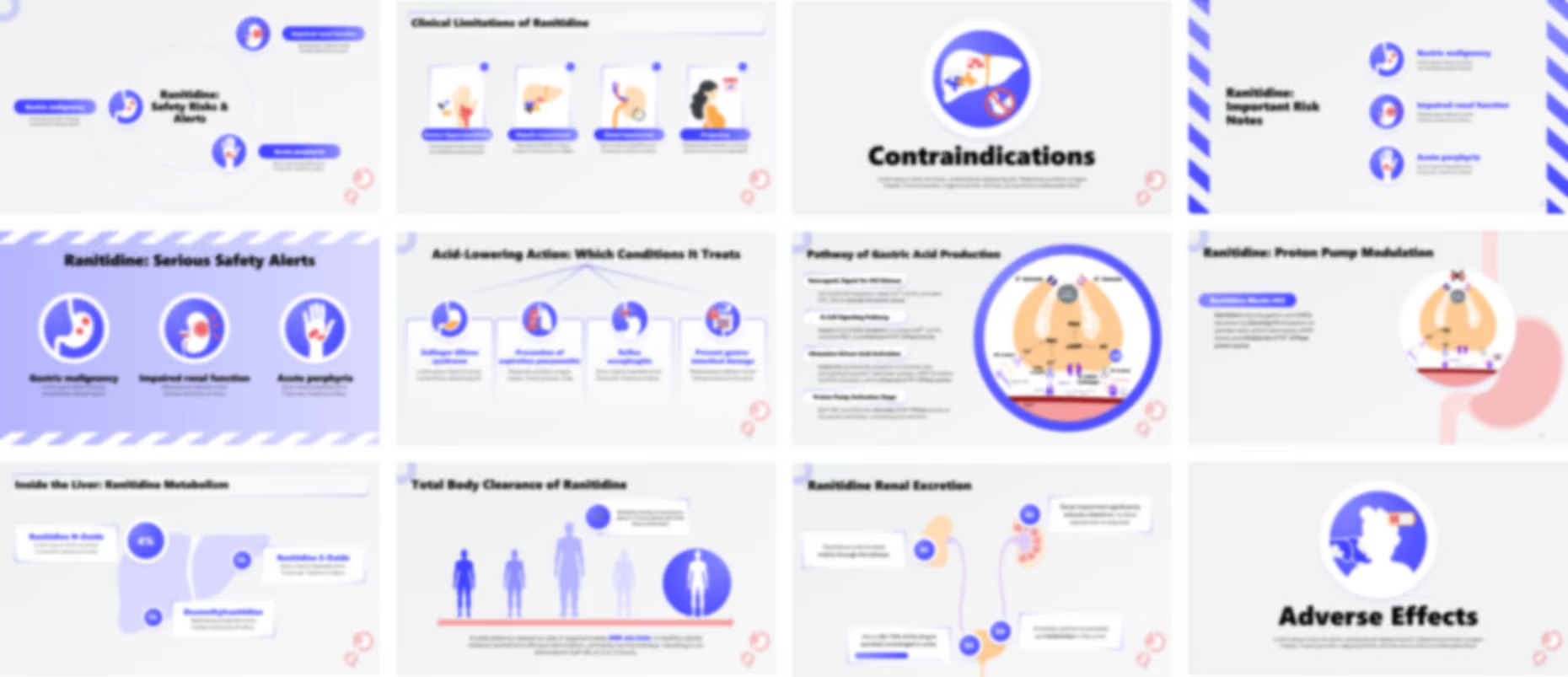
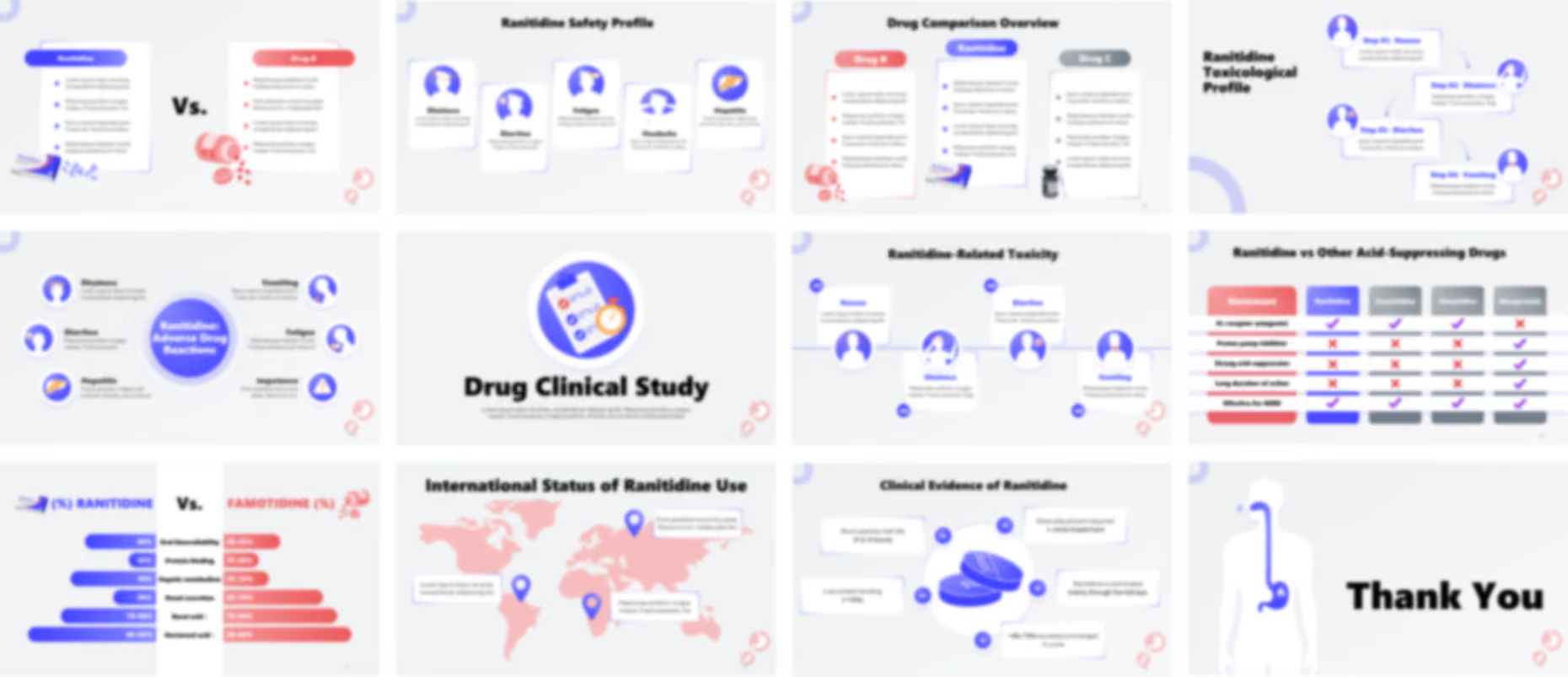
The Ranitidine PowerPoint template opens with a functional view of the digestive tract from esophagus to intestines before a high resolution map of the gastric mucosa distinguishes the parietal, chief, and G cells where the drug performs its primary function. Animated illustrations then visually explain the competitive binding process, showing how ranitidine blocks H2 receptors on parietal cells to inhibit histamine driven acid production in a set of editable medical diagrams.
The template breaks down the neurogenic, G cell, and histamine signaling pathways that trigger the proton pump before a detailed biochemical diagram visualizes the intracellular transformation of carbon dioxide into gastric acid through the carbonic anhydrase reaction. Establishing this normal secretory pathway first gives educators a shared reference point before the presentation turns to how the drug interrupts it.
A step by step diagram illustrates how ranitidine intercepts cellular signals, decreasing cAMP levels and inhibiting the proton pump, before a quantitative visual of hepatic breakdown categorizes metabolites including ranitidine N oxide and S oxide with precise percentage breakdowns.
An organized orbital layout maps potential adverse reactions across neurological, gastrointestinal, and hepatic systems before a clinical timeline visualizes the cascading symptoms of overdose, from initial nausea to severe systemic distress. The presentation template closes with a data comparison of oral bioavailability, protein binding, and acid suppression strength between ranitidine and famotidine, alongside further slides comparing the drug against omeprazole and cimetidine in a set of editable medical diagrams.
Ready To Transform Your Presentation ?
Pay once, use forever