Thyroid Cancer PowerPoint Template

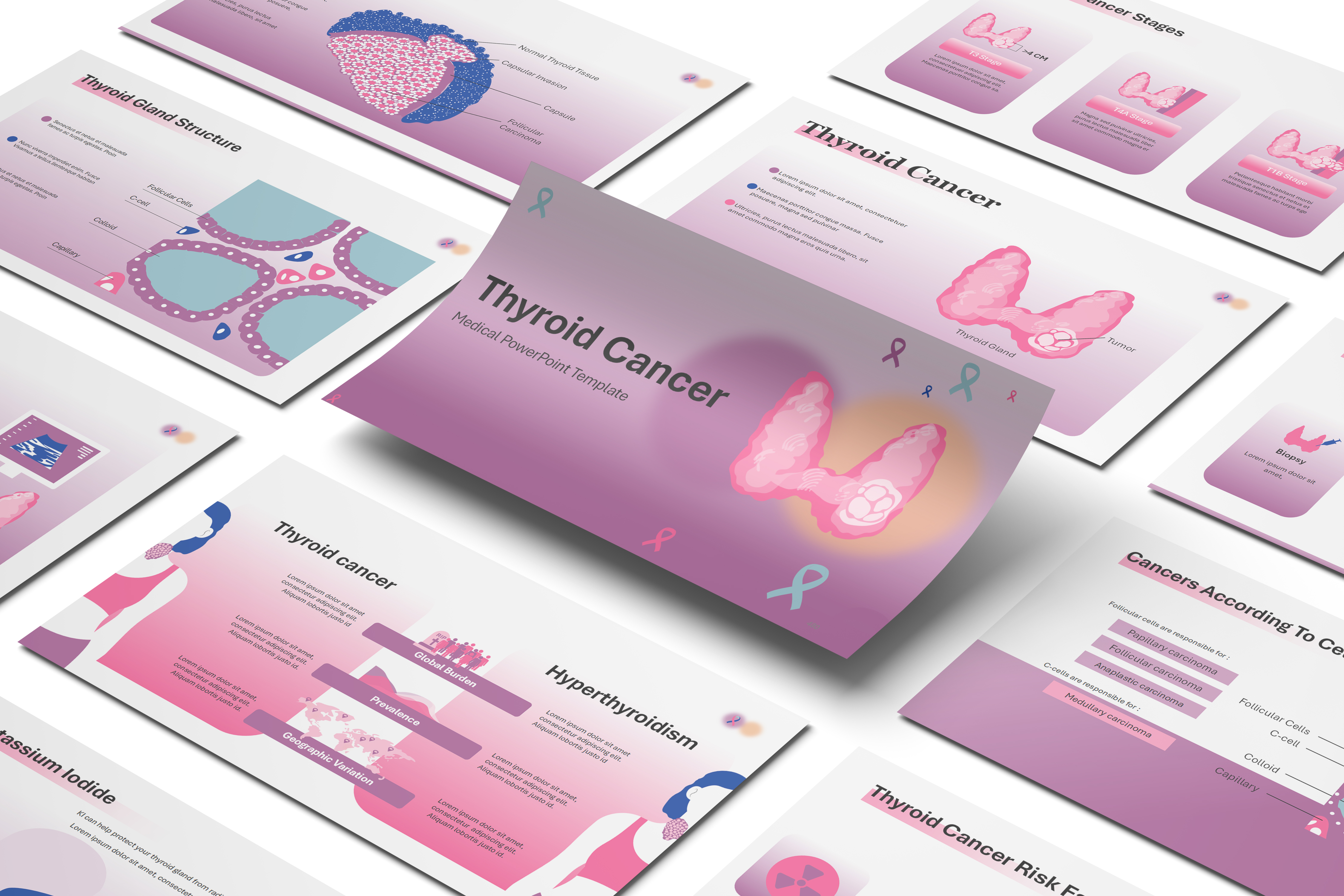




Template Preview
Designed for healthcare professionals creating clear and structured medical presentations.
Ideal for doctors, medical educators, and pharmaceutical teams preparing lectures, clinical education, product presentations, and training.
Fully editable in PowerPoint, allowing you to customize diagrams, charts, and slide layouts with your own medical content
Ready-to-use presentation structure that saves time and helps you build professional healthcare presentations quickly.
Fully Animated
Built-in animations help you present medical information clearly and make complex concepts easier to understand.
Editable Colors and Shapes
Editable colors and shapes help you easily customize the slides to match your content and presentation style, just drag and drop your content.
Professional medical layouts
Professional medical layouts help you organize clinical information, medical data, and treatment insights in a clear and structured way.

Created by Medical Professionals
This template prioritizes medical accuracy, clarity, and real-world usability. Each slide is designed with a medical audience in mind, helping you present clinical information, data, and treatment insights in a way that is structured, credible, and easy for healthcare professionals to understand.
Medical Training for Pharmaceutical & Life Sciences Companies
Oncology and endocrinology training teams onboarding new sales reps can structure introductory sessions around this 80-plus-slide Thyroid Cancer template's four-subtype framework, papillary, follicular, medullary, and anaplastic, each traced back to its cellular origin within the thyroid gland. New hires get a visual reference for how the same organ produces four clinically distinct cancer types with different growth patterns and prognoses. The T1a-through-T4b staging content gives trainees a structured reference for how tumor size and local spread determine treatment intensity. New reps finish training able to connect thyroid anatomy, cancer type, and staging to the five treatment pathways: surgery, radioiodine therapy, radiation therapy, chemotherapy, and hormone therapy.
Medical Congress & Scientific Conference Presentations
Endocrinologists and oncologists preparing a conference session can build around this Thyroid Cancer template's staged-progression content, T1a through T4b, rather than assembling tumor-staging diagrams independently. The four-subtype comparison, papillary, follicular, medullary, and anaplastic, gives a speaker a ready framework for a differential-prognosis discussion. A Key Opinion Leader presenting at an oncology conference can bring their own institutional survival-outcomes data into the existing staging content. The treatment-options content, surgery through hormone therapy, keeps the discussion clinically current for a specialist audience.
Pharmaceutical Product & Medical Affairs Presentations
Medical Affairs teams supporting an oncology or endocrine portfolio can use this Thyroid Cancer presentation as disease-level groundwork for scientific exchange, covering the four-subtype framework and staging system before any product-specific data enters the conversation. Medical Science Liaisons can reference the diagnosis content, blood tests, biopsies, radioiodine scans, and imaging, when a scientific exchange conversation calls for context on how the disease is actually confirmed and staged. Thyroid cancer biology, not a branded message, is the substance of this presentation, and it still needs the customer's own medical and compliance sign-off before Medical Affairs uses it with any audience. Oncology and endocrinology teams gain a consistent scientific reference spanning anatomy, subtype, staging, and treatment.
eLearning & SCORM Training Modules
Oncology and endocrinology programs building a thyroid cancer module can customize this template with their own case studies, then convert the finished presentation into a SCORM-compliant module for their learning management system when self-paced study fits the curriculum better. The staging progression, T1a through T4b, translates naturally into interactive checkpoints within a broader oncology course. When a program needs a narrower scope, such as the four-subtype classification content alone or a version tailored for nursing versus endocrinology learners, the RxSlides team can adjust the template's coverage and branding. The RxSlides team can also build a fully custom, from-scratch presentation when a training objective falls outside the current catalog.
Medical & Healthcare Education
Medical and nursing faculty teaching oncology can use this template's four-subtype framework to establish that thyroid cancer is not a single uniform disease but four biologically distinct cancers arising from the same gland. The staging content gives students a clear structure for connecting tumor characteristics to prognosis and treatment intensity. The diagnosis content connects classroom oncology to how the disease is actually confirmed and staged in practice, blood tests, biopsy, radioiodine scan, and imaging. Students leave with a structured understanding of thyroid cancer spanning anatomy, subtype, staging, and treatment.
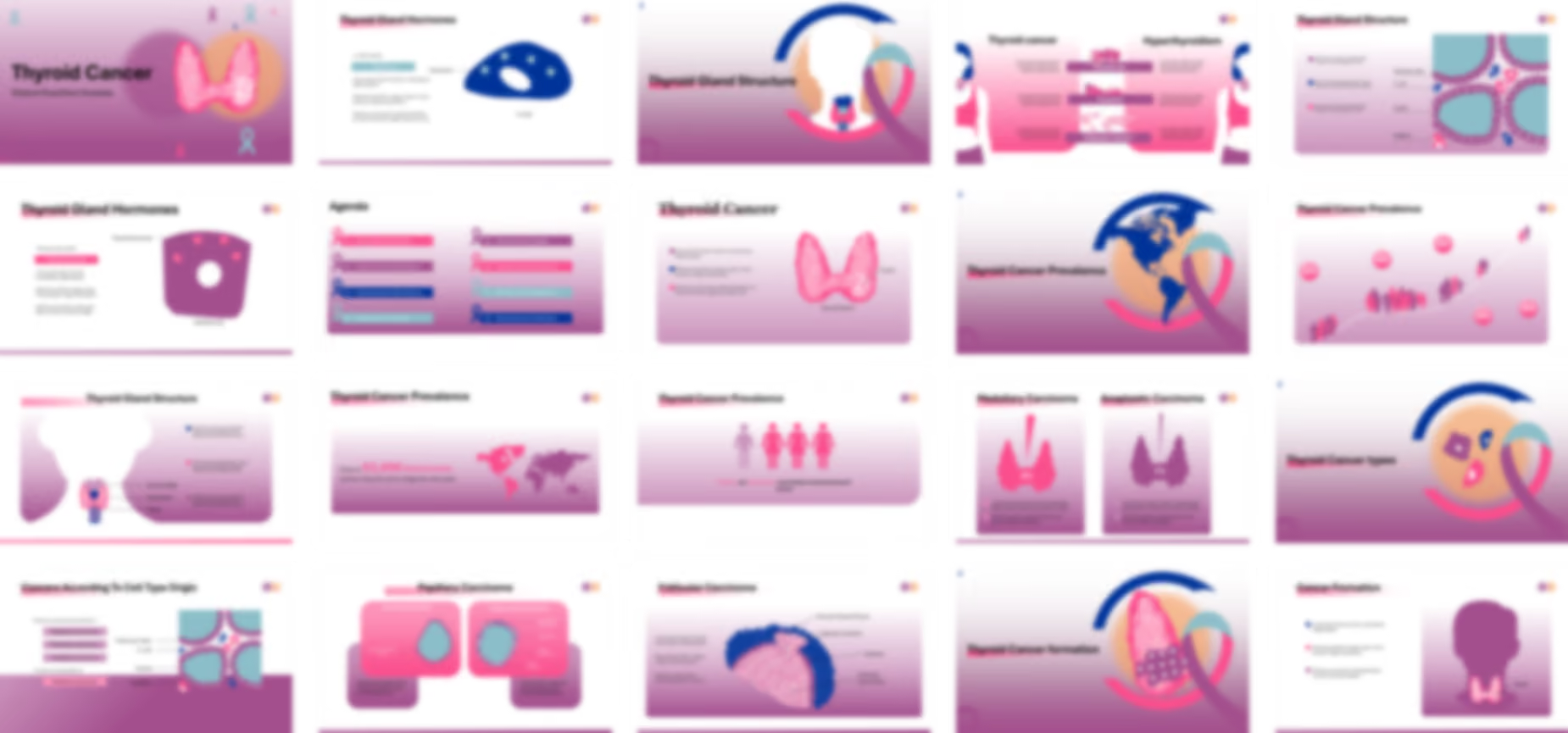
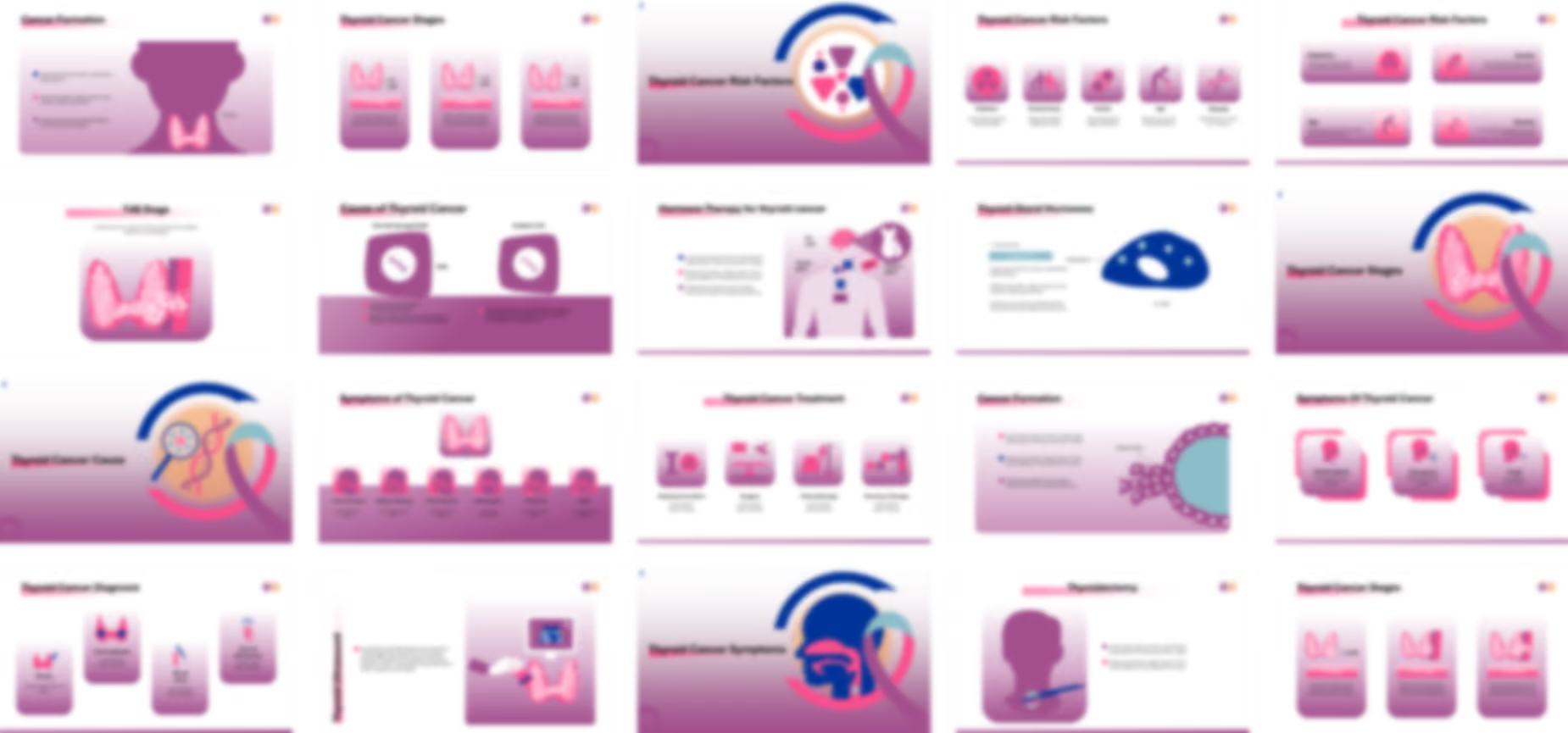
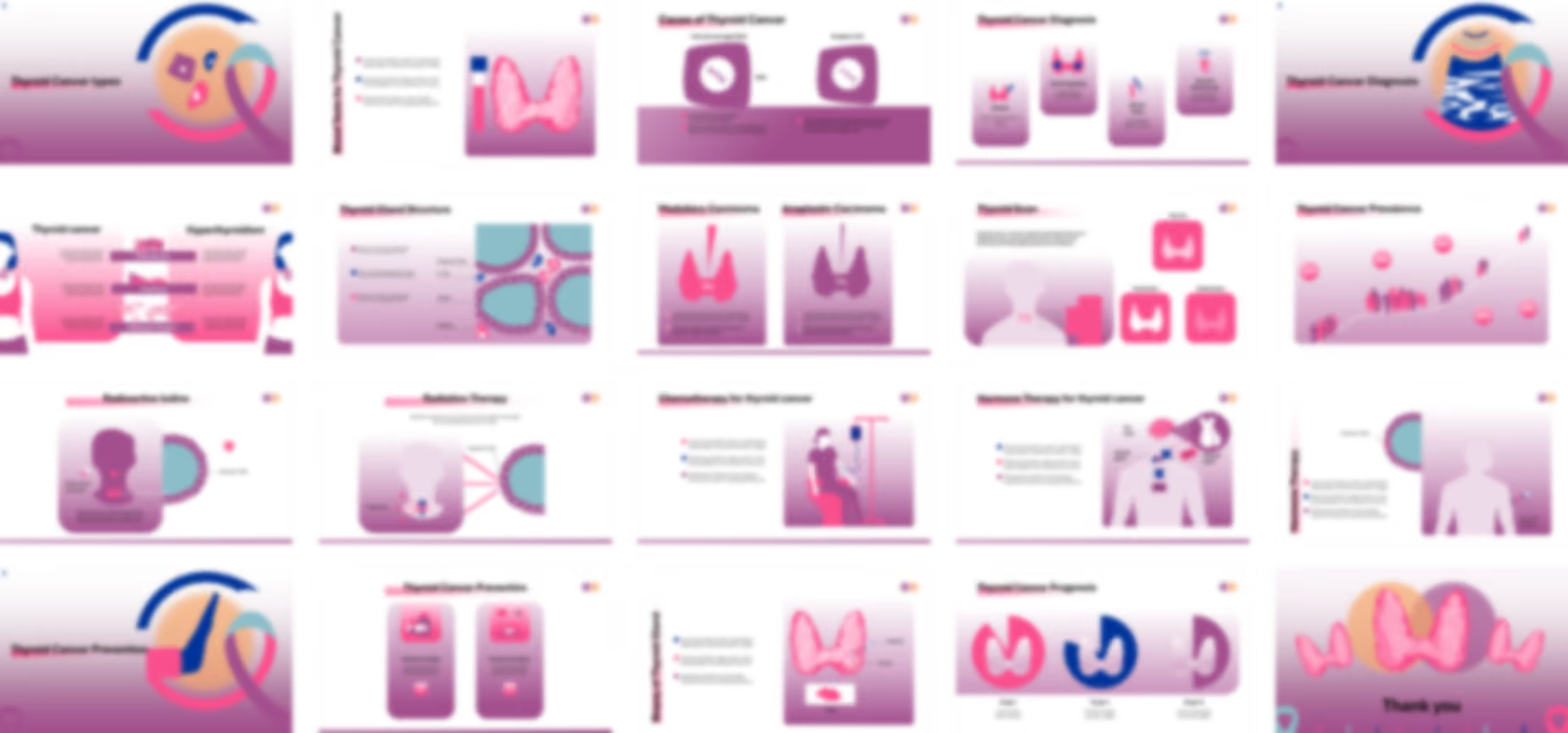
The Thyroid Cancer PowerPoint template opens with cover slides and an editable table of contents before an animated illustration shows the thyroid gland's structure and location alongside the origin of thyroid hormones. A definition then describes thyroid carcinoma as a disease in which malignant cells form in the tissues of the thyroid gland.
A prevalence infographic with adjustable percentages and countries visualizes global and local disease rates and the difference between genders, in this editable medical presentation template. Animated illustrations then distinguish the four primary thyroid cancer types by cellular origin, papillary, follicular, anaplastic, and medullary.
Animated slides show how cancer cells spread to form thyroid carcinoma, alongside medical icons for risk factors including radiation, family history, genetics, age, and gender. Establishing this formation process first gives educators a shared reference point before animated illustrations show progression through the T1a, T1b, T2, T3, T4a, and T4b tumor stages.
Medical icons explain symptoms including difficulty breathing or swallowing, hoarseness, and swollen lymph nodes, before diagnostic slides cover blood tests, biopsies, radioiodine scans, and imaging scans. The template closes with treatment options including surgery, radioiodine therapy, and chemotherapy, preventive measures such as prophylactic surgery, and chart based prognosis and survival rate content, plus a set of customizable icons and illustrations for oncology education.
Ready To Transform Your Presentation ?
Pay once, use forever