Ustekinumab PowerPoint Template

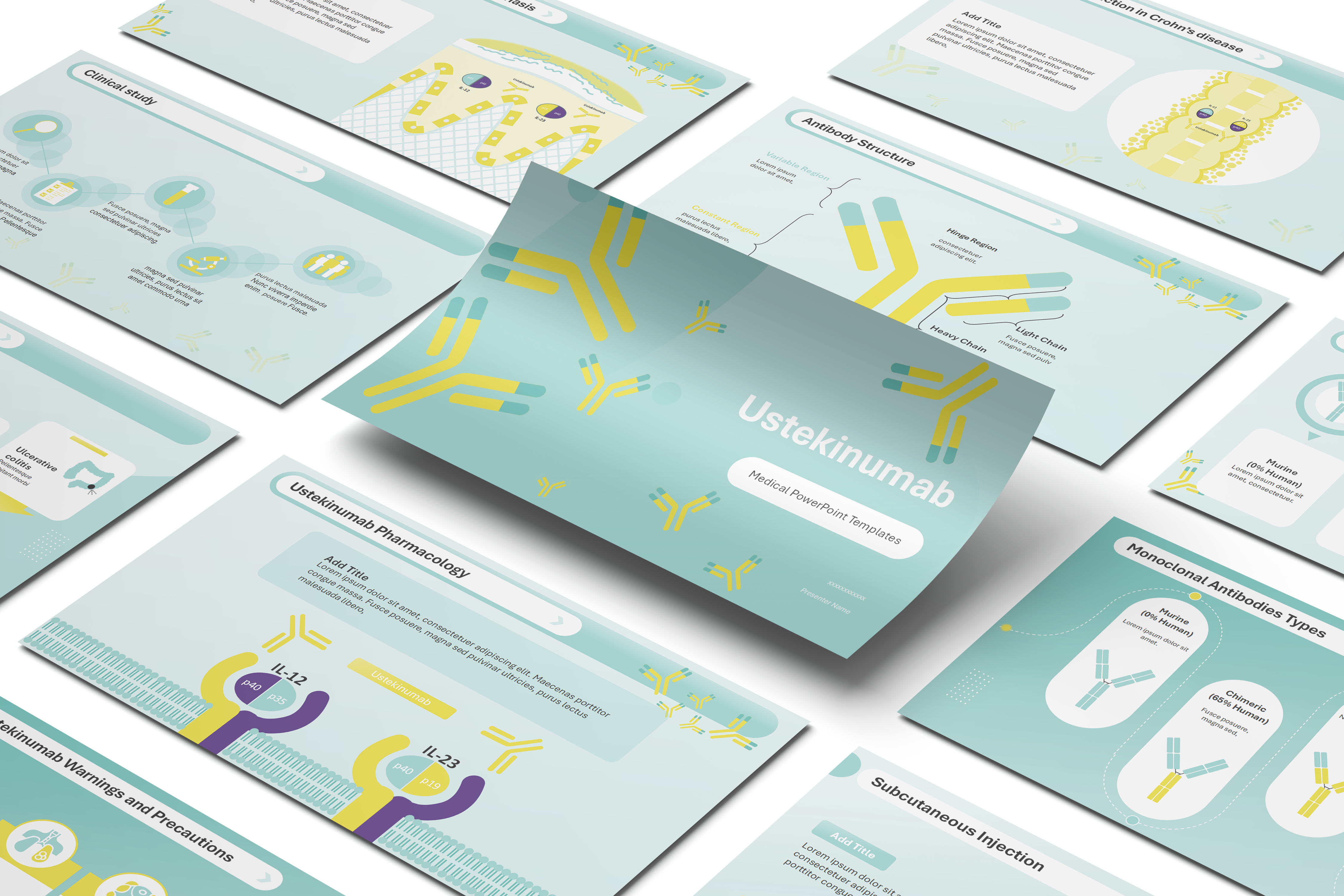




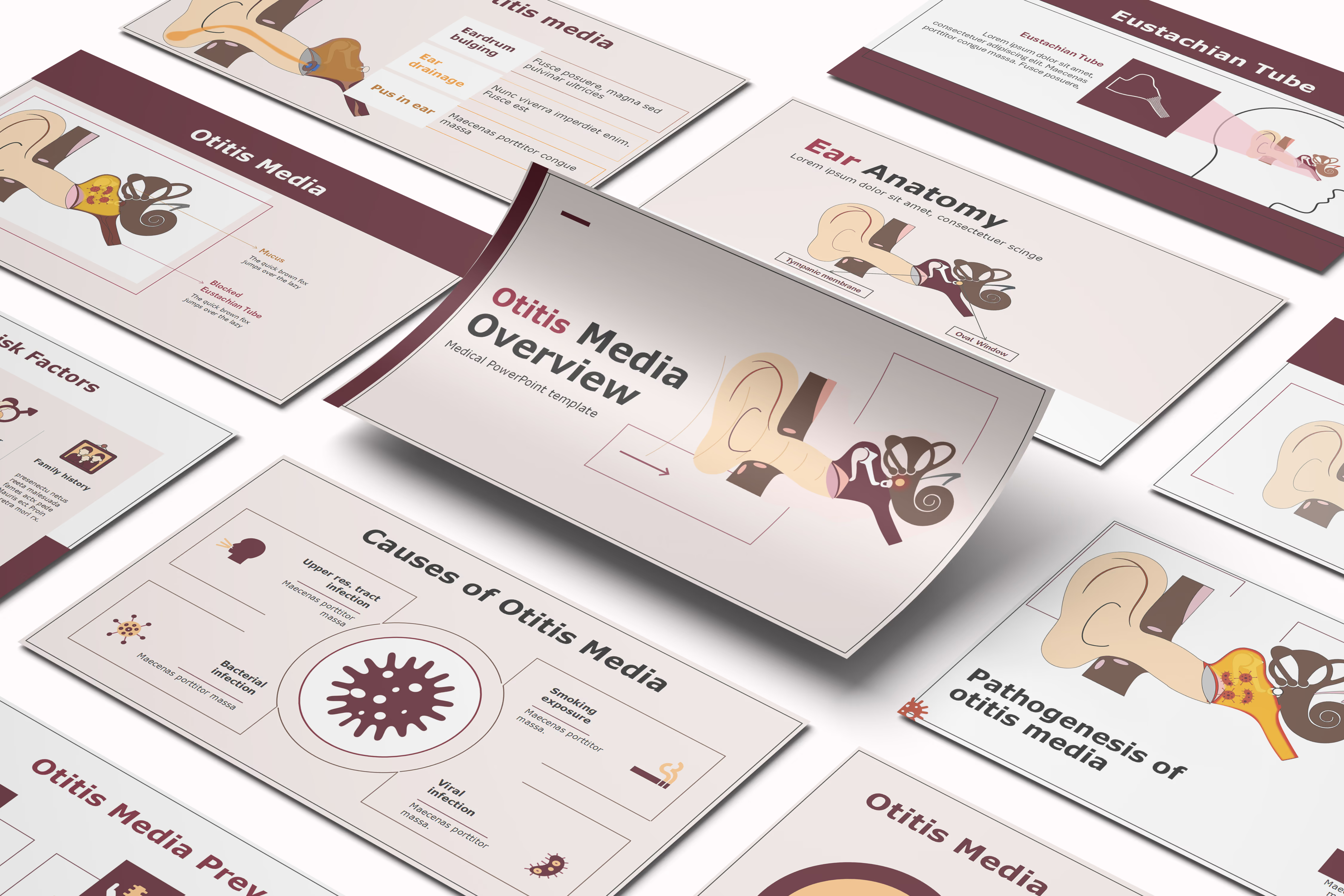
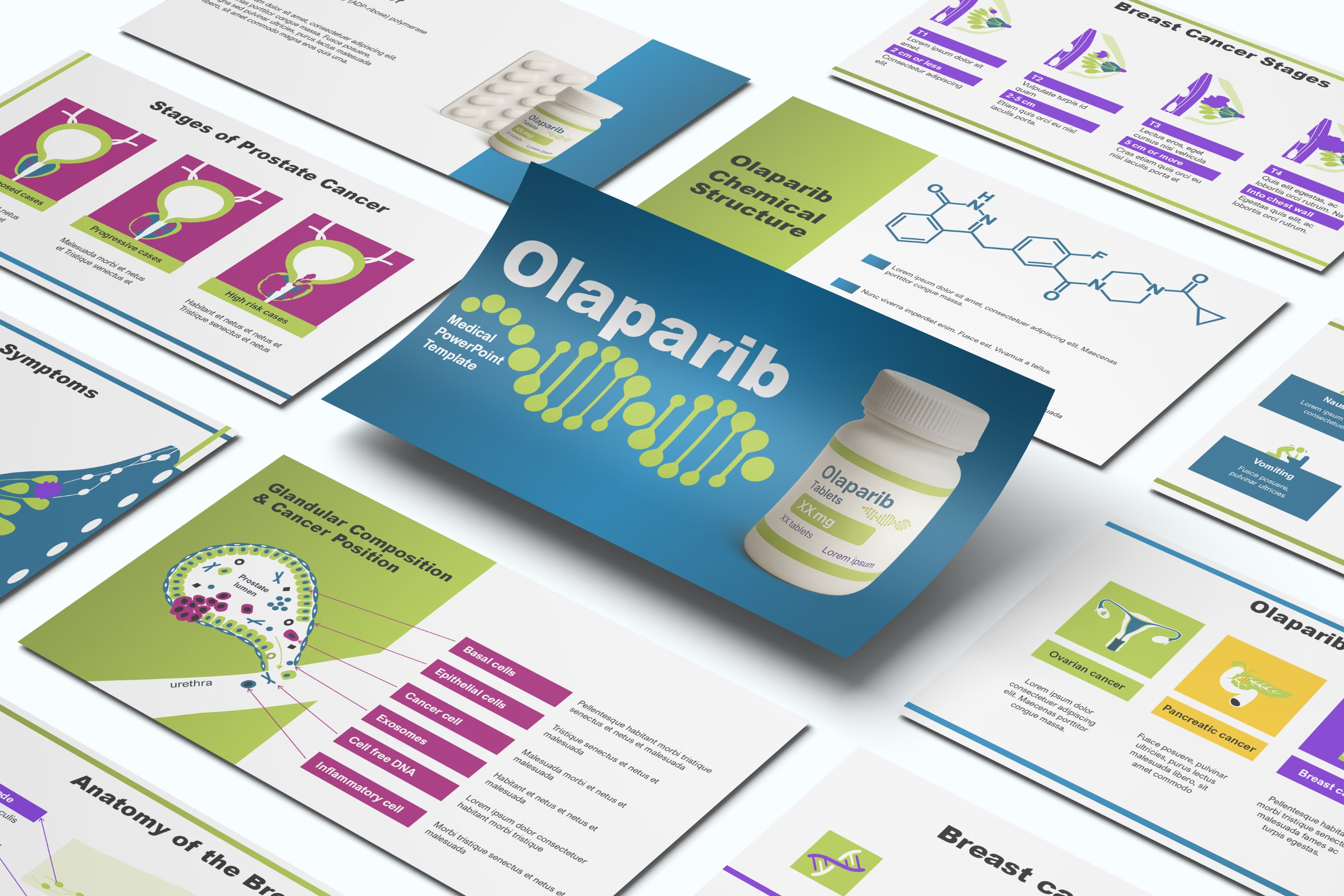
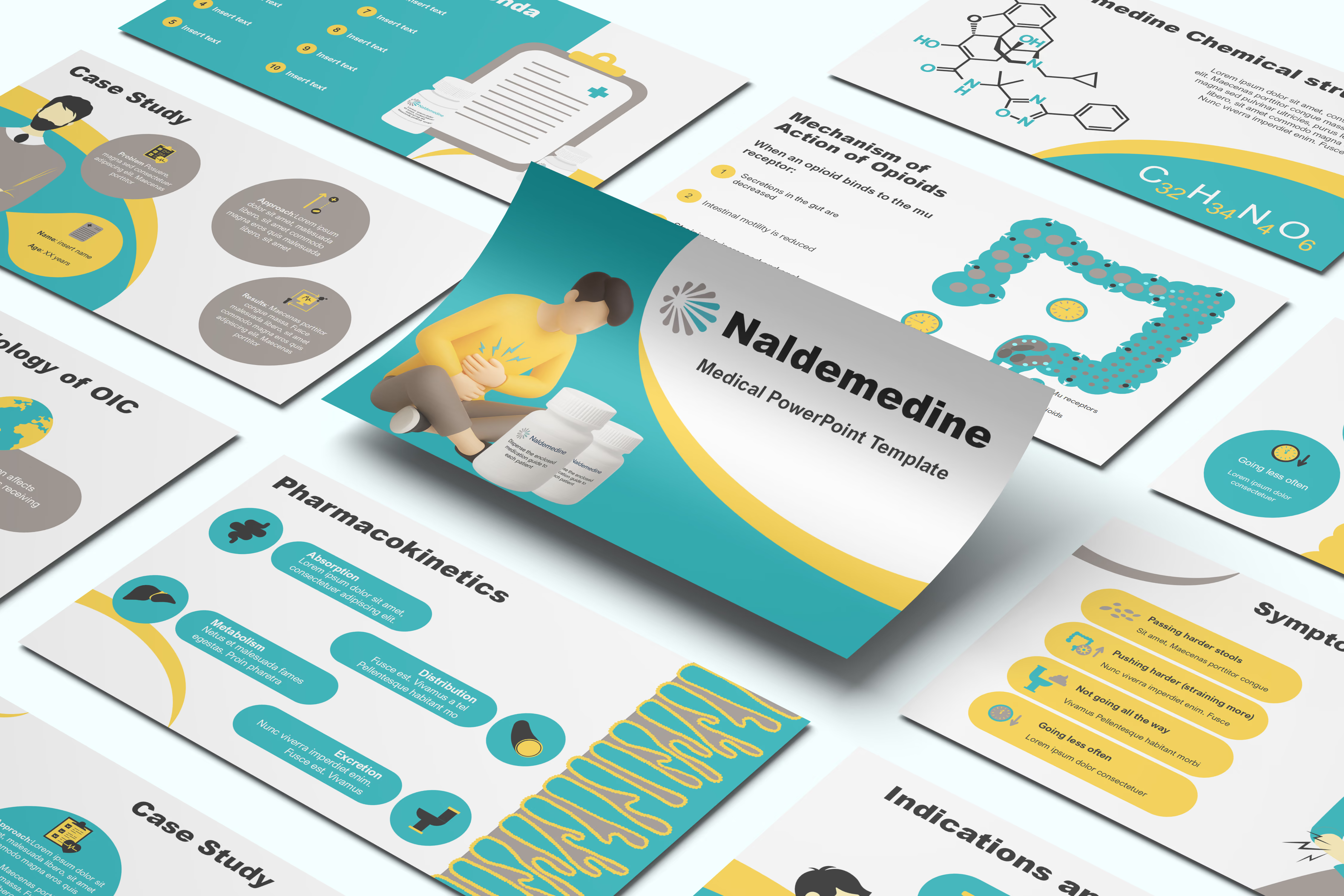
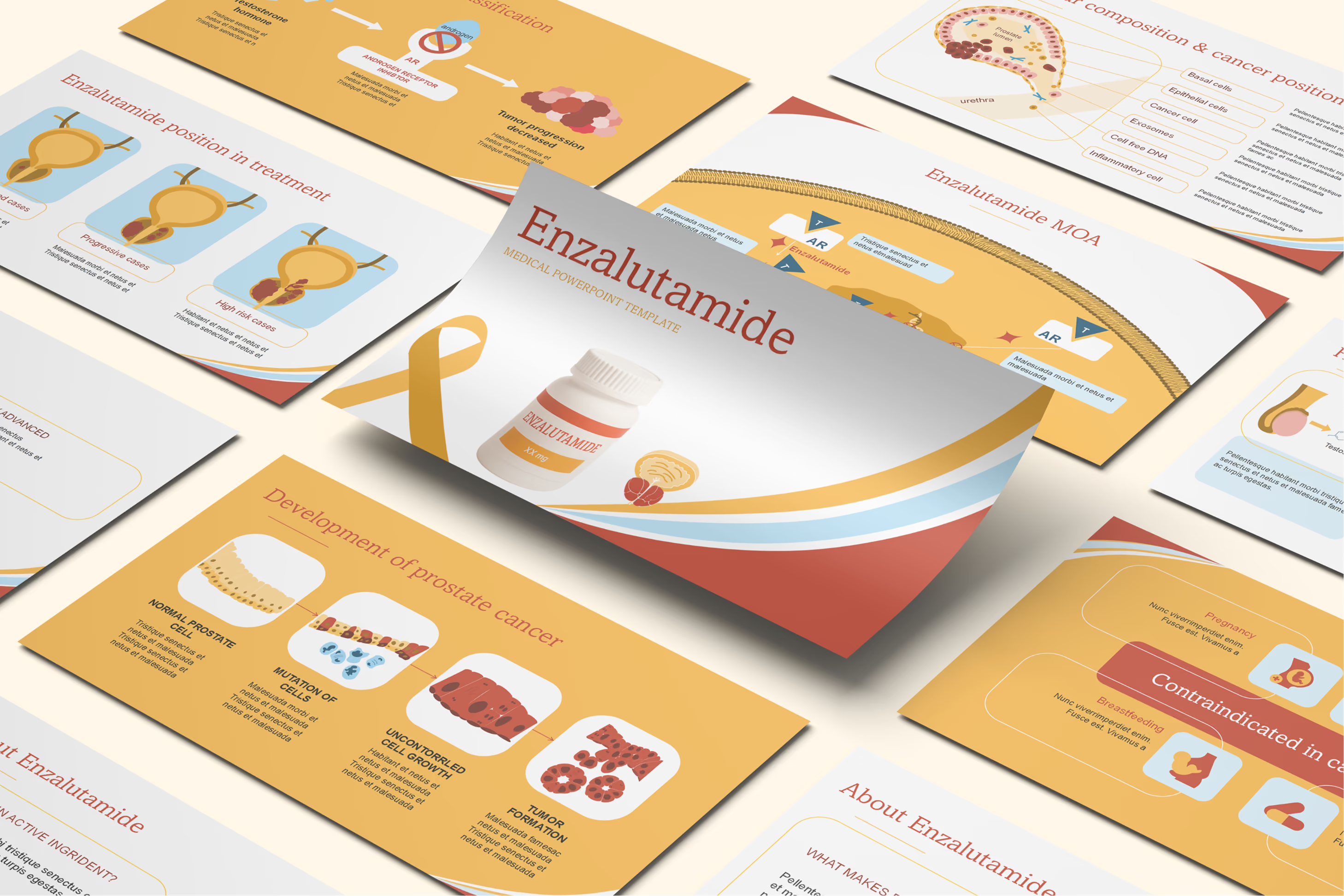
Template Preview
Designed for healthcare professionals creating clear and structured medical presentations.
Ideal for doctors, medical educators, and pharmaceutical teams preparing lectures, clinical education, product presentations, and training.
Fully editable in PowerPoint, allowing you to customize diagrams, charts, and slide layouts with your own medical content
Ready-to-use presentation structure that saves time and helps you build professional healthcare presentations quickly.
Fully Animated
Built-in animations help you present medical information clearly and make complex concepts easier to understand.
Editable Colors and Shapes
Editable colors and shapes help you easily customize the slides to match your content and presentation style, just drag and drop your content.
Professional medical layouts
Professional medical layouts help you organize clinical information, medical data, and treatment insights in a clear and structured way.

Created by Medical Professionals
This template prioritizes medical accuracy, clarity, and real-world usability. Each slide is designed with a medical audience in mind, helping you present clinical information, data, and treatment insights in a way that is structured, credible, and easy for healthcare professionals to understand.
Pharmaceutical Product & Medical Affairs Presentations
Medical Affairs teams supporting an IL-12/IL-23 inhibitor or other biologic in the psoriasis, psoriatic arthritis, or IBD space can put this 40-plus-slide Ustekinumab template to work as scientific-exchange groundwork, covering the dual IL-12/IL-23 blockade mechanism across all four approved indications without referencing a specific brand. Medical Science Liaisons can pull from the comparative efficacy and dosing-table slides, contrasting Ustekinumab against ixekizumab and secukinumab, when a scientific exchange conversation calls for positioning within the broader biologic landscape. Because the content stays mechanism-focused rather than promotional, the material still needs to clear the customer's own medical and compliance review before anyone takes it into the field. Dermatology, rheumatology, and gastroenterology teams gain a consistent scientific reference spanning all four indication areas.

Medical Congress & Scientific Conference Presentations
Dermatologists and gastroenterologists preparing a biologics session can build around this Ustekinumab template's tissue-specific mechanism slides, showing IL-12/IL-23 interception separately in skin, joint, and intestinal tissue, rather than assembling indication-specific diagrams independently. The monoclonal antibody structure comparison, tracing murine through fully human antibody evolution, gives a speaker a ready framework for a broader biologics-class discussion. A Key Opinion Leader presenting at a dermatology, rheumatology, or GI conference can pair the existing clinical-trial phase overview with their own institutional outcomes data. The comparative efficacy chart against other biologics keeps the discussion clinically current for a specialist audience.

Medical Training for Pharmaceutical & Life Sciences Companies
Immunology and biologics training teams onboarding new sales reps can structure introductory sessions around this Ustekinumab template's antibody-structure foundation before moving into the drug-specific mechanism of dual IL-12/IL-23 blockade. New hires get a visual reference for all four indications, plaque psoriasis, psoriatic arthritis, Crohn's disease, and ulcerative colitis, alongside the two administration routes, subcutaneous injection and IV infusion. The warnings-and-precautions content, covering infection risk and malignancy monitoring, gives trainees a structured safety-communication reference. New reps finish training able to explain the shared mechanism behind Ustekinumab's use across four distinct disease states.

eLearning & SCORM Training Modules
Pharmacy schools and Medical Affairs Learning & Development teams building a biologics module can customize this Ustekinumab template with their own assessment questions, then convert the finished presentation into a SCORM-compliant module for their learning management system when self-paced study fits the curriculum better. The antibody-structure and mechanism-of-action slides translate naturally into interactive checkpoints within a broader immunology or biologics course. When a program needs a narrower scope, such as one indication alone or a version tailored for nursing versus pharmacy learners, the RxSlides team can adjust the template's coverage and branding. For a training objective that doesn't match any existing template, a fully custom presentation remains available, built from scratch.
Medical & Healthcare Education
Medical and pharmacy school faculty teaching biologic therapy can use this template's monoclonal antibody structure slides to establish the foundational immunology before introducing Ustekinumab's specific IL-12/IL-23 targeting. The four-indication comparison gives students a clear framework for understanding how a single mechanism translates across dermatology, rheumatology, and gastroenterology. The tissue-specific mechanism slides connect the shared cytokine pathway to distinct clinical presentations in skin, joint, and gut tissue. Students leave with a structured understanding of how monoclonal antibody classification informs a drug's clinical application.
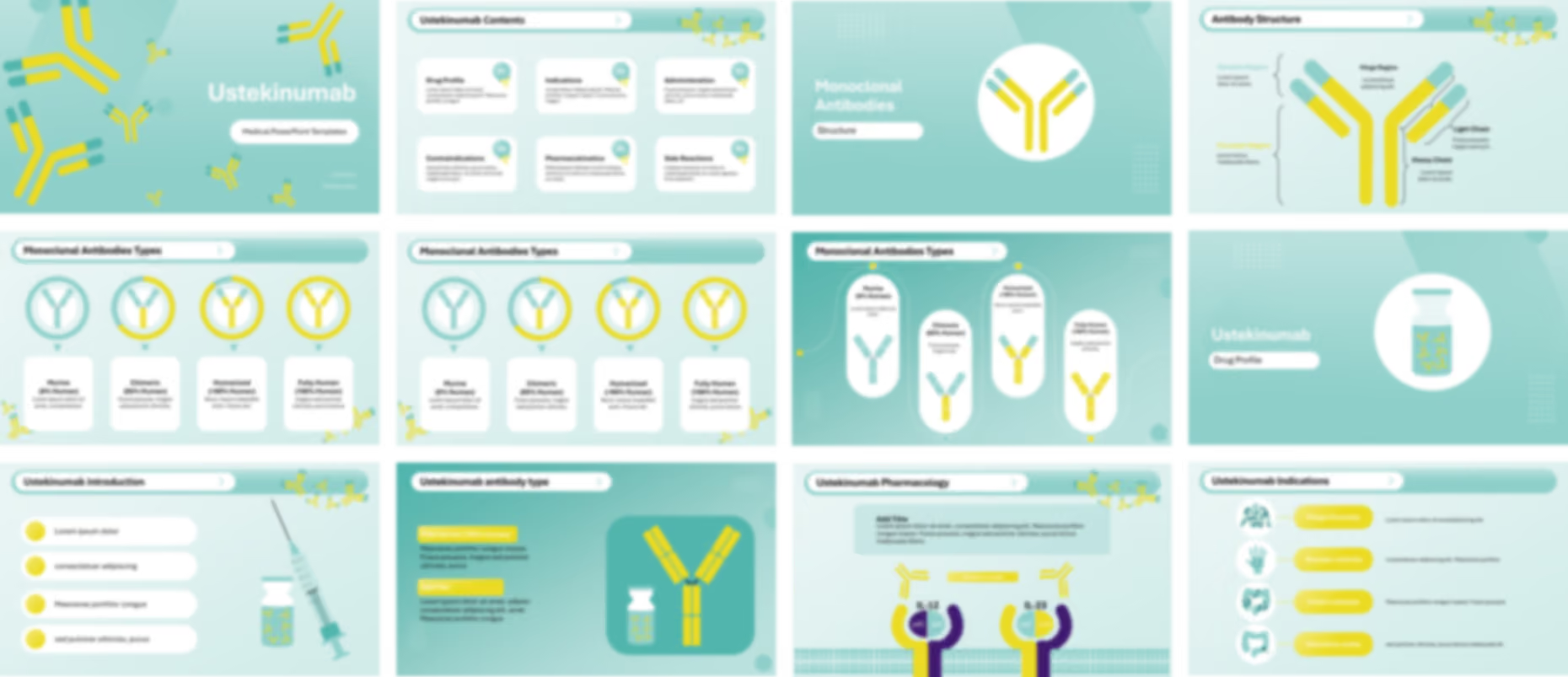
The Ustekinumab PowerPoint template opens by explaining monoclonal antibody structure, labeling the variable, constant, and hinge regions before comparing murine, chimeric, humanized, and fully human antibody types by percentage of human content. A dedicated drug profile section then introduces ustekinumab itself as a fully human antibody, setting up the pharmacology that follows.
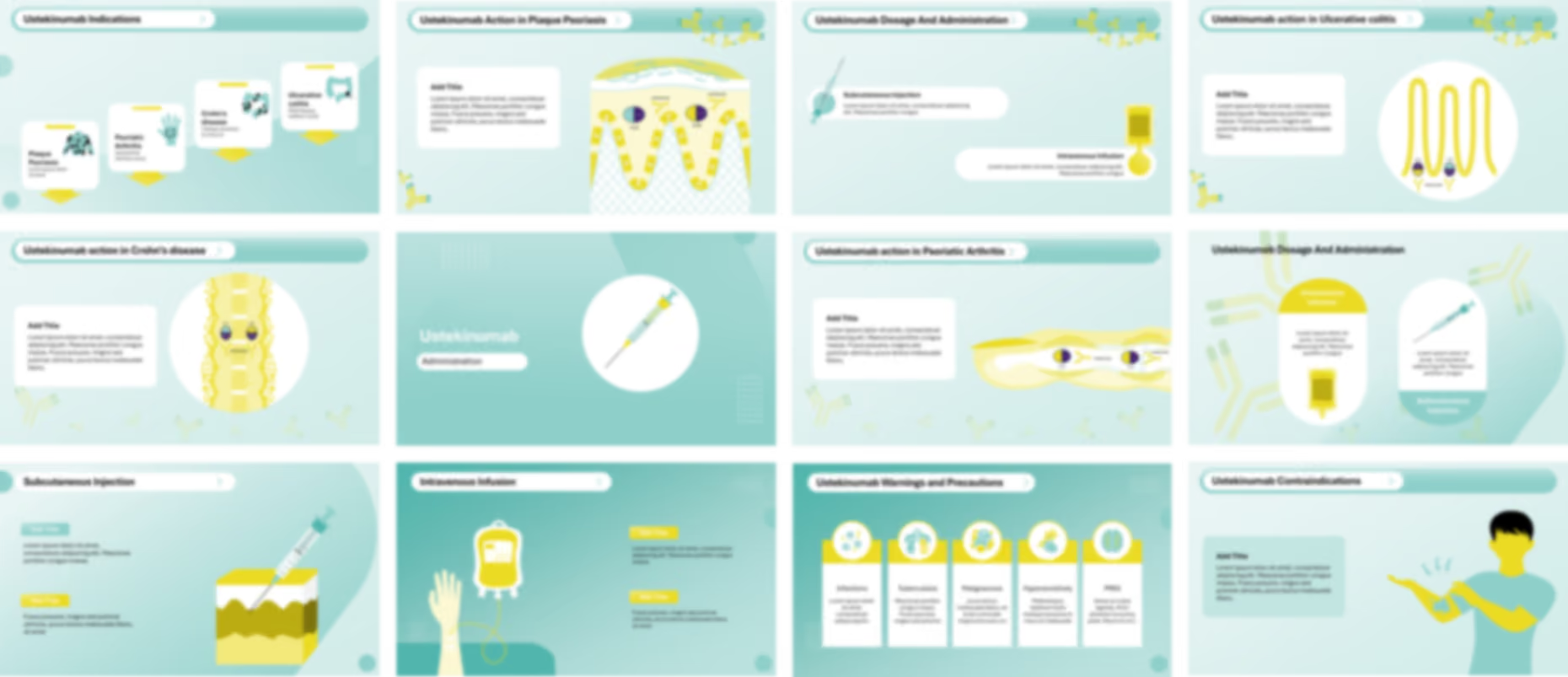
An animated mechanism slide shows how ustekinumab targets both IL-12 and IL-23 to block their cellular signals, and separate illustrations apply this mechanism to each of its four indications, plaque psoriasis, psoriatic arthritis, Crohn's disease, and ulcerative colitis. Establishing the shared IL-12 and IL-23 pathway first gives educators a single reference point before the template shows how that pathway plays out differently in skin, joint, and intestinal tissue.
Subcutaneous injection and intravenous infusion are compared side by side with dedicated technique diagrams for each delivery method. The presentation template then covers contraindications such as hypersensitivity reactions, warnings including tuberculosis and malignancy risk, and common side effects like fever, headache, and diarrhea in a set of editable medical diagrams.
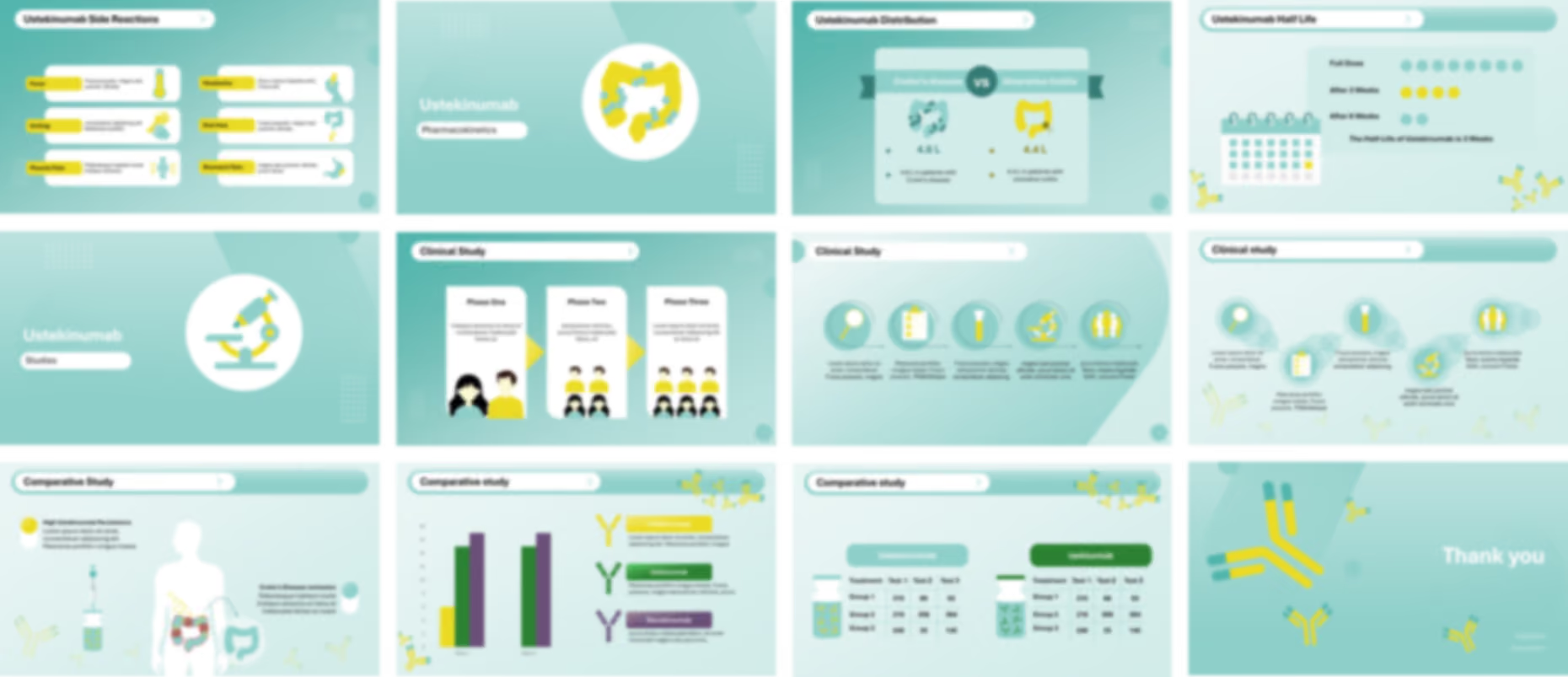
Distribution data comparing Crohn's disease and ulcerative colitis patients are paired with a half life timeline establishing the drug's three week efficacy window. The template closes with clinical trial phase overviews and comparative efficacy data against ixekizumab and secukinumab, rounding out a comprehensive medical presentation template for pharmacology education.
Ready To Transform Your Presentation ?
Pay once, use forever