Venlafaxine PowerPoint Template




Template Preview
Designed for healthcare professionals creating clear and structured medical presentations.
Ideal for doctors, medical educators, and pharmaceutical teams preparing lectures, clinical education, product presentations, and training.
Fully editable in PowerPoint, allowing you to customize diagrams, charts, and slide layouts with your own medical content
Ready-to-use presentation structure that saves time and helps you build professional healthcare presentations quickly.
Fully Animated
Built-in animations help you present medical information clearly and make complex concepts easier to understand.
Editable Colors and Shapes
Editable colors and shapes help you easily customize the slides to match your content and presentation style, just drag and drop your content.
Professional medical layouts
Professional medical layouts help you organize clinical information, medical data, and treatment insights in a clear and structured way.

Created by Medical Professionals
This template prioritizes medical accuracy, clarity, and real-world usability. Each slide is designed with a medical audience in mind, helping you present clinical information, data, and treatment insights in a way that is structured, credible, and easy for healthcare professionals to understand.
Pharmaceutical Product & Medical Affairs Presentations
Medical Affairs teams supporting an SNRI or broader antidepressant portfolio can put this 45-plus-slide Venlafaxine template to work as scientific-exchange groundwork, covering the dual serotonin-norepinephrine reuptake-inhibition mechanism and the four approved indications, MDD, GAD, social anxiety, and panic disorder, without referencing a specific brand. Medical Science Liaisons can reference the immediate-release-versus-extended-release comparison and the withdrawal-syndrome content when a scientific exchange conversation calls for context on formulation choice and discontinuation planning. Because the presentation stays mechanism-focused rather than promotional, Medical Affairs is handed a foundation that still needs the customer's own medical and compliance sign-off before it's put to use in the field. Psychiatry and primary care teams gain a consistent scientific reference across Venlafaxine's full indication range.
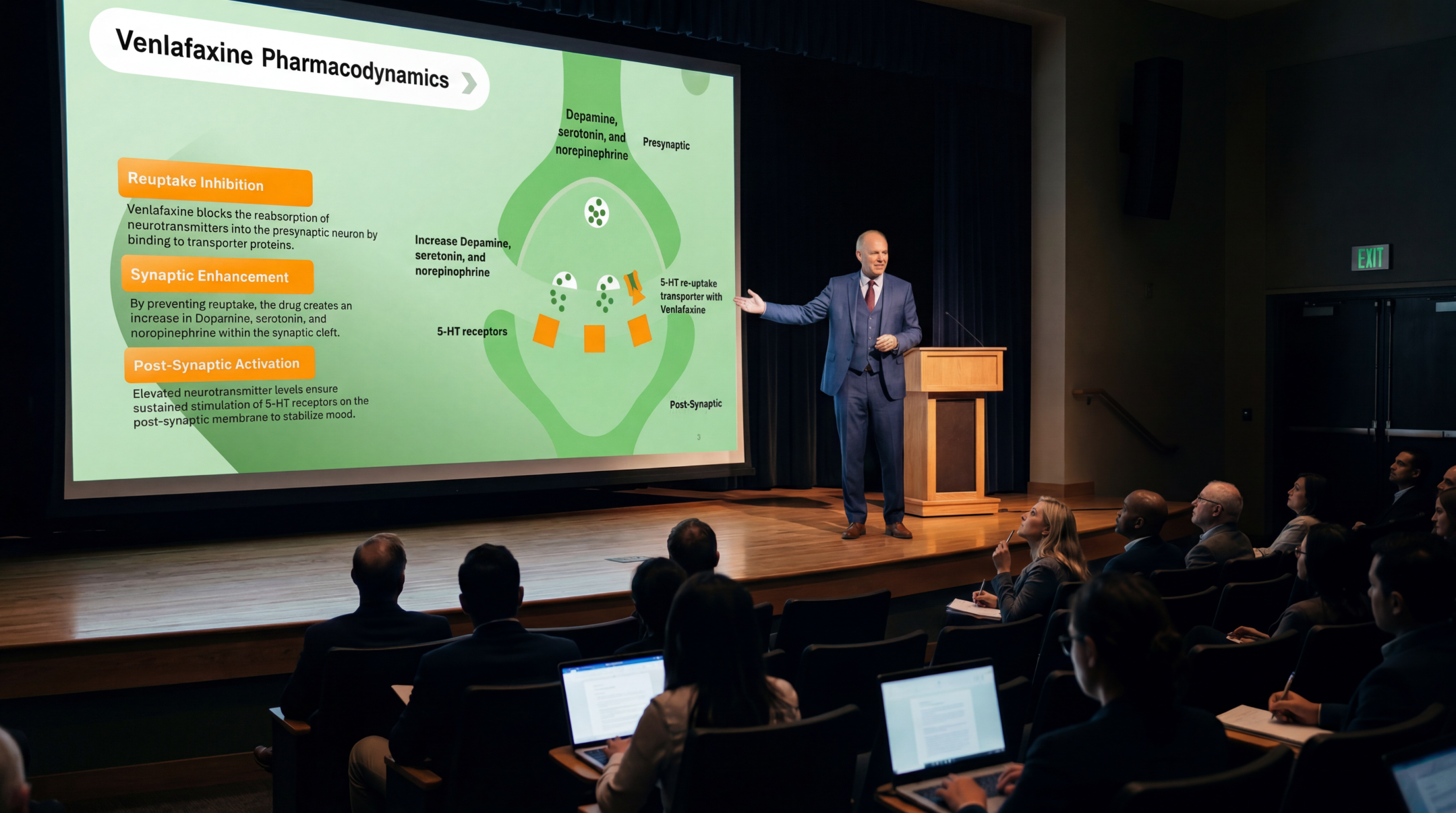
Medical Congress & Scientific Conference Presentations
Psychiatrists and primary care physicians preparing a psychopharmacology session can turn to this Venlafaxine template's synaptic reuptake-inhibition animations rather than assembling neurotransmitter diagrams independently. The dopamine, serotonin, and norepinephrine synthesis-and-release sequence gives a speaker a ready teaching framework distinguishing Venlafaxine's dual mechanism from single-target agents. A Key Opinion Leader presenting at a psychiatry or primary care conference can pair the existing four-condition indication content with their own outcomes data. The blood-pressure-monitoring and serotonin-syndrome safety content keeps the discussion clinically current for a specialist audience.

Medical Training for Pharmaceutical & Life Sciences Companies
Psychiatry and primary care training teams onboarding new sales reps can structure introductory sessions around this Venlafaxine template's neuron-anatomy foundation before moving into the drug-specific dual-reuptake mechanism. New hires get a visual reference for all four approved indications alongside the immediate-release-versus-extended-release distinction that shapes prescribing decisions. The adverse-effects and withdrawal-syndrome content, covering six common side effects and four discontinuation symptoms, gives trainees a structured safety-communication reference. New reps finish training able to explain why blood pressure monitoring matters for this particular SNRI.

eLearning & SCORM Training Modules
Psychiatry residency programs and pharmacy schools building an SNRI pharmacology module can customize this Venlafaxine template with their own exam questions, then convert the finished presentation into a SCORM-compliant module for their learning management system when self-paced study fits the curriculum better. The synaptic-transmission and mechanism-summary slides translate naturally into interactive checkpoints within a broader psychopharmacology course. When a program needs a narrower scope, such as withdrawal management alone or a version tailored for nursing versus psychiatry learners, the RxSlides team can adjust the template's coverage and branding. The RxSlides team can also build a fully custom presentation from scratch for a training objective that isn't covered by any current template.
Medical & Healthcare Education
Medical and pharmacy school faculty teaching psychopharmacology can use this template's brain-anatomy and neuron-structure slides to establish the anatomical foundation before introducing Venlafaxine's dual-reuptake mechanism. The four-indication overview gives students a clear framework for understanding SNRI use beyond depression alone, extending into generalized and social anxiety. The immediate-release-versus-extended-release comparison connects pharmacokinetic theory to a practical prescribing decision students will encounter in clinical practice. Students leave with a concrete understanding of how blocking two neurotransmitter systems differs from the single-target SSRI mechanism covered earlier in the curriculum.
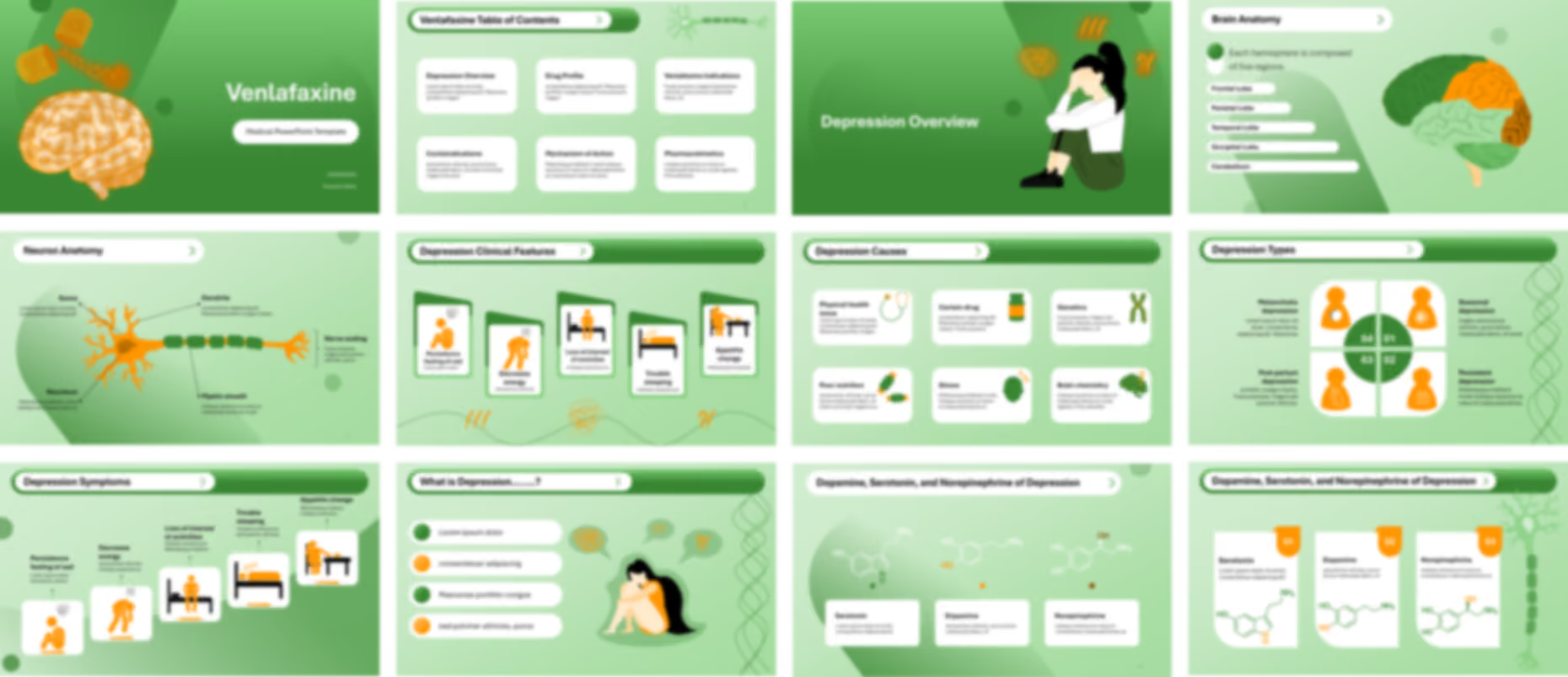
The Venlafaxine PowerPoint template opens by introducing depression before animated illustrations map the brain's five key regions, including the frontal lobe and cerebellum, and a detailed neuron diagram labels the soma, dendrite, and myelin sheath. This anatomical foundation connects directly to the drug's mechanism of action discussed later in the template.
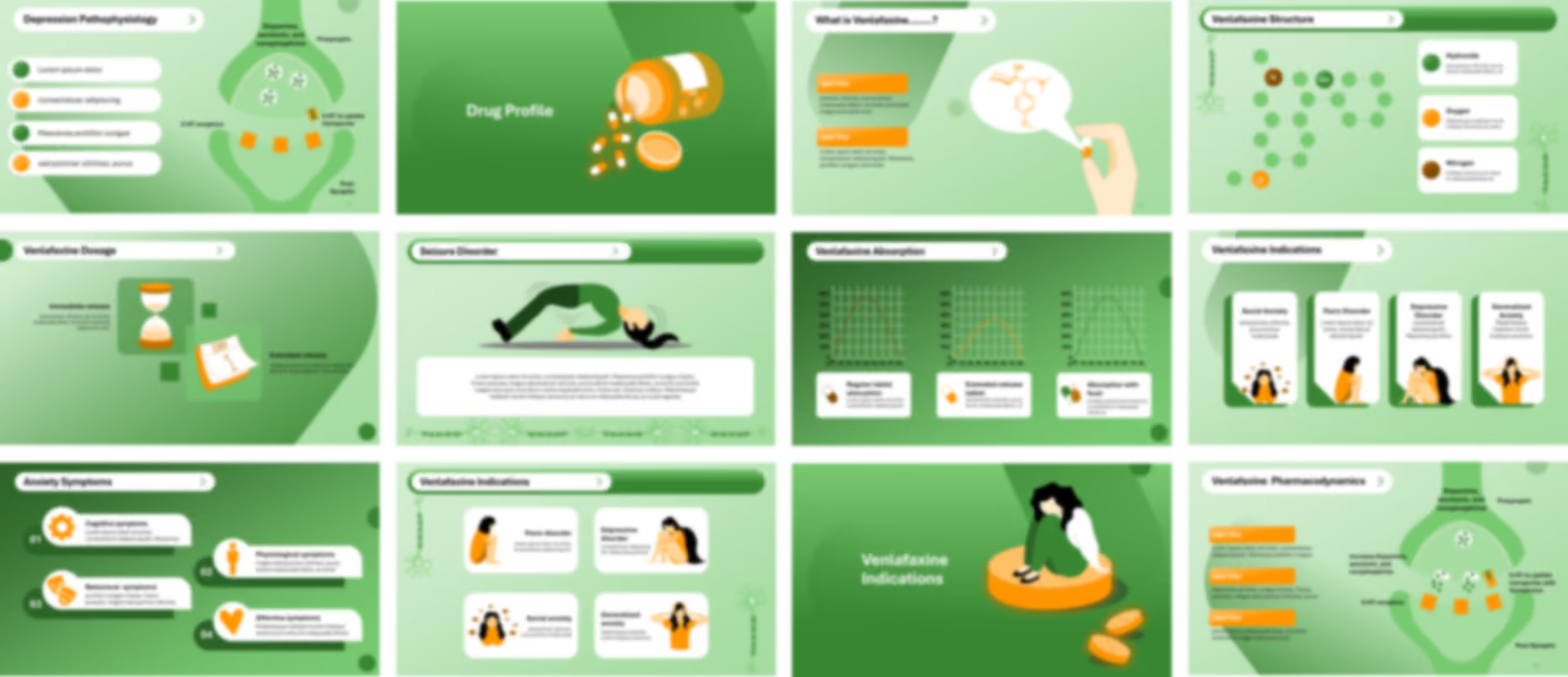
Six common causes and risk factors for depression are illustrated alongside its four main types and five key symptoms, giving presenters a complete clinical picture. Chemical diagrams of dopamine, serotonin, and norepinephrine then set up the neurotransmitter chemistry underlying the synaptic view of depression pathophysiology in this editable medical presentation template.
The drug profile section introduces venlafaxine's chemical structure and its immediate and extended release dosage forms before therapeutic indication slides cover panic disorder, generalized anxiety disorder, social anxiety, and depressive disorder. Establishing the mechanism of action first gives educators a shared reference point before the template shows how venlafaxine increases dopamine, serotonin, and norepinephrine levels by blocking their reuptake at the synapse.
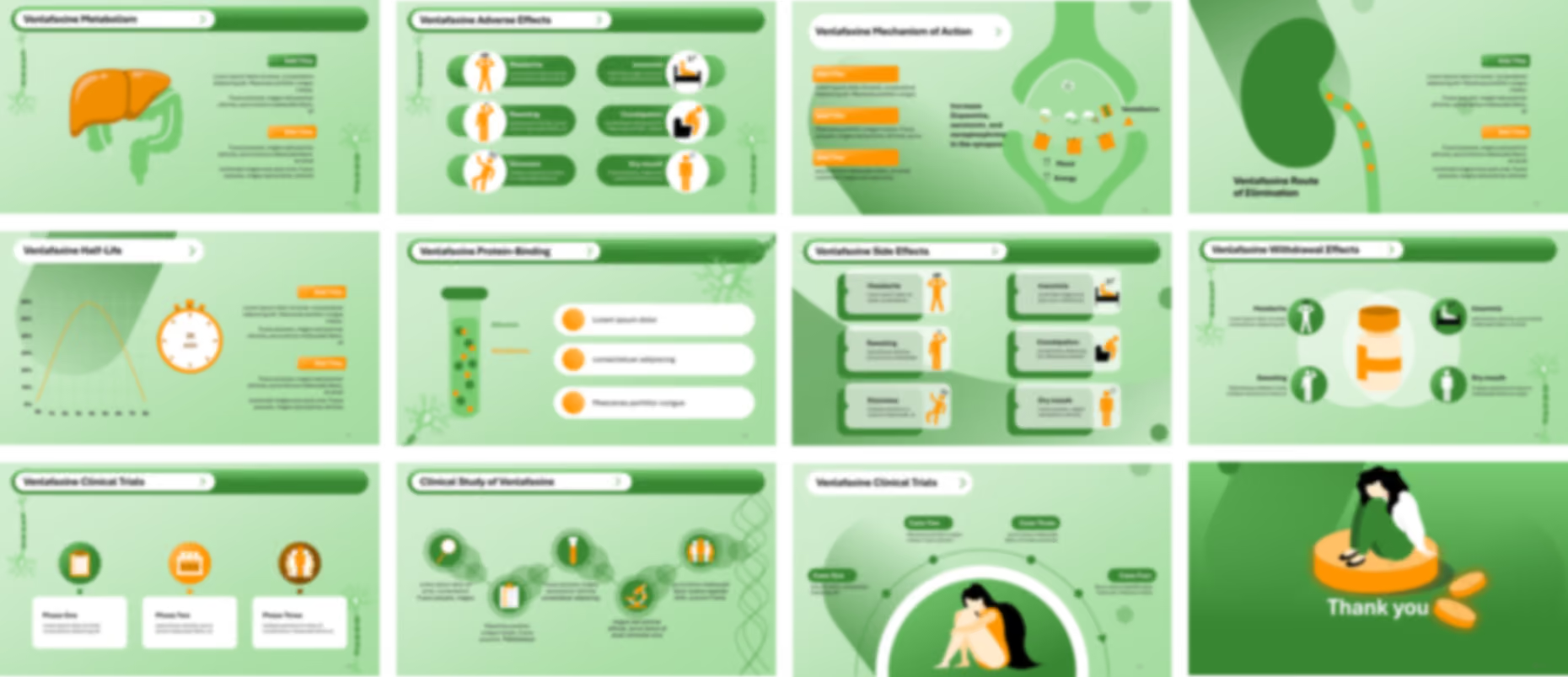
Comparative graphs illustrate venlafaxine's absorption profile across regular tablets, extended release tablets, and administration with food, followed by protein binding, hepatic metabolism, renal elimination, and half life data. The presentation template closes with adverse and withdrawal effect slides and clinical trial phase summaries, rounding out a set of editable PowerPoint slides for psychiatric pharmacology education.
Ready To Transform Your Presentation ?
Pay once, use forever