Ulcerative Colitis PowerPoint Template




Template Preview
Designed for healthcare professionals creating clear and structured medical presentations.
Ideal for doctors, medical educators, and pharmaceutical teams preparing lectures, clinical education, product presentations, and training.
Fully editable in PowerPoint, allowing you to customize diagrams, charts, and slide layouts with your own medical content
Ready-to-use presentation structure that saves time and helps you build professional healthcare presentations quickly.
Fully Animated
Built-in animations help you present medical information clearly and make complex concepts easier to understand.
Editable Colors and Shapes
Editable colors and shapes help you easily customize the slides to match your content and presentation style, just drag and drop your content.
Professional medical layouts
Professional medical layouts help you organize clinical information, medical data, and treatment insights in a clear and structured way.

Created by Medical Professionals
This template prioritizes medical accuracy, clarity, and real-world usability. Each slide is designed with a medical audience in mind, helping you present clinical information, data, and treatment insights in a way that is structured, credible, and easy for healthcare professionals to understand.
Medical Training for Pharmaceutical & Life Sciences Companies
Gastroenterology and IBD training teams onboarding new sales reps can structure introductory sessions around this 60-plus-slide Ulcerative Colitis template's three-mechanism pathogenesis sequence, covering T-cell cytokine release, sulfide-producing bacteria, and P-ANCA involvement. New hires get a visual walkthrough of the treatment ladder, from aminosalicylates and corticosteroids through immunomodulators, biologic therapy, and eventual colectomy for refractory cases. The side-by-side framing against Crohn's disease gives trainees a concrete reference for a differential-diagnosis question they'll hear often in the field. New reps finish training able to place a given IBD case within the correct treatment tier and explain how it differs from Crohn's.

Medical Congress & Scientific Conference Presentations
Gastroenterologists and IBD specialists preparing a conference session can build around this Ulcerative Colitis template's before-and-after intestinal villi illustrations rather than assembling inflammation visuals independently. The three-mechanism pathogenesis breakdown gives a speaker a ready framework for a case-based discussion distinguishing the cytokine, bacterial, and autoantibody contributors to disease. A Key Opinion Leader presenting at a gastroenterology or IBD-focused meeting can pair the existing colonoscopy and biopsy content with their own institutional prevalence data. The global-versus-local prevalence infographic supports a broader epidemiology discussion for a specialist audience.

Pharmaceutical Product & Medical Affairs Presentations
Medical Affairs teams supporting an aminosalicylate, biologic, or immunomodulator product can use this Ulcerative Colitis presentation as disease-state groundwork for scientific exchange, covering colonic mucosal inflammation and the three-mechanism pathogenesis model before any product-specific efficacy data enters the conversation. Medical Science Liaisons can reference the treatment-ladder content, aminosalicylates through colectomy, when a scientific exchange conversation calls for positioning a therapy within the broader IBD treatment sequence. Because the presentation stays disease-focused rather than promotional, Medical Affairs gets a starting point that still needs the customer's own compliance and medical review before it's used in the field. Gastroenterology and IBD teams gain a consistent scientific reference for conversations spanning both medical and surgical management.

eLearning & SCORM Training Modules
Gastroenterology fellowship programs and nursing schools building an IBD module can customize this Ulcerative Colitis template with their own case studies, then convert the finished presentation into a SCORM-compliant module for their learning management system when self-paced study fits the curriculum better. The pathogenesis and colonoscopy-findings slides translate naturally into interactive checkpoints within a broader gastroenterology course. When a program needs a narrower scope, such as medical management alone or a version tailored for nursing versus GI fellowship learners, the RxSlides team can adjust the template's coverage and branding. A custom presentation built from scratch is also available for training objectives that fall outside every existing template.
Medical & Healthcare Education
Medical and nursing faculty teaching inflammatory bowel disease can use this template's intestinal lumen anatomy to establish normal colonic structure before introducing the mucosal inflammation seen in ulcerative colitis. The three-mechanism pathogenesis breakdown gives students a clear framework for understanding disease etiology that's difficult to convey through text alone. The Crohn's disease comparison connects directly to a differential-diagnosis question students will encounter repeatedly on gastroenterology rotations. Students leave with a structured understanding of the full disease arc, from mucosal inflammation through medical and surgical management.
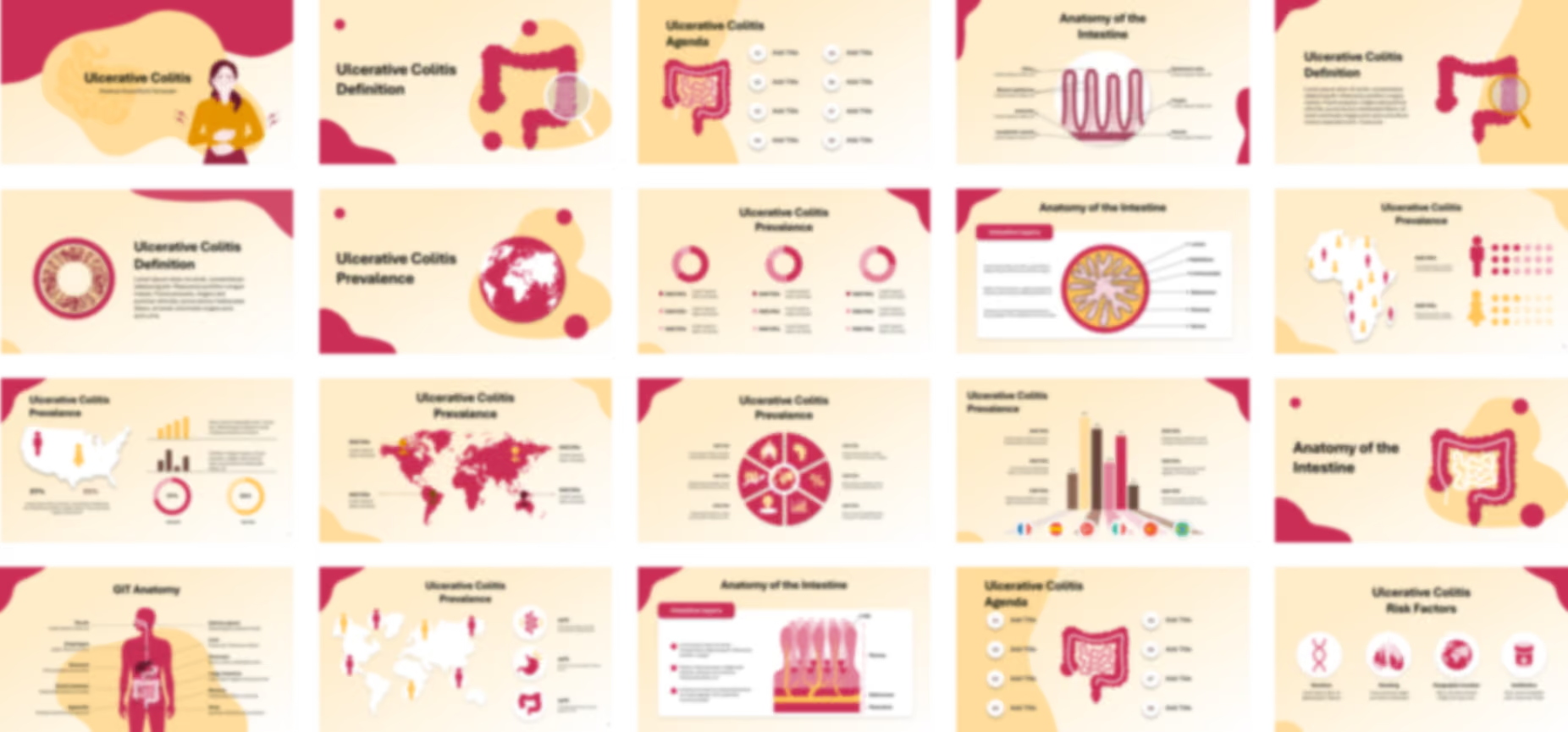
The Ulcerative Colitis PowerPoint template begins with animated illustrations of the large intestine and the intestinal lumen villi to visually define the disease, followed by a cross sectional diagram that maps the anatomical structure of the intestinal lumen, including the inner circular muscle, muscularis mucosa, outer longitudinal muscle, and lamina propria.
Dynamic infographics present the global and local prevalence of ulcerative colitis with editable percentages and country data, allowing presenters to insert their own figures. Customized medical icons then represent the causes and risk factors of the disease, including genetics, smoking, antibiotic use, and geographic location, in a set of editable medical diagrams.
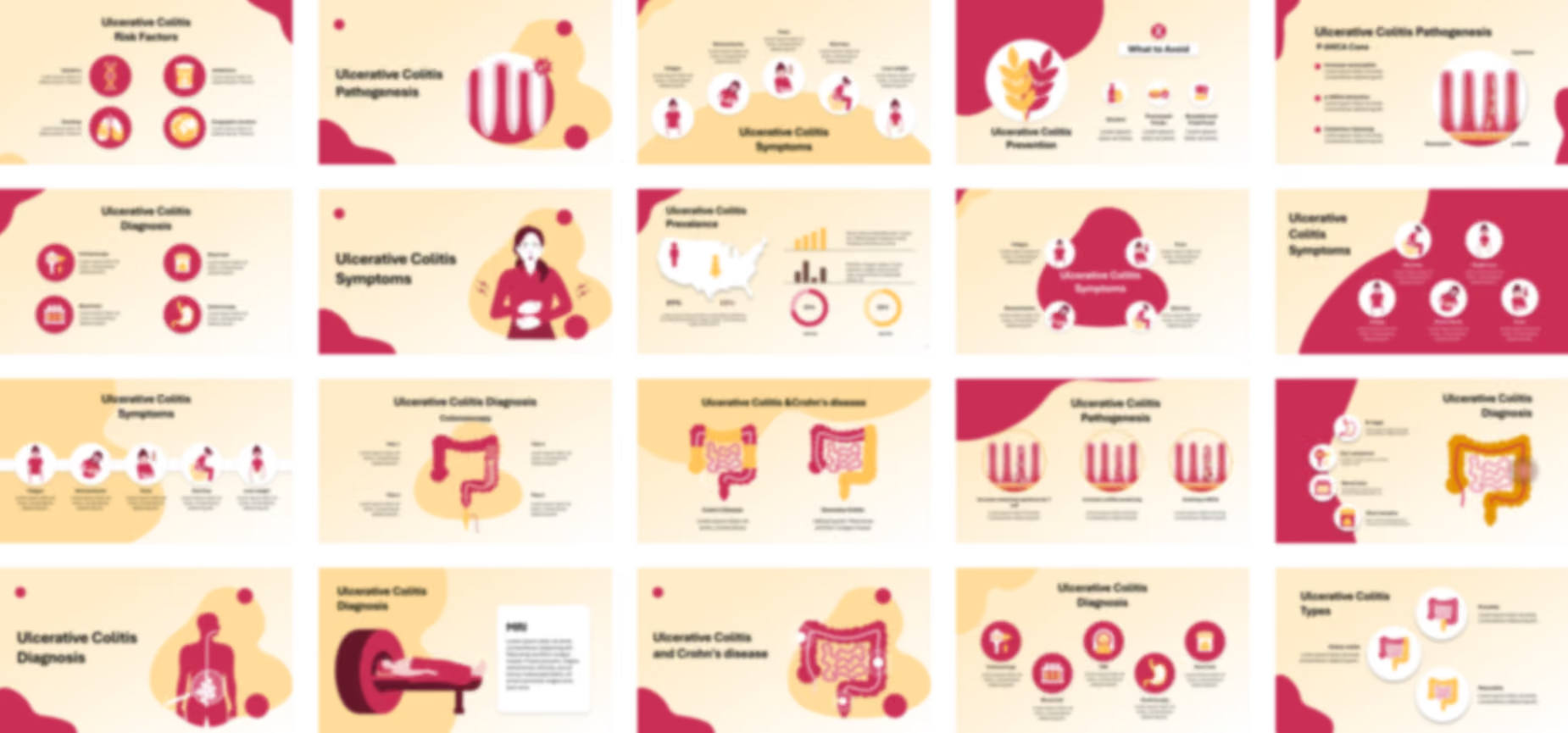
An impressive animation explains the mechanism of ulcerative colitis pathogenesis across three successive illustrated causes, increased cytokine release by T cells, increased sulfide producing bacteria, and the presence of P ANCA. Establishing these three pathways first gives educators a shared reference point before the animation brings them together into a layered explanation of the disease's varied etiology.
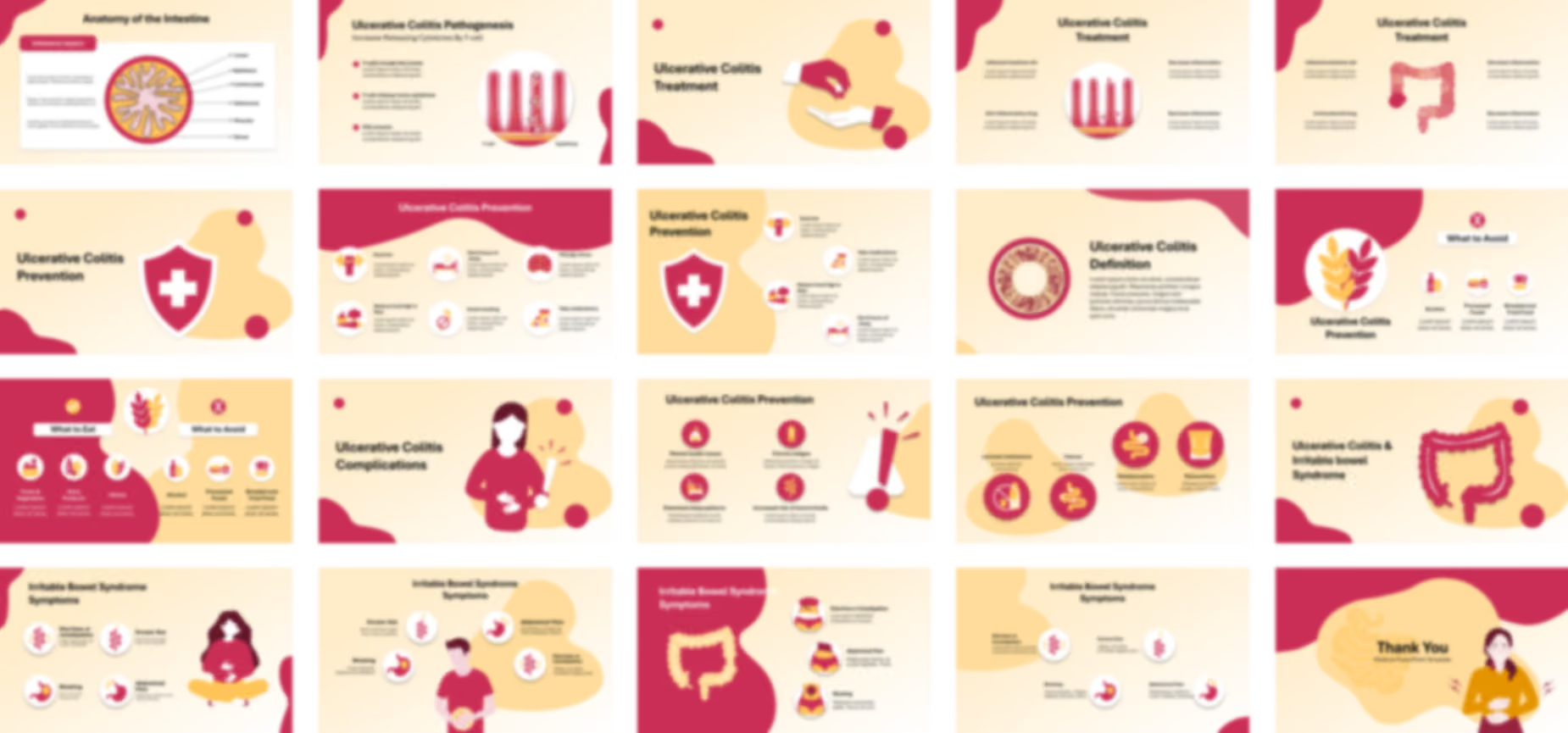
Customized visuals illustrate common symptoms such as stomachache, weight loss, fatigue, fever, and diarrhea, while medical icons and an animated endoscopy illustration walk through diagnostic methods including colonoscopy, blood tests, MRI, gastroscopy, and stool testing. The presentation template closes with animated treatment visuals showing intestinal villi before and after anti-inflammatory and corticosteroid therapy, alongside prevention icons covering exercise, diet, sleep, and stress management, in this editable medical presentation template.
Ready To Transform Your Presentation ?
Pay once, use forever